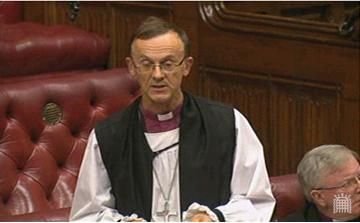
Bishop of Leicester calls for closer co-ordination between faith groups and Government to tackle domestic abuse

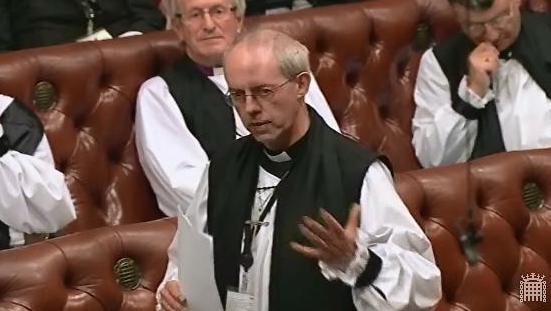
On 6th November 2014, the Bishop of Leicester, the Rt Revd Tim Stevens, took part in a debate in the House of Lords on women facing homelessness, domestic violence and social exclusion, led by Labour Peer Baroness King of Bow. The Bishop focused his remarks on tackling domestic violence, highlighting the need for closer co-ordination between faith groups and local and national government, increasing the availability and quality of training for key institutions such as the police, and asked the Minister to update the House on progress made on the Government’s violence against women strategy and its obligations under international treaties.

14.04.01 Bishop of LeicesterThe Lord Bishop of Leicester: My Lords, as this debate progresses the seriousness and critical nature of this subject is dawning on all of us. I share with other noble Lords a gratitude to the noble Baroness, Lady King, for bringing it to our attention with such eloquence and passion. We all look forward to the maiden speeches of the noble Baroness, Lady Rebuck, and the noble Lord, Lord Farmer, this morning.

Although there are profound links between the three subjects before us, I intend to concentrate on the issue of women facing domestic violence. I do so with considerable caution, even trepidation, because of the horrific stories that have already been brought to our attention, but also as a man who represents a hierarchical position in a patriarchal ecclesiastical institution. Nevertheless, I dare to speak, for three reasons. First, because of the extremely disturbing statistics which others have referred to: an estimated 7% of all women experience domestic violence, according to the 2011-12 figures, equivalent to some 1.2 million victims. There were 88,000 domestic violence cases referred to the Crown Prosecution Service that year, of which more than 64% reached a decision to charge, leading to more than 52,000 convictions. Even more disturbing are the 2013 figures, which indicate that on average 155 women and 103 children were turned away from refuges every day, at the most dangerous and vulnerable moment for them. They were then, of course, faced with returning to an abusive partner. Continue reading “Bishop of Leicester calls for closer co-ordination between faith groups and Government to tackle domestic abuse”

Bishop of Derby takes part in debate on slavery and its use in supply chains

“We live in a culture that is rightly concerned about safeguarding. We are concerned rightly about the safeguarding of children at the moment. We have to get up to speed with the safeguarding of vulnerable adults, many of whom are in exploited forced labour.”

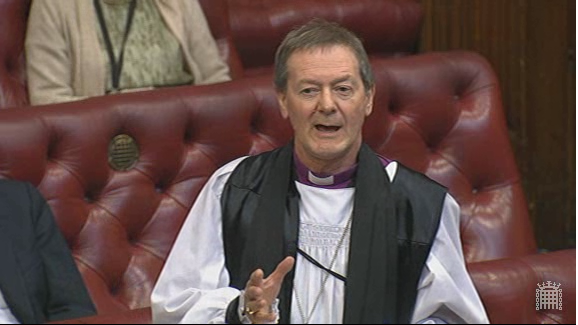
On 30th October 2014, Baroness Kennedy of Cradley led a short debate in the House of Lords to ask Her Majesty’s Government what steps they are taking to combat slavery in supply chains nationally and internationally. The Bishop of Derby, the Rt Revd Alastair Redfern, a former member of the Joint Select Committee on the Draft Modern Slavery Bill, spoke in the debate. He argued that there is a deep underlying tension between economic activity and treatment of the individual, which the modern slave trade has exploited. He also asked the Minister a number of questions regarding the strengthing of reporting and best practice in supply chains.

Bishop of DerbyThe Lord Bishop of Derby: My Lords, I, too, thank the noble Baroness, Lady Kennedy, for securing this debate and for her excellent introduction that laid out the ground clearly. I want to make some remarks from my experience of working with victims, the police and other agencies within our national context. We have just heard from the noble Baroness, Lady Cox, about the sheer horror of the way in which human beings are being treated in our own country.

I begin by welcoming Karen Bradley’s recent announcement that there will be amendments to secure proper reporting and disclosure. The key will be the level of reporting and the size of the company. I also welcome the strong support from many leaders in our industries. On the Select Committee, the people who represented Primark and Tesco, for instance, were supportive of a framework to require proper reporting and accountability, which would help their business case and standing in the community. Continue reading “Bishop of Derby takes part in debate on slavery and its use in supply chains”

Bishop of Chester takes part in debate on devolution and the Scottish referendum

“To regard the English-Scottish relationship as simply the primary and maximal example of broader devolved relationships in the UK would be to invite a repetition of recent errors of judgment.”

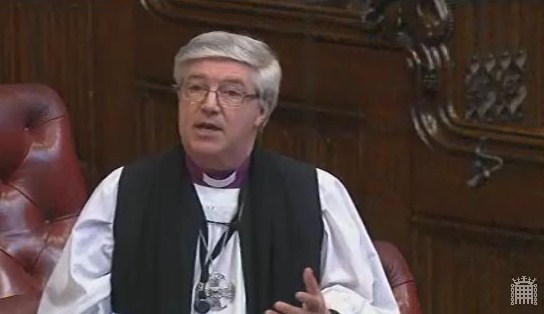
On 29th October 2014, the Bishop of Chester, the Rt Revd Peter Forster, took part in a House of Lords debate on devolution following the Scottish referendum, led by Baroness Stowell of Beeston. The Bishop reflected on his own experiences of studying and living in Scotland, and the relationship between England and Scotland. He urged caution in how politicians and the public approach matters of devolution and nationhood, noting that the post-referendum landscape was a good opportunity to renew the Union, whilst respecting cultural differences and political realities.

14.03 Bishop of ChesterThe Lord Bishop of Chester: My Lords, bishops need to tread warily when discussing matters Scottish. Although I am thoroughly English by birth and background, I can, I think, claim rather closer connections with Scotland than some whom I observe wearing the kilt at the Chester Caledonian Association dinners which I regularly attend.

Let me explain. I have a Scottish wife—my one and only wife, I hasten to add—and two Scottish degrees, all three from Edinburgh. I trained for ordination in Scotland as somebody sponsored by the Scottish Episcopal Church, and I have owned a house in Scotland for 25 years and will happily retire there in a few years’ time. I am Anglican co-chair of the current Church of England-Church of Scotland ecumenical conversations. So tread I shall, if nevertheless warily. If I have learnt one thing in my discussions with the Church of Scotland, it is that were the Kirk ever to contemplate having bishops, which remains, I think, doubtful, they would need to be very different from English bishops to be acceptable. Continue reading “Bishop of Chester takes part in debate on devolution and the Scottish referendum”

BISHOP OF LICHFIELD SPEAKS IN SHORT DEBATE ON THE SUSTAINABILITY OF MUSIC EDUCATION

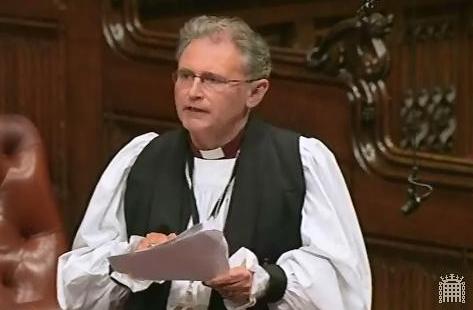
14.03.27 Bishop of LichfieldThe Bishop of Lichfield, the Rt. Revd. Jonothan Gledhill, made a speech during the short evening debate on the long term financial sustainability of the National Music Plan in England. In it, he called for an increase in the number of music hubs, as well as greater financial support for them; highlighting the tremendous benefits a high-quality music education can have for children in all aspects of their lives.

Read the full transcript of his speech here:

The Lord Bishop of Lichfield: My Lords, I congratulate the noble Lord, Lord Aberdare, on introducing this important and timely short debate. I welcome the national plan for music education, which emphasises the importance of music and the creation of music education hubs in this country, I also welcome the fact that the report has taken note of the recommendations made in the Henley review, perhaps the most comprehensive and thorough review of the state of music education in England for many years. I thank the noble Lord, Lord Berkeley of Knighton, for his support of church music as well. Continue reading “BISHOP OF LICHFIELD SPEAKS IN SHORT DEBATE ON THE SUSTAINABILITY OF MUSIC EDUCATION”

Bishop of Coventry speech on apprenticeships and further education

On Thursday 23rd October 2014, the House of Lords debated a motion in the name of Lord Monks, “that this House takes note of the case for improved alternatives for young people not attending university.” The Bishop of Coventry, Rt Rev Christopher Cocksworth, made a speech, which focused on examples of FE and apprenticeships in his diocese.

13.10 Bishop of CoventryThe Lord Bishop of Coventry: My Lords, I join others in thanking the noble Lord, Lord Monks, for leading this timely debate, in which I have learnt a lot. Perhaps I may speak rather anecdotally, and from where I come—Coventry. It is a city with two universities, both of which have an extraordinarily impressive history in relating to local businesses and developing qualifications, teaching and research that serve the world of work. The local economy of Coventry would have been in great difficulty in recent years without the excellent and genuinely multilayered provision from Coventry University and Warwick University, and I join the noble Lord, Lord Baker, in his congratulations and deep appreciation to the noble Lord, Lord Bhattacharyya, for his work in this area. Continue reading “Bishop of Coventry speech on apprenticeships and further education”

House of Commons approves the Bishops and Priests (Consecration and Ordination of Women) Measure

Bishops and Priests (Consecration and Ordination of Women) Measure

20th October, 2014

[Relevant document: The 233rd Report from the Ecclesiastical Committee, Bishops and Priests (Consecration and Ordination of Women) Measure, HC 622.]

5.07 pm

Green BenchesThe Second Church Estates Commissioner (Sir Tony Baldry):

I beg to move,

That the Bishops and Priests (Consecration and Ordination of Women) Measure (HC 621), passed by the General Synod of the Church of England, be presented to Her Majesty for her Royal Assent in the form in which it was laid before Parliament.

It is now nearly a century since Parliament recognised that it should no longer be the body that initiated legislation concerning the running of the Church of England. However, Church legislation becomes part of the law of England, so it requires parliamentary approval and Royal Assent. A Measure such as the one before us has to have been passed by the General Synod of the Church of England. Most Measures require simple majorities in the Synod, but this one falls in that special category of particularly important instruments that need to have achieved at least two-thirds majorities in each of the Houses of Bishops, Clergy and Laity. Continue reading “House of Commons approves the Bishops and Priests (Consecration and Ordination of Women) Measure”

Maiden speech by the Bishop of Ely – Government strategy on social justice

The legitimacy of any legislature is judged by the sure access to justice for all citizens, regardless of age or estate. For that justice to be social it requires the active participation of all communities. I believe that this justice is rooted in the invitation of God to be generous and visible with and for others” – Bishop of Ely, 16/10/14

14.10.16 Bishop of Ely 1On 16th October 2014, the House of Lords debated a motion in the name of Baroness Tyler of Enfield, “that this House takes note of Her Majesty’s Government’s Social Justice strategy.” The Bishop of Ely, Rt Rev Stephen Conway, gave his maiden speech in the debate:

The Lord Bishop of Ely (Maiden Speech):My Lords, I begin by expressing my gratitude for the welcome I have received since I was introduced into your Lordships’ House. My theological sense of direction is rather more developed than my physical sense, and I have been touched by the noble Lords who have accompanied me around bewildering corridors. Your Lordships may yet see me, like Theseus, unwinding a ball of twine to get me back to the Bishops’ Robing Room. Continue reading “Maiden speech by the Bishop of Ely – Government strategy on social justice”

Lords debates social justice – speech by Bishop of Truro

I worry enormously that in our society we fall too easily into a tendency to demonise and victimise and fall between us and them… I suggest that there is clear evidence that our society is struggling to understand itself as a society today, and not enough evidence on the value of justice for all members of our society” – Bishop of Truro, 16/10/14

Bishop of Truro 20.6.13On 16th October 2014, the House of Lords debated a motion in the name of Baroness Tyler of Enfield, “that this House takes note of Her Majesty’s Government’s Social Justice strategy.” The Bishop of Truro gave the following speech:

The Lord Bishop of Truro: My Lords, I am very grateful to the noble Baroness, Lady Tyler, for initiating this debate and congratulate her on her very clear and comprehensive introduction to this very important topic. I am also very grateful to be speaking in a debate when my friend the right reverend Prelate the Bishop of Ely is going to make his maiden speech. If it were not presumably against the protocols of this House, I would like to congratulate him on doing so before he has done it. However, knowing him as I do, I think that that is probably very dangerous. Continue reading “Lords debates social justice – speech by Bishop of Truro”

Bishop of Newcastle speaks in debate on wind farming in Northumberland

On 15th October 2014 Baroness Quin led a short debate in the House of Lords on the Government’s assessment of the extent of onshore wind farming in the county of Northumberland. The Lord Bishop of Newcastle, the Rt Revd Martin Wharton, contributed to the debate, making the case for an increased focus on the development of alternative forms of renewable energy outside the county of Northumberland.
14.03 Bishop of NewcastleThe Lord Bishop of Newcastle: My Lords, last Friday I took a relatively short train journey from Waterloo to Winchester, in the heart of the Hampshire countryside. The journey took little more than an hour, about the same time as it takes me to travel through my diocese from Newcastle to the Scottish border. There was a striking difference between those two train journeys. Obviously, there was no beautiful coast or even the odd castle on my trip to Hampshire, and yet to me the most striking difference was that there was not a wind turbine—let alone a wind farm—in sight at all. This is hardly surprising when you consider that Northumberland now has more wind power capacity installed than 16 counties in the south of England put together. It is then hardly surprising that a recent survey claimed that 70% of the British public support onshore wind. The truth is that 70% of the British public live in places where they will never have to put up with the sight or the sound of a wind turbine, unlike the people who happen to live in the beautiful county of Northumberland. During my time as bishop, wind farms have proliferated across the countryside to an alarming degree.

The level of Northumberland’s contribution to the Government’s onshore wind targets has been disproportionately high, as we have heard. We contribute more than 10% of all England’s wind energy but consume just over 0.5% of England’s electricity. Nobody should accuse us of nimbyism. It is hardly surprising then that the message from this short debate is simply: enough is enough. The good people of Northumberland have had enough of onshore wind farms. That point has finally, if belatedly, been recognised by DCLG in recent guidance, which states that it does not mean that,
“the need for renewable energy … overrides environmental protection and the planning concerns of local communities”. Continue reading “Bishop of Newcastle speaks in debate on wind farming in Northumberland”

Bishop of Coventry on ISIS and UK Military Action in Iraq

“Dietrich Bonhoeffer said that when a madman came down the street swinging an axe it was our duty to not just apply plasters to the injured but to stop the madman with whatever means were expedient” – Bishop of Coventry, 26/9/14

Parliament was recalled on Friday 26th September 2014 in order to debate UK involvement in military action against ISIS/ISIL, following a request for assistance from the Government of Iraq. In the debate that took place in the House of Lords the Bishop of Coventry, Rt Rev Christopher Cocksworth, gave the following speech:

13.10 Bishop of Coventry

The Lord Bishop of Coventry: My Lords, the noble and learned Lord, Lord Howe of Aberavon, referred your Lordships’ House a few moments ago to the parallel in the 1930s and 1940s in Europe. I should like to draw on one figure from that period which I found helpful in thinking about the matters before us. Dietrich Bonhoeffer said that when a madman came down the street swinging an axe it was our duty to not just apply plasters to the injured but to stop the madman with whatever means were expedient.

The Government are seeking to join with others to stop the madman swinging the axe of cruelty, and we agree that stopped he must be. The question is: what are the expedient means for doing so? Continue reading “Bishop of Coventry on ISIS and UK Military Action in Iraq”