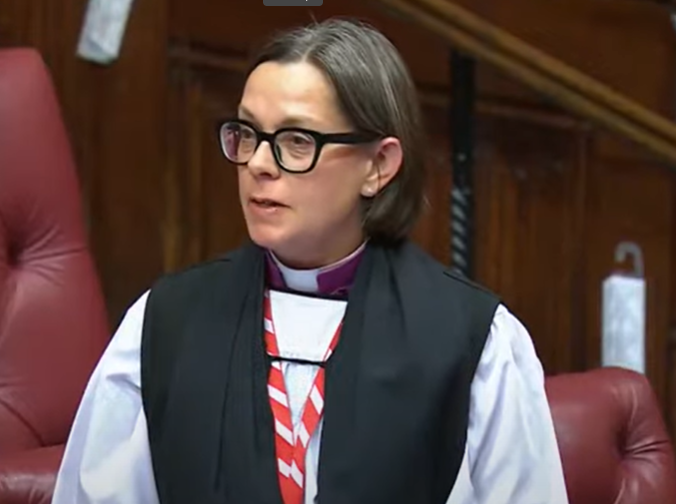
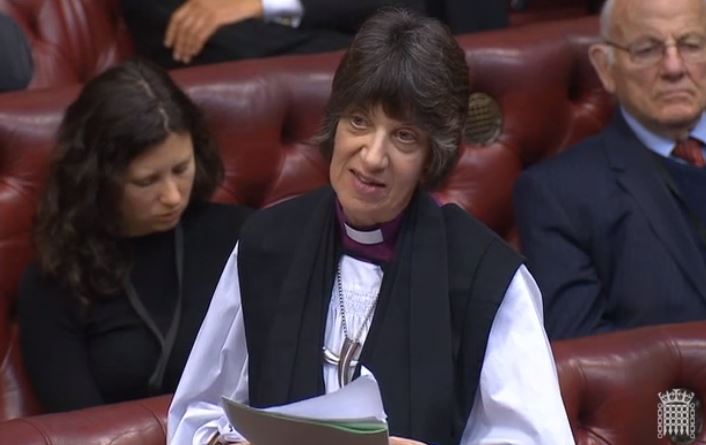
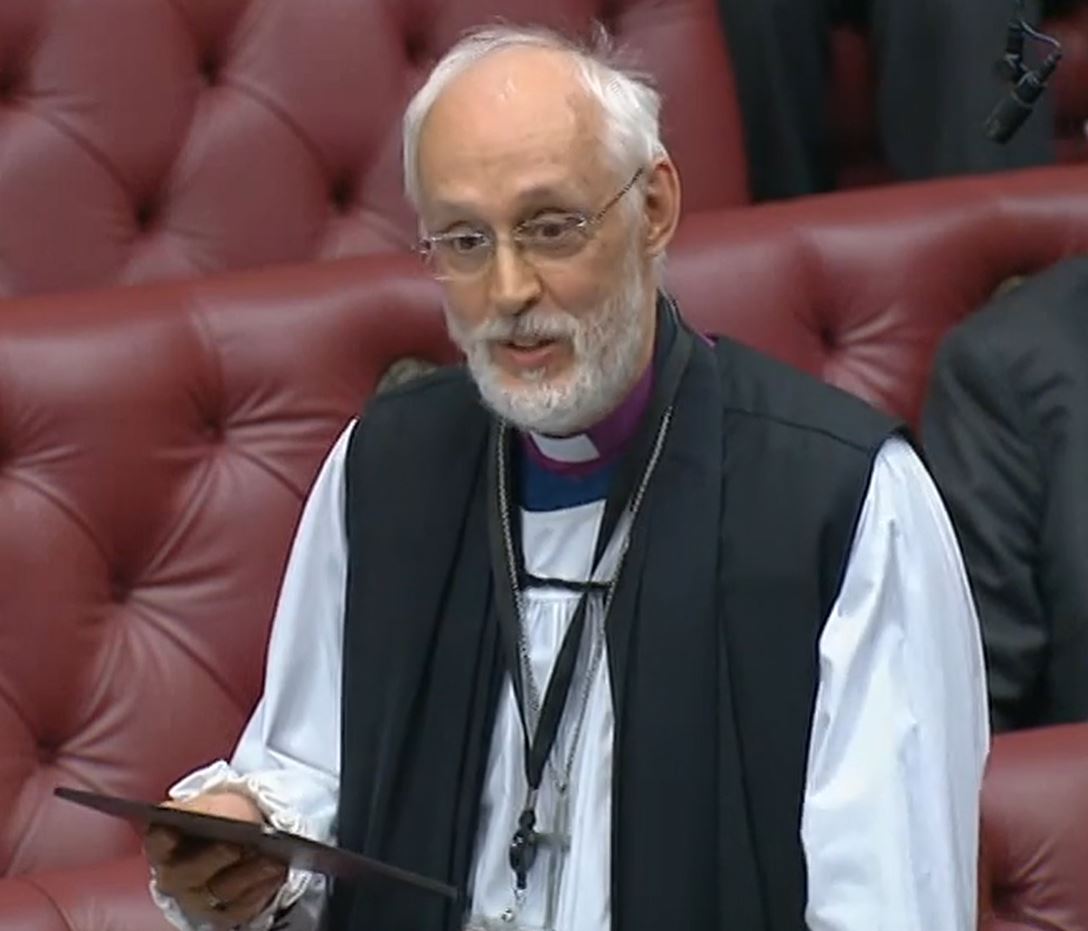
Support for Infants and Parents Bill: Bishop of Norwich welcomes legislation

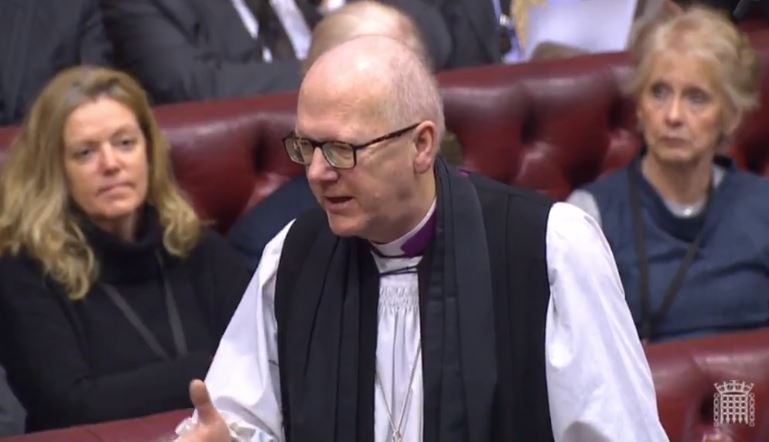
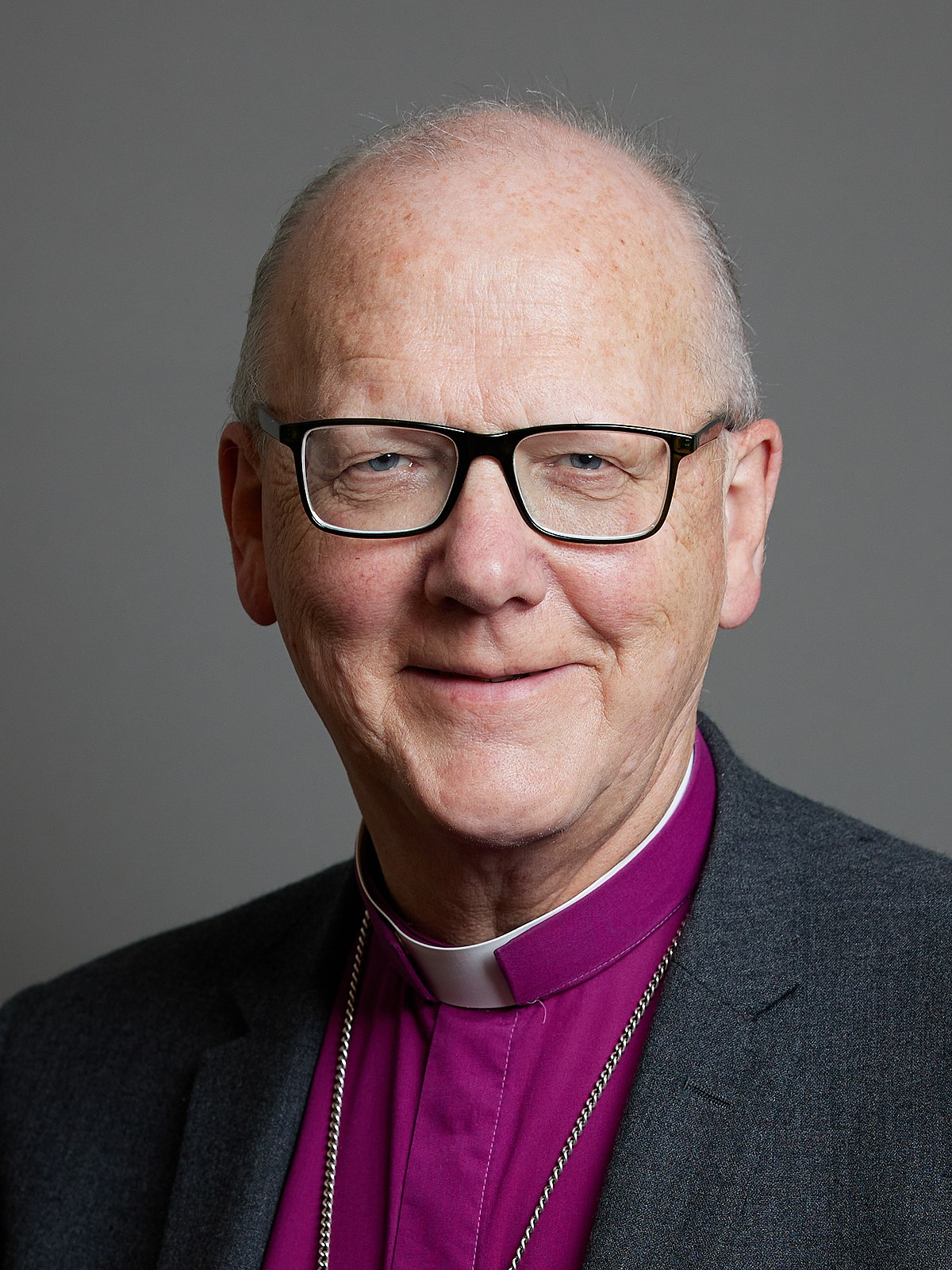
The Bishop of Norwich spoke in a debate introducing the Support for Infants and Parents Bill on 6th September 2024, welcoming the bill and referencing the work of the Archbishop’s Commission on Families and Households:

The Lord Bishop of Norwich: My Lords, I apologise to noble Lords for speaking in the gap. I did not expect to contribute today, but listening to the contributions so far, I was struck by the crossover with work underway by the Church and the Mothers’ Union, particularly when the noble Lord, Lord Farmer, mentioned the role of churches and faith communities.

I welcome the Bill and congratulate the noble Lord, Lord Farmer, and the right honourable Dame Andrea Leadsom on their work on this issue. Churches across the country offer support to new families and parents, providing spaces for parents to meet, share experiences and be directed to support, if needed. They provide child development services through toddler and children groups, which are essential for the formation of children before they start nursery or reception classes in school. Through Messy Church and these toddler groups, hundreds of churches are already implementing many of The Best Start for Life recommendations. Churches are delivering perhaps more than 18 of the 24 recommendations and are often partnering with local authorities to develop joint working on issues that affect all our communities.

Continue reading “Support for Infants and Parents Bill: Bishop of Norwich welcomes legislation”

Bishop of Southwark speaks on risks posed by changes to VAT exemption for independent schools

The Bishop of Southwark spoke in a debate on the impact of changes to the VAT exemption for independent schools on 5th September 2024, raising the issue of unintended effects on SEND provision and potential ramifications for cathedral and choir schools:

The Lord Bishop of Southwark: My Lords, the Government’s intention to levy value added tax in this area was a manifesto commitment at the general election. The Government entertain a well-evidenced belief that parents purchase an economic and social benefit for their children’s future through private schooling. Whatever the experience any of your Lordships have had of such schooling, the undoubted premium placed on forming character or the excellence in pastoral care that some of these schools exhibit, the Government nevertheless have a mandate for change. The noble Baroness, Lady Ramsey, underlined the pressing need for more teachers in our state schools.

However, who will and who will not be affected by this change is a worthy subject of debate. I am happy to say that both the boys’ and girls’ choirs at Southwark Cathedral are almost entirely drawn from state schools, and are consequently unaffected by the VAT change. Furthermore, a number of schools in my diocese offering provision for special educational needs and disabilities have their places funded by the local authorities. But there are cathedral and choir schools, and private schools, with provision for special educational needs that will be severely affected by the change that the Government intend. Many of these are small schools, and therefore the impact will be disproportionately severe.

Continue reading “Bishop of Southwark speaks on risks posed by changes to VAT exemption for independent schools”

Holocaust Memorial Bill: Bishop of Southwark expresses concern over location of memorial site

On 4th September 2024, the Bishop of Southwark spoke in a debate on the Holocaust Memorial Bill, expressing concern that the proposed site would not allow the memorial to act in its originally proposed capacity as a learning centre, and noting the importance of this in the context of rising antisemitism and Britain’s own role in the history of the Holocaust:

The Lord Bishop of Southwark: My Lords, like my right reverend friend the Bishop of St Albans, I speak personally in this debate. I have had the privilege of knowing a good number of Holocaust survivors, which has been life-changing and life-enriching for me. Future generations will be denied that privilege, which is why it is so important that we get this right.

I acknowledge the desire of His Majesty’s Government and so many of your Lordships to proceed with a matter that was, in many minds, settled back when the commission reported in 2015 and when the then Government came forward with proposals in 2016, as we have heard. I am also grateful to the noble Lord, Lord Pickles, and the secretariat at the Ministry of Housing, Communities and Local Government for its recent briefing note, which addresses, so helpfully, many of the objections to the current scheme.

Continue reading “Holocaust Memorial Bill: Bishop of Southwark expresses concern over location of memorial site”

Holocaust Memorial Bill: Bishop of St Albans raises concerns over planned site of memorial

The Bishop of St Albans spoke in a debate on the second reading of the Holocaust Memorial Bill on 4th September 2024, supporting the memorialisation of the holocaust but opposing the proposed site for the memorial, citing concerns over security and the removal of a green space in Westminster if the memorial were to be built in Victoria Tower Gardens:

The Lord Bishop of St Albans: My Lords, I rise with a certain reticence to speak, partly because of my own lack of experience of family members or others being involved in the Holocaust. I am aware that many Members of this House will have personal reasons why this is so raw and important. I underline that I am not trying to speak on behalf of the Church of England or the Lords spiritual. We hold a number of differing views on the Bill.

It hardly needs repeating, but I personally know of nobody who opposes the Bill because they are against the concept of having a prominent Holocaust memorial in this nation’s capital. As someone who has visited a significant number of Holocaust memorials in other parts of the world and other capital cities, I am well aware of their importance and how moving they can be.

Continue reading “Holocaust Memorial Bill: Bishop of St Albans raises concerns over planned site of memorial”

Bishop of London speaks in debate on COVID-19 Enquiry Report

On 3rd September 2024, the Bishop of London spoke in a debate on the first report of the COVID-19 Enquiry, highlighting the reports findings on pre-existing health inequalities in the UK, and the significance of faith to healthcare needs:

The Lord Bishop of London: My Lords, I declare my interest as set out in the register. It is good to have this opportunity to speak in this debate and to acknowledge the important recommendations of this first report from the Covid inquiry. The pandemic was a seismic event for us all, and a great tragedy for many. My thoughts and prayers go to those who have lost individuals because of the pandemic. My thanks and gratitude go to those who stepped up and beyond to care for and protect us.

I want to highlight a couple of points from the report. The first is that the clearest flaw identified in the risk assessment was the underlying health of the UK population prior to 2020, as mentioned by the noble Baroness, Lady Tyler. We are all aware of the entrenching and exposing effect that the pandemic had on health inequalities. We are all aware of the impact that non-clinical factors such as housing have on our health. We are all aware of the vast difference in healthy life expectancy depending on where we live. We are all aware that those living in more deprived areas are more clinically vulnerable on average, but spend much more time in front-line jobs.

Continue reading “Bishop of London speaks in debate on COVID-19 Enquiry Report”

Bishop of Newcastle raises potential of community sentences for reform and rehabilitation in the justice system

On 26th July 2024, the Bishop of Newcastle spoke in a debate on a report from the Justice and Home Affairs Committee, ‘Cutting crime: better community sentences (1st Report, Session 2023–24, HL Paper 27)’, on the topic of community sentences and the opportunity for reform of the justice system towards a more rehabilitative model:

The Lord Bishop of Newcastle: My Lords, I am glad to take part in this debate and I thank the noble Baroness, Lady Hamwee, for enabling the report on community sentencing to be discussed in this House. It is an honour to follow the noble Baroness, Lady Prashar, and I commend her point about changing the public narrative.

I also welcome the Minister to his new role and commend his excellent maiden speech, delivered on Wednesday, for which I was pleased to be present, and the wisdom and expertise that he brings to his new role. I wish him very well indeed. I also commend him on the way he dealt with repeating a Statement from the other place and taking questions before he had delivered that maiden speech. If I may use a word borrowed from my primary field of expertise, this was a baptism-by-fire experience.

Continue reading “Bishop of Newcastle raises potential of community sentences for reform and rehabilitation in the justice system”

Bishop of Chichester speaks in debate on education in the UK

The Bishop of Chichester spoke in a debate on a report from the Education for 11 to 16-year olds Committee, ‘Requires improvement: urgent change for 11–16 education (Session 2023–24, HL Paper 17)’ on 26th July 2024, welcoming the report and highlighting the importance of religious education and the Church of England’s role as an educational provider:

The Lord Bishop of Chichester: My Lords, it is an honour to follow the noble Lord, Lord Aberdare, and the noble Baroness, Lady Blower, who have participated in the excellent report chaired by the group led by the noble Lord, Lord Johnson.

I welcome the priority that has been given to the review of the curriculum for 11 to 19 year-olds at an early stage of the Government coming into office. In particular, I welcome the report of the review group and how it will “refresh” the curriculum,

“build on the hard work of teachers and staff”,

and seek “evolution and not revolution”.

These are important indications that education will not be driven by ideology that leads to it becoming a political football, as sometimes has happened in the past.

In particular, the promise that the review will not

“place undue burdens on education staff”

will need to be delivered ostentatiously, particularly if the Government wish to improve the recruitment and retention of top-quality teachers. To that end, I greatly welcome also the acknowledgement of

“the innovation and professionalism of teachers”.

Continue reading “Bishop of Chichester speaks in debate on education in the UK”

King’s Speech Debate: Bishop of Worcester makes valedictory speech on the topic of international development

The Bishop of Worcester gave his valedictory speech on issues facing the field of international development, in particular the problem of debt, during the Kings Speech Debate on 25th July 2024:

The Lord Bishop of Worcester: My Lords, I join others in welcoming the Ministers to the Front Bench and begin this valedictory speech by saying what a privilege it has been to serve in your Lordships’ House for the last 12 years. I thank all noble Lords and staff on the estate for all they do and their hard work.

After my maiden speech, a fellow Peer asked me how it had gone. “Oh, they were very nice and kind”, I responded. “Yes”, he retorted; “I have never known a place where courtesy is used as such an effective weapon”. I have experienced much unweaponised courtesy and civility here. I have consistently encountered humanity at its best, and I thank your Lordships, whatever their political affiliation, for their impressive devotion to the common good.

In this final intervention, I will concentrate my brief remarks on development issues, which have been a passion of mine throughout my adult life. While I recognise the imperative for defence spending and the need to be ready for war, I hope that the Government will pay equal attention to development, which is an indispensable contributor to peace and human flourishing.

Continue reading “King’s Speech Debate: Bishop of Worcester makes valedictory speech on the topic of international development”

King’s Speech Debate: Bishop of Winchester urges “faith literate” approach to foreign affairs

The Bishop of Winchester gave a speech on the topic of freedom of religion and belief during the King’s Speech debate on 25th July 2024, encouraging the government to take “a faith literate approach to foreign affairs”:

The Lord Bishop of Winchester: My Lords, I am grateful for the noble Baroness’s remarks at the start and am pleased that the Government have expressed a desire to reset the UK’s international relations. If the UK is to exercise the soft power that we undoubtedly might, not least through proper investment in the BBC World Service, it is vital that we are as fully engaged internationally as we can be. In that regard, I stress the vital importance of freedom of religion or belief—or FoRB for short, because it is a mouthful—in today’s world. It is a vital human right, and its increasing abuse is a growing global threat.

Continue reading “King’s Speech Debate: Bishop of Winchester urges “faith literate” approach to foreign affairs”

King’s Speech Debates: Archbishop of Canterbury stresses importance of engaging with faith groups in international affairs

During the King’s Speech Debate on 25th July 2024, the Archbishop of Canterbury gave a speech on foreign affairs and international relations, emphasising the importance of engaging with faith groups:

The Lord Archbishop of Canterbury: My Lords, I join noble Lords in congratulating the noble Lord, Lord Coaker, and the noble Baroness, Lady Anderson, on their appointments and on their party’s first King’s Speech. As a successor to the noble Lord, Lord Ahmad, the noble Baroness has a very hard act to follow indeed, as I am sure the whole House will recognise. I also congratulate the noble Baroness, Lady Goldie, on her remarkable meal, which, as I missed breakfast, may result in me leaving quickly to have lunch—but it will not be as good.

As others have indicated, we are living in unstable times. The Anglican Communion, in 165 countries, finds almost half our members facing conflict. Issues elsewhere in the world, however, do not confine themselves to affecting us in our international policy alone. We are recognised now by the United Nations as the most diverse nation on earth. That means that every single overseas conflict or disaster has a diaspora community here. To build a cohesive society here, domestic and foreign policy must work hand in glove.

Continue reading “King’s Speech Debates: Archbishop of Canterbury stresses importance of engaging with faith groups in international affairs”