Victims and Prisoners Bill: Bishop of Bristol supports amendments focused on protecting migrant victims of crime

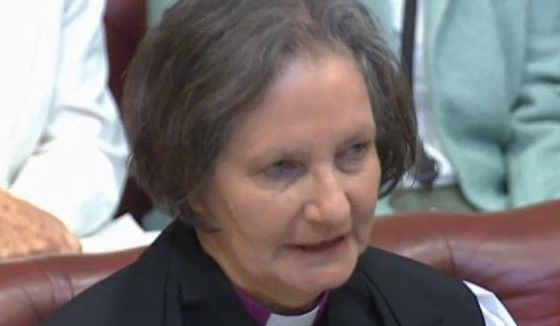
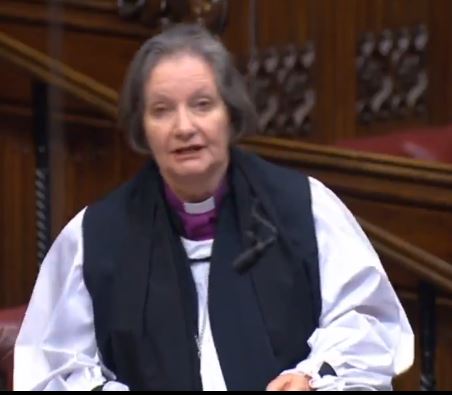
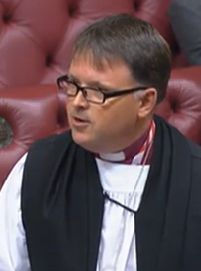
The Bishop of Bristol, on behalf of the Bishop of Gloucester and the Bishop of London, spoke in support of two amendments to the Victims and Prisoners Bill on 5th February 2024, one aimed at improving conditions for migrant victims of domestic violence, and another on ensuring that data on victims of crime not be shared with immigration enforcement authorities:

The Lord Bishop of Gloucester: My Lords, I rise to speak on behalf of two of my colleagues who have supported amendments in this group. My right reverend friend the Bishop of Gloucester regrets that she cannot be in her place to add her voice in support of Amendment 80, which concerns a cause on which she has long been an advocate. She tabled an amendment to the Domestic Abuse Bill, with cross-party support in 2021. Advocates have campaigned for 30 years to improve conditions for migrant women who have no recourse to public funds and who are victims of domestic abuse. While there has been some progress, including the introduction of the domestic violence indefinite leave to remain rule and the destitution domestic violence concession, there is still much more to be done to make sure that victims of domestic abuse with no recourse to public funds, or who are undocumented, are eligible for those schemes. Victims face an impossible choice: domestic abuse or deportation and destitution. Many are unable even to enter a women’s refuge; they cannot pay their rent or living costs as they are not eligible for housing or other social security benefits.

Continue reading “Victims and Prisoners Bill: Bishop of Bristol supports amendments focused on protecting migrant victims of crime”

Victims and Prisoners Bill: Bishop of Manchester tables amendments to bolster victim support organisations

On 5th February 2024, the House of Lords debated the Victims and Prisoners Bill in Committee. The Bishop of Manchester spoke on two amendments he had tabled, aimed at enabling increased collaboration between statutory and community bodies in the victim support sector:

The Lord Bishop of Manchester: My Lords, I rise to speak to Amendments 56 and 59 in my name; I also support the other amendments in this group. These amendments would all help to firm up the very good intentions set out in Clauses 12 and 13.

In an earlier group, I tabled an amendment to ensure that victim support services were properly signposted; it is no use a service existing if the people it is meant to serve are not able to access it. But now we come to, if anything, a more fundamental point: how do we ensure that the right services exist for victims, and in each and every part of the country?

The Bill as drafted gets much right: it requires policing bodies, integrated care boards and local authorities to collaborate in assessing the needs of victims, producing a published strategy and, indeed, revising that strategy as occasion requires—so far, so good. But, as things stand, and as the noble Lord, Lord Russell of Liverpool, has indicated, that assessment and strategy could be little more than a combination of the unaffordable and the non-existent—a bit like an overambitious child’s Christmas wish list.

Continue reading “Victims and Prisoners Bill: Bishop of Manchester tables amendments to bolster victim support organisations”

Bishop of London takes part in debate to mark Holocaust Memorial Day

The Bishop of London spoke in a debate to mark Holocaust Memorial Day on 2nd February 2024, on the themes of the fragility of freedom and the need to challenge prejudice in all forms:

The Lord Bishop of London: My Lords, I start by thanking noble Lords for their contributions to this debate, and in particular those to whom the Holocaust and anti-Semitism continue to give deep, personal pain. I know that not only speaking in but listening to this debate will cause them greater concern and pain, so I thank them so much. It is a particular honour to follow the noble Lord, Lord Dubs, and the noble Baroness, Lady Anderson, whom I thank so much for what they said.

Last week, it was my privilege to be at the ceremony for Holocaust Memorial Day at the Guildhall in the City, along with a number of noble Lords. Those who were there could not help but be moved by the stories that people recalled. We recalled the murder of so many people in not only the Holocaust but the other genocides since: Darfur, Rwanda, Bosnia and Cambodia, to name but a few: each person loved; each person known; each person missed and each person grieved for. Their loss makes the world a poorer place, even decades later.

Continue reading “Bishop of London takes part in debate to mark Holocaust Memorial Day”

Bishop of St Albans highlights risks posed by overdue maintenance and repair in UK schools

The Bishop of St Albans spoke in a debate on the safety risks of reinforced autoclaved aerated concrete in schools on 1st February 2024, raising the potential effects on exam results and the wider issue of a maintenance and repair backlog in UK schools:

The Lord Bishop of St Albans: My Lords, I thank the noble Lord, Lord Addington, for securing this debate on a subject that has already been raised in this House and is adversely affecting a significant minority of our schools. I pay tribute to those hard-pressed and sometimes overstressed heads, teachers, ancillary staff and pupils who are still having to cope with this on a daily basis; it really is having an effect on the ordinary running of some of our schools across our nation. I think, for example, of the staff and students of St Leonard’s Catholic School in County Durham, who have been extremely adversely affected by this crisis; the pupils are still being taught in temporary classrooms five months on. The DfE announced this week that it cannot make any exam dispensations for the GCSE and A-level students at this school, despite experts advising a 10% boost to grades to compensate for disruption to education.

Continue reading “Bishop of St Albans highlights risks posed by overdue maintenance and repair in UK schools”

Bishop of St Albans calls for wider access to arts and culture

The Bishop of St Albans spoke in a debate on the contribution of the arts to the economy and society on 1st February 2024, calling upon the government to both fund the arts and ensure access to arts and culture for wider groups of people:

The Lord Bishop of St Albans: My Lords, I too am grateful to the noble Lord, Lord Bragg, for securing this debate, and I am particularly glad we are debating the contribution of the arts not just to finance and the economy but to society. The arts are fundamental to human flourishing, to expanding our imaginations, to deepening our sympathies and to touching all aspects of our lives that, so often, the merely financial fails to engage with.

Of course, the arts do make a significant contribution to the wealth of this nation, and we are fortunate to be home to some of the world’s leading orchestras, musicians, playwrights, theatres, artists and galleries. In my own diocese in Hertfordshire there is a rapid expansion of studios that are attracting filmmakers from around the world, which is important. But the danger is that we do not give enough time and attention to thinking, “Where are these musicians and artists going to come from, and where are they first going to get the experience of the arts? Where are the ordinary people, in their homes and families, engaging with the sheer delight of creativity?” That is why I find it deeply sad that many young people do not have the access to artistic expression or musical education in their communities, homes, or, sadly sometimes, even in their schools.

Continue reading “Bishop of St Albans calls for wider access to arts and culture”

Bishop of Durham speaks in support of financial education in primary schools

The Bishop of Durham spoke in a debate on financial education in schools on 31st January 2024, urging that teachers be equipped to teach financial education as part of the primary school curriculum:

The Lord Bishop of Durham: My Lords, I too thank the noble Baroness, Lady Sater, for securing this debate and introducing it so clearly. I declare my interests as stated in the register.

The evidence finds that a child’s attitude towards money is well developed by the age of seven. The foundations of our skills in managing money are laid in these early years. Yet, unlike in the secondary curriculum, financial education is absent from the requirements of the primary curriculum in England. This is seen by 60% of teachers as a key obstacle to its high-quality delivery. Further challenges include training, time and funding. Young Money and City Pay it Forward are examples of external providers supporting teachers with high-quality resources and training.

Continue reading “Bishop of Durham speaks in support of financial education in primary schools”

Victims and Prisoners Bill: Bishop of Leeds supports amendment to ensure competence of translators and interpreters

On 31st January 2024, the House of Lords debated the Victims & Prisoners Bill in the second day of committee. The Bishop of Leeds spoke in support of an amendment to the bill tabled by Baroness Coussins aimed at ensuring that translators and interpreters working in victims services be trained and qualified professionals:

The Lord Bishop of Leeds: My Lords, I apologise that I was not able to be present at Second Reading—the day job had to take precedence. I rise to endorse thoroughly what the noble Baroness, Lady Coussins, said in her speech. I wish not to speak to each amendment but to add a bit of heft to what she said. I do not exactly declare this as an interest, but I was a professional linguist before I went into the Church, so language has been important to me right the way through.

We heard in the Minister’s response earlier that victims must get the information they need. They also must get it in a form they are able to read, or hear, and understand. In this country language is often misunderstood or not taken as seriously as it ought to be, or as one might find in some countries in continental Europe, for example, where you live on boundaries and have to operate in a number of languages. Because we are an island nation, this is something we do not necessarily experience.

Continue reading “Victims and Prisoners Bill: Bishop of Leeds supports amendment to ensure competence of translators and interpreters”

Safety of Rwanda (Asylum & Immigration) Bill: Bishop of London points out inconsistency with international law and human rights regulations

On 29th January 2024, the Bishop of London spoke in a debate on the Safety of Rwanda (Asylum & Immigration) Bill, pointing out the inconsistency of the bill’s approach to international law, and the potential harm of disapplying parts of the human rights act to refugees and asylum seekers:

The Lord Bishop of London: My Lords, I share many concerns about the Bill that have been expressed by many other noble Lords, but I will focus on human rights. What underpins my contribution to the House is a fundamental belief that all people are made in the image of God. It is a belief that is the foundation not just of the Christian faith but of many other faiths and religions. People have an inherent immeasurable value and deserve dignity and respect. In the Bill, unfortunately, the value of people is consistently maligned. For example, the Bill decides who is and is not entitled to human rights. Has history not taught us the risk of that?

It is an odd situation that we find ourselves in when it feels necessary to state in your Lordships’ House that the Government should obey the law, yet the Minister has stated on the face of the Bill that he is unable to say that the measures within it are compatible with the European Convention on Human Rights. Clause 3 disapplies sections of our Human Rights Act and Clause 1(6) lists great swathes of international law that will be contravened to pass the Bill. As many noble Lords have said, it is illogical that the Government are disregarding international law while relying on Rwanda’s compliance with it to assure us it is safe. That is not a mark of global leadership.

Continue reading “Safety of Rwanda (Asylum & Immigration) Bill: Bishop of London points out inconsistency with international law and human rights regulations”

Safety of Rwanda (Asylum & Immigration) Bill: Bishop of Durham questions support for refugees available in Rwanda and raises risks of modern slavery

On 29th January 2024, the House of Lords debated the the Safety of Rwanda (Asylum & Immigration) Bill. The Bishop of Durham spoke in the debate, questioning, based on his experience of the country through his role as Bishop, whether Rwanda would be able to adequately support refugees relocated from the UK, and highlighting the risks to refugees in the country, particularly in terms of modern slavery:

The Lord Bishop of Durham: My Lords, I declare my interests as laid out in the register. I stand in agreement with the arguments already made regarding the domestic constitutional, international standing and human rights concerns surrounding this Bill. I echo the belief that we should not outsource our moral and legal responsibilities to refugees and asylum seekers. However, today I hope to bring some insight to this debate through my own experience of Rwanda.

Rwanda is a country that I love. It is a country that I have travelled to on 20 occasions since 1997. I have observed the amazing transformation of Kigali and some aspects of the whole nation. My visits take me to rural villages, small towns and cities, not simply the glamour of a great international city. I have had the privilege of becoming friends with many local people whom I have met and stayed with there. The conversations I had there last August further led me to conclude that this policy will simply not work.

Continue reading “Safety of Rwanda (Asylum & Immigration) Bill: Bishop of Durham questions support for refugees available in Rwanda and raises risks of modern slavery”

Safety of Rwanda (Asylum & Immigration) Bill: Archbishop of Canterbury raises concerns over potential damaging impact of legislation

The Archbishop of Canterbury spoke in a debate on the Safety of Rwanda (Asylum & Immigration) Bill on 29th January 2024, expressing concern that the legislation would be damaging to the UK in outsourcing asylum to another country, calling on the government to establish a wider strategy for refugee policy and to lead internationally on this:

The Lord Archbishop of Canterbury: My Lords, in almost every tradition of global faith and humanism around the world, the dignity of the individual is at the heart of what is believed. In the Christian tradition, we are told to welcome the stranger. Jesus said:

“I was a stranger and you invited me in”.

In numerous places in the Old Testament and the New, the commands of God are to care for the alien and stranger. It has already been said, and I agree, that the way that this Bill and its cousin, which we debated in the summer, work is by obscuring the truth that all people, asylum seekers included, are of great value. We can, as a nation, do better than this Bill.

Continue reading “Safety of Rwanda (Asylum & Immigration) Bill: Archbishop of Canterbury raises concerns over potential damaging impact of legislation”