Victims and Prisoners Bill: Bishop of Leicester supports aftercare provision for IPP prisoners

On 12th March 2024, the House of Lords debated the Victims and Prisoners Bill. The Bishop of Leicester spoke in support of amendments 165 & 166 to the bill, which would ensure provision of aftercare for those subject to IPP (Imprisonment for Public Protection) sentences:

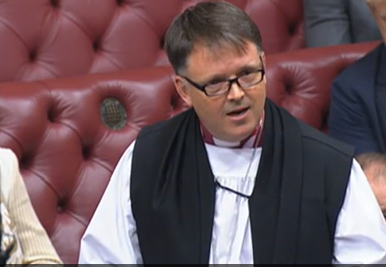
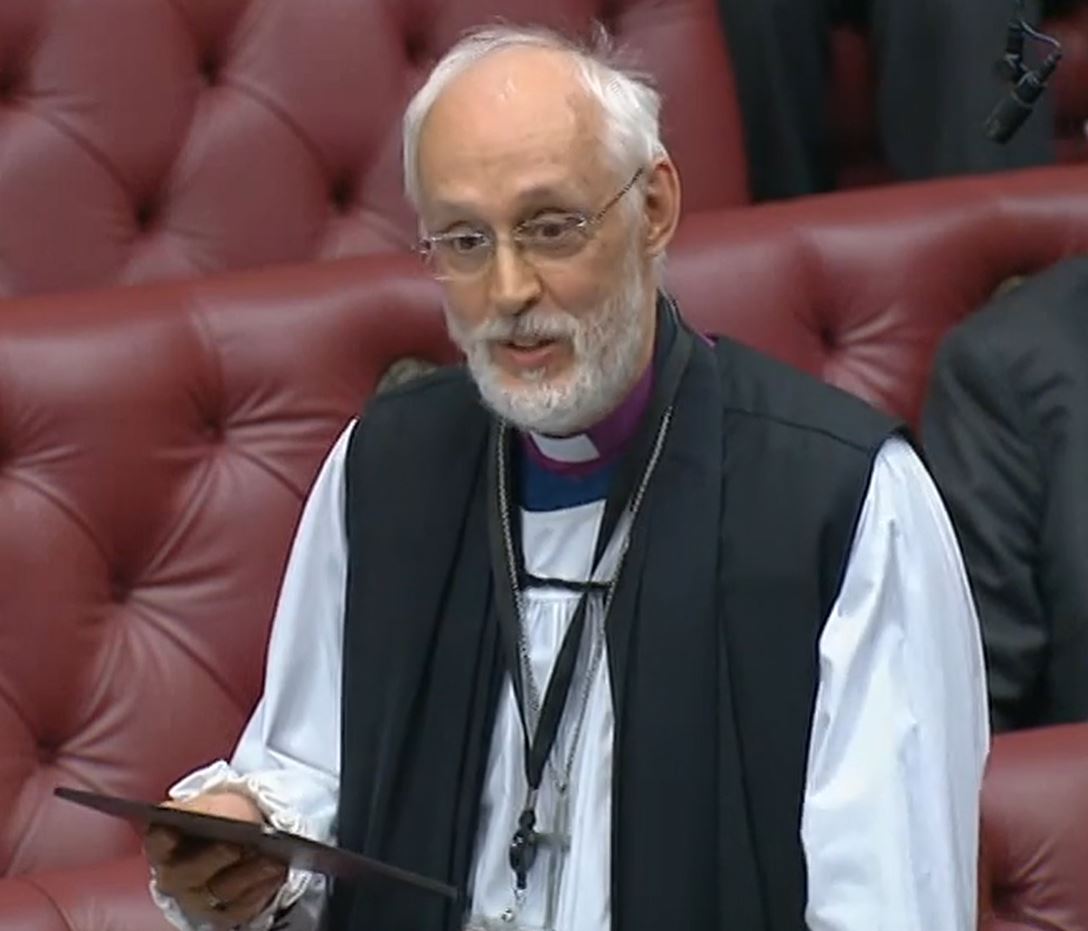
The Lord Bishop of Leicester: My Lords, I support this group of amendments and it is a pleasure to follow noble Lords and benefit from their considerable wisdom—I am in awe of the learning and wisdom on display this evening. I do not want to repeat a lot of what has been said, so I will keep my speech very short.

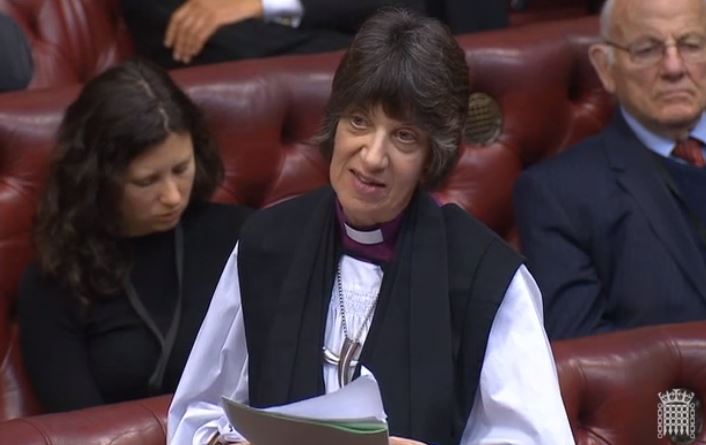
I have one or two reflections on Amendments 165 and 166, to which my right reverend friend the Bishop of Gloucester has added her name. She is a regular visitor to prisons across the country and supports the network of chaplains in our prisons who have direct evidence in relation to the mental health of prisoners.

Continue reading “Victims and Prisoners Bill: Bishop of Leicester supports aftercare provision for IPP prisoners”

Bishop of Southwark takes part in debate marking International Women’s’ day

The Bishop of Southwark gave a speech during a debate to mark international women’s day on 8th March 2024, paying tribute to the women of the Bishops Benches and raising the impact of poverty on women in the UK and overseas:

The Lord Bishop of Southwark: My Lords, I thank the noble Baroness, Lady Barran, for securing this important debate on International Women’s Day. I look forward to the maiden speech of the noble Baroness, Lady Casey of Blackstock.

It is my belief that the kingdom of God is a place of radical inclusion in which all are welcome and all shall flourish. I speak as the duty bishop today, but I am mindful of the determined advocates on this Bench, which include the right reverend Prelate the Bishop of Gloucester, who is attending the 68th session of the Commission on the Status of Women at the United Nations headquarters in New York.

Continue reading “Bishop of Southwark takes part in debate marking International Women’s’ day”

Safety of Rwanda (Asylum and Immigration) Bill: Bishop of Chelmsford supports amendment providing additional protection to unaccompanied children

On 6ht March 2024, the House of Lords debated the Safety of Rwanda (Asylum and Immigration) Bill in the final day of the report stage. The Bishop of Chelmsford spoke in support of amendment 34 to the bill, tabled by Baroness Lister of Burtersett, which would seek to restore the jurisdiction of the courts to review removal decisions taken on the basis of age assessments of unaccompanied children:

The Lord Bishop of Chelmsford: My Lords, I rise also to support Amendment 34. I will keep my comments brief because I fully support the statements from the noble Baroness, Lady Lister, and the noble Lord, Lord Dubs. But please do not mistake my brevity with the level of importance that should be attached to this issue. Safeguarding is not some burdensome requirement but a moral and legal imperative. It is for this reason that I repeat the request that I made in Committee for a child’s rights impact assessment to be published.

It is welcome that the Government have excluded unaccompanied children from the Rwandan partnership, but to safeguard potential children effectively, this commitment must be more than a mere intention; it must be operationally put into practice. This amendment would help mitigate the risk of a person being sent erroneously—when they are, in fact, a child—by sensibly awaiting the result of any age assessment challenge before their removal. When it comes to a child, we cannot allow harm to be addressed retrospectively, as surely it is the role of any Government to prevent harm, regardless of the immigration objective. Trauma, as we have heard, simply cannot be remedied.

Continue reading “Safety of Rwanda (Asylum and Immigration) Bill: Bishop of Chelmsford supports amendment providing additional protection to unaccompanied children”

Bishop of St Edmundsbury and Ipswich speaks on use of armed force and ethics of conflict

The Bishop of St Edmundsbury and Ipswich gave a speech in response to a motion to take note of the UK’s position on foreign affairs, on the topic of how and why armed force is used, and the difficulties of the ethics of war:

The Lord Bishop of St Edmundsbury and Ipswich: My Lords, I add my gratitude and appreciation to the noble Lords, Lord Cameron and Lord Ahmad, not just for what they do but for the way in which they do it.

I want to focus on how we continue to apply moral principles surrounding war in this ever-changing landscape. These are dangerous and uncertain times, as we have heard countless times this afternoon, for which we must prepare—and good preparation is itself deterrence. I add my name to the appeal made by the noble Baroness, Lady Goldie, that we see a significant increase in defence funding.

Continue reading “Bishop of St Edmundsbury and Ipswich speaks on use of armed force and ethics of conflict”

Bishop of Leeds raises need for increased security in the UK and overseas during foreign affairs debate

On 5th March 2024, the Bishop of Leeds gave a speech in response to a motion to take note of the UK’s position on foreign affairs, stressing the need for security in the UK and overseas, and making particular mention of the current civil war in Sudan:

The Lord Bishop of Leeds: My Lords, it is a great pleasure to follow the noble Lord, Lord Young. I endorse the comments made by many speakers about the great respect that we have for the noble Lords, Lord Cameron and Lord Ahmad. I note that it is not only the anniversary of the Fulton speech by Winston Churchill but the 71st anniversary of the death of Stalin—even tyrants are mortal.

Foreign policy is domestic policy, and vice versa. What happens in Gaza hits the streets of Leeds; what happens in Kashmir directly affects attitudes and events in Bradford. It is impossible to put foreign and domestic policies in separate compartments, which is why it is vital that the UK does not create a credibility gap when thinking that what we do in London is not noticed beyond these islands.

In the last 10 years, we have seen the absurdity of speaking of our neighbours as if they could not understand us—I witnessed Brexit—and of demanding adherence by Russia, China, Sudan and so on to the rule of law while being ready in this place to drop commitments made by us. I think that three Bills now have come to this House with a cover note saying that the Secretary of State cannot guarantee that our obligations under human rights legislation, for example, are being met. This country has achieved a credibility over decades, especially in the 80 years since the end of World War II, for honest diplomacy and pragmatic integrity. What takes decades to create can disappear in days when that integrity, or at least reputation for integrity, is compromised or questioned.

Continue reading “Bishop of Leeds raises need for increased security in the UK and overseas during foreign affairs debate”

Archbishop of Canterbury calls for peacebuilding to be prioritised in UK foreign policy

The Archbishop of Canterbury gave a speech in response to a motion to take note of the UK’s position on foreign affairs on 5th March 2024, expressing the hope that peacebuilding would be a focus of the government’s foreign policy:

The Lord Archbishop of Canterbury: My Lords, I join in the tributes to the noble Lord, Lord Ahmad, for his opening and his many distinguished years of service—may he continue in his current position—and to the energy that the noble Lord, Lord Cameron, as Secretary of State, has brought to the present process and this debate.

I want to focus, as the noble Baroness, Lady Smith of Newnham, did, on the means rather than the end. Like many noble Lords here, I was in Ukraine three weeks ago—for about a week, in my case—in Kyiv and Odesa. I was there, coincidentally, at the same time as the head of the European foreign service, and we managed, with some of his staff, accidentally to be in the same bomb shelter at the same time, which gives one an opportunity to talk to people. One of the things that came across was the determination of Europe to protect Ukraine from defeat—to support it. However, in conversations with senior politicians in Ukraine, as well as the most senior religious leaders in that very religious country, the question they put was not just what the West intends and what the UK intends—their warm words about the UK were very striking—but what were the means to those ends. You do not win wars by good intentions.

Continue reading “Archbishop of Canterbury calls for peacebuilding to be prioritised in UK foreign policy”

Safety of Rwanda (Asylum and Immigration) Bill: Bishop of Manchester supports amendments on power of the courts

During a debate on the Safety of Rwanda (Asylum and Immigration Bill on 4th March 2024, the Bishop of Manchester spoke in support of amendments 9 and 12 to the bill, tabled by Lord Anderson of Ipswich, which would allow the courts to take new factors into consideration when considering Rwanda’s safety in the future:

The Lord Bishop of Manchester: My Lords, I am grateful to the noble Lord, Lord Anderson of Ipswich, for sponsoring Amendments 9 and 12, to which I have added my name. They take up matters that I and the noble Lord, Lord Carlile, raised in Committee.

Continue reading “Safety of Rwanda (Asylum and Immigration) Bill: Bishop of Manchester supports amendments on power of the courts”

Safety of Rwanda (Asylum and Immigration) Bill: Archbishop of Canterbury supports amendments on rule of law

On 4th March 2024, the Archbishop of Canterbury spoke in a debate on the Safety of Rwanda (Asylum and Immigration) Bill, in support of a group of amendments seeking to ensure compliance with the rule of law in the application of the bill:

The Lord Archbishop of Canterbury: My Lords, at this stage of the debate on this group, we are looking at two distinct things. One is the question of whether Rwanda is safe. If, as the noble Lord just said, it is unquestionably safe, it seems to me that these amendments are not a problem because, at that point, the Secretary of State can easily say, “It’s safe”, and they will have evidence of that, for this and future Governments.

Continue reading “Safety of Rwanda (Asylum and Immigration) Bill: Archbishop of Canterbury supports amendments on rule of law”

Safety of Rwanda (Asylum and Immigration Bill): Bishop of St Edmundsbury and Ipswich supports amendments on modern slavery, right of return, and overall safety

On 4th March 2024, the House of Lords debated the Safety of Rwanda (Asylum and Immigration) Bill in the first day of the report stage. The Bishop of St Edmundsbury & Ipswich spoke in the debate, supporting amendments on assessing Rwanda’s safety, establishing right of return for asylum seekers after relocation, and protection for victims of modern slavery:

The Lord Bishop of St Edmundsbury & Ipswich: My Lords, I shall speak in favour of Amendments 1, 3 and 5 tabled by the noble Baroness, Lady Chakrabarti, to which I have added my name. I do not believe that we can enshrine in law a statement of fact without seeing and understanding the evidence that shows such a statement to be true, in particular when such a statement of fact is so contentious and for which the evidence may change. Ignoring for a second the strange absurdity of such declarations, we must also consider the real impact that this could have on the potentially vulnerable people whom the Government intend to send to Rwanda. As my most reverend friend the Archbishop of Canterbury, who is in his place, said at Second Reading,

Continue reading “Safety of Rwanda (Asylum and Immigration Bill): Bishop of St Edmundsbury and Ipswich supports amendments on modern slavery, right of return, and overall safety”

Schools (Mental Health Professionals) Bill: Bishop of Winchester applauds measures to address mental health issues in young people

The Bishop of Winchester spoke in a debate on the second reading of the Schools (Mental Health Professionals) Bill on 1st March 2024, pointing out the need for a consistent, universally applied policy to improve student mental health, and the need to address the causes of mental health issues at a root level:

The Lord Bishop of Winchester: My Lords, I am grateful to the noble Baroness for bringing this Bill to us for its Second Reading. We indeed face a crisis in this area and need to be aware of the long-term consequences of not addressing it.

The Bill would pave the way for just the kinds of interventions that are sorely needed. The NSPCC and our own Library briefing state that more than 20% of children and young people are living with poor mental health. CAMHS referrals are provided for only the most severe presenting issues, while early intervention, though widely recognised to be key to good long-term outcomes, is now a thing of distant memory. The sobering fact is that children are taking their own lives while they wait to be seen, and that is deeply shameful.

Last summer, the Church of England published the document Our Hope for a Flourishing Schools System, which makes specific mention of mental health, it being the issue school leaders most often raise with us. It states:

“Children’s mental health and wellbeing is prioritised and resourced generously by a society that invests in the long-term future of its nation by placing children first in funding and political direction. The fulfilling of a child’s potential should never be hindered, blocked or prevented by the system in which they find themselves”.

However, those words are, sadly, far from being the current reality.

Continue reading “Schools (Mental Health Professionals) Bill: Bishop of Winchester applauds measures to address mental health issues in young people”