“search engines free of advertising, social networking freed from the blind pursuit of profit, messaging services which do not mine our data—and all protecting the rights of the child? Perhaps the Government might be willing to explore this kind of radical intervention—social media in public service—in this vital area”
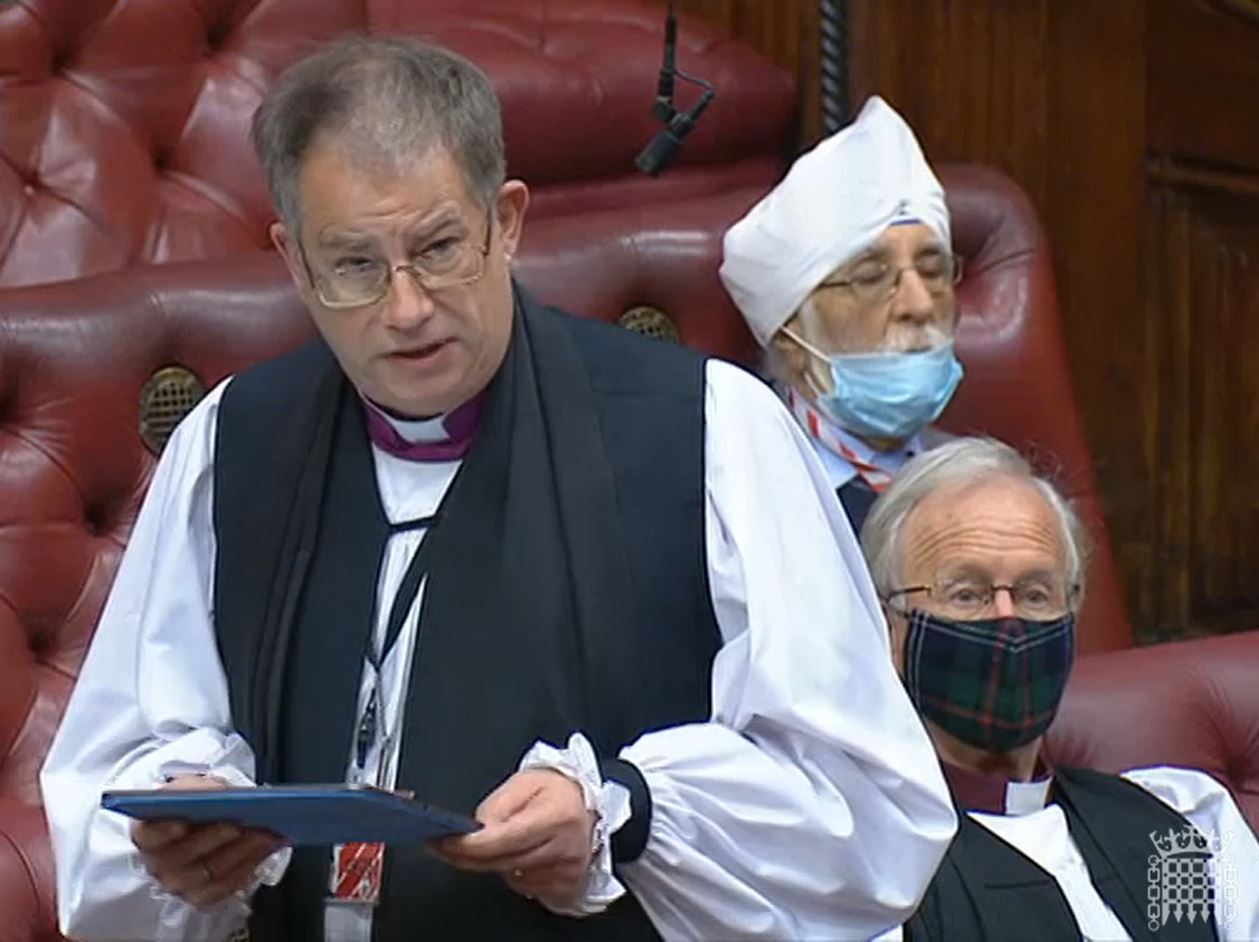
On 10th December 2021 the Bishop of Oxford spoke in a House of Lords debate led by the Archbishop of Canterbury on contemporary challenges to freedom of speech and the role of the public, private and third sectors in upholding it:
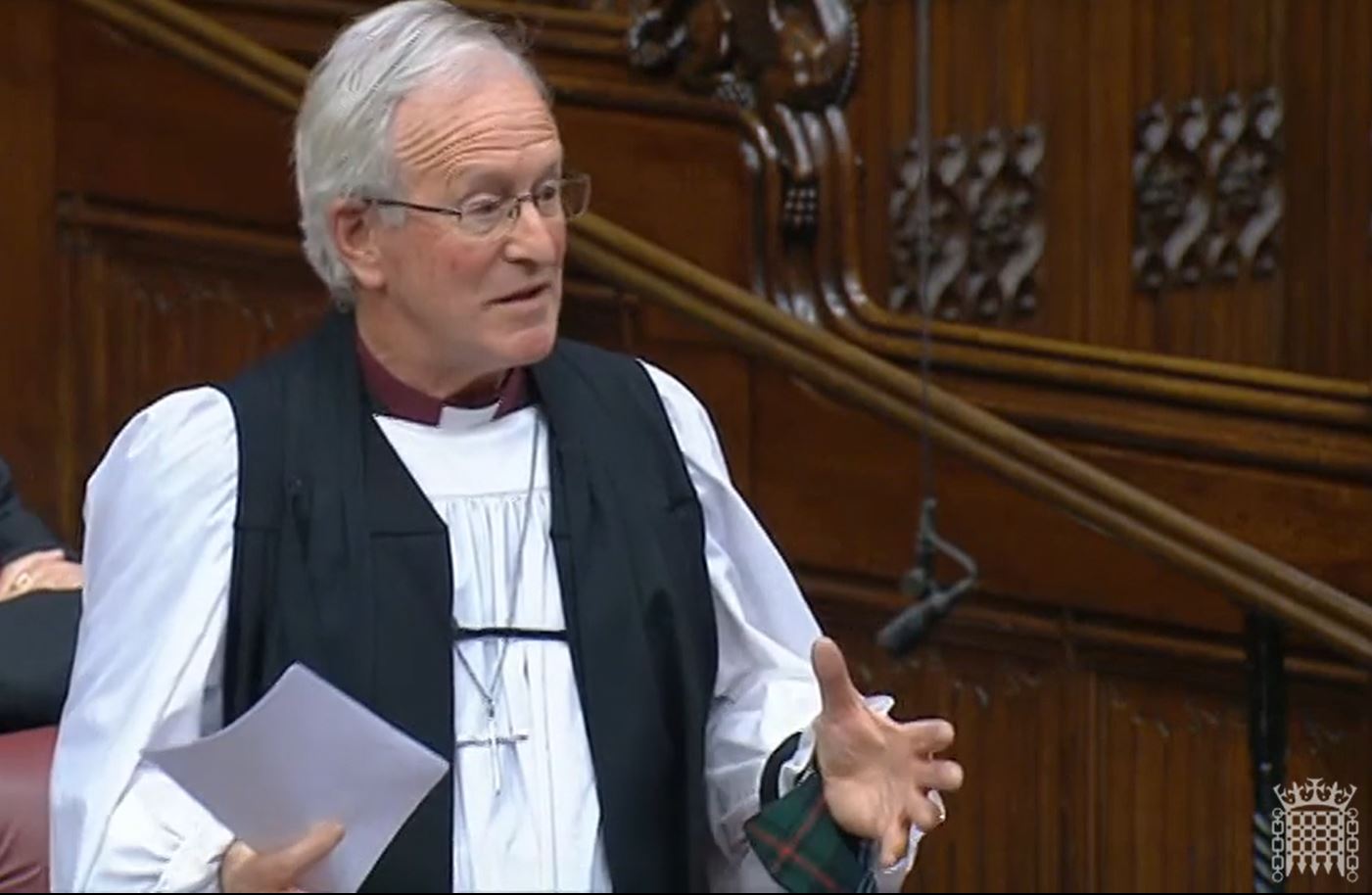
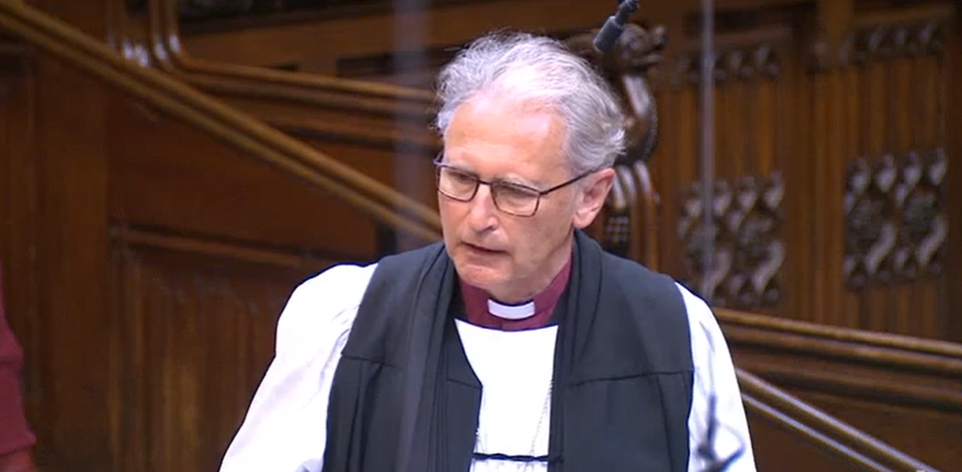
The Lord Bishop of Oxford: My Lords, it is a great privilege and honour, as always, to follow the noble and right reverend Lord, Lord Harries, one of my distinguished predecessors. I am grateful for this timely debate and to the most reverend Primate for his very comprehensive introduction. In a few days’ time, as we have heard, the scrutiny committee of both Houses will publish its report on the online safety legislation: a potentially vital web of provisions to prevent harm to individuals and, I hope, to society.
“civil society and faiths can create and convene safe spaces where difference can be spoken with care and understanding can be deepened, truth revealed and progress made towards a common good”
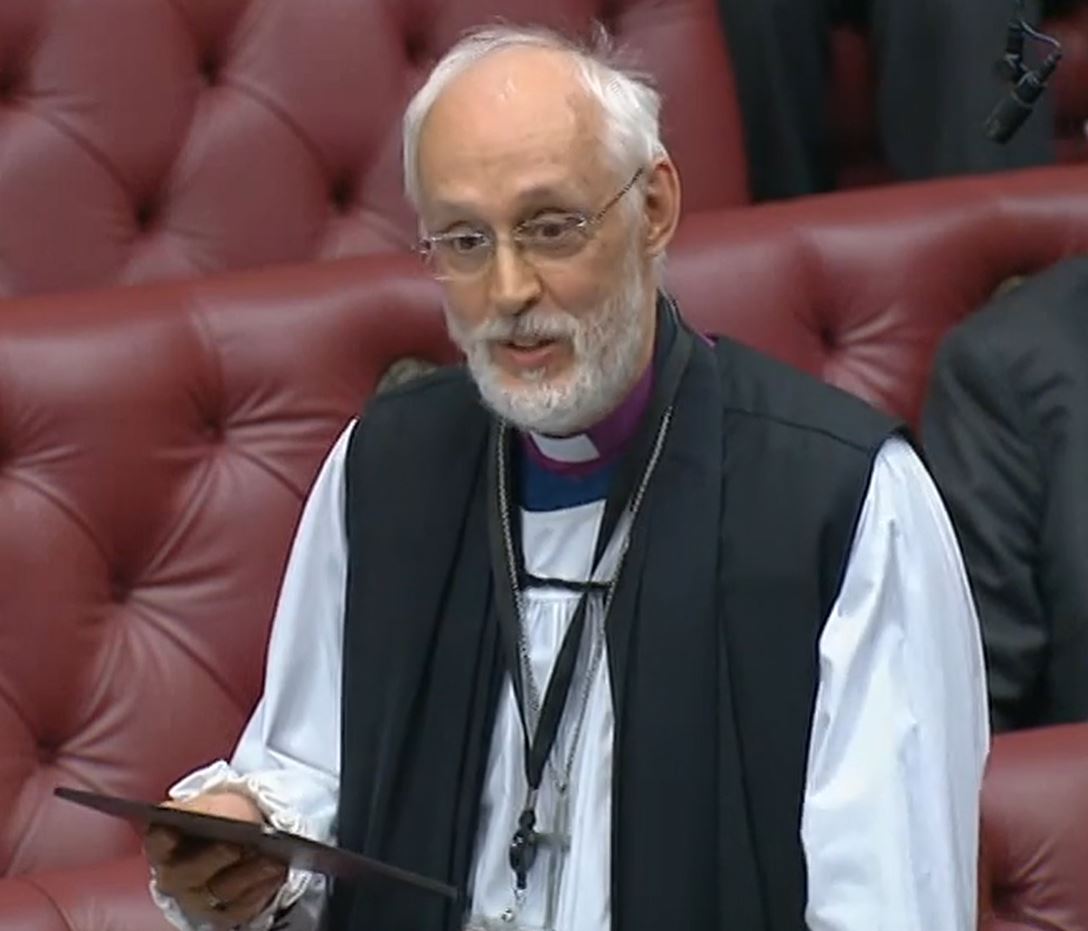
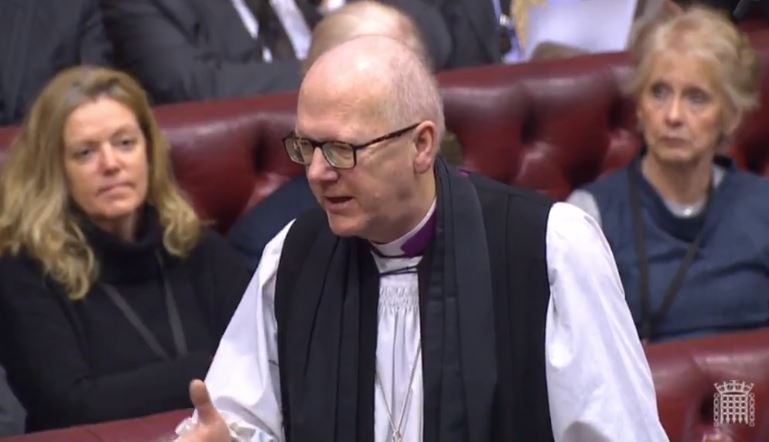
On 10th December 2021 the Bishop of Birmingham spoke in a House of Lords debate led by the Archbishop of Canterbury on contemporary challenges to freedom of speech and the role of the public, private and third sectors in upholding it
The Lord Bishop of Birmingham: My Lords, as we have been hearing, speech is one of the most precious gifts for humanity, freedom of which is easy to take for granted, as we may do from week to week in this House, but even easier to abuse. Speech is so important that, at this season of the year, for people of Christian tradition, we even call the son of God’s appearance the word of God—the word made flesh
In the same scriptures in which we read that story, there is warning of the danger of the use of the tongue:
“If anyone thinks he is religious and does not bridle his tongue but deceives his heart, this person’s religion is worthless.”
Of course, I do not refer to anyone who stands on the platform at Speakers’ Corner or any other venue of that kind. We remember also
“the tongue is a small member, yet it boasts of great things. How great a forest is set ablaze by such a small fire!”—
the blaze of instant phone recordings or a tweet out of context.
On 8th December 2021, the House of Lords debated the Police, Crime, Sentencing and Courts Bill in its first day of the report stage. The Bishop of Manchester spoke in support of amendments to ensure data protection regulations are maintained when data is shared under the bill:
The Lord Bishop of Manchester: My Lords, I rise to support the amendments in my name and those of the noble Baroness, Lady Meacher, and the noble Lord, Lord Paddick. I draw your Lordships’ attention to my interests in policing ethics and my work with the National Police Chiefs’ Council, as set out in the register. I trust that those interests assure your Lordships that I am a strong supporter of effective policing, not its adversary.
As an occasional statistician, I am also well aware of the power and utility of data. Good data, including on the risks of serious violence, can provide the evidence that allows the limited resources of our police forces to be directed to the particular challenges faced in different contexts and localities. Perhaps it is because I trained not as a lawyer but as a mathematician that I hold firmly to the maxim that, before one can begin to find the right solution, one has to have clearly defined the problem. I am not sure that these clauses, as presently drafted, fully pass that test.
On 7th December 2021, the House of Lords debated the Health and Care Bill in its second reading. The Bishop of Carlisle made a speech welcoming the bill and outlining the multiple aspects of care in need of attention going forwards:
The Lord Bishop of Carlisle: My Lords, this is a health and care Bill. I will address certain specific aspects of that care that deserve further attention.
First, on integrated care, like the noble Lord, Lord Kakkar, I welcome the clear desire for integration, collaboration and local flexibility, and the placing of integrated care systems on a statutory footing. But can the Minister assure us that, in ICBs and ICPs working together to ensure co-ordination in the design and delivery of integrated care, there will be an adequate focus on prevention rather than just cure, especially in mental health needs, not least among young people with learning disabilities?
“I have experienced first-hand the sting of injustice—injustice born of being caught up in events that are bigger than we are and in the face of which we are powerless.”
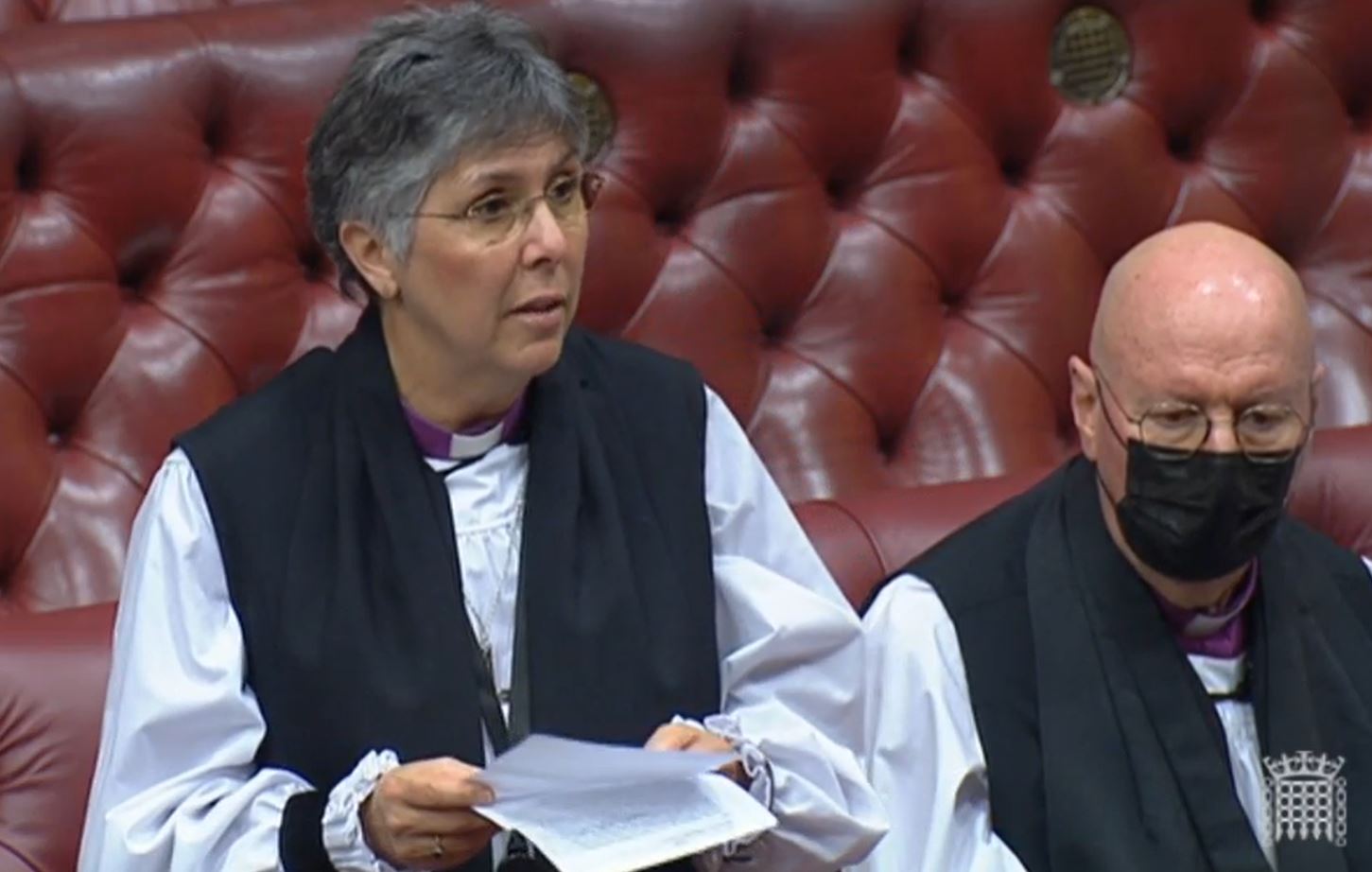
The Bishop of Chelmsford, Rt Revd Guli Francis-Dehqani, made her maiden speech in the House of Lords on 2nd December 2021, in a debate led by Lord Collins of Highbury, “That this House takes note of the detention of Nazanin Zaghari-Ratcliffe and the case for further action by Her Majesty’s Government to secure her release.”
The Lord Bishop of Chelmsford (Maiden Speech): My Lords, I was introduced to the House barely a month ago, having recently taken up my post as Bishop of Chelmsford, that vast and wonderful diocese that covers the whole of Essex and east London. It is a privilege to serve this diocese, which is complex, diverse and full of opportunities and challenges. Today, I thank everyone here who has offered me the warmest of welcomes. I am immensely grateful, in particular, for the help and support that I have received from staff and officials.
I have a deep and personal interest in the subject of this debate. Not only have I met Richard Ratcliffe and followed the story of Nazanin over the years, but I myself originally come from Iran. Born and brought up there, I left as a teenager during the Islamic Revolution, following difficult and traumatic circumstances. I was born into a Christian household, my father having been a convert from Islam to Christianity, in a small village in the centre of Iran. We were part of the tiny Anglican Church in Iran, which, when I was growing up in the 1970s, was made up primarily of converts and second- and third-generation Christians.
“Calm scrutiny will cause people with power, whoever and wherever they may be, whatever they may say, however loudly they may speak, one and all, to be uncomfortable. This applies as much to the Bishops of the Church of England as to anyone else”.
On 2nd December 2021 the Bishop of Liverpool, Rt Revd Paul Bayes, made his maiden speech in the House of Lords, during a debate led by Lord Bragg “That this House takes note of the BBC’s value to the United Kingdom and a wider global audience and the case for Her Majesty’s Government giving it greater support.”
The Lord Bishop of Liverpool (Maiden Speech): My Lords, I am grateful for the opportunity to address your Lordships for the first time and on this subject, and for the privilege of following the noble Lord, Lord Bilimoria. I am grateful to the noble Lord, Lord McNally, for his kind words*. I thank all noble Lords for the warmth of the welcome that I have received, and, for the quality of briefing and induction from the officers and staff of your Lordships’ House, which has been exemplary and profoundly helpful.
I speak as one whose first degree was in drama and theatre arts, and who was almost employed by the BBC as a trainee script editor in what was then called “English Regions Drama”, at the Pebble Mill studios in Birmingham, in 1975. With whatever wisdom, I chose instead to enter the ordained ministry of the Church, and there have been times when I have felt that I chose the lower calling. Forty-two years of ministry in six different dioceses have culminated in the enormous privilege of my being appointed Bishop of Liverpool in 2014. I have been preferred to your Lordships’ House late in my ministry, but I am very grateful to be here and to receive wisdom for at least a few months.
Among its many dimensions, I want to speak of what the BBC does uniquely in our fragmented public square. To me, the gift and value of public service broadcasting is a matter of form before it is a matter of content: it rests on the decision to assume a tone of voice. The value of the BBC to this nation and our global position is rooted in its decision to be calm, to choose a particular volume and quality of scrutiny and to sustain it, no matter how unpopular it may be.
“what moral authority will we lose, and what price will the Uighurs pay, if we do not do all in our power, whatever the cost, to confront these dreadful atrocities that are unfolding in front of our eyes?”
In the House of Lords on 25th November 2021 Peers debated a Motion from Lord Alton of Liverpool, “That this House takes note of the reported remarks of the Secretary of State for Foreign, Commonwealth and Development Affairs that a genocide is underway against the Uyghur population in Xinjiang, China.”
The Lord Bishop of St Albans: My Lords, I too pay tribute to the noble Lord, Lord Alton, for his tireless work in this area. I also share with him a sense of frustration—I feel as if I have stood up so many times as we have engaged with this issue, yet it seems that we are not able to confront it in a way that is really making a difference. Despite all our hopes of human progress, it is quite extraordinary that here we are, at the start of the 21st century, witnessing events such as we see and which are now well documented. There is no doubt that they are going on.
“a policy that does not go beyond deterrence is not sufficient”
On November 25th 2021 the House of Lords debated a motion from Baroness Hoey, “That this House takes note of the number of migrants arriving in the United Kingdom illegally by boat“.
The Lord Bishop of Coventry: My Lords, I too am grateful to the noble Baroness, Lady Hoey, for securing this debate, especially at this time. I was helped this morning by the “Thought for the Day” from my colleague, the right reverend Prelate the Bishop of Leeds, in which he said that this is a time to dig deeper into our emotions and face the grief we feel at the loss of humanity. It is that sense of grief, our common commitment to the preservation and dignity of life, as well as to a passion for justice for those suffering the ills and evils of the world, which unites us. The noble Baroness, Lady Hoey, demonstrated that.
Our shared grief is the proof we do not really need of the humanity and vulnerability that unites us. These common concerns, which underpin both our aim to stop migrants making dangerous journeys and our grief today, are the same concerns and moral instincts that require us to sit back and face the reality that a policy that does not go beyond deterrence is not sufficient.
On 22nd November 2021, the House of Lords debated the Police, Crime, Sentencing & Courts Bill. The Bishop of Leeds spoke in the debate, supporting an amendment tabled by Baroness Coussins which would establish minimum qualifications for court appointed interpreters:
The Lord Bishop of Leeds: My Lords, I endorse every word of what the noble Baroness just said. In a previous incarnation—that is probably the wrong phrase to use; I am mixing my religions—I was a professional linguist in Russian, German and French, working in government service. One of the things you learn as a professional linguist is that language goes deep. This is not simply a matter of picking someone off the street who can order a pint in a Spanish bar; you are dealing with the stuff of people’s lives. Surely accuracy is vital, for the sake of not only clarity of understanding but justice itself.
The Bishop of St Albans moved his Coroners (Determination of Suicide) Bill in the House of Lords on 19th November 2021, and gave a speech outlining the purpose of the bill, which focuses on gambling-related suicide:
The Lord Bishop of St Albans: That the Bill now be read a second time.
My Lords, I declare my interest as a vice-chair of Peers for Gambling Reform. The focus of this Bill is on gambling-related suicide; indeed, I have heard one Member of your Lordships’ House describe it as a “gambling Bill”. It is no secret that gambling reform is a major concern of mine, but I start by stressing that the scope of the Bill extends far beyond gambling-related suicides and can include a wide range of factors that contribute to death by suicide.
I will give some background to set the scene. Under the current legislative framework in England and Wales, once a suspected suicide is reported, the death is classified as “sudden and unexplained” until an official determination is made. The coroner is then required to undertake an inquest alongside a jury to make a determination as to the cause of death and whether the death is to be registered as a suicide—a process that often takes up to six months from the confirmed date of death of the deceased.



 The Church of England in Parliament
You must be logged in to post a comment.