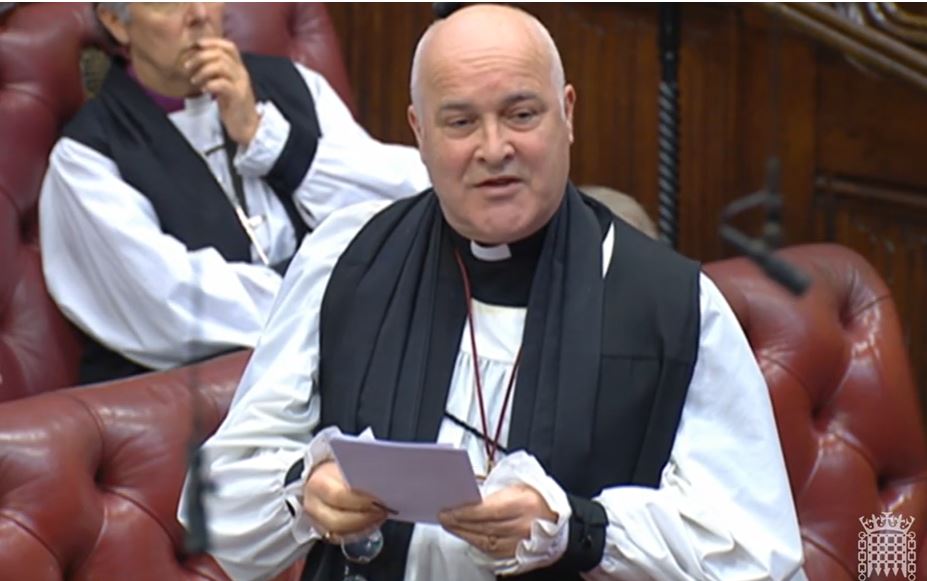
Bishop of Newcastle speaks in debate on conflict in Ukraine

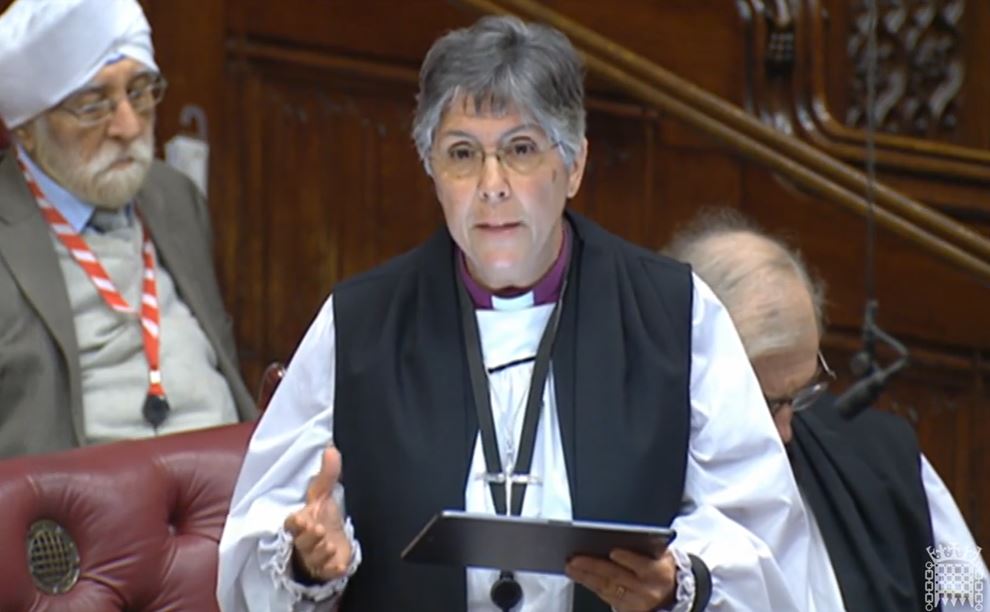
The Bishop of Newcastle took part in a debate on the current conflict in Ukraine on 26th January 2024, asking about the government’s planning for future conflict scenarios:

The Lord Bishop of Newcastle: My Lords, it is very good to be able to participate in this debate. I acknowledge the collective wisdom in this Chamber and the contributions of noble Lords in the preceding speeches. I pay particular tribute to the noble Lord, Lord Camoys, and congratulate him on his most excellent maiden speech, especially his reminder to look up and look out. I also thank the Minister for bringing this debate today.

This is not the time for platitudes and what could be construed as naive statements about hope. Evil and indeed illegal acts that lead to immense suffering demand decisive response. We know also that there is potential for and actual massive cultural damage in conflict, including the destruction of religious sites and a clamping down on the freedom of religion and belief. These and other matters in the Ukraine war require continued engagement and response. Ukraine depends entirely on money and weaponry from the West and our support in this is vital.

Continue reading “Bishop of Newcastle speaks in debate on conflict in Ukraine”

Bishop of Worcester asks about respect for international humanitarian law in wake of Israel-Gaza conflict

The Bishop of Worcester received the following written answer on 26th January 2024:

The Lord Bishop of Worcester asked His Majesty’s Government what assessment they have made of how the war in Gaza might affect respect for international humanitarian law in other conflicts.

Continue reading “Bishop of Worcester asks about respect for international humanitarian law in wake of Israel-Gaza conflict”

Bishop of Norwich welcomes sustainable farming incentives

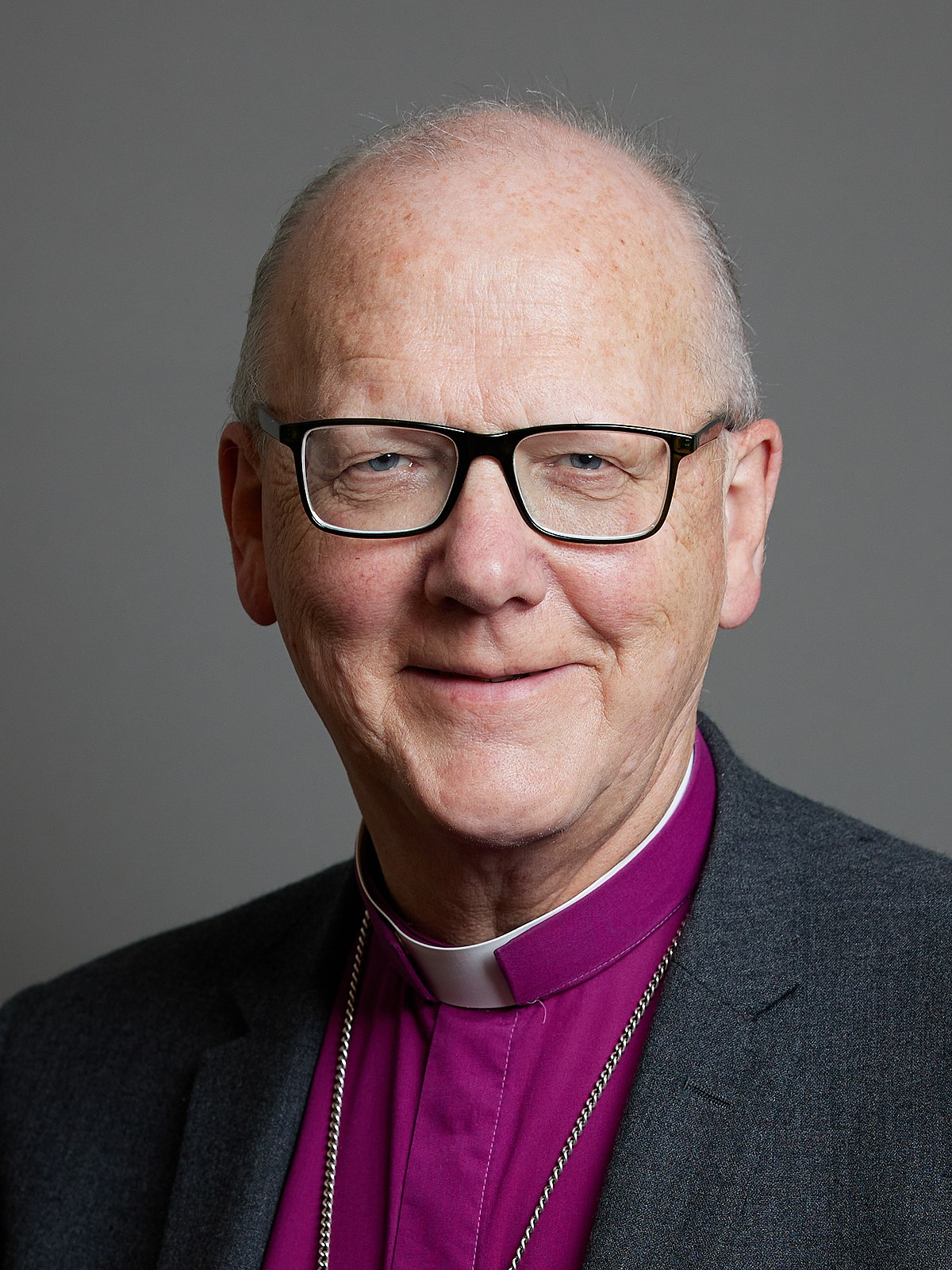
On 25th January 2024, the Bishop of Norwich spoke in a debate on sustainable farming, welcoming the sustainable farming incentive scheme and calling for a new regulatory framework around nature protection:

The Lord Bishop of Norwich: My Lords, it is a pleasure to follow a fellow tree planter, the noble Lord, Lord Robathan. I give a tree to every person I confirm as a sign of the care of God’s creation. I am grateful to the noble Earl, Lord Caithness, for securing this debate. I declare an interest as a member of Peers for the Planet and as a Church Commissioner.

Landowners and conservationists with whom I have spoken have broadly welcomed the changes to the sustainable farming incentive, not only the increased payment rates, which make uptake more attractive, but the new areas of action, the increased flexibility and the promise of a simpler, clearer and faster application service. Let us hope it does what is says on the new, streamlined tin. This better-rounded and more holistic agri-environmental scheme in England will undoubtedly see a greater uptake across all agricultural sectors. The tools are certainly in place to help deliver both sustainable food production and nature recovery.

In particular, I welcome the new emphasis on soil health. Being under our feet, we too often forget it, but soil is perhaps our greatest natural asset and the key to so much nature recovery. I am glad that the noble Baroness, Lady Bennett of Manor Castle, shares my enthusiasm for soil. Healthy soil supports a range of environmental, economic and societal benefits. These include food production, climate change mitigation and increased biodiversity. These vital soil functions are at risk from poor soil management or inappropriate land use, leading to soil degradation, soil compaction and soil erosion from wind and water. Ecological breakdown of our soils together with climate change are perhaps the primary threats to food security.

Continue reading “Bishop of Norwich welcomes sustainable farming incentives”

Bishop of Norwich speaks on impact of bank closures in rural areas and market towns

The Bishop of Norwich spoke in a debate on closure of high street banks and the need for a national network of banking hubs on 25th January 2024, raising the impact of bank closures on those in rural areas and market towns:

The Lord Bishop of Norwich: My Lords, I am grateful to the noble Baroness, Lady Tyler of Enfield, for this timely debate. I will speak particularly about rural areas and market towns.

The diocese I serve across Norfolk and Waveney is largely a rural one, but it is one where market towns play a key part in peoples’ lives. Historically places of transaction, they contribute to the warp and weft of community life, especially with their rural hinterland. It is no accident that, in Norfolk, they are fairly evenly spread out across the county, having developed so that livestock could be driven to them for sale and the bonds of extended familial friendship and trust strengthened.

From my internet searching, I estimate that we lost at least 12 bank branches in Norfolk last year. The market town of Wymondham saw the closure of NatWest, HSBC and Barclays within 12 months. The parish church’s treasurer now has a 26-mile round trip to bank the cash collection and cheques. Banks are vital for small rural businesses and charities that deal with cash. Yet, as we have heard, closures are accelerating, and this seems to be a pattern across the UK.

Continue reading “Bishop of Norwich speaks on impact of bank closures in rural areas and market towns”

Bishop of Worcester asks about efforts to uphold international humanitarian law in Israel-Gaza conflict

The Bishop of Worcester received the following written answer on 25th January 2024:

The Lord Bishop of Worcester asked His Majesty’s Government:

  • what steps they are taking to ensure that (1) international humanitarian law is upheld in Gaza, and (2) civilians are protected there.
  • what assessment they have made of whether international humanitarian law is being respected in the war in Gaza.
Continue reading “Bishop of Worcester asks about efforts to uphold international humanitarian law in Israel-Gaza conflict”

Bishop of Manchester asks about strategies for care leavers in the prison and probation service

The Bishop of Manchester received the following written answer on 25th January 2024:

The Lord Bishop of Manchester asked His Majesty’s Government whether they will provide a timetable for updating the HM Prisons and Probation Service Strategy for Care-Experienced People; and whether this will include a specific focus on race.

Continue reading “Bishop of Manchester asks about strategies for care leavers in the prison and probation service”

Bishop of Gloucester asks about mother and baby units in prisons

The Bishop of Gloucester received the following written answer on 25th January 2024:

The Lord Bishop of Gloucester asked His Majesty’s Government how many mothers and babies residing in a prison Mother and Baby Unit were separated upon the child reaching 18 months of age in each of the last three years.

Lord Bellamy (Con, Ministry of Justice): Over the last three years, 110 applications to Mother and Baby Units (MBUs) have been approved. In the year to March 2023, 51 women and 44 babies were received into MBUs; compared with 39 women and 40 babies in the previous reporting year. Not all mother and babies that move onto a Mother & Baby Unit will be separated due to the child reaching 18 months old. As it would be necessary to review, individually, the records of each of the women accommodated on MBUs over the last three years to determine this, the information requested could not be provided without incurring disproportionate cost.

Continue reading “Bishop of Gloucester asks about mother and baby units in prisons”

Victims & Prisoners Bill: Bishop of Gloucester speaks in support of amendments providing support for children of modern slavery victims

On 24th January 2024, the Bishop of Gloucester spoke in support of amendments 7 and 11 to the Victims & Prisoners Bill, which would provide provision for support given to children of victims of modern slavery:

The Lord Bishop of Gloucester: My Lords, my right reverend friend the Bishop of Bristol, as has been said, regrets that she cannot be in the Chamber today but along with her, I support Amendments 7 and 11. The children of victims of modern slavery are currently underserved by support services, despite that lasting and intergenerational trauma which witnessing the crime of modern slavery can cause. We have already heard about the organisation Hestia. In 2021, it estimated that as many as 5,000 vulnerable children could be identified within the NRM as children of victims of modern slavery. I want to add that there is an urgent need to extend victims’ rights to this group, and I am glad to see these amendments.

Hansard

Victims & Prisoners Bill: Bishop of Manchester supports amendments on child criminal exploitation and access to victims’ services

On 24th January 2024, the House of Lords debated the Victims & Prisoners Bill in committee. The Bishop of Manchester spoke in the debate, in support of two amendments:

  • amendment 10, which would seek to provide a definition of “child criminal exploitation” in the text of the bill
  • amendment 15 in the Bishop of Manchester’s name, which would specify that responsibility for accessing services for victims does not lie with the potential service user

The Lord Bishop of Manchester: My Lords, as I said at Second Reading, this is a good Bill for victims. It contains many provisions that I strongly support. I hope and believe that we can make it an even better Bill by working across the House, which is the mood tonight, as it was then.

Continue reading “Victims & Prisoners Bill: Bishop of Manchester supports amendments on child criminal exploitation and access to victims’ services”

Digital Markets, Competition and Consumers Bill: Bishop of Manchester advocates for small businesses

The Bishop of Manchester spoke in a debate on the Digital Markets, Competition & Consumers Bill in the second day of the Committee stage on 24th January, stressing the need to create a proper balance between smaller and larger businesses:

The Lord Bishop of Manchester: My Lords, I shall be extremely brief. When we debate in Grand Committee, it always strikes me that we do so in the Moses Room —Moses, the great giver of the law. However, the biblical characters that I am more thinking of today would be David fighting Goliath, because it seems to be that a lot of the conversation around this group of amendments is about how we create a proper balance between the large platforms and small entrepreneurial providers. My mother was a small businesswoman; she ran two record shops in the Greater Manchester area. We could have been put out of business very easily if somebody had been able to delay some anti-competitive business action against us. We also have the judgment of Solomon here; he was quick in his judgment—there were no lengthy processes that took for ever and a day. I tend to the view that the Bill, as it entered the House of Commons, was probably at about the sweet spot, but let us get this right so that Davids have a chance amid the Goliaths. And yes, I apologise for not declaring that interest—I am called David.

Hansard