Bishop of Bristol asks about impact of parental imprisonment on children

On 18th July 2023, the Bishop of Bristol asked a question on the effects of custodial sentences on dependent children of prisoners and the results of a pilot scheme taking this into account in magistrates courts:

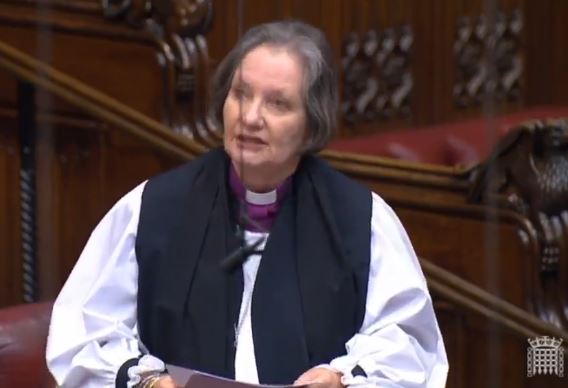
The Lord Bishop of Bristol: My Lords, following the response given to my right reverend friend the Bishop of Gloucester on 15 December 2021 about pre-sentence reports, can the Minister say what impact the pilot in 15 magistrates’ courts has had on the take-up, taking into account the devastating impact of parental imprisonment, when sentencing a primary carer?

Continue reading “Bishop of Bristol asks about impact of parental imprisonment on children”

Illegal Migration Bill: Archbishop of Canterbury speaks on motion to ensure scrutiny of government migration policy

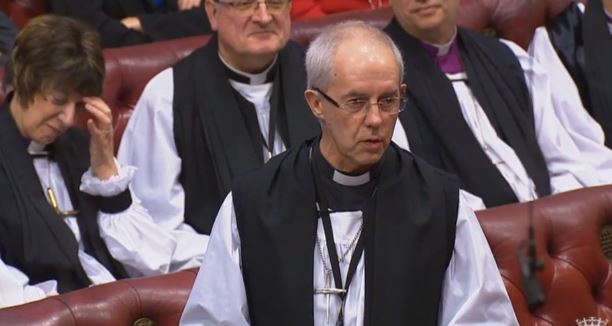
On 17th July 2023, during the final day of debate on the Illegal Migration Bill, the Archbishop of Canterbury spoke on his motion J1, which would aim to ensure that government policy on migration is considered and debated by the House of Commons and the House of Lords in the future. The motion was not taken to a vote:  

The Lord Archbishop of Canterbury: My Lords, I will speak very briefly to Motion J1. The amendment put forward under Motion J1 aims to ensure that, not only now but in the future, the Government’s policy is examined. As the Minister said, the current Government’s concentration is on international co-operation and working, although with some hesitation at times, with groups such as the UNHCR and others internationally. The amendment would ensure that that strategy—the way the Government are working—and the context in which migration is being considered are brought in front of both Houses, simply for a debate, with an analysis of the situation by the Government.

The Minister has said very clearly that he does not wish this to happen on the grounds that it is being done now, but this Bill is not about today. It will shortly be an Act, and when it is an Act it will last years—it may last many years. Who knows what will happen in elections in the future, whether they are next year, in 10 years or whenever? We cannot guarantee what kind of Government there will be at that time. That is why we have Acts of Parliament and a system of law which requires changes in the case that people wish to change the way in which this country operates.

Continue reading “Illegal Migration Bill: Archbishop of Canterbury speaks on motion to ensure scrutiny of government migration policy”

Illegal Migration Bill: Bishop of Bristol tables motion to limit detention of vulnerable migrant children

On 17th July 2023, the House of Lords debated the Illegal Migration Bill in the final day of the report stage. The Bishop of Bristol spoke in support of her motion E1, which would amend the bill to ensure that children could not be held in detention for longer than 120 hours, or for longer than a maximum of a week with authorisation of a Minister of the Crown:

The Lord Bishop of Bristol: My Lords, I shall speak to Motion E1. This Motion, as with Motion D1, concerns vulnerable children being deprived of their freedom—in this case, those accompanied children. I am disappointed that, regardless of the strength of opinion across this Chamber, the Government are still not proposing to set limits on the detention of children in the Bill, whether they are accompanied or unaccompanied. Despite the comments of the Minister about the possibility of fake families earlier in the debate, I wish to press the point.

Continue reading “Illegal Migration Bill: Bishop of Bristol tables motion to limit detention of vulnerable migrant children”

Votes: Illegal Migration Bill

On 17th July 2023, the House of Lords debated Commons amendments to the Illegal Migration Bill. Votes were held on motions relating to amendments, in which Bishops took part:

Continue reading “Votes: Illegal Migration Bill”

House of Lords debates role of religion in schools

On 17th July 2o23, the House of Lords debated a question asked by Baroness Burt of Solihull on the recommendation by the United Nations Committee on the Rights of the Child that the United Kingdom should prevent the use of religion as a selection criterion for school admissions in England. Church of England schools were discussed during the debate:

Baroness Burt of Solihull (LD): To ask His Majesty’s Government what assessment they have made of the United Nations Committee on the Rights of the Child’s recommendation that the United Kingdom should prevent the use of religion as a selection criterion for school admissions in England.

Baroness Barran (Con): My Lords, the UK is a proud signatory of the UN Convention on the Rights of the Child. However, the Government support faith schools’ ability to set faith-based oversubscription criteria. This allows parents to have their children educated in line with their religious beliefs. Faith schools can give priority to applicants on the basis of faith only when they are oversubscribed. Where places are available, they must admit all children who apply.

Continue reading “House of Lords debates role of religion in schools”

Bishop of Gloucester asks about caring responsibilities and history of local authority care for prisoners

The Bishop of Gloucester received the following written answer on 17th July 2023:

The Lord Bishop of Gloucester asked His Majesty’s Government:

  • following the introduction of the Basic Custody Screening Tool, how many (1) men, and (2) women, currently in custody have been assessed as having primary caring responsibilities; and how many children are affected by their imprisonment.
  • how many women in prison have been identified as having previously been in local authority care in each of the last five years.
Continue reading “Bishop of Gloucester asks about caring responsibilities and history of local authority care for prisoners”

Bishop of Gloucester asks about number of female prisoners in secure hospitals

The Bishop of Gloucester received the following written answer on 17th July 2023:

The Lord Bishop of Gloucester asked His Majesty’s Government how many women in prison were transferred to a secure hospital under provisions in the Mental Health Act 1983 in each of the last five years.

Lord Bellamy (Con): Please see below table showing the number of female prisoners who were transferred to a mental health hospital under Part 3 of the Mental Health Act 1983 in each of the last five years. This is in the context of a female prison population which stood at 3,253 as of June 2022:

Continue reading “Bishop of Gloucester asks about number of female prisoners in secure hospitals”

Church Commissioners Written Questions: Church Finance, Repairs and Maintenance, Technology, Religious Freedom, Diocesan Vacancies, and Education

On 14th July 2023, Andrew Selous MP, representing the Church Commissioners, gave the following written answers to questions from MPs:

Church of England: Finance

Julian Knight MP (Ind, Solihull): To ask the Member for South West Bedfordshire, representing the Church Commissioners, what steps the Church is taking to ensure transparency and accountability in its financial operations.

Continue reading “Church Commissioners Written Questions: Church Finance, Repairs and Maintenance, Technology, Religious Freedom, Diocesan Vacancies, and Education”

Levelling-up & Regeneration Bill: Bishop of Chichester supports amendment on local authority budgets

On 13th July 2023, the House of Lords debated the Levelling Up & Regeneration Bill in the second day of the report stage. The Bishop of Chichester spoke in the debate, in support of an amendment intended to ensure that local authorities have appropriate budgets to meet their funding commitments:

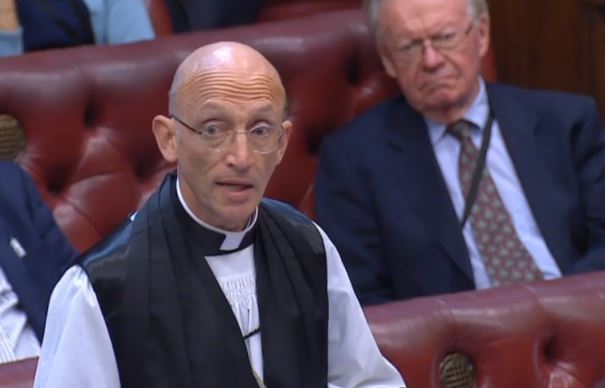
The Lord Bishop of Chichester: My Lords, I wish to speak in support of Amendment 63, which I had understood was tabled in the name of the noble Baroness, Lady Taylor, but to which the noble Baroness, Lady Hayman, spoke. I speak having consulted with my colleague the right reverend Prelate the Bishop of Bristol, who has been doing some work in this area.

It seems entirely right and logical that the methodology used for allocating funds for a local authority is based on the most up-to-date information. As has been outlined, the current mechanism of allocating funds does not respond to local needs or local data and often seems to rely on data that is out of date. This will simply act as a barrier to the crucial role local government has to play in ensuring that people can receive the services and support they need, no matter where they live. These services, from collecting bins and filling potholes to providing much-needed support for low-income households and preventing homelessness—core business—have a considerable impact on the wellbeing and welfare of families and households who may be struggling to get by, and in turn affect the fabric of our communities.

Continue reading “Levelling-up & Regeneration Bill: Bishop of Chichester supports amendment on local authority budgets”

Levelling-up & Regeneration Bill: Government amends Bill in response to call from Bishop to clarify local authorities grant-making powers to places of worship

On 13th July 2023, during a report stage debate on amendments to the Levelling-up and Regeneration Bill, the Government Minister Baroness Scott introduced an amendment to the Bill to give clarity in the law on the question of the ability of local authorities to issue grants to parish churches and places of worship. The Bishop of Bristol had called for this at the earlier Committee stage, introducing her own amendment, which was not accepted at the time. The Minister’s amendment recognises the need for the changes, and is made in response to the arguments advanced by the Bishop and others at Committee. There was a short debate on the amendment, which the House agreed without a vote.

Continue reading “Levelling-up & Regeneration Bill: Government amends Bill in response to call from Bishop to clarify local authorities grant-making powers to places of worship”