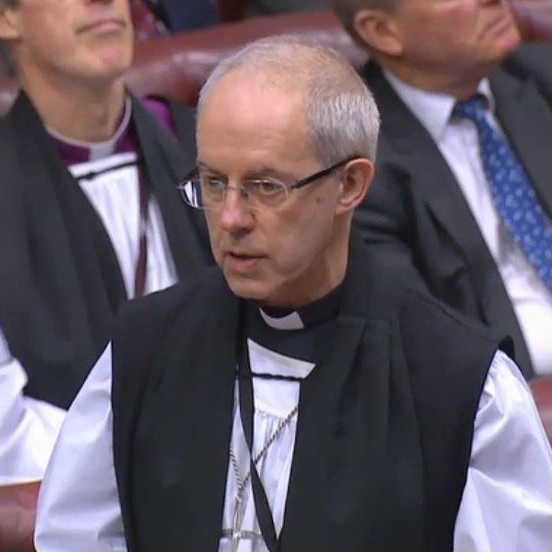
Nationality and Borders Bill: Bishop of Chelmsford questions increase of powers to remove citizenship

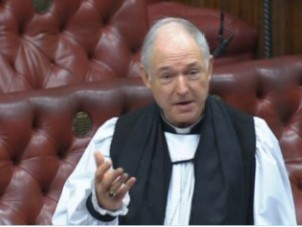
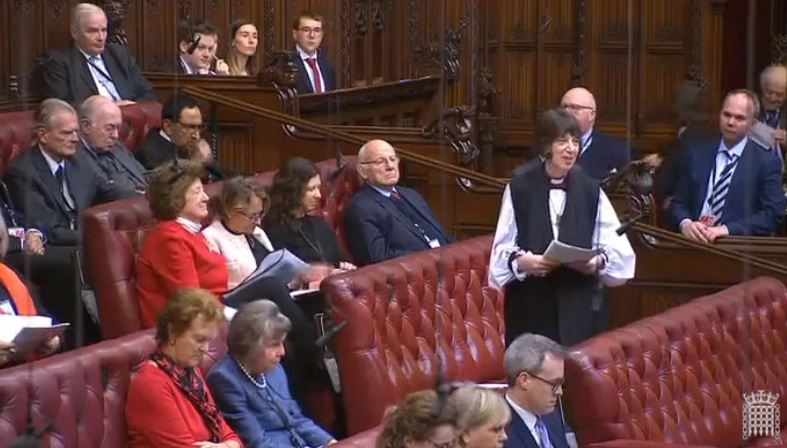
On 27th January 2022, the House of Lords debated the Nationality and Borders Bill in committee. The Bishop of Chelmsford spoke in the debate, raising the issue of increased powers to remove citizenship within the bill, and whether these increases were necessary:

The Lord Bishop of Chelmsford: My Lords, I am grateful to those noble Lords who have already spoken. It is heartening to hear voices from across the Committee raising concerns about the proposed powers in Clause 9. My contribution will be very short.

I can well imagine variants on our current conversation happening time and again, ever since the British Nationality Act 1981, which has already been referred to by the noble Lord, Lord Moylan, brought in deprivation of citizenship. Indeed, a look through Hansard would confirm that.

Since 1981, these deprivation powers have been amended and extended, including in 2003, 2006, 2014 and 2018. Each time, the rationale provided by the Government is the same: that these are relatively minor tweaks made for pragmatic reasons, with the security of the nation in mind, and that these powers will be used only in extreme circumstances, with great caution and restraint on the part of the Government. Yet it seems that these powers are never quite enough.

Continue reading “Nationality and Borders Bill: Bishop of Chelmsford questions increase of powers to remove citizenship”

Nationality and Borders Bill: Bishop of Durham & Bishop of Gloucester support amendment to costs for children’s citizenship applications

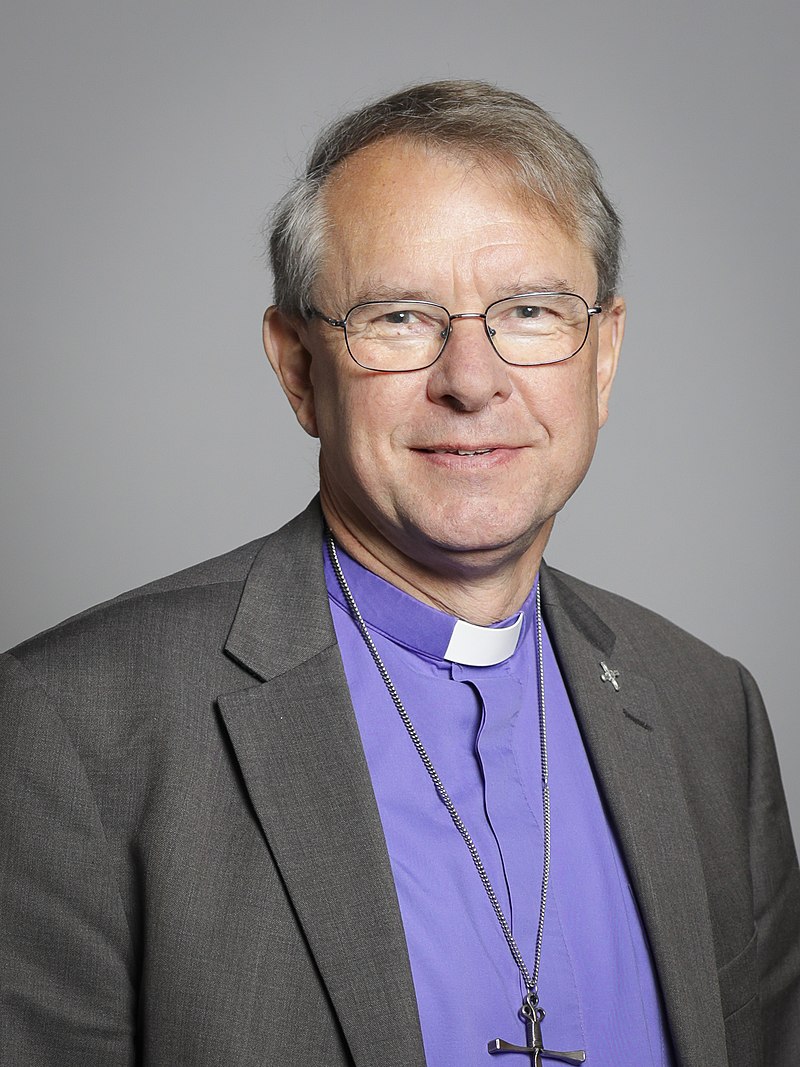
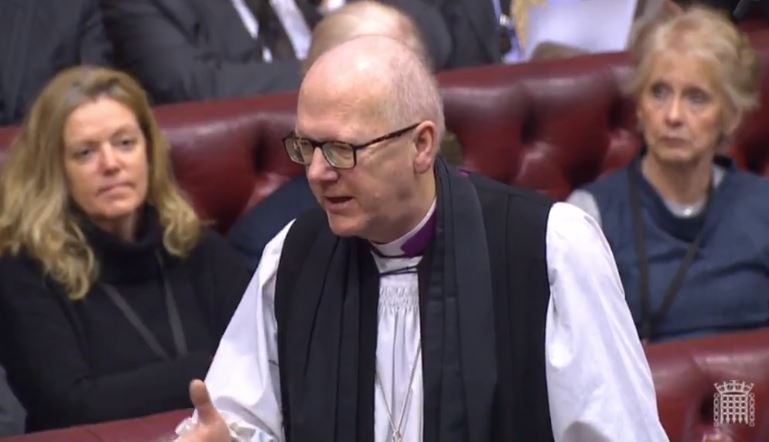
On 27th January 2022, the House of Lords debated the Nationality and Borders Bill in the first day of the committee stage. The Bishop of Gloucester, on behalf of the Bishop of Durham, spoke in support of an amendment to regulations around children’s citizenship, and administrative costs associated with citizenship applications:

The Lord Bishop of Gloucester: My Lords, I will speak on Amendment 13 on behalf of my noble friend the right reverend Prelate the Bishop of Durham, who sadly cannot be in the House until later today. He wishes to declare his interests in relation to both RAMP and Reset, as set out in the register. The following words are his, but I will say that I wholeheartedly agree with every one of them.

My interest comes from my ongoing engagement in this House with issues concerning children and ensuring that their best interests are central to legislation. The Government should be doing everything they can to ensure that all children in the UK have the opportunity to thrive. We should be working to remove barriers that they may face in seeking to reach their full potential. The current British citizenship registration fees create a barrier for many children to being and feeling fully part of society.

Continue reading “Nationality and Borders Bill: Bishop of Durham & Bishop of Gloucester support amendment to costs for children’s citizenship applications”

Bishop of St Albans asks about support for those at risk of problem gambling

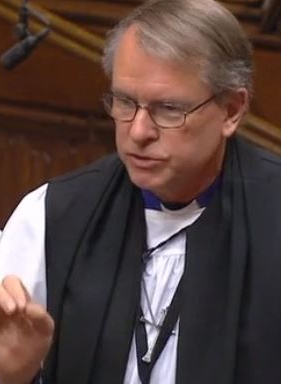
The Bishop of St Albans asked a question on support available for armed forces veterans affected by problem gambling on 27th January 2022:

The Lord Bishop of St Albans: My Lords, it is absolutely right that we pay tribute to those veterans who have successfully transitioned back into civilian life, but nevertheless the research by the RAF Benevolent Fund is striking, with much higher levels of problem gambling and at-risk gambling among veterans, which we need to attend to. Are there any plans by Her Majesty’s Government to screen those transitioning back into civilian life, and to provide additional support where necessary?

Continue reading “Bishop of St Albans asks about support for those at risk of problem gambling”

Bishop of London asks about funding for mental health and wellbeing of NHS Staff

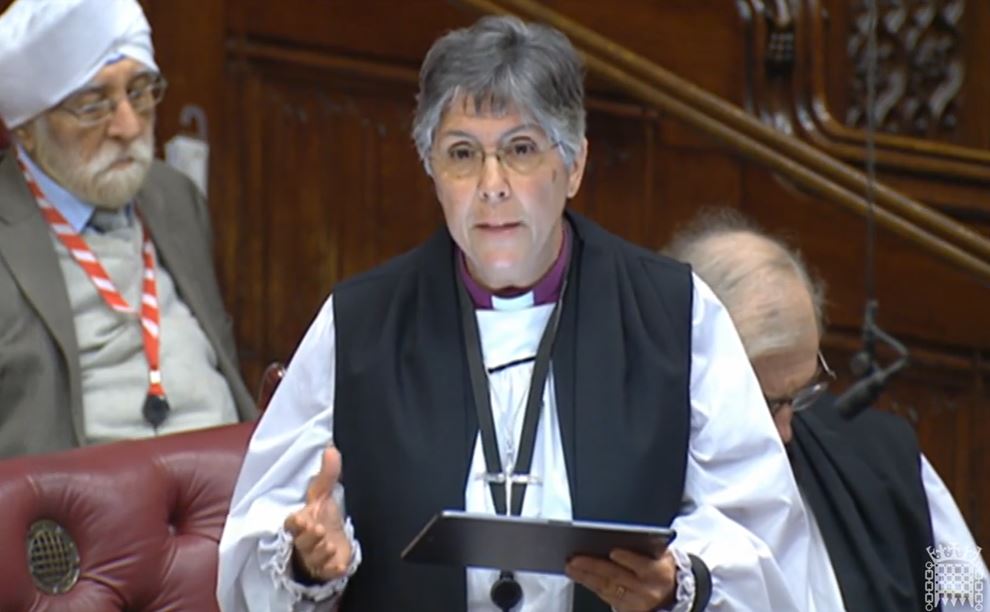
The Bishop of London asked a question on continuation of mental health and wellbeing funding for NHS staff on 27th January 2022, during a debate on NHS Staff recruitment:

The Lord Bishop of London: My Lords, over the last two years I have been encouraged by the way in which the NHS has creatively met the mental health needs of nurses and other healthcare workers, encouraging their well-being and recognising what contributes to that. Can the Minister reassure us that the funding that has gone in over the last two years will continue to be put into the NHS, ensuring that we look after the well-being of our staff?

Continue reading “Bishop of London asks about funding for mental health and wellbeing of NHS Staff”

Church Commissioner Questions: church buildings, racial inequality, freedom of religion or belief, parenting and marriage, gay and lesbian Christians, Christians in the Middle East, church schools

On 27th January 2022 MPs asked the Second Church Estates Commissioner, Andrew Selous MP, answered questions in the House of Commons chamber:

Churches and Cathedrals: Sustainability

Jerome Mayhew (Broadland) (Con)

What assessment the Church of England has made of the steps needed to put the maintenance of churches and cathedrals on a sustainable basis. (905258)

The Second Church Estates Commissioner (Andrew Selous): The Church estimates that over the next five years at least £1.14 billion of maintenance and repairs are needed for churches and cathedrals. The Church is very grateful that 550 churches and cathedrals have already benefited from the culture recovery fund, but there remains an urgent need for predictable and sustainable sources of funding, which enable us to keep skilled builders and craft people in work.

Continue reading “Church Commissioner Questions: church buildings, racial inequality, freedom of religion or belief, parenting and marriage, gay and lesbian Christians, Christians in the Middle East, church schools”

Health and Care Bill: Bishop of Carlisle raises concerns on assisted dying

On 26th January 2022, the House of Lords debated the Health and Care Bill in committee. The Bishop of Carlisle spoke on issues of assisted dying contained in amendments to the bill:

The Lord Bishop of Carlisle: My Lords, I recognise and respect the integrity and passion that underlie Amendment 297. However, I rise to agree wholeheartedly and briefly with those noble Lords and noble and learned Lords who have already expressed their significant reservations about it.

There are two problems in particular with that amendment. The first has to do with the many contentious arguments for and against any legislation permitting assisted dying, some of which have already been mentioned. Tempting though it is to rehearse some more of those, I am conscious not only of the time but of the fact that they have already been presented recently and at length, as we have been reminded by the noble and learned Lord, Lord Mackay, at Second Reading of the Assisted Dying Bill here in your Lordships’ House. The ongoing process of that Bill, however slow it may be, should not be undermined. We have also been assured that this is not primarily what Amendment 297 is all about. I might add that the terminology of that amendment is unhelpfully vague. “Vague” is a word that has already been used more than once in the debate today. For instance, we might ask exactly what is meant by “terminally ill” or “medical assistance”.

Continue reading “Health and Care Bill: Bishop of Carlisle raises concerns on assisted dying”

Archbishop of Canterbury asks about humanitarian support for Ukraine

The Archbishop of Canterbury asked a question on the government’s plans for humanitarian support in the event of conflict in Ukraine, during a debate on the escalating tensions between Ukraine and Russia on 26th January 2022:

The Lord Archbishop of Canterbury: First, I associate myself with, particularly, the wise comments of the noble Lord, Lord Cormack. Having listened to the questions, does the noble Baroness the Leader agree that mediation and diplomacy should be pursued until the last moment, seeking to find ways to give both sides the opportunity to withdraw—particularly the Russians from their completely unjustified threats? The one thing we can be sure of is that, once war starts, all control of the situation will be completely lost, possibly for years, and the casualties will be terrible. Secondly, what provision are the Government making, should the worst come to the worst, to support the very large number of refugees and the huge needs for humanitarian support that will inevitably be part of fighting in the late winter in eastern Europe?

Continue reading “Archbishop of Canterbury asks about humanitarian support for Ukraine”

Bishop of St Albans asks about development and social cohesion in Ukraine

The Bishop of St Albans asked a question on the government’s efforts towards supporting development in Ukraine, during a debate on growing tensions between Russia and Ukraine on 26th January 2022:

The Lord Bishop of St Albans: My Lords, it is right that we attend to the situation in Russia, but Ukraine is a deeply divided country. The situation is not helped by, for example, Ukraine’s decision three years ago to make Ukrainian the national language, precluding the involvement of some 50% of Russians in the south and east of the country, who speak only Russian. What are Her Majesty’s Government doing to bring economic development and social cohesion to try to strengthen and bolster the life of Ukraine, as it faces this threat?

Continue reading “Bishop of St Albans asks about development and social cohesion in Ukraine”

Bishop of Southwark asks about treatment of Christians in India

The Bishop of Southwark received the following written answers on 26th January 2022:

The Lord Bishop of Southwark asked Her Majesty’s Government what discussions they have had with the government of India over its refusal to allow Oxfam and the Missionaries of Charity operating in that country to receive money from abroad.

Lord Ahmad of Wimbledon (Con): We are aware that some Non Government Organisations (NGOs) have faced difficulties in India due to the application of the Foreign Contribution Regulation Act (FCRA) by the Indian authorities, and that some have recently had applications to renew their foreign funding licenses rejected. We continue to support a wide range of local NGO partners in India, including through programmes, and officials have discussed issues facing NGOs directly with the Indian Government.

Continue reading “Bishop of Southwark asks about treatment of Christians in India”

Bishop of Southwark asks about pay rates for keyworkers

The Bishop of Southwark received the following written answer on 25th January 2022:

The Lord Bishop of Southwark asked Her Majesty’s Government what assessment they have made of the claim by the Trades Union Congress that thousands of key workers are earning less in real terms than they were a decade earlier.

Viscount Younger of Leckie (Con, Treasury): To examine the real terms earnings of key workers, we focus on public sector workers – which represent the majority of key workers.

Public sector pay in real terms (total pay, deflated by CPI) has grown at an annualised rate of 0.2% over the last decade (since the three months to November 2011). The level of public sector average weekly earnings (in real terms) is now in line with that of the private sector in the three months to November 2021.

Continue reading “Bishop of Southwark asks about pay rates for keyworkers”