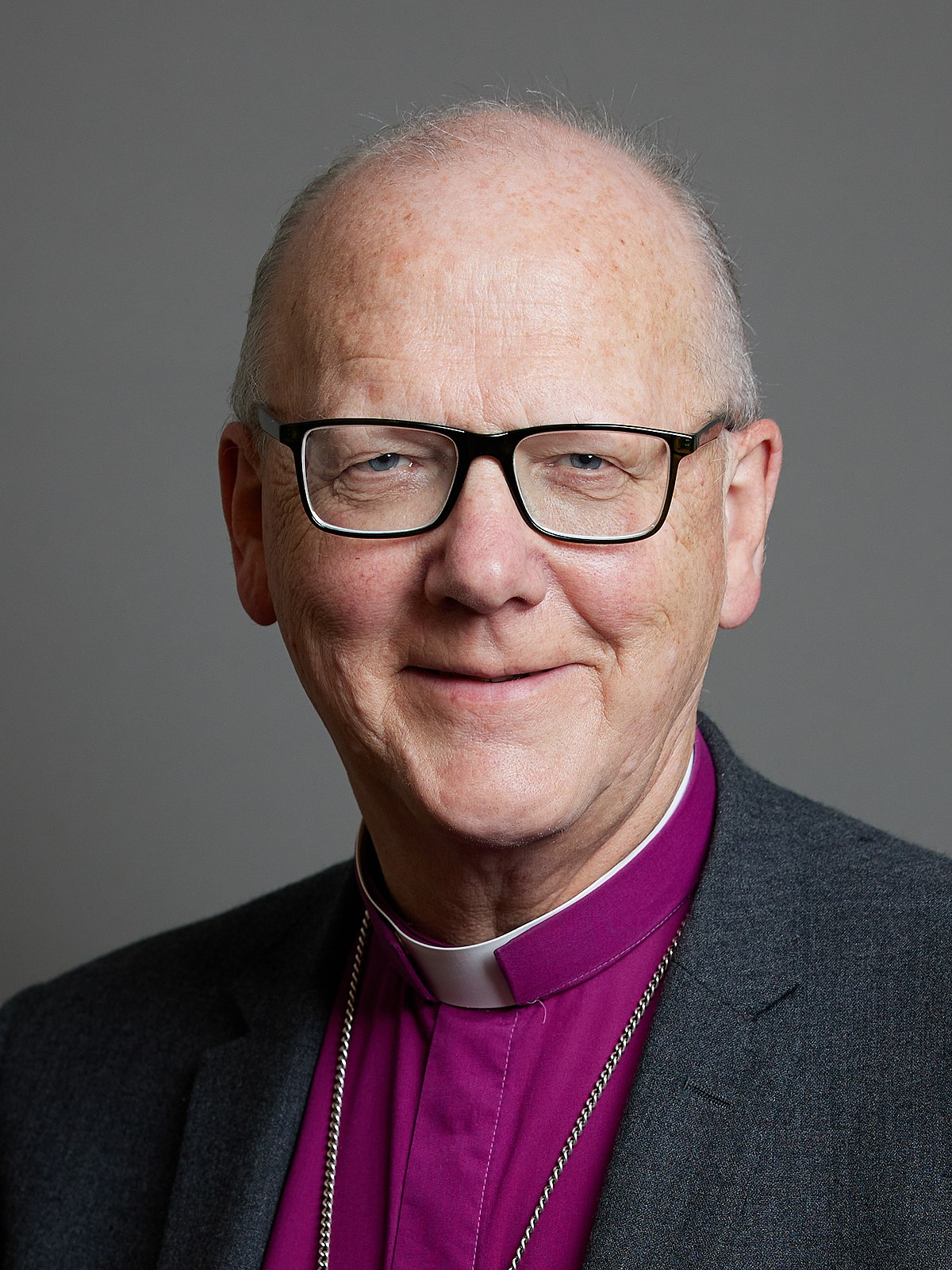
Bishop of St Albans asks about issues faced by Christians in Jerusalem

The Bishop of St Albans received the following written answer on 25th January 2022:

The Lord Bishop of St Albans asked Her Majesty’s Government, further to concerns expressed by the Greek Orthodox Patriarch of Jerusalem that “radical fringe groups” are trying to drive Christians out of Jerusalem, what assessment they have made of the future status of Christians in Jerusalem.

Continue reading “Bishop of St Albans asks about issues faced by Christians in Jerusalem”

Bishop of St Albans takes part in debate on deaths caused by social media

The Bishop of St Albans spoke in a debate on the role of social media in children’s deaths on 20th January 2023, drawing attention to the broadness of social factors contributing to children’s deaths:

The Lord Bishop of St Albans: My Lords, I too thank the noble Baroness, Lady Kidron, for securing this most important debate on the contributory role of social media to the deaths of children, and I pay tribute to her persistent campaigning on this subject. It is a timely debate given that only a month ago we received the legislative scrutiny committee’s report on the draft online harms Bill.

I want to focus on the whole question of the extent to which we understand the numbers and the causes of child deaths, not only where social media plays a significant role but in a whole range of other issues. This is a much broader problem than just this topic, although it is a superb example of why we need better research and better recording of data.

In December, your Lordships’ House debated the Second Reading of my Coroners (Determination of Suicide) Bill. It would require coroners to record any relevant contributory factors once a death by suicide has been officially determined. It would not be a finding in law, the results would be anonymised and published anonymously, and it would be akin to the well-established processes that hospitals have for recording comorbidities of death.

Continue reading “Bishop of St Albans takes part in debate on deaths caused by social media”

Bishop of London asks for hold on dismissal of unvaccinated NHS staff

The Bishop of London asked that the government consider placing a hold on legislation to dismiss any NHS staff that remained unvaccinated after April 2022, during a debate on the easing of COVID-19 restrictions on 20th January 2022:

The Lord Bishop of London: My Lords, I thank the noble Baroness for her update. I believe that NHS staff who have not received two doses of the vaccine face dismissal from 1 April onwards. It is estimated that this will result in London losing something like 12.5% of its midwives, putting at risk the lives of pregnant women and their babies. Such a loss of staff may be thought to be justified were it not for the case that two doses of the vaccine are not understood to protect against the omicron variant of Covid-19. We shall lose precious midwives to implement a policy that has been superseded by the evolution of the virus. Will Her Majesty’s Government put the implementation of existing legislation on hold, given that it may now lead only to harm and not the good that it was designed to promote?

Continue reading “Bishop of London asks for hold on dismissal of unvaccinated NHS staff”

Bishop of Leeds asks about statements made by Russian foreign minister regarding security in Europe

On 20th January 2022, the Bishop of Leeds asked a question regarding Russian Foreign Minister Sergey Lavrov’s statement regarding the Organisation for Security & Cooperation in Europe (OSCE):

The Lord Bishop of Leeds: My Lords, what assessment have Her Majesty’s Government made of the statement by Sergey Lavrov two days ago that the OSCE used to convene parties on an equal basis but it is now simply a defender of western interests? What impact does that have on our conversations with the Russians?

Lord Sharpe of Epsom (Con): I am sorry but I shall have to write to the right reverend Prelate on that. I have not seen Sergey Lavrov’s statement.

Hansard

Bishop of Durham speaks on impact of sanctions on Burundi

The Bishop of Durham spoke in a debate on the imposition of sanctions on Burundi on 19th January 2022, asking that the government consider the impact of sanctions on the poor and keep existing regulations under review:

The Lord Bishop of Durham: My Lords, I rise to make some comments—I should probably explain why a bishop is doing so. I have been a regular visitor to Burundi since 2000. I have made a number of visits, which have largely been to church leaders, but one occasion included meeting President Nkurunziza when he was in power. I have therefore experienced the deep poverty of Burundi first hand—and it is very deep. It is one of the five poorest nations on earth. My visits are not confined to staying in the capital city—it was Bujumbura but is now Gitega—but include going out meeting ordinary people in villages around the nation.

Continue reading “Bishop of Durham speaks on impact of sanctions on Burundi”

Bishop of Leeds asks question on funding for Welsh authorities

The Bishop of Leeds asked a question on the funding given to Welsh authorities to deal with the remediation and repair of coal tips in the country on 19th January 2022:

The Lord Bishop of Leeds: My Lords, the Minister has referred a couple of times to the funding to the Welsh authorities as “adequate”. Can he enlighten us as to how adequacy is defined?

Viscount Younger of Leckie (Con): I will define what I see as being adequate. The Welsh Government have more than enough to deal with the very important subject of coal-tip safety.

Hansard

Bishop of Gloucester asks about conditions in UK prisons

The Bishop of Gloucester received the following written answers on 19th January 2022:

The Lord Bishop of Gloucester asked Her Majesty’s Government how many women in prison aged (1) 18–24, or (2) 25 years or older, have been (a) in receipt of mental health care, or (b) referred to mental health support, whilst in custody.

Continue reading “Bishop of Gloucester asks about conditions in UK prisons”

Church Commissioners Written Questions: Church of England Staff

On 19th January 2022, Andrew Selous MP, representing the Church Commissioners, gave the following written answer to an MP:

Jane Hunt MP (Con): To ask the Member for South West Bedfordshire, representing the Church Commissioners, what the total number of people employed in full and part time diocesan roles across the UK was, excluding parish priests and lay readers, in (a) 1959, (b) 1979, (c) 1989, (d) 1999, (e) 2010 and (f) 2020, including Bishops, Suffragen Bishops, Archdeacons, governance managers, human resource management, operations directors, inclusivity and diversity managers, directors of giving, mission enablers, directors of social justice, environment managers, training leaders, youth leaders, conference centre managers and wardens, and all associated support staff.

Continue reading “Church Commissioners Written Questions: Church of England Staff”

Health and Care Bill: Bishop of Carlisle supports amendments requiring specialist palliative care services

On 18th January 2022, the House of Lords debated amendments to the Health and Care Bill. The Bishop of Carlisle spoke in the debate, supporting amendments tabled by Baroness Finlay of Llandaff that would require specialist palliative care units to be set up in the UK:

The Lord Bishop of Carlisle: My Lords, it is always a pleasure to follow the noble Lord, Lord Patel. I am pleased to give my wholehearted support to Amendment 47 and to Amendment 52, to which I have added my name, which compellingly requires the commissioning of specialist palliative care services in every part of England. Throughout my life and work I have often had the privilege of being present with families and communities, supporting people of all ages through the final chapter of their life, so I have seen at first hand the enormous difference that high-quality palliative care can make to their experience of dying, death and bereavement.

However, as the noble Baronesses, Lady Brinton and Lady Masham, pointed out, 90% of people might need such care, but as things stand at present only about half of them will receive it. What is more, it is all too often those in our most deprived communities who are dying without the help and dignity they deserve.

To that end, a compelling body of evidence has been provided by Marie Curie, the end-of-life charity, which has been mentioned several times already in this debate. Building on that evidence, this amendment will not only prevent many people with a terminal illness dying in pain but deliver significant cost savings to the NHS by reducing unnecessary hospital admissions.

Continue reading “Health and Care Bill: Bishop of Carlisle supports amendments requiring specialist palliative care services”

Health and Care Bill: Bishop of Birmingham supports strengthening services for children and young people

On 18th January 2022, the House of Lords debated the Health and Care Bill. The Bishop of Birmingham, on behalf of the Bishop of London, spoke in support of amendments aimed at strengthening public health services for children and young people:

The Lord Bishop of Birmingham: My Lords, on behalf of my right reverend friend the Bishop of London, who cannot be in her place today, I speak in support of Amendment 141, to which she has put her name, alongside all the amendments, which I too support, having listened to the discussion and read them carefully. They all aim to strengthen the services for children and young people. The Government should be congratulated on continuing in the NHS a long period—perhaps 20 to 30 years—of raising the profile of children and young people. The work of the clinical director should be noted, and the involvement of young people in the design of services, although we have already heard this morning that this could be increased.

Continue reading “Health and Care Bill: Bishop of Birmingham supports strengthening services for children and young people”