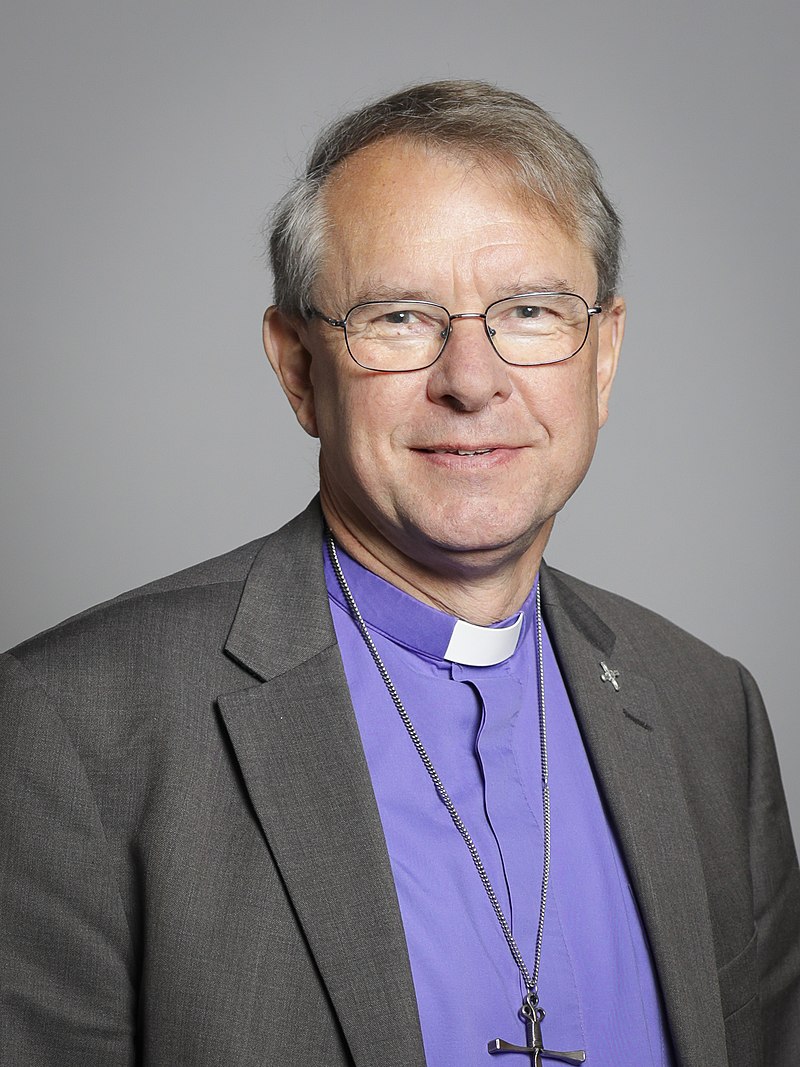
Skills and Post-16 Education Bill: Bishop of Durham speaks in favour of amendment to standardise funding for students with specific learning difficulties and disabilities

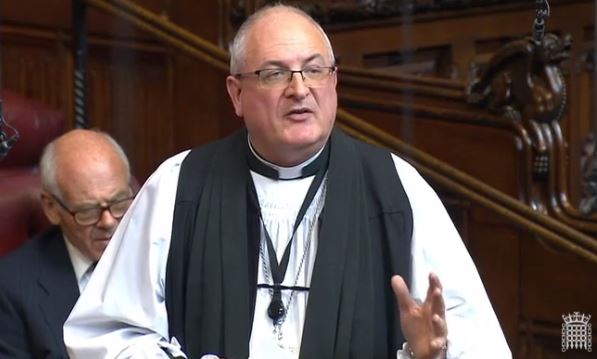
The Bishop of Durham spoke in favour of an amendment to the Skills and Post-16 Education Bill which would aim to remove discrepancies in funding offered to people with specific learning difficulties and disabilities in further education:

The Lord Bishop of Durham: My Lords, as the right reverend Prelate the Bishop of Leeds observed at Second Reading, colleges play a vital role in providing for students with specific learning difficulties and disabilities—the term widely used in further education as being broader than the “special educational needs” used elsewhere. This amendment seeks to address the discrepancy between the range and funding available to younger students with specific learning difficulties or disabilities, principally those in school settings or specialist institutions, and those applicable to students in FE. It seeks also to harmonise best practice across the FE and HE sectors, as the noble Lord, Lord Addington, outlined a few moments ago. It connects with the earlier Amendments 41 and 43 to 46, especially the requirement to review how well the education and training provided by an institution meet the needs of those with special educational needs in its area, and with Amendment 99, which places a specific duty on the Secretary of State to this end.

Continue reading “Skills and Post-16 Education Bill: Bishop of Durham speaks in favour of amendment to standardise funding for students with specific learning difficulties and disabilities”

Skills and Post-16 Education Bill: Bishop of Durham tables amendment to specify long term funding plans for further education

On 21st July 2021, the Bishop of Durham tabled a probing amendment to the Skills and Post-16 Education Bill which would require the government to set out a long term funding plan for further education:

The Lord Bishop of Durham:

90B: After Clause 25, insert the following new Clause—

“Long-term funding review

(1) The Secretary of State must commission a panel of experts to review of the long-term funding for skills and post-16 education.(2) The panel must consider and make recommendations about—(a) resources available for different types of technical training, further education and higher education; (b) support for disadvantaged students and those with special education needs;(c) the impact of this Act on the long-term funding for skills and post-16 education.(3) The panel must conclude their review and make a report to the Secretary of State with their findings and recommendations.(4) Within the period of one year beginning with the day on which this Act is passed, the Secretary of State must lay the panel’s report before Parliament.”Member’s explanatory statement

This is a probing amendment, intended to draw out the Government’s plans to introduce a longer-term funding settlement for FE, as called for by the Education Select Committee, prefigured in the White Paper and signalled, as the direction of travel by recent increases in core FE funding, capital funding allocations and the longer term Lifelong Learning Entitlement.

Continue reading “Skills and Post-16 Education Bill: Bishop of Durham tables amendment to specify long term funding plans for further education”

Skills and Post-16 Education Bill: Bishop of Durham tables amendment removing restriction on claiming universal credit for those in education

On 21st July 2021, the House of Lords debated the Skills and Post-16 Education Bill in the fourth day of the committee stage. The Bishop of Durham tabled a probing amendment to the bill which would remove restrictions on claiming universal credit from those receiving education:

The Lord Bishop of Durham:

90A: After Clause 25, insert the following new Clause—

“Universal credit conditions: receiving education

(1) In section 4 of the Welfare Reform Act 2012—(a) in subsection (1) omit paragraph (d), and(b) omit subsection (6).(2) The Secretary of State may by regulations made by statutory instrument make consequential provision.(3) A statutory instrument containing regulations under this section is subject to annulment in pursuance of a resolution of either House of Parliament.”Member’s explanatory statement

This amendment would remove the restriction that those “receiving education” cannot claim Universal Credit, which at present may impede some of the most disadvantaged from benefitting from learning opportunities. It is intended to probe how the Government plans to incentivise take-up of training programmes, and to elicit how cross-departmental working can be made more effective in transforming learning and skills.

Continue reading “Skills and Post-16 Education Bill: Bishop of Durham tables amendment removing restriction on claiming universal credit for those in education”

Bishop of St Albans asks about purposes of home-schooling register

The Bishop of St Albans asked a question about concerns over the government’s proposal to introduce a register of home schooled children on 21st July 2021:

The Lord Bishop of St Albans: My Lords, parents often choose home schooling to escape the rigidity, values and standardisations of public education. Some people are deeply fearful that a register might seek to reimpose this. Will Her Majesty’s Government assure us that this register is for safety and quality purposes only and that parents will be able to continue to exercise their discretion and freedom of conscience over what and how best to educate their children?

Continue reading “Bishop of St Albans asks about purposes of home-schooling register”

Bishop of Gloucester asks about treatment of experiences of domestic abuse in the criminal justice system

The Lord Bishop of Gloucester received the following written answers on 21st July 2021:

The Lord Bishop of Gloucester asked Her Majesty’s Government:

  • (1) what are the terms of reference, and (2) what is the planned process, for the Lord Chancellor’s review of sentencing in domestic homicide cases; and what plans they have, if any, to hold a public consultation on this matter.
  • (1) what are the terms of reference, and (2) what is the planned process, for the Lord Chancellor’s review of sentencing in domestic homicide cases; and what plans they have, if any, to hold a public consultation on this matter.
  • what organisations will be consulted for the Lord Chancellor’s review of sentencing in domestic homicide cases.
Continue reading “Bishop of Gloucester asks about treatment of experiences of domestic abuse in the criminal justice system”

Bishop of Durham asks about immigration and resettlement

The Bishop of Durham received the following written answers on 21st July 2021:

The Lord Bishop of Durham asked Her Majesty’s Government what assessment they have made of the number of people likely to be resettled this year under the Vulnerable Persons Resettlement Scheme; and how that figure compares to (1) 2018, and (2) 2019.

Continue reading “Bishop of Durham asks about immigration and resettlement”

Votes: Leasehold Reform (Ground Rent) Bill

On 20th July 2021, the House of Lords debated the Leasehold Reform (Ground Rent) Bill in the first day of the report stage. Votes were held on amendments to the bill, in which Bishops took part:

Continue reading “Votes: Leasehold Reform (Ground Rent) Bill”

Votes: Conduct Committee Report

On 20th July 2021, two Bishops took part in votes in the House of Lords on reports on the conduct of several members of the House, regarding completion of the “Valuing Everyone” training mandated by the House of Lords Code of Conduct.

Continue reading “Votes: Conduct Committee Report”

Bishop of Southwark asks about rights of indigenous communities in planning work

The Bishop of Southwark asked a question about the principle of businesses and governments seeking “free, prior, and informed consent” from indigenous communities before engaging in industrial activities, during a debate on human rights in business practices on 20th July 2021:

The Lord Bishop of Southwark: My Lords, I draw the Minister’s attention to the policy of the National Investing Bodies of the Church of England on extractive industries, which has an explicit commitment drawn from the UN Declaration on the Rights of Indigenous Peoples to the

Continue reading “Bishop of Southwark asks about rights of indigenous communities in planning work”

Bishop of Durham asks about Vulnerable Persons Resettlement Scheme

The Bishop of Durham received the following written answer on 20th July 2021:

The Lord Bishop of Durham asked Her Majesty’s Government how many individuals have been resettled under its Vulnerable Persons Resettlement scheme since the scheme restarted.

Baroness Barran (Con, Home Office): In December 2020, the UK resumed resettlement following a pause due to the pandemic. On 25 February 2021 the Government met its target of resettling 20,000 refugees who have fled the conflict in Syria through the Vulnerable Persons Resettlement Scheme. Since then, the Government has continued to welcome refugees through the global UK Resettlement Scheme (UKRS).

Continue reading “Bishop of Durham asks about Vulnerable Persons Resettlement Scheme”