On 19th and 20th October the House of Lords considered the Government’s UK Internal Market Bill at its Second Reading. The Bishop of Leeds spoke in the debate:
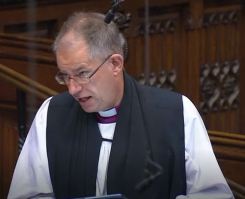
 The Lord Bishop of Leeds [V]: My Lords, I add my congratulations to the noble Baroness, Lady Hayman of Ullock, and look forward to her future contributions to this House. I fully endorse the arguments set out by the noble and learned Lord, Lord Judge. I concur with the concerns set out in the report cited by other noble Lords earlier. I even welcome the commitments articulated by the Minister, but I question how they can be trusted, given the underlying ethic of the Bill—and it is absolutely right for archbishops to ask questions of such matters.
Relations with potential partners usually depend on integrity. Trade, security, migration and so on all rest on fundamental trust. Trust cannot be one-sided, or it is not trust at all. Respecting one’s interlocutors is essential. This is inevitably evidenced in language. The Bill before us assumes that our interlocutors cannot be trusted and will behave in bad faith, and that we need to be protected from them. If they do not give us what we demand, we are free to do our own thing, including breaking the law and reneging on agreements made less than a year ago that were said at the time to be “oven ready”—a good arrangement that required “no more negotiations”. What the Bill does not ask is why our word should be trusted by others. Continue reading “UK Internal Market Bill: Bishop of Leeds says trust, integrity and morality matter in international relations”
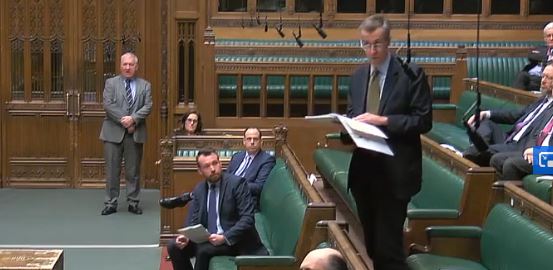
 It is a pleasure to serve under your chairmanship, Ms Elliott. I reassure Members that we should be able to dispose of this matter reasonably speedily. The Measure will enable the General Synod, which is the legislative body for the Church of England, to meet and conduct its business remotely. The current coronavirus restrictions mean that it is not practically possible for the Synod to meet in the usual way with 500 people from across England gathering in the same place, either over the road in Church House here in London, or in York. In this Parliament, as we are all aware, we have been able to make provision for remote participation in sittings using the orders of the House. However, as the General Synod was created by statute law, it does not have the same freedom, and legislation is required to enable it to meet remotely.
 The Lord Bishop of London: My Lords, the judgment in December 2019 highlighted that the Home Office application fee to register a British citizen was £1,012 for children, even though the Home Office estimated the cost of processing applications for registration as £372. Putting a financial barrier on being able to access one’s rights is a clear barrier to one’s access to justice. What assessment have Her Majesty’s Government made of the number of people whose rights are limited by the level of the fee that has been set?
 The Lord Bishop of St Albans: To ask Her Majesty’s Government, further to the Written Answer by Lord Greenhalgh on 1 October (
 Parliament met this week in Westminster and online. Prayers were read at the start of each sitting day in the House of Lords by the Bishop of Oxford.
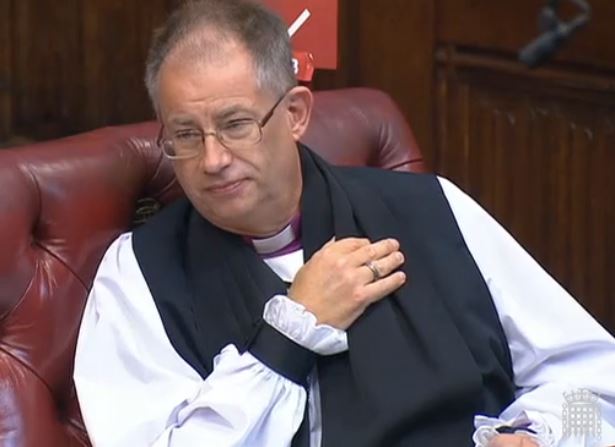
 The Lord Bishop of Oxford: My Lords, I thank the Minister for the compassion and passion in her answers but, as we must acknowledge, this is a very serious situation. The Resolution Foundation now forecasts that unemployment among the 18 to 29 year-olds could triple to 17% by late 2020—a level not seen since 1984. Given the well-established link between unemployment and mental health, and the risks of a mental health epidemic, will the Government undertake to fund support for additional mental health provision, in addition to the education and employment initiatives which she has unpacked, to support this very hard-pressed and vulnerable Covid generation?
 The Lord Bishop of Oxford: My Lords, I welcome this report and it is good to hear the Minister welcome it too. Deprivation is an issue that goes to the core of natural justice, and therefore our common good as a nation. Does the Minister accept in particular the report’s findings that employment interventions are as critical as educational improvement in addressing systematic inequalities and levelling up? What additional steps do the Government propose to take to improve employment opportunities, particularly when facing the current recession, in the cold spots that the report identifies across the nation?


You must be logged in to post a comment.