On 12th May 2020 Baroness Massey of Darwen asked the Government “what assessment they have made of the ability of schools to deliver the new compulsory elements of relationships and sex education curriculum from September 2020”. The Bishop of Durham, Rt Revd Paul Butler, asked a follow up question:
 The Lord Bishop of Durham: My Lords, I declare my interests as stated in the register as chair of the National Society. In November, the Church of England produced a charter to support schools in preparing for the new compulsory elements of RSHE. It is important to us and our schools that we consult parents on how best to deliver this new material, to ensure that we provide a sensitive education enabling all pupils to flourish. Will Her Majesty’s Government reassess the delivery date of the new elements of RSHE to accommodate the current constraints on schools’ time and energy due to Covid-19?
Continue reading “Bishop of Durham asks Government to reconsider delivery date of RSHE in light of Covid-19”

 On 13th May, the Rt Revd Alan Smith, Bishop of St Albans, received a written answer from Lord Bethell on the procurement of dairy products for the NHS.
 On 13th May, the Rt Revd Nick Baines, Bishop of Leeds, received a written answer from Lord Agnew of Oulton on the debt of developing countries.
 Lord Bishop of Durham: My Lords, we must consider this report in light of the global pandemic. Decisions about our future relationship with the EU must be informed by Covid-19, recognising our international interdependence rather than being driven by ideology. Our European neighbours remain our friends and allies. This must continue for the sake of all, and especially for vulnerable children.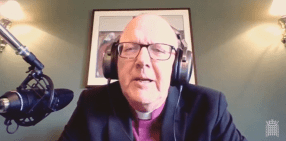


You must be logged in to post a comment.