On 18th May 2020 the Second Church Estates Commissioner, Andrew Selous MP, answered two written questions from Mark Pritchard MP:
Mark Pritchard (The Wrekin): 46582 To ask the Member for South West Bedfordshire, representing the Church Commissioners, what discussions he has had with the Diocese of Lichfield on lost revenues resulting from the closure of places of worship during the covid-19 outbreak.
Mark Pritchard (The Wrekin): 46581 To ask the Member for South West Bedfordshire, representing the Church Commissioners, what discussions he has had with the Diocese of Hereford on lost revenues resulting from the closure of places of worship during the covid-19 outbreak.
 Andrew Selous: The Church Commissioners and National Church Institutions are in discussions with dioceses during this challenging period, including on the evolving financial impact. A series of structured interviews have been held with every diocese, including with the Diocese of Lichfield at the beginning of May [and Diocese of Hereford at the end of April]. Though too early for detailed conclusions, it was clear that the financial challenges will be significant.
Continue reading “Church Commissioners’ Written Answers: Coronavirus, Lichfield and Hereford dioceses”
 Parliament met this week, in Westminster and online.

 The Lord Bishop of Durham: My Lords, I applaud the achievement of accommodation having been offered to 90% of rough sleepers. The community collaboration that achieved this reflects the focus of the housing commission set up by the most reverend Primate the Archbishop of Canterbury of building strong communities alongside homes. What plans do Her Majesty’s Government have to create multiagency partnerships to create an integrated homelessness system?
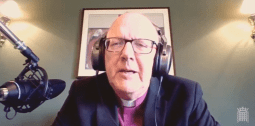 The Lord Bishop of St Albans: My Lords, I thank the noble Baroness, Lady Boycott, for this debate and I declare my interest as president of the Rural Coalition. It is often said that the primary duty of government is the defence of the realm: equally important is the need to feed the population. When a crisis hits, we can survive for a considerable time without importing computers and machinery, but without food we last only a few weeks. Fortunately, during this pandemic the food chain has held up relatively well, although a number of shortages in the early days of the lockdown acted as a salutary warning. Within days of the lockdown, many of our churches here in Hertfordshire and Bedfordshire had set up food banks or parish pantries, not just in poorer areas such as Stevenage or Farley Hill, but in wealthier villages such as Flamstead and Ponsbourne.
 The Lord Bishop of Gloucester: My Lords, the World Health Organization has been clear that testing will be a key part of tackling coronavirus. We just heard some of those stats, but could the Government please give us the number of prisoners who have been tested to date, and give an assurance that testing will always be in place before moving people between prisons?
 On 14th May 2020 the Bishop of London, Rt Revd Sarah Mulally, received a written answer to a question to Government on immigration removal centres:
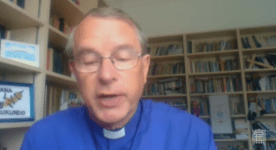 Lord Bishop of Durham: The extension of the JRS is extremely welcome. Here in the north-east, we have a worryingly high infection rate and among the highest average death rates per capita. Will Her Majesty’s Government consider taking a regional approach to phasing out the JRS, ensuring that the economic and social needs of each region are reflected adequately in the Government’s ongoing support?
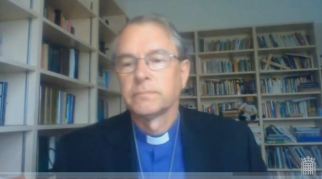
 On 13th May, the Rt Revd Christopher Chessun, Bishop of Southwark, received a written answer from Lord Ahmad of Wimbledon on Israeli Settlements in the West Bank.


You must be logged in to post a comment.