On 18th April 2018 Lord Suri asked Her Majesty’s Government “what director level staffing changes, if any, they intend to make in the Foreign and Commonwealth Office to provide greater capacity for that department to co-ordinate, oversee and deliver policy to advance freedom of religion and belief.” The Bishop of Coventry, Rt Revd Christopher Cocksworth, asked a follow-up question:
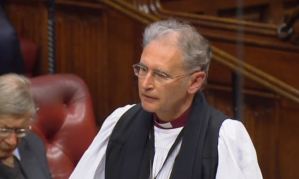 The Lord Bishop of Coventry: My Lords, following on from that question, the Minister will be aware of the gathering at Lambeth Palace at the moment convened by my most reverend friend the Archbishop of Canterbury, which is bringing together parliamentarians and religious leaders from across the Commonwealth to help them work on good local practice. Would not the sort of director-level appointment mentioned in the Question to increase capacity help Her Majesty’s Government to partner with such initiatives to take them on to the next stage and provide co-ordination across the Commonwealth? Continue reading “Bishop of Coventry asks Government about plans for promoting freedom of religion and belief”

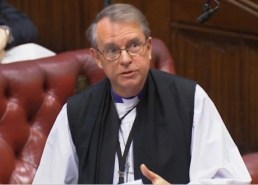 On 18th April the Bishop of Durham, the Rt Revd Paul Butler, received written answers to two questions on refugees:
  On 23rd April Lord Lennie asked Her Majesty’s Government “what progress they have made on the appointment of the new Chair and members of the Social Mobility Commission.” The Bishop of Norwich, the Rt Revd Graham James, asked a supplementary question:
 This week in the House of Lords bishops spoke in debates on national security in relation to Syria and Russia, and on lifelong learning. They responded to Government statements on the treatment by immigration authorities of the Windrush generation, and military action in Syria, and asked a question about Government plans to promote freedom of religion and belief. Bishops voted on amendments to the Government’s EU (Withdrawal) Bill and Haulage Permits and Trailer Registration Bill.
 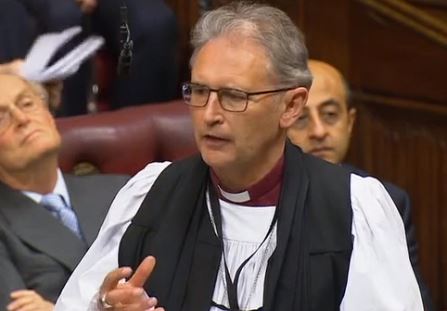 The Lord Bishop of Coventry: My Lords, I, too, am grateful to the Minister for bringing this debate forward at this pivotal time in our national security and foreign policy. It is a great honour to follow the noble Lord, Lord Owen, and other distinguished speakers with their panoramic perspectives. Given the timing of the debate, I shall offer some reflections on the Syrian situation, both the danger it represents for national security and the role it might play in recasting relations with Russia, even in the stressful times described so clearly by the noble and gallant Lord, Lord Stirrup.
  On 16th April Baroness Garden of Frognal held a debate ‘To ask Her Majesty’s Government what progress is being made in developing a sustainable lifelong learning culture in England’. The Bishop of Coventry, the Rt Revd Christopher Cocksworth, spoke in the debate:
 On 16th April Baroness Evans of Bowes Park repeated a statement from the Prime Minister on the UK’s military action in Syria. The Bishop of Coventry, the Rt Revd Christopher Cocksworth, responded to the statement:

You must be logged in to post a comment.