
Welcome to the Church of England’s weekly round-up of activity in Parliament.
 This week bishops in the House of Lords responded to the Prime Minister’s statement on Syria and military action and spoke on freedom of speech in universities, community relations and counter-terrorism, and the impact of loneliness on health and well-being. Questions were asked about the Government’s defence review, support for rural small businesses and food banks. The Bishop of Chelmsford raised in the House the decision by Digital Cinema Media not to screen an advert by the Church of England.
 Monday 23rd November
The Bishop of Leeds responded to the Government’s statement on the Defence and Security Review.
Tuesday 24th November
The Bishop of St Albans asked about support for rural small businesses.
 Wednesday 25th November
The Bishop of Chelmsford asked a question he had tabled on the decision of Digital Cinema Media not to screen an advert from the Church of England.
 Thursday 26th November
The Archbishop of Canterbury asked Government about the link between food bank use and benefit changes. He also responded to the Prime Minister’s statement on Syria and military action.
 The Bishop of Ely spoke in a debate on freedom of speech at universities.
 The Bishop of Rochester spoke in a debate about counter-terrorism and community cohesion.
 The Bishop of Bristol spoke in a debate about public health, highlighting the impact of loneliness and isolation.
 The Lord Bishop of Bristol: My Lords, I, too, am grateful to the noble Lord, Lord Crisp, for introducing this debate and this very big idea into the Chamber. Already we start to see that the breadth of material that needs to be thought about in relation to creating a healthy society is indeed vast. I sat here for some of the debate thinking were I the Minister—God forbid—how I might respond to such a plethora of concerns that have been articulated. I wish him well with that.
 The Lord Bishop of Rochester: My Lords, I, too, am very grateful to the noble Baroness, Lady Mobarik, for initiating the debate and for the opportunity to speak in it. I am grateful, too, to the noble Baroness, Lady Eaton, for saying some of the things about Near Neighbours that I might have said. That will save me having to do it. It is good to have other advocates of these things.
 The Lord Bishop of Ely: I, too, take the opportunity to congratulate the noble Baroness, Lady Deech, for bringing this debate about. I would be very glad to engage in metaphysical conversation with the noble Lord, Lord Patten, about the soul of the university sometime outside the Chamber. I am more concerned for us to promote and understand the importance of religious literacy in the defence of free speech, and the Church’s engagement with a number of institutions in seeking to make the most of the Prevent agenda without throwing aside openness and readiness to engage in full debate.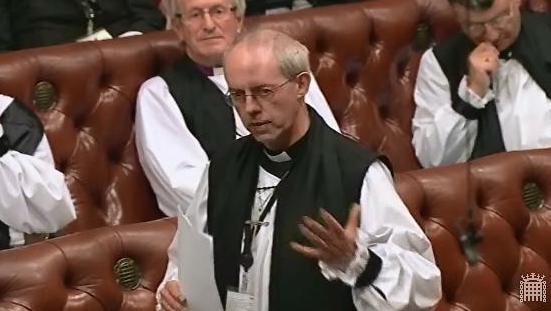
 The Lord Bishop of Chelmsford: To ask Her Majesty’s Government what assessment they have made of the freedom of religious and non-religious organisations to express their beliefs in the public sphere, in the light of the decision by Digital Cinema Media not to accept advertisements from the Church of England.
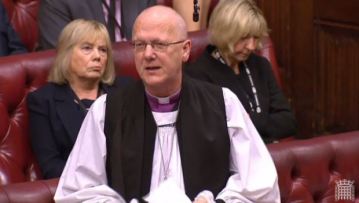 The Lord Bishop of St Albans: My Lords, the northern powerhouse has great potential to bring social and economic benefit to many people, but it is fundamental from the very start that we embed it in the rural communities. Micro-businesses employing fewer than 10 people make a very significant contribution to the rural economy, yet previous approaches to regional development tended to ignore or sideline the rural dimension of it. Will the noble Lord the Minister assure the House that, with the northern powerhouse and other devolved areas, there will be a specific, focused and relevant approach to providing resources for small rural businesses?
  The Lord Bishop of Leeds: My Lords, would the Minister agree with me that some of the language we are using in this debate reflects an assumption that the world is binary and divided into allies and enemies? The reality is that allies become enemies, and enemies become allies. In any strategic approach to the future, could we be assured that that possibility will be taken into account? I worked on elements to do with Iraq in the 1980s, and we can see what happened in the 2000s.
 The Church of England in Parliament
You must be logged in to post a comment.