Bishop of Carlisle supports new Bill on access to palliative care

On 23rd October 2015 the House of Lords debated the Access to Palliative Care Bill, a private member’s bill tabled by crossbench peer Baroness Finlay of Llandaff. The Bill sought to, in her words,

“ensure that wherever a dying person is, whatever the time of day or night, whatever day of the week, they can receive high-standard care… It would do so by ensuring that commissioners commission a level of service for their populations to meet need…My Bill would ensure co-ordination so that help is accessible, efficient and can meet needs.”

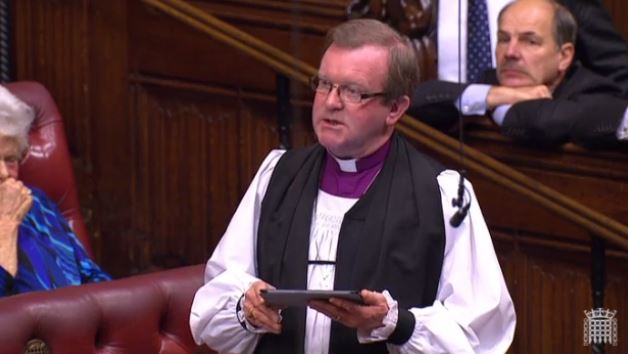
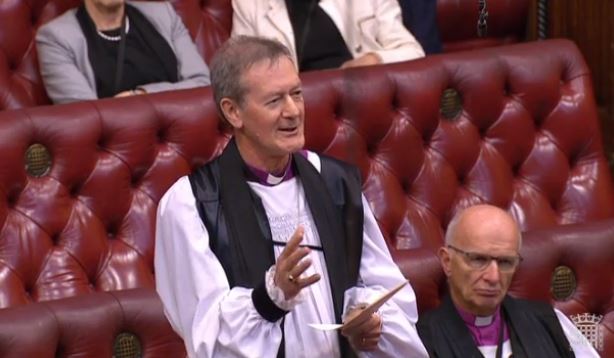
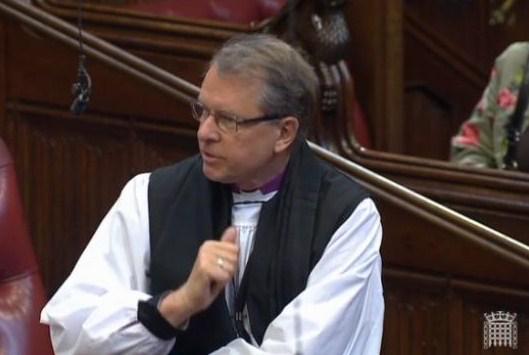
The Bishop of Carlisle, Rt Revd James Newcome, who is also lead bishop on healthcare for the Church of England, spoke supportively in the debate.


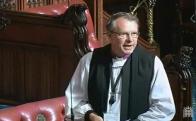
14.06.09 Bishop of CarlisleThe Lord Bishop of Carlisle: My Lords, I declare an interest as a fairly active patron of Eden Valley Hospice in Cumbria and of Hospice at Home Carlisle and North Lakeland. They work together to provide outstanding end-of-life care for people in the community as well as for those in a hospice bed. Like so many others, I am also most grateful to the noble Baroness, Lady Finlay, for initiating this significant Bill. Continue reading “Bishop of Carlisle supports new Bill on access to palliative care”

Bishop of Rochester calls for better end of life care services in prison

On 22nd October 2015 the Bishop of Rochester, Rt Revd James Langstaff, spoke during a House of Lords debate tabled by Lord Farmer “To ask Her Majesty’s Government, in the light of the Parliamentary and Health Service Ombudsman’s report Dying Without Dignity, what steps they are taking to ensure that everyone who needs it has access to good palliative care and a level of social care that ensures the end of life is valued.” The Bishop, the Church’s lead bishop for prisons, spoke about the need to improve end of life care for those in prison.


14.04.01 Rochester intro 2

The Lord Bishop of Rochester:  My Lords, I understand that the noble Lord, Lord Suri, is not able to be present for this discussion, but I promise not to extend my contribution by the minutes thereby freed. I am grateful to the noble Lord, Lord Farmer, for initiating this debate, and I apologise that I am not going to touch on matters that are directly to do with spirituality. I shall leave that to those who have done so—my right reverend friend and others—because I want to focus on one particular aspect of end-of-life care: what goes on in Her Majesty’s prisons, for which I am bishop. Continue reading “Bishop of Rochester calls for better end of life care services in prison”

Bishop of Carlisle praises work of chaplains and volunteers in end of life care

On 22nd October 2015 Lord Farmer asked Her Majesty’s Government, “in the light of the Parliamentary and Health Service Ombudsman’s report Dying Without Dignity, what steps they are taking to ensure that everyone who needs it has access to good palliative care and a level of social care that ensures the end of life is valued.” The Bishop of Carlisle, Rt Revd James Newcome, spoke in the debate, praising the work of chaplains and volunteers in delivering end of life care. The Bishop of Rochester also spoke in the debate. 


Carlisle Moses RoomThe Lord Bishop of Carlisle:  My Lords, today’s debate, for which I am also most grateful to the noble Lord, Lord Farmer, has prompted me to take a fresh look at some of the numerous documents on palliative care that have been produced over the past two years, including of course the ombudsman’s report, Dying Without Dignity. As I read the documents, I was struck and impressed by their general agreement that palliative care at the end of life involves more than simply the relief of physical pain, crucial though of course that is. Suffering is not always the same as pain and it is often more difficult to ease, which is why the word “holistic” is often used to describe the kind of care that is needed. I cite as an example the NICE quality standard which is regarded by NHS England as,

“a comprehensive picture of what high quality end of life care should look like”.

In particular, as we have been reminded by the noble Lord, Lord Farmer, reference is made to spiritual and religious support not only for patients but for relatives, carers and staff. Such support is an essential element in end of life care. Continue reading “Bishop of Carlisle praises work of chaplains and volunteers in end of life care”

Bishop of Portsmouth speaks about challenges of retention of armed forces reservists

On 22nd October 2015 Lord Freeman led a Lords debate “To ask Her Majesty’s Government what assessment they have made of the present and future strength of the reserves of the British Armed Forces.” The Bishop of Portsmouth spoke in the debate

14.04.09 Portsmouth maiden speech 2The Lord Bishop of Portsmouth:  My Lords, I share our gratitude to the noble Lord, Lord Freeman, for this Question for Short Debate. The Whole Force Concept is journeying from theory to reality. It is a tricky journey, it seems to me, not because the Government set the wrong course five years ago but because of the scale and complexity of the task. It is true that many essential defence skills, and especially many essential national security skills, reside in the private sector as well as in the Armed Forces. To bring these together coherently and effectively requires both strategic direction and effective management. Continue reading “Bishop of Portsmouth speaks about challenges of retention of armed forces reservists”

Bishop of Coventry on Article 18 and freedom of religion and belief

On 22nd October 2015 Lord Alton of Liverpool hosted a debate in the Lords “To ask Her Majesty’s Government what steps they are taking, if any, to promote Article 18 of the 1948 Universal Declaration on Human Rights.” The Bishop of Coventry spoke in the debate, on religion and national identity / loyalty.


Coventry Moses RoomThe Lord Bishop of Coventry:  My Lords, I, too, am very grateful for this debate. I will focus my comments on the interface between religion and national identity, and the theological and political dangers of too close an alignment between them. Too often, the abuse of religious freedom arises from a false collusion between religion and national loyalty. We saw it once in our own land and, yes, in my own church. We see it now in the “gozinesh” criterion for state employment in Iran, in the treatment of the Rohingya in Myanmar, and in the actions of the so-called Orthodox Army in the Donbass region of Ukraine.

Religions, which at their best seek to serve all humanity, find themselves yoked to a form of patriotism that is insecure and sees minorities as the enemy within. Continue reading “Bishop of Coventry on Article 18 and freedom of religion and belief”

Divisions – Energy Bill

House of Lords Division Lobby

The Rt Revd Peter Forster, Bishop of Chester took part in two divisions during the report stage consideration of the Government’s Energy Bill on the 21st of October 2015.

The Bishop voted with the Government  ‘Not Content’ to amendments 78Q and 78UA. The Government lost both divisions.  His interventions can be seen here.


Division on Amendment 78Q – Contents 242; Not-Contents 190. Amendment 78Q agreed

Division on Amendment 78UA – Contents 189; Not-Contents 166. Amendment 78UA agreed

(Via Parliament.UK)


Energy Bill – Bishop of Chester on renewable energy amendments

14.03 Bishop of ChesterOn 21st October 2015 the Rt Revd Peter Forster, Bishop of Chester, spoke a number of times during the report stage debate of the Government’s Energy Bill. The Bishop spoke to amendments relating to the future of Onshore wind power and the closure of the renewables obligation.

Continue reading “Energy Bill – Bishop of Chester on renewable energy amendments”

Bishop of Derby asks Government about gangmasters licensing

On the 21st of October 2015 the Rt Revd Alastair Redfern, Bishop of Derby, received written answers to questions he asked the Government regarding gangmasters licensing.


Bishop of DerbyBishop of Derby: To ask Her Majesty’s Government whether they plan to require gangmasters to have a Disclosure and Barring Service check as part of their licence application process.
Lord Bates: The Government has no current plans to introduce a requirement for a Disclosure and Barring Service check in the Gangmasters Licensing Authority licence application. A public consultation on the role of the GLA in labour market enforcement was published on 13 October and invites views on operation of the licensing regime.

Bishop of Derby: To ask Her Majesty’s Government whether they plan to introduce a requirement for the Gangmasters Licensing Authority to ensure that gangmasters have a Disclosure and Barring Service check as part of the licence application process.


Lord Bates: The Government has no current plans to introduce a requirement for a Disclosure and Barring Service check in the Gangmasters Licensing Authority licence application. A public consultation on the role of the GLA in labour market enforcement was published on 13 October and invites views on operation of the licensing regime.

Bishop of Ely highlights role of church schools during Lords debate on Education and Adoption Bill

“We are committed to excellence and parents choose Church of England schools because of the broad and rounded education they provide… I urge the Minister and his officials and his officials to ensure that clear protocols and their consistent application are used to support the continued partnership between church and state as providers of education.” – Bishop of Ely, 20/10/15

14.10.16 Bishop of Ely 1On 20th October 2015 the House of Lords debated the Government’s Education and Adoption Bill. The Bishop of Ely, Rt Revd Stephen Conway, who is chair of the Church of England’s Board of Education, spoke about the work of church schools in character education. He also underlined the commitment of the church to helping improve standards through collaborative work between church schools, diocesan bodies and multi-academy trusts. The text of his speech and the minister’s response is below.


The Lord Bishop of Ely:
The Church of England is firmly committed to delivering outstanding education that promotes academic excellence, together with the development of the whole child. I welcome all that has already been said about any approach to metrics in education to take a holistic view strongly into account.

I have already spoken in this House about the importance of character education. Last week, the Church of England launched a new discussion paper, on character education in schools, at a conference that was attended by teachers, school leaders and many people involved. The point was our doing this in partnership with the Jubilee Centre for Character and Virtues at the University of Birmingham, so that the work we are seeking to do in this area is of interest not just to those of us in the church but looks at how we can take a holistic approach to the education of the whole child across the maintained education service. Continue reading “Bishop of Ely highlights role of church schools during Lords debate on Education and Adoption Bill”

Bishop of Durham asks Government about effect of steel plant closures in north east on those in apprenticeships

On 20th October 2015 a Government statement was repeated in the House of Lords on the steel industry. The Bishop of Durham, Rt Revd Paul Butler, asked about the effect of closures and job losses on those young people who are in apprentice schemes.


Bp Durham June 2015 bThe Lord Bishop of Durham: My Lords, in the north-east there is also particular concern around young people who are in apprenticeships at Redcar, Hartlepool and elsewhere, and their deep concern that after three or three and a half years they will now have to go back to the beginning. Can the Minister give us an assurance that some of the £80 million will go to assist them to complete their apprenticeships without having to return to the beginning? Continue reading “Bishop of Durham asks Government about effect of steel plant closures in north east on those in apprenticeships”