MPs QUESTIONS TO CHURCH COMMISSIONERS: Overseas visits, Bath and Wells, church buildings, credit unions and flooding

In Church Commissioners’ question time in the House of Commons on 13th February 2014, Sir Tony Baldry MP was asked by MPs to answer questions on overseas visits by Archbishops, the residence of the Bishop of Bath and Wells, the use of church buildings, credit unions and flooding. 

14.01 CCQ Baldry

Transcript (via Parliament.uk):

Continue reading “MPs QUESTIONS TO CHURCH COMMISSIONERS: Overseas visits, Bath and Wells, church buildings, credit unions and flooding”

The Bishop of Worcester speaks in debate on Independent Panel on Forestry

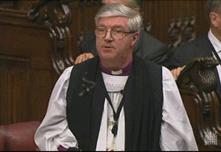
My Lords, I am grateful to the noble Baroness, Lady Royall, for securing this debate. Like her, I am a great lover of the Forest of Dean, which until recently was part of the diocese of Worcester. When I say “recently”, I mean the 16th century, but what are a few centuries in the life of the church or, indeed, in the life of a forest? I pay tribute to her for her work, as I do, along with other noble Lords, to the recently retired Bishop of Liverpool for his significant contribution to the welfare of our forests made as chairman of the Independent Panel on Forestry. Continue reading “The Bishop of Worcester speaks in debate on Independent Panel on Forestry”

Bishop of Worcester speaks of close link between overseas development and climate change

Baroness Rawlings asked Her Majesty’s Government by how much United Kingdom overseas aid will be increased in 2014-15 as a result of the growth in gross domestic product and the 0.7% target for overseas aid.

The Bishop of Worcester asked a supplementary question:

The Lord Bishop of Worcester: My Lords, the Minister has already referred to Pakistan. I was going to draw her attention to the Bangladeshi floods of 1998, which resulted in the loss of 30 million homes and cost the economy of that country 4.8% of its GDP. Does the Minister agree that the spending of money generally on countries which are affected terribly by climate change is both in our national interest and a moral responsibility?

Baroness Northover: The right reverend Prelate sums it up extremely effectively.

(via parliament.uk)

Bishop of St Albans seeks assurances from Government on illegality of sex-selective abortion

Baroness Knight of Collingtree asked Her Majesty’s Government what action they intend to take in the light of recent analysis of the ratio of boys and girls in United Kingdom families suggesting that sex-selective abortion is taking place.

The Bishop of St Albans asked a supplementary question:

The Lord Bishop of St Albans: My Lords, there is an opportunity coming up where this can be underlined. At the moment, the procedures for the approval of independent sector places for the termination of pregnancy are being revised. Will Her Majesty’s Government undertake to ensure that they spell out clearly and unequivocally that termination on grounds of gender alone is illegal and that an appeal on gender alone is insufficient to satisfy the mental health criteria of the Abortion Act?

Earl Howe: My Lords, as I have said, the guidance to abortion providers will be updated and that will include the guidance to independent sector providers. It will be made abundantly clear that gender selection is illegal.

(via parliament.uk)

The Bishop of St Albans speaks in debate on Independent Panel on Forestry report

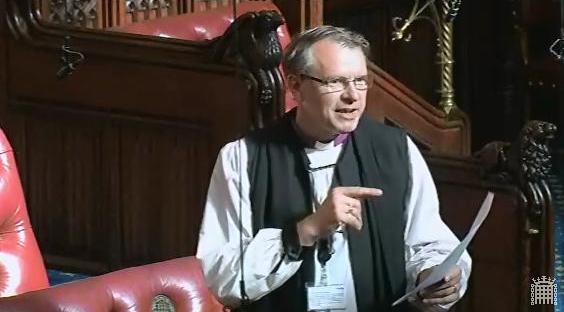
My Lords, I was eager to participate in this debate and I, too, thank the noble Baroness, Lady Royall, for raising this vital issue, which has touched the nerves of so many people right across the country, in every part of our nation. I want to pick up four details of the Government’s response. They are minor, not major, points but I hope that they will be helpful. The first is to build on the point made by the noble Baroness, Lady Parminter, about the unprecedented levels of flooding that we are having in the UK. Continue reading “The Bishop of St Albans speaks in debate on Independent Panel on Forestry report”

The Bishop of Worcester speaks on arts and culture in the ‘current financial climate’

My Lords, I am grateful to the noble Lord, Lord Mawson, for securing this debate and I pay tribute to the wonderful work that he has done in this area over many years, as I do to the noble Baroness, Lady Kidron, who has similarly done wonderful work. I claim no particular expertise, although I am passionate about the arts—perhaps that is something to do with the fact that it is sometimes said that many clergy are failed actors. Continue reading “The Bishop of Worcester speaks on arts and culture in the ‘current financial climate’”

The Bishop of St Albans asks Government about support for healthy living in schools

Baroness Morgan of Ely asked Her Majesty’s Government what representations they have made to the food and drink industry about reducing levels of sugar in processed products in the United Kingdom.

The Bishop of St Albans asked a supplementary question:

The Lord Bishop of St Albans: My Lords, while I support the need to reduce the level of sugar in processed food wherever possible, I am concerned that this alone will do little to improve the nation’s health or deal with the problem of obesity. What progress are the Department for Education and the Department of Health making on reducing the number of calories in meals served in schools, and what progress is being made on increasing the level of physical activities for the pupils in our schools?

Earl Howe: My Lords, tackling obesity calls for action by the widest possible range of partners, including the food industry but also including schools. That is what we are trying to do through the responsibility deal. Our National Child Measurement Programme, the School Food Plan, the School Games and the money that we are putting into school sports funding—£150 million a year—all contribute to the joint effort across government to influence the way in which calories are consumed by children. I have encouraging news on that front, which is that the level of child obesity is now the lowest that it has been since 1998, so we are moving in the right direction.

(via parliament.uk)

Bishop of Worcester commends the living wage as tool to tackle inequality

Lord Giddens asks Her Majesty’s Government what policies they have to address economic inequalities in British society.

The Bishop of Worcester asked a supplementary question:

The Lord Bishop of Worcester: My Lords, is the Minister aware of the first report published today by the Living Wage Commission, chaired by my friend the most reverend Primate the Archbishop of York, which found that emerging economic recovery will have no effect on more than 5 million workers unless employers pay a living wage. It found furthermore that 6.7 million of the 13 million people in poverty in the UK are in a family where someone works—which, for the first time, is more than half the total. Will the Minister tell the House what steps the Government are taking to address this real concern?

Lord Newby: My Lords, the Government are encouraging employers to pay the living wage where they can. One of the key things about people in work on very low incomes is that a large proportion of them are working a small number of hours or a smaller number of hours than they would like. Economic growth will mean that more of those people are able to work longer hours, which will help deal with their household circumstances.

(via parliament.uk)

The Bishop of Leicester raises concerns about Immigration Bill during Second Reading deabte

My Lords, I am happy to declare an interest in this debate as the Bishop of Leicester, a city whose character, economy, culture and vibrancy have all been immensely enhanced by waves of immigration over the last 40 years. At last year’s 40th anniversary of the arrival of the Ugandan Asians expelled from east Africa by Idi Amin, we were reminded of an advertisement placed by Leicester City Council in 1973. It read:

“In your own interests and those of your family you should accept the advice of the Uganda Resettlement Board and not come to Leicester”.

It led to a headline in the Leicester Mercury: “No room here”. It is a reminder that general anxiety about immigration and the fears of politicians about public opinion on this matter are not new. Continue reading “The Bishop of Leicester raises concerns about Immigration Bill during Second Reading deabte”

The Bishop of St Albans raises concerns about growing regional economic inequality

Baroness Wilcox asked Her Majesty’s Government what recent assessment they have made of the levels of manufacturing activity in the United Kingdom.

The Bishop of St Albans asked a supplementary question:

The Lord Bishop of St Albans: My Lords, I am sure we all want to encourage a much more robust manufacturing base in this country. An article in the Economist last week pointed out that, unlike the rest of the country, the north-east and south-west regions still saw an increase in unemployment up to the year ending November 2013. There are huge problems at the moment in the south-west, which was already facing a downturn in its tourist industry and now has floods and difficulties with trains. Is there anything the Government can do to encourage a more long-term, stronger economic and, indeed, manufacturing base in the south-west of England?

Viscount Younger of Leckie: Our industrial strategy focuses on the whole country. I note the right reverend Prelate’s point about the south-west where they are suffering so terribly from the floods. The industrial strategy has five main strands which are bearing fruit, particularly in places such as Liverpool and Tyneside, and the south-west is just as important.

(via parliament.uk)