Egypt: Written Questions from Bishop of Coventry

On March 19th 2014 the Bishop of Coventry, Rt Rev Christopher Cocksworth, received answers to two written questions about Egypt: on political and religious freedom in the country.
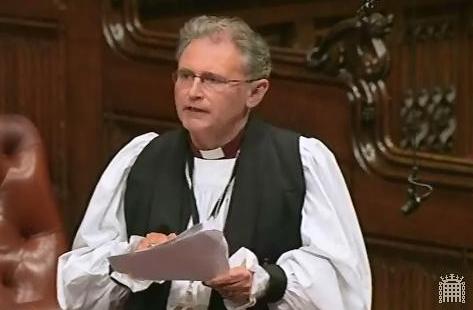
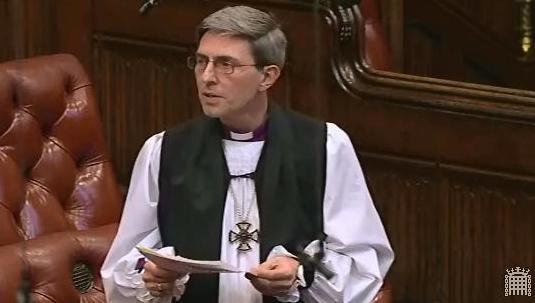
13.10 Bishop of CoventryThe Lord Bishop of Coventry: To ask Her Majesty’s Government what is their assessment of the current state of political freedom in Egypt and of the prospects for free and fair Presidential elections later this year.

The Senior Minister of State, Department for Communities and Local Government & Foreign and Commonwealth Office (Baroness Warsi): The January 2014 constitutional referendum was an important moment for millions of Egyptians who expressed their opinion through the ballot box. We welcome the fact that the new constitution includes better provisions for the protection of the rights of minorities, including Christians, and women. However, we are concerned by restrictions on freedom of expression for opposition groups and the press, both in the run-up to the referendum and since. We encourage Egypt’s interim authorities to ensure that Egypt’s democratic transition leads to free and fair presidential elections in a genuinely inclusive process. We are pleased to hear that the EU European External Action Service is discussing with Egyptian authorities its intention to send an Electoral Observation Mission to Egypt for the presidential elections.

The Lord Bishop of Coventry: To ask Her Majesty’s Government what is their assessment of the state of freedom of religion and belief in Egypt following the removal of President Morsi from office in July 2013.

Baroness Warsi: Sectarian violence increased under President Morsi and has continued since. Amnesty report that 200 Christian-owned properties have been attacked and 43 churches burned down or damaged since July 2013. In September, the Secretary of State for Foreign and Commonwealth Affairs, my Rt. Hon. Friend the Member for Richmond (Yorks) (Mr Hague), made a statement in Parliament condemning the violence against Christian churches. Article 64 of the 2014 constitution states that freedom of belief is absolute. The key test will be how the constitution is implemented, as many articles require additional legislation. We have continued to raise the importance of respect for different religions and beliefs and the protection of religious minorities with the Egyptian authorities. The Minister for the Middle East and North Africa, my Rt. Hon. Friend the Member for Faversham and Mid Kent (Mr Robertson), discussed the situation faced by Coptic Christians and implications of the new constitution in a meeting with Bishop Yulios during his visit to Cairo in December 2013. The Bishop was optimistic about the new Constitution provisions for religious minorities.

(Via parliament.uk)
Sikhs and Golden Temple: Written Question from Bishop of Coventry

On 19th March 2014 the Bishop of Coventry, Rt Rev Christopher Cocksworth, received an answer to a written question about the Indian operation at the Golden Temple, Amritsar.

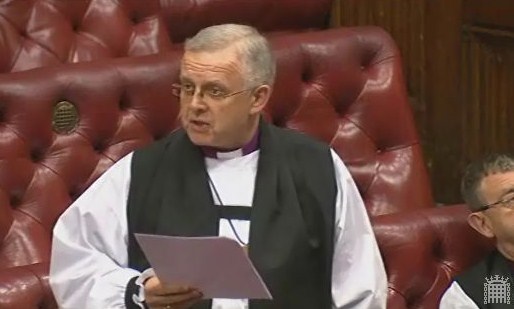
13.10 Bishop of CoventryThe Lord Bishop of Coventry: To ask Her Majesty’s Government, further to the Written Answer by Baroness Warsi on 3 March (WA 287), whether they intend to hold further meetings with the representatives of Sikh organisations in the United Kingdom to address concerns arising from the publication of the Cabinet Secretary’s report on the Indian operation at Sri Harmandir Sahib.

The Senior Minister of State, Department for Communities and Local Government & Foreign and Commonwealth Office (Baroness Warsi): Ministers held two recent round-table meetings with the Sikh community and the Government is keen to ensure that constructive dialogue is maintained.

(Via parliament.uk)

Bishop of Peterborough Raises Plight of Missionaries in North Korea

On 18th March 2014 Lord Alton of Liverpool asked Her Majesty’s Government “what assessment they have made of the findings of the United Nations commission of inquiry into human rights in North Korea.”

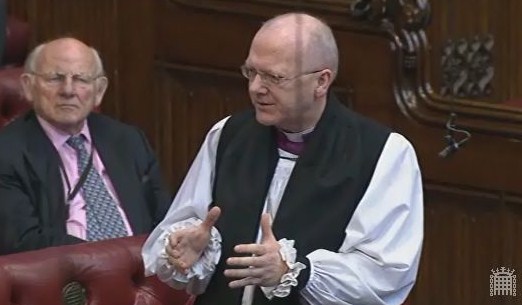
The Bishop of Peterborough, Rt Rev Donald Allister, asked a supplementary question:14.02 Peterborough

The Lord Bishop of Peterborough: My Lords, can the Minister confirm recent reports of the possible execution of 33 people for allegedly plotting to overthrow the regime by their association with the South Korean missionary, Kim Jung-wook? What efforts are being made to urge the North Korean authorities not to proceed with such executions and to respect freedom of religion?

Baroness Warsi: We are aware of these terrible reports. Of course, this relates to the suspicion that these individuals were involved with the creation of an underground church under the support of Kim Jung-wook, a South Korean who was arrested by the DPRK last year. As noble Lords are aware, freedom of religion and belief is a key priority for the Foreign and Commonwealth Office and we make those views clear to the North Koreans. I am sure that the right reverend Prelate will accept that we have only so many mechanisms with which to make our opinions known on this matter.

Ukraine Crisis – the Religious Dimension. Speech by Bishop of St Albans

Even if this crisis has cast a Cold War shadow over Europe, it is important that we remain in dialogue with the Russian Orthodox Church. That is not always an easy task” – Bishop of St Albans.

On March 18th Foreign Office Minister Baroness Warsi moved ‘that this House takes note of the situation in Ukraine.’ The Bishop of St Albans, Rt Rev Alan Smith, spoke of the religious dimension to the crisis in Crimea between Russia and Ukraine:

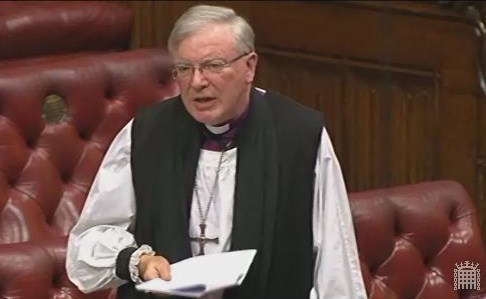
14.03 Bishop of St AlbansThe Lord Bishop of St Albans:

My Lords, I am grateful to the noble Baroness for this debate and for her helpful setting out of the situation. We have heard some fascinating background regarding the very complex history behind the situation. My comments will focus on the religious dimension, which has not been drawn out very fully so far.

Continue reading “Ukraine Crisis – the Religious Dimension. Speech by Bishop of St Albans”

Church Commissioner Rt Hon Sir Tony Baldry MP answers written questions from Pamela Nash MP

Second Church Estates Commissioner, Rt Hon Sir Tony Baldry MP, answered a number of written questions from Pamela Nash MP on the Church of England, Churches and LGBT people. 

Church of England

Pamela Nash: To ask the right hon. Member for Banbury, representing the Church Commissioners, what assessment the Church Commissioners have made of recent trends in the proportion of Church of England congregations that are(a) from black and Asian minority ethnic groups, (b) women, (c) disabled people and (d) from low-income groups.

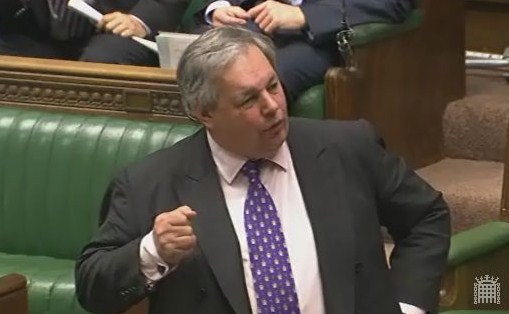
14.01 CCQ BaldrySir Tony Baldry: The most recent assessment of the proportion of Church of England congregations that are women and from Black and Asian minority ethnic groups was in the 2007 Congregational Diversity Audit. This was the first time such a survey had been conducted, and therefore no trends are yet available. It did not record information on people with disabilities and those from low-income groups.

The 2007 Diversity Audit showed that Black and Black British adults were more likely to belong to Church of England local congregations than their White counterparts. This results in a stronger picture of congregational strength in those dioceses where the presence of Black and Black British adults is high, for example, urban areas. Continue reading “Church Commissioner Rt Hon Sir Tony Baldry MP answers written questions from Pamela Nash MP”

Palace at Bath and Wells: Church Commissioners’ Written Answers

Second Church Estates Commissioner, Rt Hon Sir Tony Baldry MP, answered two written questions from Tessa Munt MP on the Church Commissioners plans for the Palace at Wells.

Tessa Munt: To ask the right hon. Member for Banbury, representing the Church Commissioners, what consideration the Church Commissioners gave to the historical or other interest of the residence at the Bishop’s Palace at Wells before planning alternative accommodation for the bishop in accordance with section 4 of the Episcopal Endowments and Stipends Measure 1943.

The Palace at Bath and Wells (picture courtesy of bishopspalace.org.uk)

Sir Tony Baldry: Section 4 of the Episcopal Endowments and Stipends Measure 1943 applies only where the Commissioners propose to exercise a power conferred by that Measure—that is to say, to transfer a house to the diocesan authority, convert it for use for other purposes, sell, let or otherwise dispose of it, or demolish it or part of it. The Commissioners have not exercised any of those powers in relation to the Palace, as the intention is that the Bishop will continue to work and worship there. Continue reading “Palace at Bath and Wells: Church Commissioners’ Written Answers”

Egypt: Written Questions from Bishop of Coventry

On March 18th 2014 the Bishop of Coventry, Rt Rev Christopher Cocksworth, received answers to two written questions about Egypt: election monitoring and the suspension of export licences for equipment that could be used for internal repression. Continue reading “Egypt: Written Questions from Bishop of Coventry”

Bishop of Winchester on teacher training, education and social mobility

“I question whether the Government’s policies for improving the quality of teaching have been fully effective and will enable social mobility. I am particularly concerned about the School Direct programme. In fact, I suggest there is an urgent case for rethinking arrangements around initial teacher training before a crisis develops.” – Bishop of Winchester

The Bishop of Winchester gave a speech in a House of Lords debate on 13th March 2014, tabled by the Education Minister Lord Nash.

The debate title was: ‘that this House takes note of the role of primary and secondary education in improving social mobility.’

The Lord Bishop of Winchester:13.05 Bishop of Winchester

My Lords, I, too, am grateful to the noble Lord, Lord Nash, for the opportunity of this debate. I shall focus on the impact made by initial teacher training on social mobility. Continue reading “Bishop of Winchester on teacher training, education and social mobility”

Bishop of Newcastle on role of education in improving social mobility in the north-east

“…she went away to university but then, crucially, returned to give back to the wider community the benefits of the education that she had received. We need more people like her—people not using their education to escape from the area, but realising that with well trained minds and warm hearts they have much to give for the common good..” – Bishop of Newcastle

The Bishop of Newcastle gave a speech in a House of Lords debate on 13th March 2014, tabled by the Education Minister Lord Nash.

 The debate title was: ‘that this House takes note of the role of primary and secondary education in improving social mobility.’

The Lord Bishop of Newcastle:

14.03 Bishop of NewcastleMy Lords, I, too, welcome this debate about the role of primary and secondary education in improving social mobility, and I want to speak from my experience as a bishop in the north-east of England for the past 16 years.

Continue reading “Bishop of Newcastle on role of education in improving social mobility in the north-east”

Immigration Bill – Bishop of Newcastle raises concern about potential for discrimination by landlords

During the committee stage of the Government’s Immigration Bill in the Lords on 12th March 2014, the Bishop of Newcastle drew attention to the potential impact of measures in clause 16 that require nationality checks on potential tenants by private landlords. The Bishop asked the Minister whether the need for private landlords to have regard to a code of practice was in itself robust enough to prevent discrimination against migrants or those of foreign name or appearance.14.03 Bishop of Newcastle

The Lord Bishop of Newcastle: My Lords, perhaps I may also ask for some clarification. One of my concerns about this part of the Bill is that many landlords will simply not rent to anyone who seems to be foreign or who does not hold a British passport for fear of getting it wrong and being fined. I am afraid that that will inadvertently result in further racial discrimination and provide a charter for those unscrupulous landlords who are racist.

In response to the consultation, the Government accepted that the new rules might provoke landlords to discriminate against people they perceive to be foreign rather than to conduct proper checks. They also recognised the risk that vulnerable people might be impacted. So, in relation to the code of practice and the associated guidance which will make it clear that the checks do not allow landlords to act in a manner inconsistent with the UK’s equality legislation, is that in itself sufficient? It simply requires landlords to read the code and adhere to it without any redress at all if they do not. Continue reading “Immigration Bill – Bishop of Newcastle raises concern about potential for discrimination by landlords”