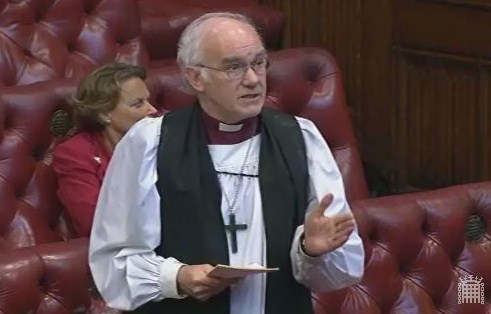
Bishop of Coventry leads debate on humanitarian crisis in Syria

“Even with a political solution, the scars of this conflict will take many generations to heal. It will require the continued generosity of the international community in a sustained and strategic humanitarian commitment. I hope that Her Majesty’s Government will continue to take a courageous lead and make this not the last business of a long day but the priority of every morning until the holy land of Syria is healed.”

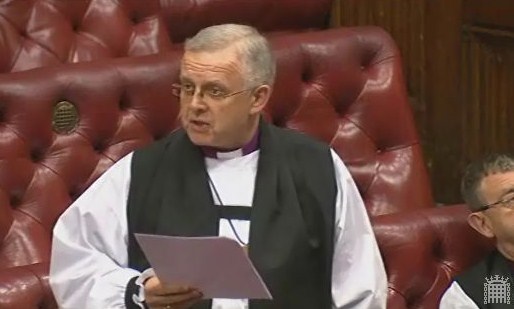
On 30th October 2013, the Bishop of Coventry, the Rt Revd Christopher Cocksworth, led a short debate in the House of Lords, to ask Her Majesty’s Government what steps they are taking to address the humanitarian crisis caused by the ongoing conflict in Syria. In his opening speech, the Bishop commended the Government for its response to the humanitarian crisis in Syria, but called for all pledged humanitarian assistance to be supplied as quickly as possible. He called on the Goverment to look into the resettling of Syrian refugees and noted the negative impact that the humanitarian crisis was having on the broader region. 

13.10 Bishop of CoventryThe Lord Bishop of Coventry: My Lords, despite the admirable diplomatic activity of recent weeks, the humanitarian costs of the ongoing conflict in Syria show no sign of abatement. As violence expands exponentially and cruelty abounds, no one can fail to be moved by the scale of the crisis, which is nothing short of a catastrophe.

This debate seeks neither to underestimate the efforts of Her Majesty’s Government to rise to the challenge of humanitarian support, nor to question their resolve to work towards a political resolution of the civil war. Rather, I hope that it will give an opportunity for your Lordships’ House to focus its expert attention on the humanitarian costs of the conflict and the humanitarian imperative of bringing the conflict to an end, and, in so doing, of checking that every stone is being turned in the cause of compassion and the pursuit of peace. Continue reading “Bishop of Coventry leads debate on humanitarian crisis in Syria”

Bishop of Lichfield highlights educational excellence in Church of England schools

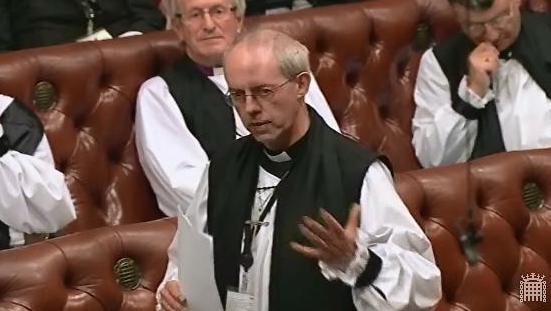
On 30th October 2013, Baroness Massey of Darwen asked Her Majesty’s Government whether free schools and faith schools will be required to deliver a broad and balanced curriculum which addresses the needs of all pupils. The Bishop of Lichfield, the Rt Revd Jonathan Gledhill, asked a supplementary question:

14.03.27 Bishop of LichfieldThe Lord Bishop of Lichfield: Does the Minister agree that the use of the phrase “faith schools” can be profoundly unhelpful in the context of this discussion? Schools of a religious character come in many forms. Is it not true that the nearly 4,700 Church of England schools sit very firmly within the mainstream of English education, and that even C of E free schools and academies are linked to diocesan boards to ensure that the education that they provide is broad and balanced, academically challenging, personally inspiring and serving the needs of the whole local community?

Lord Nash: I agree entirely with the right reverend Prelate. Faith schools are a long-established and highly valued part of our educational establishment, and church schools are, too. Church schools consistently outperform maintained schools; they are very popular and often highly oversubscribed. The applications procedures of many of them do not rely heavily on faith; they have a much wider intake.

(via Parliament.uk)

Bishop of Lichfield urges caution in redefining ‘anti-social behaviour’

“We [must] steer a course between tolerating bad behaviour on the one hand, and on the other hand taking an overly punitive and controlling approach to those whose behaviour can just be annoying. I am not here thinking of street preachers or those who sing hymns very loudly—though a balance has to be struck even in those instances—but chiefly of young people and the more vulnerable among adults.”

On 29th October 2013, the Bishop of Lichfield, the Rt Revd Jonathan Gledhill, spoke in the Second Reading debate of the Government’s Anti-social Behaviour, Crime and Policing Bill. He welcomed measures in the Bill on strengthening firearm regulations, tackling forced marriage and reforms to the College of Policing’s code of ethics. He raised concerns about the newly proposed definition for ‘anti-social behaviour’, suggesting that young people and vulnerable adults could be at risk from a broad definition.


14.03.27 Bishop of LichfieldThe Lord Bishop of Lichfield: My Lords, there is much to welcome in this Bill. The strengthening of the laws on firearms and on forced marriage, for example, are obvious steps forward. The measures for prevention of sexual harm, while raising important issues about the need for caution in restricting the freedoms of unconvicted people, will make possible swifter and more effective action to protect potential victims. The College of Policing has made an encouraging start. I am pleased to welcome the draft code of ethics. It sets a strong, ethical and I would say spiritual basis for law and its enforcement, which is a key concern for us all.

The emphasis on communities—people working together for the common good—has run through the long gestation period of these proposals. The principles of restorative justice and restorative practice, especially in local communities, are built into the efforts of churches in every part of this country to serve their local communities and especially those who are most vulnerable. In my part of the world, 80% of young people typically reoffend in the first two years after their sentence. However, with those who are taken on board by church monitoring and mentoring groups, even with the more difficult cases, the rate of reoffending is less than 20%. Continue reading “Bishop of Lichfield urges caution in redefining ‘anti-social behaviour’”

Bishop of Wakefield leads debate on religious freedom in the Middle East and North Africa

“States need to feel comfortable and confident enough in their own skins, as one might put it, to uphold their core values for all citizens regardless of religious or non-religious background. Even in our own nation, it can sometimes appear to be a fragile commodity but we have the comfort of two centuries’ experience of relative tolerance. If freedom of religion is in many ways the fundamental right upon which all other rights turn, it is important for our and other Governments to remain actively engaged over the long term, pressing for the rights of all religious minority communities.”

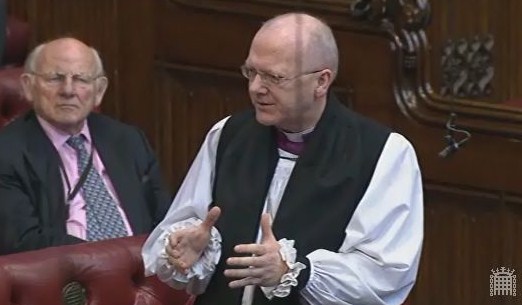
On 29th October 2013, the Bishop of Wakefield, the Rt Revd Stephen Platten, led a debate in the House of Lords to ask Her Majesty’s Government what is their assessment of the situation of religious minorities in the Middle East and North Africa after the events of the Arab Spring. He noted that the Arab Spring and resulting events were about issues of identity, political organisation and rights, all of which impact on the place of religious minorities. He urged wisdom and patience from the international community and urged for governments based on consent to be established throughout the region. He noted in particular the persecution of Christians in the region, including many groups historically amongst the earliest Christian communities. He commended the work of the Government in prioritising the freedom of religion but called for there to be consideration around the appointment of an Ambassador-at-Large for Religious Freedom. 

Bishop of Wakefield PlattenThe Lord Bishop of Wakefield: My Lords, I am very grateful for this opportunity to speak about the situation of religious minorities in the Middle East and north Africa since the Arab spring. The debate will, I hope, provide the opportunity to take a more detached view on developments over the past few years and to look at the underlying dynamics affecting religious minorities in the region.

Events in the Middle East since the start of the Arab spring have been a challenge not only to those living in the region but to all of us. Many, myself included, have viewed the series of uprisings which started in Tunisia through the lense of our experience of the Cold War. We wrongly assumed then that the fall of the Berlin Wall would usher in an era of tolerance and political pluralism throughout Europe. The reality was very different. Released from the uniformity of authoritarian rule, the former states of the USSR struggled with weak Governments to meet the diverse and competing aspirations of all their people. Often, as in the case of Balkans, those struggles turned horribly violent, with religion politicised as a marker of identity. Of course, the lessons of our own European history are seminal when trying to understand the transformations shaping the Middle East today. Revolutions are never simple and straightforward affairs. The Reign of Terror and the Vendée in France at the end of the 18th century were perhaps the beginning in our own modern era. Continue reading “Bishop of Wakefield leads debate on religious freedom in the Middle East and North Africa”

Care Bill – Vote

On 29th October 2013, three bishops took part in a division during the Third Reading of the Government’s Care Bill. 

House of Lords Division Lobby

Lord Hamilton of Epsom moved amendment 1, in clause 1, page 1, line 10, after “emotional” to insert “and spiritual”.

The Bishops of Lichfield, Norwich and Ripon & Leeds voted ‘content’. No bishop voted ‘not content’.

There were: Contents: 96 | Not Contents: 271 | Result: Government Win

(via Parliament.uk)

Bishop of London presses for reduction in demand for electricity during consideration of Energy Bill

On 28th October 2013, the Bishop of London, the Rt Revd and Rt Hon Richard Chartres, took part in the Report Stage debate of the Government’s Energy Bill. He tabled an amendment to the Bill, which sought to require the Secretary of State to publish a strategy setting out cost-effective policies to achieve a reduction
in demand for electricity, including specific targets for reductions to be made by 2020 and 2030. 
Following the debate on the Amendment, the Bishop did not move it to a vote.  

LondonThe Lord Bishop of London: My Lords, biblical studies teach me that when you have two amendments that look as much alike as my amendment and that of the noble Lord, Lord Grantchester, you must look for an Ur-text. Indeed, there is an Ur-text, as we all know, and the figures in my amendment are simply the latest figures available from the Government. This is intended to be a constructive and supportive amendment, which also reflects the concern mentioned by the noble Lord, Lord Roper, about the sole emphasis on the capacity market not really catching the full subject here.

According to the Secretary of State in his own foreword to the response to the consultation, which was published in May of this year, a 9% reduction in overall demand could save electricity equivalent to the output of four power stations in one year. I do not want to pose as an expert, of which there are many in this House, but I have been trying in my own diocese of London to improve energy efficiency. I have taken a keen personal interest in the various efforts and our churches have actually achieved a 22% saving in energy consumption between 2005 and 2011. Continue reading “Bishop of London presses for reduction in demand for electricity during consideration of Energy Bill”

Vote – Energy Bill

On 28th October 2013, two bishops took part in a division on the Government’s Energy Bill, during its Report Stage.

House of Lords Division Lobby

Crossbench Peer Lord Oxburgh moved amendment 1, which would require the government to set out its decarbonisation strategy in 2014, establishing milestones up to 2030.

The Bishops of Lichfield and London voted ‘content’. No bishop voted ‘not content’.

There were: Contents: 202 | Not Contents: 216 | Result: Government Win

(via Parliament.uk)

Bishop of Derby receives answer on accountability in free schools (Written Answer)

On 29th October 2013, the Bishop of Derby, the Rt Revd Alastair Redfern, received an answer to a written question on accountability in free schools. 

Bishop of DerbyThe Lord Bishop of Derby: To ask Her Majesty’s Government what steps they are taking to ensure that there is a rigorous assessment of the leadership, aims and ethos of free schools.

The Parliamentary Under-Secretary of State for Schools (Lord Nash) (Con): All free school applications undergo a rigorous assessment against a number of criteria. The areas covered include: the education vision and plan for the school, which will cover its proposed aims and ethos; and the capacity and capability of the applicant group, which covers the track record and expertise of the trust members and proposed governing body, as well as their plans for recruiting a high quality principal. We also carry out due diligence checks on the suitability and track record of key members of the proposer group. The assessment criteria for the next round of applications will be published on the Department’s website shortly.

Where an application is approved into the pre-opening phase, those leading the project work closely with a named lead contact and an education adviser from the Department. Where any concerns are reported, including about their leadership, aims or ethos, the matter is escalated and an early decision is taken on what action to take in response, which may include cancellation of the project.

(via Parliament.uk)

Bishop of Guildford supports reform of hereditary titles and honours

On 25th October 2013, the Bishop of Guildford, the Rt Revd Christopher Hill, spoke in support of of Lord Lucas’ Equality (Titles) Bill, during its debate at Second Reading. He also highlighted the Church of England’s progress towards enabling women to become Bishops. The Bill received one day of Committee consideration, but did not receive Royal Assent.

guildfordThe Lord Bishop of Guildford: My Lords, I am grateful for the courtesy of the House in allowing me to slip into the gap, as it were. I shall, I hope, be courteous in return by being very brief in so doing.

Members on this Bench have no direct interest in the content of the Bill, for obvious reasons. Nevertheless, I express support in principle and, indeed, in practice for the Bill before your Lordships’ House and hope to hear that the government Front Bench is also sympathetic. I will not rehearse what has already been said in the House in support of the Bill, which I fully agree with, but am sorely tempted to slip in an amendment to the effect that women bishops could be ordained in the Church of England.

Noble Lords: Hear, hear!

The Lord Bishop of Guildford: That would allow the noble Baroness, Lady Deech, to add bishops to her list.

(via Parliament.uk)

Bishop of Ripon and Leeds speaks during debate on UK-Iran relations

“I am not yet convinced that a change in Iran’s human rights agenda will come with the Rouhani presidency, because critical decisions continue to be made by the Supreme National Security Council. This remains populated by a cohort of people who spent much of their careers in the military and security services.”

On 24th October 2013, the Bishop of Ripon and Leeds, the Rt Revd John Packer, took part in a short debate led by Baroness Afshar to ask Her Majesty’s Government, in the light of the recent elections in Iran, what steps they are taking to facilitate closer commercial and educational ties with that country. The Bishop asked what the Government considered a normalisation of relations between Iran and the UK to look like. He also raised concerns about human rights abuses in Iran and the importance of the respect of religious freedom and noted the need for strengthening of relations between UK and Iranian Churches. 

R_LThe Lord Bishop of Ripon and Leeds: My Lords, I am very grateful to the noble Baroness, Lady Afshar, for initiating this debate and for introducing it so comprehensively. I am aware, through contacts, of Iranian students in Leeds and of some of the difficulties of which noble Lords have been speaking in terms of their education and the way that that has developed, and of the struggle to keep them at Leeds University.

Like others, I have been heartened by the change of political rhetoric following the elections in Iran, and share the high expectations that a more pragmatic stance from Tehran will see progress made on a range of issues, not least the nuclear issues. In view of the speed of recent diplomatic developments and the ambitious timetable set at this month’s talks in Geneva—the six to nine months to which a number of noble Lords have already referred—it would be helpful to have some idea from the Minister as to what she understands to be the end game. What would a normalisation of relations look like? What might be the trade-offs that each party might be required to make? That seems to be at the heart of the question that the noble Baroness has put before us today. Continue reading “Bishop of Ripon and Leeds speaks during debate on UK-Iran relations”