On 4th July 2022 the House of Lords heard the repeat of a statement made by the Prime Minister in the Commons, on the Commonwealth Heads of Government, G7 and NATO meetings.
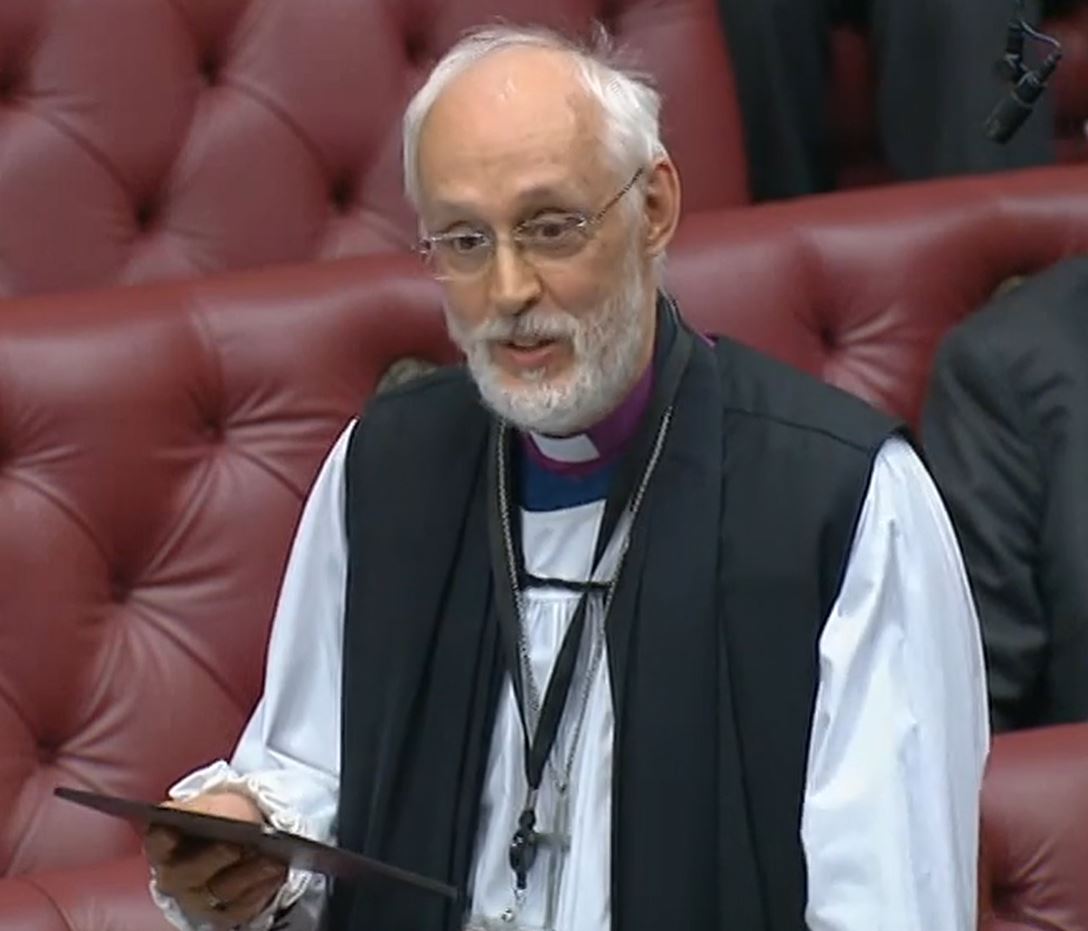
The Lord Bishop of Manchester: My Lords, we on these Benches support Her Majesty’s Government in their response to President Putin’s invasion, as I am sure will our General Synod which is debating the matter this weekend. Aggression must not be rewarded. My right reverend friend the Bishop of St Albans has previously assured this House that the Church stands ready to use its reach and connections to pave the way to a solution, and we also stand ready to use our extensive links to humanitarian organisations.
May I therefore ask the Minister to expand on what is being done to ensure UK aid support reaches all those who need it, particularly through the informal volunteer groups, which have so far received only 0.24%—less than £1 in every £400—of direct donations, and to consider how faith organisations, including the Church, can pay their full part?
The Bishop of St Albans received the following written answer on 23rd June 2022:
The Lord Bishop of St Albans asked Her Majesty’s Government, further to the Written Answers by Lord Goldsmith of Richmond Park on 31 May (HL450 and HL451), whether the £72 million in financial aid to (1) Ethiopia, (2) Kenya, (3) Somalia, and (4) South Sudan, to combat drought, flooding and conflict was additional to the £169 million in aid allocated to those countries in 2021–22.
The Bishop of St Albans spoke in a debate in response to cuts to overseas aid on 1st July 2021, criticising the decision to reduce aid at a time when many countries are experiencing negative effects of the COVID-19 pandemic and calling for the cuts to be reversed:
The Lord Bishop of St Albans: My Lords, these cuts raise profound ethical questions as the world faces the worst pandemic in over a century. Despite all the talk of global Britain, these cuts shout out that we are withdrawing from the world stage. Here we are, planning booster vaccinations in the UK this autumn, while only 0.9% of people in low-income countries have received even one dose. Covid is a global problem, and it is made worse when essentials such as clean water and basic health programmes, often provided by British aid, are cut.
Yesterday, I met the ambassador of Ethiopia, who spoke with grave concern about the cut in aid to Ethiopia, which is likely to be by more than 50%. Currently, less than 2% of its population is vaccinated, and it faces a third wave while simultaneously managing the fallout from the conflict in Tigray and famine due partly to war and partly to the swarms of locusts.
On 19th May 2021 the Bishop of Leeds spoke in the House of Lords in the fifth and final day of debate on the Queen’s Speech. He focused on ethics, the EU and Russia.
My Lords, I am grateful to follow the Noble Lord Campbell and for the Noble Lady the Minister’s comprehensive and ambitious speech introducing this debate. I welcomed the Government’s Integrated Review as a necessary attempt to hold together the diverse interests, challenges and opportunities facing the UK in the future.
One of the things I learned in my early career as a linguist at GCHQ was that words and assumptions need to be interrogated as they can be used to obscure reality. For example, in our context, an increased “cap” on nuclear weapons tells us nothing about numbers that might actually be intended or the rationale for them.
So, I think it was remarkable that reference in the Review to the European Union was almost completely missing. Now, this had been widely predicted as it seems that, for the Government, any such reference might be heard as an ideological Remainer capitulation. Yet, the rationale for a tilt towards the Indo-Pacific only makes sense to a point: it is not just what we are “tilting towards” that matters, but also what we are “tilting away from” that has to be considered.
On 19th May 2021 the Archbishop of Canterbury spoke in the House of Lords on the fifth and final day of the debate on the Queen’s Speech.
My Lords, it is a privilege to speak in this debate on the Gracious Speech after the Noble Lord, Lord Hannay with his vast experience and knowledge, and I have learned much from his speech and agree with what he’s said.
The Integrated Review of Global Britain in a Competitive Age has much to be welcomed, including especially the thoughtfulness about the security implications of climate change, the strong commitment to Freedom of Religion and Belief and the commitment to restore the 0.7%. However, to speak of security, defence, development and foreign policy without a developed section on peacebuilding and peace-making, especially with competitors, is like speaking of the pandemic without mentioning vaccination.
The Bishop of Winchester asked a question on the impact of cuts to the overseas aid budget on COVID-19 vaccine distribution on 16th March 2021:
The Lord Bishop of Winchester: My Lords, is the Minister aware that, if the cuts to the overseas aid budget lead to cuts to the Voluntary Service Overseas programme, they will negatively impact the international distribution of Covid-19 vaccines, given the involvement of VSO in Covid-19 response programmes in different parts of the world, such as Covid safety training for healthcare workers and rural populations in Tanzania, Sierra Leone, Ethiopia, et cetera?
The Bishop of St Albans received the following written answers on 1st February 2021:
The Lord Bishop of St Albans asked Her Majesty’s Government, further to the report by the UNOCHA Ethiopia—Tigray Region Humanitarian Update Situation Report, published on 6 January, what assessment they have made of reports of (1) food shortages, (2) looting, (3) sexual violence, and (3) damage to cultural heritage, in Tigray.
On 25th November 2020 the House of Lords asked questions of Government on its abandonment of the legal commitment to spend 0.7% of GNI on overseas aid. The Bishop of Worcester highlighted the many pledges made to protect this, which had now been broken:
The Lord Bishop of Worcester [V]: My Lords, the 2019 Conservative general election manifesto said:
“We will proudly maintain our commitment to spend 0.7% of GNI on development”.
That was before Covid, of course. On 16 June, the Prime Minister said in the other place that spending 0.7% remained the Government’s commitment.
On 18 June, the Leader of the House reassured the right reverend Prelate the Bishop of Peterborough of the Government’s continued commitment to the 0.7% target.
In this House on 2 September, the noble Baroness, Lady Sugg, reassured the right reverend Prelate the Bishop of Bristol, with these words:
“I assure her that we will continue to be guided by our responsibilities under the International Development Act”.—[Official Report, 2/9/20; col. 354.]
In a letter to the Prime Minister last week, I drew attention to Archbishop Desmond Tutu’s words:




 The Lord Bishop of Worcester: To ask Her Majesty’s Government what plans they have to consult with (1) civil society, (2) faith groups, and (3) other humanitarian actors, before drafting any legislation to amend the International Development (Official Development Assistance Target) Act 2015. [HL11257]
  The Church of England in Parliament
You must be logged in to post a comment.