On 25th November 2020 the House of Lords asked questions of Government on its abandonment of the legal commitment to spend 0.7% of GNI on overseas aid. The Bishop of Worcester highlighted the many pledges made to protect this, which had now been broken:
The Lord Bishop of Worcester [V]: My Lords, the 2019 Conservative general election manifesto said:
“We will proudly maintain our commitment to spend 0.7% of GNI on development”.
That was before Covid, of course. On 16 June, the Prime Minister said in the other place that spending 0.7% remained the Government’s commitment.
On 18 June, the Leader of the House reassured the right reverend Prelate the Bishop of Peterborough of the Government’s continued commitment to the 0.7% target.
In this House on 2 September, the noble Baroness, Lady Sugg, reassured the right reverend Prelate the Bishop of Bristol, with these words:
“I assure her that we will continue to be guided by our responsibilities under the International Development Act”.—[Official Report, 2/9/20; col. 354.]
In a letter to the Prime Minister last week, I drew attention to Archbishop Desmond Tutu’s words:
On 2nd September 2020 the Bishop of Bristol, Rt Revd Vivienne Faull, asked a question to Government on its commitment to the 0.7% GNI development aid target. The Minister had given a commitment to the fulfilling the Government’s obligations under law to the target in earlier exchanges:
The Lord Bishop of Bristol: My Lords, I have personally seen through the Anglican Communion’s worldwide partnerships the positive impact that the UK’s overseas aid has made to alleviating poverty. I share the concerns of other Peers about the reports of the Government’s intent to overturn the legal commitment to spend 0.7% of gross national income on aid. At the risk of tedium, I hope that the Minister will continue to give this House assurances that the Government have no such plans, which would reduce the UK’s impact under the UN sustainable development goals. Continue reading “Bishop of Bristol asks Government for assurances that 0.7% aid commitment will stay”
On 18th June 2020 a Government statement on the proposed merger of the Department for International Development and the Foreign Office, was repeated in the House of Lords. The Bishop of Peterborough, Rt Revd Donald Allister, responded:
The Lord Bishop of Peterborough: My Lords, I thank the Leader of the House for answering questions on this matter. On these Benches, we affirm the Government’s right to organise themselves as they think best for the common good. We look forward to greater integration between foreign and development policy and values, and we warmly commend the continued 0.7% commitment. I am grateful to have heard the noble Baroness’s assurance that the Government will remain committed to the OECD DAC rules—it would be lovely to have that repeated. Can we have another assurance that the Government will preserve the primary focus of UK aid as poverty reduction? Continue reading “Bishop of Peterborough welcomes Government continuing commitments to UK aid”
On 20th May 2020, Lord Collins of Highbury asked the Government “what assessment they have made of the response of international institutions to the impact of COVID-19 on refugee camps”. The Archbishop of Canterbury asked a follow-up question:
The Archbishop of Canterbury: My Lords, the Minister will be aware of the Global Humanitarian Response Plan published by the UN and updated this month, which emphasises “The importance of involving and supporting local organizations … given the key role they are playing in this crisis.” In all areas where the world’s 70 million displaced people gather, faith groups and especially churches are often the only remaining organisations with reach from grass roots to leaders, but they are often ignored by international and relief agencies. In many cases, shortage of money and logistics hamper food distribution. What steps are the Government taking to ensure that faith-based local groups are fully involved by all international agencies in all aspects of relief, reconciliation and moral and spiritual support?
On 13th May 2019 the Second Church Estates Commissioner, Dame Caroline Spelman MP, answered two written questions from Jim Shannon MP, on aid to Sri Lanka and on persecution of Christians in African countries:
Jim Shannon (Strangford):252642 To ask the right hon. Member for Meriden, representing the Church Commissioners, what steps the Church of England is taking to tackle the persecution of Christians in African countries; and what steps the Church of England is taking with the Foreign and Commonwealth Office to highlight the persecution of Christians in those countries.
On the 20th December 2018 the Bishop of St Albans, the Rt Revd Dr Alan Smith asked a question he had tabled to Government about Yemen and the shortfall in aid needed to resolve the humanitarian crisis.
The Lord Bishop of St Albans: To ask Her Majesty’s Government what steps they are taking to provide humanitarian relief to Yemen following the agreement of the ceasefire in Hodeidah.
On the 3rd July 2017, the Bishop of Truro, the Rt Revd Tim Thornton contributed to Baroness D’Souza’s debate: That this House takes note of the case for measuring the impact of the United Kingdom’s development aid budget. In a wide-ranging speech, the Bishop spoke of the importance of guarding against thinking about aid spending simply as a financial investment.
The Lord Bishop of Truro: My Lords, I am grateful to the noble Baroness, Lady D’Souza, for initiating this debate on such a very important and topical issue.
As no doubt we will hear from other speakers, the UK is known around the world as a leader in international development. It has achieved great results during the past two decades. I have no doubt of the importance of the case for measuring the impact of our development aid. I want to underline that case and also, perhaps more importantly for me, to ensure that we try to measure the right things if we can and do not understand aid only as a financial investment which can be measured simply in financial terms. I fear that too many people in our debate will go immediately from talking about aid to talking about money and finances rather than going back and thinking about what the word “development” might mean. It seems that development is in itself a fascinating idea in our world today with perhaps an assumption that other countries are less developed than we are. We must be careful about the assumptions and presuppositions we make when we use the word.
On 21st March 2017, Lord Hylton asked Her Majesty’s Government what assessment they have made of the present state of public health in the Occupied Territories of Palestine; and the prospects for agreed international action, in particular action by Israel, to keep the Gaza Strip habitable. The Bishop of Leeds, the Rt Revd Nick Baines asked a supplementary question about direct aid from the UK to particular hospitals.
The Lord Bishop of Leeds My Lords, does the Minister agree that the health sector in the Gaza Strip is really on life support and that while the blockade remains and while there is a lack of public water, this will continue? Does he see any way of encouraging direct aid from the United Kingdom towards particular hospitals? There are two Anglican hospitals, for example, serving the whole community, often free of charge: the Al Ahli Arab Hospital; and the Al-Wafa Medical Rehabilitation Hospital, which has had to be relocated because of damage to St Luke’s Hospital in Nablus. These are beacons of hope in a fairly desperate place. Is there a way of enabling direct funding there as we continue to urge an end to the blockade? Continue reading “Bishop of Leeds asks about direct aid to hospitals in Gaza strip”

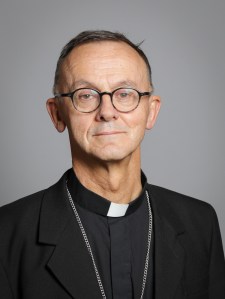 The Lord Bishop of Worcester: To ask Her Majesty’s Government what plans they have to consult with (1) civil society, (2) faith groups, and (3) other humanitarian actors, before drafting any legislation to amend the International Development (Official Development Assistance Target) Act 2015. [HL11257] Continue reading “Bishop of Worcester asks Government about plans to consult on, assess impact, and set time limit for reduction in overseas aid”
 The Lord Bishop of Bristol: My Lords, I have personally seen through the Anglican Communion’s worldwide partnerships the positive impact that the UK’s overseas aid has made to alleviating poverty. I share the concerns of other Peers about the reports of the Government’s intent to overturn the legal commitment to spend 0.7% of gross national income on aid. At the risk of tedium, I hope that the Minister will continue to give this House assurances that the Government have no such plans, which would reduce the UK’s impact under the UN sustainable development goals.
  The Lord Bishop of Peterborough: My Lords, I thank the Leader of the House for answering questions on this matter. On these Benches, we affirm the Government’s right to organise themselves as they think best for the common good. We look forward to greater integration between foreign and development policy and values, and we warmly commend the continued 0.7% commitment. I am grateful to have heard the noble Baroness’s assurance that the Government will remain committed to the OECD DAC rules—it would be lovely to have that repeated. Can we have another assurance that the Government will preserve the primary focus of UK aid as poverty reduction?
 On the 20th December 2018 the Bishop of St Albans, the Rt Revd Dr Alan Smith asked a question he had tabled to Government about Yemen and the shortfall in aid needed to resolve the humanitarian crisis.
 On the 3rd July 2017, the Bishop of Truro, the Rt Revd Tim Thornton contributed to Baroness D’Souza’s debate: That this House takes note of the case for measuring the impact of the United Kingdom’s development aid budget. In a wide-ranging speech, the Bishop spoke of the importance of guarding against thinking about aid spending simply as a financial investment.
 On 21st March 2017, Lord Hylton asked Her Majesty’s Government what assessment they have made of the present state of public health in the Occupied Territories of Palestine; and the prospects for agreed international action, in particular action by Israel, to keep the Gaza Strip habitable. The Bishop of Leeds, the Rt Revd Nick Baines asked a supplementary question about direct aid from the UK to particular hospitals.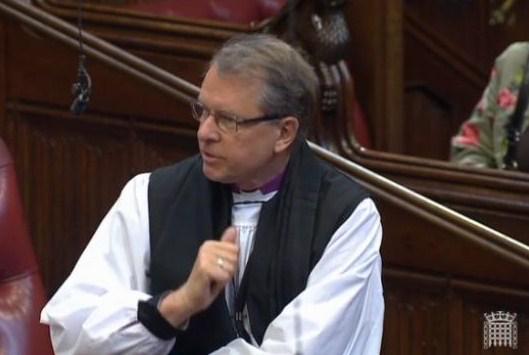


You must be logged in to post a comment.