On the 6th Feb 2020 the Second Church Estates Commissioner, Mr Andrew Selous MP, answered a written question about youth work in the Church of England:
Jim Shannon MP (DUP, Strangford) : To ask the right hon. Member for South West Bedfordshire, representing the Church Commissioners, what estimate the Church of England has made of the number of church-based youth clubs; and what assessment he has made of effect of those clubs on the wellbeing of the young people that use them. Continue reading “Church Commissioners’ written answer – Youth Workers”
On 29th January 2020 the House of Lords debated a motion from Baroness Tyler of Enfield, “to ask Her Majesty’s Government how they plan to respond to the ten steps to improve social mobility contained in the Sutton Trust’s Mobility Manifesto, published in November 2019, and the recommendations of the Social Mobility Commission’s 2019 State of the Nation report.” The Bishop of Durham, Rt Revd Paul Butler, spoke in the debate:
The Lord Bishop of Durham: My Lords, I look forward to the maiden speech of the noble Lord, Lord Choudrey.
Opportunity, aspiration and education are critical to all having the best chance of being socially mobile. Giving children the best start in life is paramount, so we need more health visitors, better-targeted childcare for those least able to afford it and renewed opportunities for parents to interact with others. Will Her Majesty’s Government commit to a proper national early years strategy with an increased share of future spending?
Church of England schools in my diocese have found it difficult to implement our motto that “no child is left behind” because social mobility is a great challenge exacerbated by a poverty of aspiration. According to the Social Mobility Commission’s survey, less than a third of people living in the north-east think that there are good opportunities in our region.
On 28th January 2020 the Bishop of Gloucester, Rt Revd Rachel Treweek, asked a question she had tabled to Government, on support for looked after and adopted children. She and the Archbishop of York, Most Revd and Rt Hon John Sentamu, asked follow-up questions and the transcript is below:
Looked-after and Adopted Children Question
The Lord Bishop of Gloucester: To ask Her Majesty’s Government what plans they have to review support for children looked after by local authorities and those children who are adopted.
The Parliamentary Under-Secretary of State, Department for Education (Lord Agnew of Oulton) (Con): My Lords, we are committed to undertake a review of the care system. We are already implementing substantial reforms to improve outcomes for this most vulnerable group of children and young people. Alongside the reforms, we are providing councils with an additional £1 billion for adult and children’s social care in every year of this Parliament. The review will allow us to go further in ensuring that children and young people have the support that they need. Continue reading “Bishop of Gloucester and Archbishop of York ask Government about support for looked after and adopted children”
On 21st January 2020 the House of Lords debated and voted on an amendment to the Government’s EU (Withdrawal Agreement) Bill from Lord Dubs, which would restore measures for refugee children family reunion. The Bishop supported the amendment as a co-sponsor and in the subsequent vote it was passed by 300 votes to 220. It returns to the Commons to be voted on by MPs.
The Lord Bishop of Durham: My Lords, I speak once more from these Benches, recognising that the argument has been made again and again. I am honoured to follow the noble Lord, Lord Kerr, and to concur with all that he said. As my right reverend friend the Bishop of Worcester reminded the House last week—he kindly spoke for me because I could not be present in Committee—this debate resonates with the nativity story, the story of a child fleeing persecution. The voices of these children are too often drowned out by conflict and violence, by traffickers and by political leaders. Let this House speak on their behalf by voting for the amendment. Continue reading “EU (Withdrawal Agreement) Bill: Bishop of Durham urges support for Dubs amendment on refugee children family reunion”
On 16th January 2020 Baroness Doocey asked Her Majesty’s Government “what is the Home Office’s policy on the processing of an asylum claim when an applicant says they have been the victim of child trafficking?” The Bishop of Worcester, Rt Revd John Inge, asked a follow-up question:
On 15th January 2020 the House of Lords considered amendments to the Government’s European Union (Withdrawal Agreement) Bill at its second day in Committee. The Bishop of Worcester, Rt Revd John Inge, spoke in support of an amendment in the name of Lord Dubs and the Bishop of Durham, to ensure the continuation of the refugee children and family reunification provisions of the European Union (Withdrawal) Act 2018. The amendment was withdrawn by Lord Dubs at the end of the debate, with a commitment to return to it at a later stage.
Clause 37: Arrangements with EU about unaccompanied children seeking asylum. Debate on whether Clause 37 should stand part of the Bill.
The Lord Bishop of Worcester: My Lords, I am pleased to support this amendment, to which my friend the right reverend Prelate the Bishop of Durham has put his name. He is sorry not to be able to be in the Chamber today. A few weeks ago, we celebrated the story of Christmas. In the nativity, the happy events in a Bethlehem stable were followed by the more dramatic flight of the holy family to escape the violent persecution of King Herod. As we discuss this amendment, that story of the child Jesus and his parents fleeing from violence to a foreign land resonates loudly.
Children are among the most vulnerable victims of conflict, persecution and violence around the world. We all know that they do not choose to become refugees separated from their families. We as a nation can choose to reunite some families torn apart by conflict by offering children shelter, hope and a future. That is what I believe the majority of people in this country wish, and I am sure that is what the Government wish. This amendment seeks to ensure it by guaranteeing a safe, legal, effective and managed route for child refugees to join their families in this country. Continue reading “European Union (Withdrawal Agreement) Bill: Bishops support Dubs amendment on refugee children family reunion”
On 9th January 2020 the Bishop of Gloucester, Rt Revd Rachel Treweek, spoke in the Queen’s Speech debate, about children and vulnerable women:
The Lord Bishop of Gloucester: My Lords, I begin by congratulating the noble Baroness, Lady Blower, on her excellent maiden speech.
I shall focus on children and vulnerable women; I draw noble Lords’ attention to my entry on the register of interests. My headlines are that we need policy that supports and enables early intervention and effective partnerships. Experiences that we have at an early age shape who we are. The Children’s Society has been measuring children’s well-being for more than a decade, and during much of that time children’s well-being has been in decline. This is not simply about children; it is about how we shape the sort of communities we want to see. Continue reading “Bishop of Gloucester responds to Queen’s Speech – the needs of children and vulnerable women”
On 9th January 2020, Baroness Massey of Darwen asked the Government, “following their ratification of the UN Convention on the Rights of the Child, what plans they have to promote children’s rights and well-being across government departments in this Parliament”. The Bishop of Rochester, Rt Revd James Langstaff, asked a follow-up question:
The Lord Bishop of Rochester: My Lords, I have two particular groups of children in mind whose well-being is often compromised. The first are those who have a parent or other primary carer on the cusp of going into custody. What plans do Her Majesty’s Government have to ensure that sentencers, including magistrates, are aware of the new guidance from the Sentencing Council on this matter? On looked-after children, what intentions do Her Majesty’s Government have to further promote the vocation—it is a vocation—to become a foster carer or an adopter? Continue reading “Bishop of Rochester asks Government about children of prisoners, improving fostering and adoption”
On the 7th January the Bishop of Durham, the Rt Revd Paul Butler, spoke during the second day of debate on the Queen’s Speech, on the topics of child poverty, climate change sustainable development and immigration:
The Lord Bishop of Durham: My Lords, initially I want to note how little reference there is in the gracious Speech to the needs of children, except in the realm of education. There is nothing about children’s first 1,000 days, nor any firm commitment to tackle the iniquity of child poverty. How we treat children speaks volumes for where our priorities lie. Could the Minister please comment on this omission?
On 22nd October 2019 Parliament continued to debate the Queen’s Speech, including scrutiny of measures relating to Health and Social Care. The Bishop of London, Rt Revd Sarah Mullally (and formerly Chief Nursing Officer for England), contributed to the debate:
Lord Bishop of London: My Lords, many noble Lords will know that I have a background in health, and I continue to be a great supporter of the National Health Service, so they will not be surprised when I address my comments to health and social care. In doing so, I recognise the contribution of the noble Baroness, Lady Emerton, to nursing and to this House.
I thank the Government for their work to support and strengthen the National Health Service, its workforce and its resources. However, increased investment and reform does not guarantee getting to the root of the problem. Our health and social care issue is what you might call a “village problem”. Our flourishing, mentally, physically and emotionally, occurs best in community. More than that, as Sir Michael Marmot’s research from the Institute of Health Equity indicated, our economic, social and emotional circumstances all play a part in our health and well-being.

 On the 6th Feb 2020 the Second Church Estates Commissioner, Mr Andrew Selous MP, answered a written question about youth work in the Church of England:
 The Lord Bishop of Durham: My Lords, I look forward to the maiden speech of the noble Lord, Lord Choudrey.
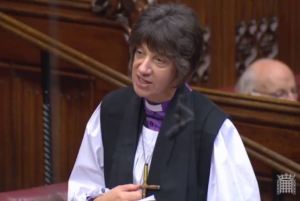 On 28th January 2020 the Bishop of Gloucester, Rt Revd Rachel Treweek, asked a question she had tabled to Government, on support for looked after and adopted children. She and the Archbishop of York, Most Revd and Rt Hon John Sentamu, asked follow-up questions and the transcript is below:
 On 16th January 2020 Baroness Doocey asked Her Majesty’s Government “what is the Home Office’s policy on the processing of an asylum claim when an applicant says they have been the victim of child trafficking?” The Bishop of Worcester, Rt Revd John Inge, asked a follow-up question:
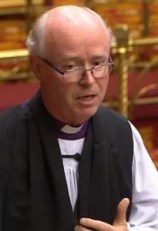 On 9th January 2020, Baroness Massey of Darwen asked the Government, “following their ratification of the UN Convention on the Rights of the Child, what plans they have to promote children’s rights and well-being across government departments in this Parliament”. The Bishop of Rochester, Rt Revd James Langstaff, asked a follow-up question:
 On 22nd October 2019 Parliament continued to debate the Queen’s Speech, including scrutiny of measures relating to Health and Social Care. The Bishop of London, Rt Revd Sarah Mullally (and formerly Chief Nursing Officer for England), contributed to the debate:
 The Church of England in Parliament
You must be logged in to post a comment.