Bishop of Chelmsford – why the Internet needs regulation

On 17th January 2019 Baroness Kidron led a debate in the House of Lords on the motion “that this House takes note of the relationship between the use of digital technology and the health and well-being of children and young people.” The Bishop of Chelmsford, Rt Revd Stephen Cottrell, spoke in the debate:
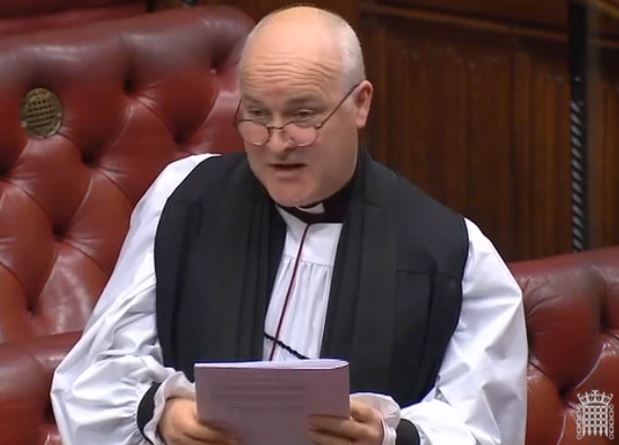
The Lord Bishop of Chelmsford: My Lords, an unregulated digital environment is causing moral decay. There is no time to reiterate the various harms that are being caused, but they are deep-seated, corrosive and pervasive. Just last week I was at a school in Essex talking to 7 to 11 year-olds about their use of a game called TikTok. All of them were using it. The lower age limit for using it is 13. As the noble Baroness, Lady Kidron, pointed out, the digital world assumes that all users are equal and all users are adults, whereas in fact one-third of users worldwide are children. Therefore, their health, well-being and development require us to ensure that the internet, and the many ways that children access it, are as safe as they can be. This has usually meant creating special safe places for children or safety options that can be activated. Continue reading “Bishop of Chelmsford – why the Internet needs regulation”

Bishop of St Albans – ban online gambling adverts and monitor games to reduce harm to young people

On 17th January 2019 Baroness Kidron led a debate in the House of Lords on the motion “that this House takes note of the relationship between the use of digital technology and the health and well-being of children and young people.” The Bishop of St Albans, Rt Revd Alan Smith, spoke in the debate:

The Lord Bishop of St Albans: My Lords, I, too, thank the noble Baroness, Lady Kidron, for raising this subject and for her outstanding introduction to this debate.

Fifty-five thousand children in this country are classified as problem gamblers. The Gambling Commission’s report, Young People and Gambling, published in November, shows that gambling participation has risen, with 14% of 11 to 16 year-olds having spent their own money on gambling. That is a greater proportion of young people than have drunk alcohol, smoked cigarettes or taken illegal drugs. Continue reading “Bishop of St Albans – ban online gambling adverts and monitor games to reduce harm to young people”

Bishop of Ely asks about school exclusions and education of Gypsies, Roma and Travellers

On 16th January 2019 the Bishop of Ely, Rt Revd Stephen Conway received three written answers to questions, on school exclusions and the education of Gypsies, Roma and Travellers:
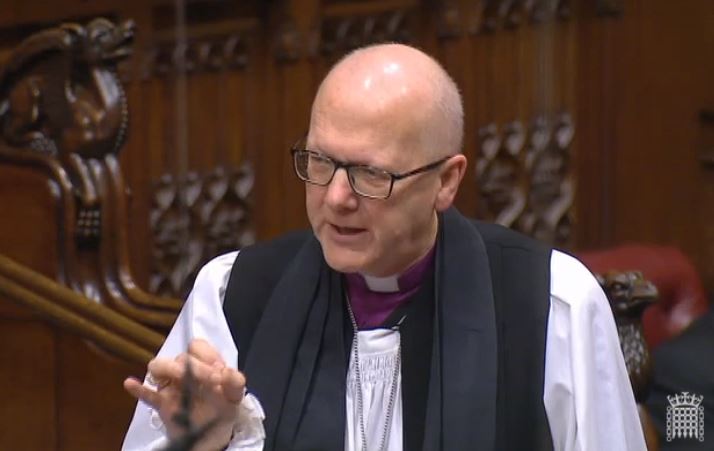
The Lord Bishop of Ely: 

(i) To ask Her Majesty’s Government, following their Race Disparity Audits, what steps they are taking to ensure that educational institutions improve the standard of reading among Gypsies, Roma and Travellers aged 6–7.

(ii) To ask Her Majesty’s Government, following their Race Disparity Audits, what steps they are taking to ensure that educational institutions improve attainment at GCSE level for Gypsies, Roma and Travellers.

Continue reading “Bishop of Ely asks about school exclusions and education of Gypsies, Roma and Travellers”

Bishop of St Albans asks Government how it will regulate gambling advertising online focused on young people

On 15th January 2019 the Bishop of St Albans, Rt Revd Alan Smith, asked a question he had tabled to Government in the House of Lords. The answer, his subsequent question and those of other Members are below:

Gambling: Children

The Lord Bishop of St Albans: To ask Her Majesty’s Government what assessment they have made of the prevalence of gambling among children and young people.

The Parliamentary Under-Secretary of State, Department for Digital, Culture, Media and Sport (Lord Ashton of Hyde) (Con): My Lords, protecting children is a priority for the Government. There are strict controls to prevent underage gambling. In 2011, 23% of 11 to 15 year-olds had gambled in the last week, including with friends. Last year, it was 12%. On the other hand, the Gambling Commission’s Young People & Gambling 2018 report shows an increase to 14%, though not to earlier levels. Sample sizes are small, and we do not know if this is a trend. We are of course monitoring the situation very carefully.

The Lord Bishop of St Albans: I thank the Minister for his reply. At a time when the gambling industry is spending about £1.5 billion a year on encouraging gambling, when children are seeing three gambling adverts every day on average and when 55,000 teenagers in this country are now classified as problem gamblers, we need to look at what is happening particularly online, where young people most often see the adverts, which is outside all the previous criteria for regulation. What are Her Majesty’s Government doing to regulate online advertising, which is particularly focused on our young people? Continue reading “Bishop of St Albans asks Government how it will regulate gambling advertising online focused on young people”

Bishop of Durham Welcomes Universal Credit Announcement

From the Church of England website:

Following comments by the Work and Pensions Secretary Amber Rudd on changes to Universal Credit, the Bishop of Durham, Paul Butler, who speaks for the Church of England on issues relating to children and young people, said:

“As a just and compassionate society, we believe that every child is a blessing and deserves to be treated equally.

“So I very much welcome today’s announcement that the two-child limit policy will not be extended to children born before the policy came into effect in April 2017. I also welcome the Government’s more considered approach to moving people on to Universal Credit from the old benefits system.

Continue reading “Bishop of Durham Welcomes Universal Credit Announcement”

Bishop of Gloucester asks about impact of benefit reforms and two-child limit on families with children

On 10th January 2019 the Bishop of Gloucester, Rt Revd Rachel Treweek, asked a question she had tabled to Government on benefit reforms and the impact on children. She specifically raised the issue of the two-child limit. A Government announcement on that was made the following day. The response to the question and to the Bishop’s subsequent question and those of other Members, can be seen in full below:

Benefit Reforms

The Lord Bishop of Gloucester: To ask Her Majesty’s Government what assessment they have made of the impact of benefit reforms on families with children.

​The Parliamentary Under-Secretary of State, Department for Work and Pensions (Baroness Buscombe) (Con): My Lords, this Government support families. Our welfare system supports those who are vulnerable and helps people into work. These reforms are working, with 3.3 million more people in work and 300,000 fewer children in absolute poverty than in 2010, a record low. Once fully rolled out, universal credit will result in an extra 200,000 people moving into work and will empower people to work an extra 113 million hours a year to support their families.

The Lord Bishop of Gloucester: I thank the Minister for her Answer and I am grateful for recent engagement with faith and other groups on this issue, but the Government’s own statistics show that child poverty is rising among families with more than two children, even when those families have an adult in work. One of the principal drivers of this increase is the Government’s two-child limit, which makes it harder for parents of more than two children to work their way out of poverty, contrary to the aims of universal credit. In light of this evidence, will the Government reconsider that two-child policy? Continue reading “Bishop of Gloucester asks about impact of benefit reforms and two-child limit on families with children”

Bishop of Gloucester urges Government to support girls in conflict-zones and ratify Istanbul Convention

On the 8th January 2019 Baroness Hodgson of Abinger hosted a debate about adolescent girls in conflict-affected countries. The Bishop of Gloucester, the Rt Revd Rachel Treweek spoke in the debate to highlight the need to ratify the Istanbul Convention and to increase the support given to education of children:

Gloucester071117 b

The Lord Bishop of Gloucester:  My Lords, I too thank the noble Baroness, Lady Hodgson, for securing this debate. It is a great honour to be taking part and to listen to the contributions of so many amazing supporters of women and girls. I should also like to draw attention to my interests as set out in the register.


Following previous speakers, I too should like to reinforce what has been said about violence and access to education. As has been said, before, during and after conflict girls face both physical and sexual violence. It is important to note that trauma follows adolescent girls when they flee from conflict, whether they become refugees or are internally displaced. There is a high ​risk of sexual abuse in overcrowded, unsanitary and unsafe refugee areas. Girls face not only prostitution and the risk of early marriage; they also face isolation and a lack of access to healthcare and psychological support. I would like to ask the Minister: what specific action are the Government currently taking to support girls in these vulnerable places, and how will rebuilding peace after conflict specifically involve support for these girls?

Continue reading “Bishop of Gloucester urges Government to support girls in conflict-zones and ratify Istanbul Convention”

Bishop of Gloucester asks Government about child refugees and rights to family reunion

Gloucester 150318On the 8th January 2019 Lord Roberts of Llandudno asked a question of the government about migrants crossing the English channel. the Bishop of Gloucester, Rt Revd Rachel Treweek asked a follow-up question about the right of family reunion and child migrants.
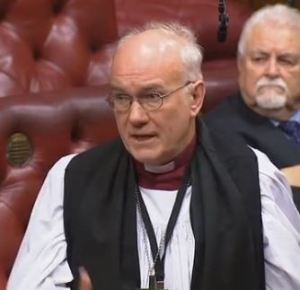
The Lord Bishop of Gloucester: My Lords, children granted refugee status in the UK have no rights to family reunion. This sets the UK apart from all other European countries. What are the Government doing to ensure legal protection and mental health support for these children? Will they consider granting rights to family reunion?

Continue reading “Bishop of Gloucester asks Government about child refugees and rights to family reunion”

Bishop of Chester questions strength of protections of new online pornography regulations

On 11th December 2018 the House of Lords considered a motion to approve the Online Pornography (Commercial Basis) Regulations 2018. During the debate the Bishop of Chester, Rt Revd Peter Forster, spoke:

The Lord Bishop of Chester: My Lords, I am pleased to speak in general support of the regulations and guidance. They relate to matters which I and others raised during the passage of the Digital Economy Bill in 2017 and, more broadly, to issues debated by the House a couple of years ago in a balloted debate that I introduced. The subject of that debate was the impact of pornography on our society. While there was some disagreement over the impact of pornography on adults, there was virtual unanimity that children needed to be protected from pornography—as far as this could reasonably be achieved. I seem somehow, by default, to have become the episcopal expert on pornography. I am trying to live that down. It is just the way it has fallen—although I often find myself talking from these Benches about things I have not had much experience of. Continue reading “Bishop of Chester questions strength of protections of new online pornography regulations”

Bishop of Portsmouth asks Government about impact of welfare benefit two-child limit on families

On 4th December 2018 the Bishop of Portsmouth, Rt Revd Christopher Foster, received written answers to four questions on welfare benefits and the two-child limit:

The Lord Bishop of Portsmouth: To ask Her Majesty’s Government, further to the statistics they published on 28 June, how many (1) families, and (2) children have been affected by the policy to provide support for a maximum of two children in each month since that policy came into effect. Continue reading “Bishop of Portsmouth asks Government about impact of welfare benefit two-child limit on families”