On the 2nd December 2016 the Bishop of Ely, the Rt Revd Stephen Conway spoke in a debate led by the Archbishop of Canterbury on shared values and their implications for public policy making. The Bishop of Ely spoke about the importance of character education in developing values and the role played by church schools in fostering good links between children of all faiths and none.
 The Lord Bishop of Ely: My Lords, I thank my friend the most reverend Primate for securing this timely and essential debate. I applaud the noble Lord, Lord McInnes, on his excellent speech, not least on drawing together our concern for values with opportunity for our children and young people. When we talk about British values, we should be aiming not at the lowest common denominator but, as the noble Baroness, Lady Warsi, said, at the highest ideals that we want to promote for and with our children.
Character education is all set to be the foundation for the kind of person we want each child to become: a member of society who not only understands the world, but cares about it, is equipped to continue in the good and recognise and challenge the bad and is courageous enough to bridge divides and extend the hand of friendship. The Church of England vision for education actively seeks to provide an education that fosters this. Character education is about educating children not only to become efficient economic units, but to flourish in all areas of their lives, and enjoy life in all its fullness, as Jesus says in the Gospel of John. Fundamental to this is the nurturing of virtues as the intrinsic building blocks of a rounded human life with concrete outcomes in behaviour and service. St Paul takes the life of virtue beyond what had previously been categorised when he wrote in the Letter to the Galatians about the “fruits of the spirit”: love, joy, peace, forbearance, kindness, goodness, faithfulness, gentleness and self-control.

 The Lord Bishop of St Albans To ask Her Majesty’s Government what assessment they have made of the rise in the number of children and young people being treated for self-harm.
 The Lord Bishop of Gloucester: My Lords, I thank my noble friend the most reverend Primate the Archbishop of Canterbury on his foresight in tabling this debate on shared values. I also add my own congratulations to the noble Lord, Lord McInnes of Kilwinning, and the noble Baroness, Lady Bertin, on their poignant and insightful maiden speeches.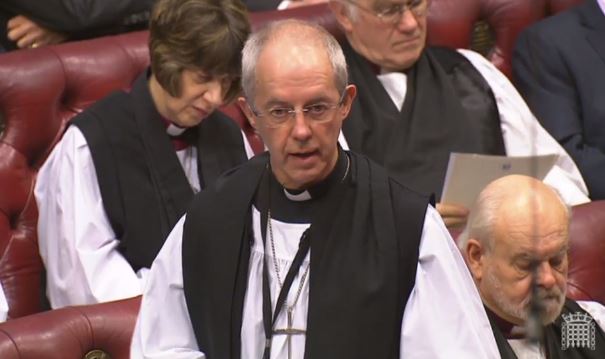

 On 16th November 2016, Baroness Tyler of Enfield asked Her Majesty’s Government “what is their response to the Report of the Values-Based Child and Adolescent Mental Health System Commission, What Really Matters in Children and Young People’s Mental Health, published on 7 November.” The Bishop of Carlisle, Rt Revd James Newcome, asked a follow up question:
 On 8th November 2016, the House of Lords considered the Government’s Children and Social Work Bill at its Report Stage. They debated an amendment co-sponsored by the Bishop of Durham and Lord Dubs on the welfare and protection of unaccompanied migrant children. Lord Watson of Invergowrie moved the amendment on behalf of Lord Dubs and the Bishop of Leeds, Rt Revd Nick Baines, spoke on behalf of the Bishop of Durham. The Bishop welcomed the Government’s commitment to publishing a strategy to implement the substance of the amendment. In her response, Baroness Williams of Trafford, Minister of State for the Home Office, paid tribute to the work of the Church:
 On 7th November 2016, Lord Laming asked the Government “what steps they are taking to ensure that children in local authority care are placed in a location close to their extended family and current school.” The Bishop of Durham, the Rt Revd Paul Butler, asked a supplementary question.
 On Monday 24th October, Lord Roberts of Llandudno asked Her Majesty’s Government “what steps they are taking to fulfil the obligation under the Immigration Act 2016 to accept unaccompanied child refugees before the camps at Calais and Dunkirk are demolished on 31 October.” The Bishop of Portsmouth, Rt Rev Christopher Foster, asked a follow up question.
 The Church of England in Parliament
You must be logged in to post a comment.