Bishop of Durham calls for more joined-up approach to tackling child poverty

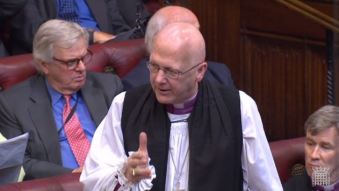
durham-230117On 24th January 2017 Baroness Lister of Burtersett asked the Government “why they have abolished the Child Poverty Unit which was sponsored by the Department for Work and Pensions, the Department for Education and HM Treasury.” The Bishop of Durham, Rt Revd Paul Butler, asked a follow up question:

The Lord Bishop of Durham: My Lords, I know the Minister will agree that no child chooses to live in poverty, so when a child is hungry or lives in poor housing, will the Minister and the Government recognise that these are our children, as a society, and that that means we must have good joined-up structures which tackle these issues? Does he also recognise that the abolition of the CPU does not hint at good joined-up structures? Continue reading “Bishop of Durham calls for more joined-up approach to tackling child poverty”

Bishop of St Albans raises concerns about self-harm by young people

stalbans190117On 19th January 2017 Labour Peer Lord Hunt of King’s Heath asked Her Majesty’s Government “what is their assessment of Young Minds’ analysis published on 21 December 2016 that 64 per cent of Clinical Commissioning Groups are diverting new funding for children’s mental health services to other areas”. The Bishop of St Albans, Rt Revd Alan Smith, asked a follow up question:

The Lord Bishop of St Albans: My Lords, this is a very serious and growing problem. Recent research has shown over the last five years that the number of hospital admissions associated with children’s self-harm has grown by 93% among girls and 45% among boys. It seems extraordinary that when money is announced for mental health services it is then not spent. First, how many years will we wait until we need to ring-fence that money, because this is a really important issue? Secondly, to pick up on the previous but one question, will the Government commit to producing guidelines for schools and colleges about preventing and responding to self-harm, so that we have some practical things put in place? Continue reading “Bishop of St Albans raises concerns about self-harm by young people”

Bishop of St Albans questions Government about underage online gambling

St Albans 2On the 12th January 2017 the Bishop of St Albans, the Rt Revd Alan Smith asked a question in the Lords about underage gambling online. Lord Ashton of Hyde responded for the Government. Those exchanges and the follow-up questions of Peers are reproduced below:

 The Lord Bishop of St Albans: To ask Her Majesty’s Government what steps they will take to tackle the prevalence of underage gambling online, in the light of the Gambling Commission’s report Young People and Gambling 2016.

Bishop of St Albans raises serious need to address self harm amongst children and young people

On 6th December 2016, the Bishop of St Albans, the Rt Revd Alan Smith, spoke to a question he had tabled to ask the Government “what assessment they have made of the rise in the number of children and young people being treated for self-harm.” Lord Prior of Brampton responded for the Government. The Bishops’ follow-up question and those of Peers are reproduced below. 

StAlbans171115The Lord Bishop of St Albans To ask Her Majesty’s Government what assessment they have made of the rise in the number of children and young people being treated for self-harm.

Lord Prior of Brampton My Lords, the Government are aware of the appalling rise in self-harm in children and young people and the misery this reflects. The Government are also acutely aware that self-harm is a leading indicator of risk of suicide and recognise that much more needs to be done to address this issue.

The Lord Bishop of St Albans I thank the Minister for his reply. The research from the World Health Organization shows that around 20% of British 15 year-olds report some sort of self-harm. In the past five years, research shows that hospital admissions associated with self-harm have gone up by nearly 93% among girls and 45% among boys. Having recently visited the outstanding charity selfharmUK, in Luton in my diocese, I have seen what a concerted and systematic approach to this problem can have on a very difficult issue, and we need something similar at a national level. Will Her Majesty’s Government commit to publishing guidelines for schools and colleges about preventing and responding to self-harm?

Bishop of Gloucester on building strong local communities of shared values

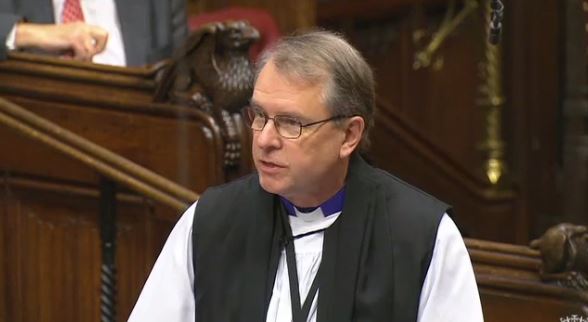
On the 2nd December 2016 the Bishop of Gloucester, the Rt Revd Rachel Treweek, spoke in the debate led by the Archbishop of Canterbury on shared  values and their role in shaping public policies. She highlighted the compassionate hospitality which this country has shown generations of refugees alongside the work she is undertaking in Gloucestershire to build community, standing ‘with’ rather than ‘othering’ people to promote human flourishing. 

gloucesterThe Lord Bishop of Gloucester: My Lords, I thank my noble friend the most reverend Primate the Archbishop of Canterbury on his foresight in tabling this debate on shared values. I also add my own congratulations to the noble Lord, Lord McInnes of Kilwinning, and the noble Baroness, Lady Bertin, on their poignant and insightful maiden speeches.

In the diocese of Gloucester, I have recently been talking to young people about body image and reflecting with them on how their true worth begins deep within, the place from which true values emerge and are lived. Last Saturday, I hosted a huge community party in Cheltenham to publicly launch our new vision for the diocese of Gloucester. The vision has emerged from conversations in local communities, urban and rural, involving about 6,000 people, churchgoers and otherwise, discussing what sort of church they want to see in their communities.The vision is one of human flourishing and transformation, emanating from those words of Jesus from the gospel of John:

“I have come that they may have life, and have it to the full”.

That is a good starting place when it comes to talking about values. Continue reading “Bishop of Gloucester on building strong local communities of shared values”

Bishop of Ely highlights role of church schools in fostering shared values

On the 2nd December 2016 the Bishop of Ely, the Rt Revd Stephen Conway spoke in a debate led by the Archbishop of Canterbury on shared values and their implications for public policy making. The Bishop of Ely spoke about the importance of character education in developing values and the role played by church schools in fostering good links between children of all faiths and none.

ElyThe Lord Bishop of Ely: My Lords, I thank my friend the most reverend Primate for securing this timely and essential debate. I applaud the noble Lord, Lord McInnes, on his excellent speech, not least on drawing together our concern for values with opportunity for our children and young people. When we talk about British values, we should be aiming not at the lowest common denominator but, as the noble Baroness, Lady Warsi, said, at the highest ideals that we want to promote for and with our children.

Character education is all set to be the foundation for the kind of person we want each child to become: a member of society who not only understands the world, but cares about it, is equipped to continue in the good and recognise and challenge the bad and is courageous enough to bridge divides and extend the hand of friendship. The Church of England vision for education actively seeks to provide an education that fosters this. Character education is about educating children not only to become efficient economic units, but to flourish in all areas of their lives, and enjoy life in all its fullness, as Jesus says in the Gospel of John. Fundamental to this is the nurturing of virtues as the intrinsic building blocks of a rounded human life with concrete outcomes in behaviour and service. St Paul takes the life of virtue beyond what had previously been categorised when he wrote in the Letter to the Galatians about the “fruits of the spirit”: love, joy, peace, forbearance, kindness, goodness, faithfulness, gentleness and self-control.

Archbishop of Canterbury leads Lords debate on shared values

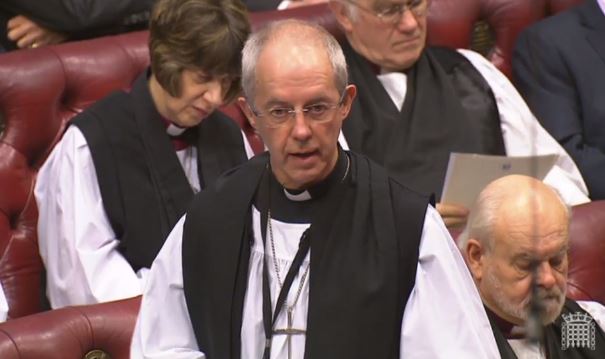
On 2 December 2016 the Archbishop of Canterbury, the Most Revd and Rt Hon Justin Welby, led a debate in the House of Lords “That this House takes note of the shared values underpinning our national life and their role in shaping public policy priorities.” His opening and closing speeches are below. The Bishops of Ely and Gloucester also spoke in the debate.

abcvalues5

The Archbishop of Canterbury: My Lords, I am most grateful to the usual channels for making this debate possible. I should also like to thank noble Lords who have made the time and taken the trouble to attend today in considerable numbers, the Minister, the noble Lord, Lord Bourne, and those who look after us so well in this House.

In case noble Lords are wondering what the Motion is [laughter]…I decided to change it at the last minute…It reads:

“The Lord Archbishop of Canterbury to move that this House takes note of the shared values underpinning our national life and their role in shaping public policy priorities”.

It will be an especial pleasure to hear maiden speeches from the noble Baroness, Lady Bertin, and the noble Lord, Lord McInnes of Kilwinning. The noble Baroness brings her knowledge of communications, issues of disability among children and education. The noble Lord will enable us to have a wider view of issues in Scotland.

The UK, especially perhaps England, is a pragmatic country with a bias towards the empirical over the theoretical. Not for us the cries of “liberty, equality and fraternity”, to be followed by years of bloodshed to ensure true fraternity was established. Rather, ours is an untidiness of cumulative reforms and changes, worked out in practice through the highways and byways of our constitution. We relish the irony of a constitution that works in practice but never could in theory.

Great times of change in mood and culture demand from us a reimagining of what we are about as a nation. As we move into a post-Brexit world, alongside the other events that buffet and deflect us, unless we ground ourselves in a clear course and widely accepted practices, loyalties and values—what I will call values in this speech—we will just go with the wind. Continue reading “Archbishop of Canterbury leads Lords debate on shared values”

Bishop of St Albans on the action needed to address child poverty

On 17th November 2016 the House of Lords debated a motion from Crossbench Peer Lord Bird, “to ask Her Majesty’s Government what plans they have to address the root causes of child poverty across the United Kingdom”.The Bishop of St Albans, Rt Revd Alan Smith, spoke in the debate:


The Lord Bishop of St Albans: My Lords, my thanks go to the noble Lord, Lord Bird, for tabling this important debate and for the challenging and spirited way in which he always makes his speeches, which not only entertain but very often get to the heart of many of the crucial issues. This debate is particularly timely because of the figures recently released by the End Child Poverty Coalition, which show that child poverty levels continue to rise steeply, reaching 47% in some areas. In his maiden speech the noble Lord, Lord Bird, spoke of the need to give those in poverty a hand up and not a handout. He focused on the importance of creating opportunities, rather than dependency. This of course has been one of the great themes of his life’s work. I believe that that is a crucial message. Continue reading “Bishop of St Albans on the action needed to address child poverty”

Policing and Crime Bill: Bishop of Bristol sponsors amendment on child abduction

On 16th November 2016 the House of Lords considered the Government’s Policing and Crime Bill in Committee. The Bishop of Bristol co-sponsored an amendment to the Bill about the abduction of vulnerable children, which was moved in his absence by Labour’s Lord Kennedy. The amendment was withdrawn after the debate.

Continue reading “Policing and Crime Bill: Bishop of Bristol sponsors amendment on child abduction”

Bishop of Carlisle asks Government about the impact of work pressures on teachers’ mental health

14.06.09 Bishop of CarlisleOn 16th November 2016, Baroness Tyler of Enfield asked Her Majesty’s Government “what is their response to the Report of the Values-Based Child and Adolescent Mental Health System Commission, What Really Matters in Children and Young People’s Mental Health, published on 7 November.” The Bishop of Carlisle, Rt Revd James Newcome, asked a follow up question:

The Lord Bishop of Carlisle: My Lords, the commission highlighted the importance of valuing the workforce, but a 2014 survey of teachers and lecturers indicated that about 55% of them reckoned that their work was seriously damaging their own mental health. Have Her Majesty’s Government any plans to address that particular issue so that the mental health of teachers can be improved and so they are better equipped to help and improve the mental health of their pupils? Continue reading “Bishop of Carlisle asks Government about the impact of work pressures on teachers’ mental health”