
On Wednesday 17th December 2014 it was announced by Downing Street that the Rev Libby Lane had been nominated to be the next Bishop of Stockport, making her the first woman to be appointed as a bishop in the Church of England. MPs joined those across the country in offering their congratulations. Continue reading “MPs welcome the news of the Church of England’s first female bishop”
Tag: Church of England
Lords Debate on Religion and Belief in British Public Life
A full transcript of the House of Lords debate on Religion and Belief in British Public Life, which took place on 27th November 2014, is below.
A video of the debate can also be watched on the UK Parliament website, here.
The speeches made by the Bishops of Norwich and Birmingham are also available on this website, here and here.
Motion to Take Note
11.53 am
Moved by Lord Harries of Pentregarth
That this House takes note of the role of religion and belief in British public life.
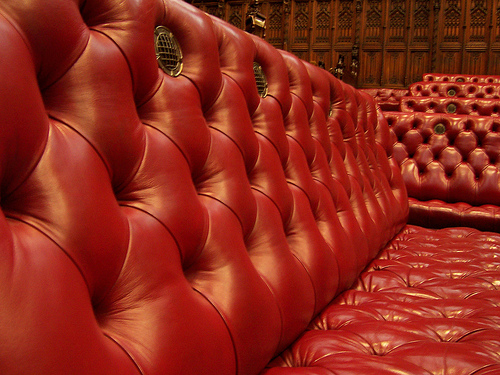
Continue reading “Lords Debate on Religion and Belief in British Public Life”
Service and trust: Bishop of Norwich speaks in Lords debate on religion and belief in public life
“Service, in the Christian tradition, is a vocation. When Jesus washed the feet of his disciples he reversed the power relationship between the teacher and his followers. Two thousand years ago, service never made you great; it was a sign of your enslavement. These days, by contrast, everyone wants to do us a service” – Bishop of Norwich, 27/11/14
On 27th November 2014 the House of Lords debated a motion from the Crossbench Peer and former Bishop of Oxford, Lord Harries of Pentregarth, on ‘the role of religion and belief in British public life’. The Bishop of Norwich, Rt Rev Graham James, spoke in the debate, focusing on themes of trust and a vocation to service in public life.
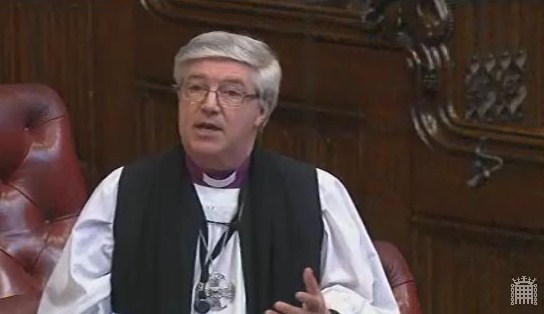 The Lord Bishop of Norwich: My Lords, like other noble Lords I am very grateful to the noble and right reverend Lord, Lord Harries, for securing this debate. I notice that the commission of which he is part is considering how religion may contribute to,
“greater levels of mutual trust and collective action, and to a more harmonious society”.
I will address the reference to mutual trust, especially with regard to our public life, which is far from well. The level of cynicism about our political structures and politicians finds reflection in an all too common assumption that many people in public life are not to be trusted. That is true for religious leaders, too, and for almost anyone in the public eye, and it generates cynicism about the state itself. Continue reading “Service and trust: Bishop of Norwich speaks in Lords debate on religion and belief in public life”
Bishop of Birmingham in Lords Debate on Religion and Belief in Public Life
On 27th November 2014 the House of Lords debated a motion from the Crossbench Peer and former Bishop of Oxford, Lord Harries of Pentregarth, on ‘the role of religion and belief in British public life’. The Bishop of Birmingham, Rt Rev David Urquhart spoke in the debate:
The Lord Bishop of Birmingham: My Lords, I am grateful to my colleague, the noble and right reverend  Lord, Lord Harries, for shaping this debate and for the remarks just offered by the noble Baroness. It may be a great surprise to many of our fellow citizens that public religious figures should be asked to play a part at all in 21st century society. However, the least surprised in the city of Birmingham are my interfaith colleagues. They expect the leaders and members at a local parish level and at a national level in what they regard as the indigenous national religion to play a full part in society and to articulate the needs, values and beliefs of those who have faith on things that are a matter of importance to the whole of society, whether they are faithful or not. Continue reading “Bishop of Birmingham in Lords Debate on Religion and Belief in Public Life”
Minister congratulates Church on passage of Women Bishops Measure
On 21st October 2014 Baroness Thornton asked Her Majesty’s Government “what measures they are taking to increase the representation of women in public life”. The Bishop of Coventry, Rt Rev Christopher Cocksworth, asked a supplementary question.
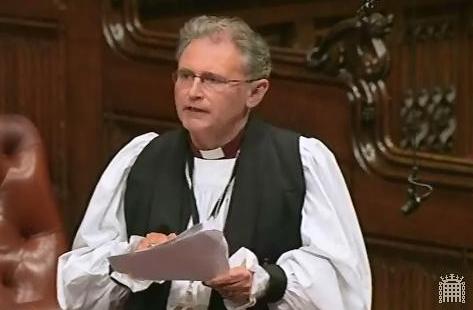 The Lord Bishop of Coventry: My Lords, in the light of those and other comments and last night’s debate in the other place, is the Minister ready to accept the thanks of the Church of England to both Houses for dealing so expeditiously with this matter? If Her Majesty graciously grants Royal Assent to the Measure, will the Minister convey in a suitably constitutional way the good wishes of this House to the General Synod when it meets to enact the necessary canon on 17 November, which will make way for the admittance of women to the episcopate in the Church of England?
Baroness Northover: I was delighted with the debate in this and the other House. We congratulate the church on this historic event.
(via Parliament.uk)
House of Commons approves the Bishops and Priests (Consecration and Ordination of Women) Measure
Bishops and Priests (Consecration and Ordination of Women) Measure
20th October, 2014
[Relevant document: The 233rd Report from the Ecclesiastical Committee, Bishops and Priests (Consecration and Ordination of Women) Measure, HC 622.]
5.07 pm
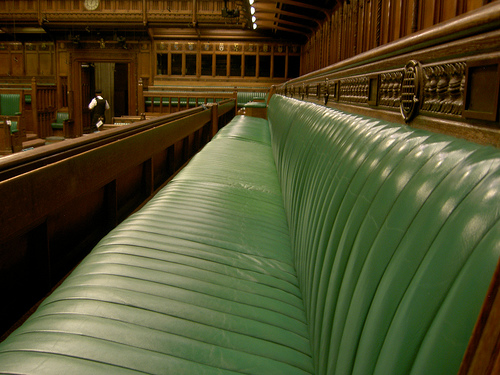 The Second Church Estates Commissioner (Sir Tony Baldry):
I beg to move,
That the Bishops and Priests (Consecration and Ordination of Women) Measure (HC 621), passed by the General Synod of the Church of England, be presented to Her Majesty for her Royal Assent in the form in which it was laid before Parliament.
It is now nearly a century since Parliament recognised that it should no longer be the body that initiated legislation concerning the running of the Church of England. However, Church legislation becomes part of the law of England, so it requires parliamentary approval and Royal Assent. A Measure such as the one before us has to have been passed by the General Synod of the Church of England. Most Measures require simple majorities in the Synod, but this one falls in that special category of particularly important instruments that need to have achieved at least two-thirds majorities in each of the Houses of Bishops, Clergy and Laity. Continue reading “House of Commons approves the Bishops and Priests (Consecration and Ordination of Women) Measure”
Lords Approves the Bishops and Priests (Consecration and Ordination of Women) Measure
Bishops and Priests (Consecration and Ordination of Women) Measure
14th October 2014
Motion to Direct
5.35 pm
Moved by
That this House do direct that, in accordance with the Church of England Assembly (Powers) Act 1919, the Bishops and Priests (Consecration and Ordination of Women) Measure be presented to Her Majesty for the Royal Assent.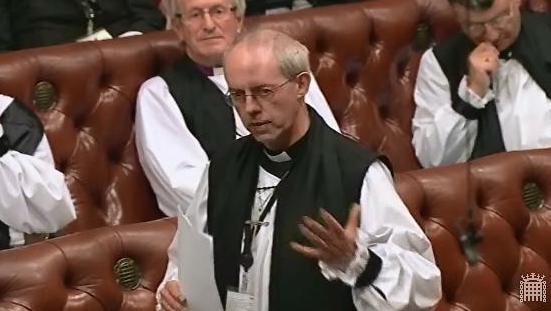
My Lords, it is now 95 years since Parliament conferred on the Church of England the power to initiate legislation, which, following parliamentary approval and Royal Assent, becomes part of the law of England.
Most of the Measures passed by the Church Assembly and, since 1970, by the General Synod have been necessary but modest revisions of the church’s rule book and the law of England. Texts such as the Church of England (Miscellaneous Provisions) Measure 2014 or the Ecclesiastical Fees (Amendment) Measure 2011 were not framed with excitement in mind, but even they sound positively racy compared with that early piece of Church Assembly legislation considered by this House in the days of Archbishop Davidson—the Ecclesiastical Dilapidations Measure 1923. Just occasionally, though, the church brings to Parliament legislation which is of more significance and effect. The Church of England (Worship and Doctrine) Measure 1974 was one such, and so was the legislation passed by Synod in 1992 to enable women to be ordained priests in the Church of England. Continue reading “Lords Approves the Bishops and Priests (Consecration and Ordination of Women) Measure”
Church and the Marriage (Same Sex Couples) Act – Lords questions
 On 30th July 2014, Conservative Peer Lord Fowler asked Her Majesty’s Government “whether they are satisfied with the enactment and operation of the Marriage (Same Sex Couples) Act 2013.”
In his follow up question, Lord Fowler raised the situation of clergy who are married to someone of the same sex. A number of other Peers also asked questions relating to the situation in the Church of England.
The Bishop of Sheffield, the Rt Rev Steven Croft, set out the Church of England’s position in his own supplementary question and the full transcript of all the exchanges is reproduced below: Continue reading “Church and the Marriage (Same Sex Couples) Act – Lords questions”
Bishop of Derby speaks of unique contribution of the voluntary sector to society
“We do not look just to our neighbours but to strangers. We are not just interested in economic viability but in what is morally right. That is where the energy of the charity sector comes from, and why there is that great British tradition we have heard of—not because it is economically efficient but because it is morally right” – Bishop of Derby, 26.6.14
On 26th June 2014, the Bishop of Derby, the Rt Revd Alastair Redfern, took part in Baroness Scott of Needham Market’s take note debate on the role played by the voluntary and charitable sectors. He spoke of the distinctive nature of the voluntary and charitable sectors, how they can learn from the world of business but must not simply become businesses, and how they must be afforded the freedom and flexibility to deliver their own unique contribution to communities.

The Lord Bishop of Derby: My Lords, I, too, thank the noble Baroness and her party for securing this debate. We talk in a context in which certainly many of the charities and voluntary and faith groups that I am involved with are in crisis, with rising demand and costs and reduced funding. That context is the ending of the welfare state. I remind the House that when the welfare state was conceived, Sidney and Beatrice Webb saw it as having three charity and voluntary work purposes: to meet basic needs, to bring people into association with each other, and to create partnership and participation. Of course, the welfare state became totally focused on meeting basic needs rather than on the richer political ecology of dignifying people, associating with them and bringing them into partnership. Many of us in the charitable and voluntary sector have got drawn into that game of meeting basic needs through projects. Continue reading “Bishop of Derby speaks of unique contribution of the voluntary sector to society”
First World War: Bishop of London highlights role of cathedrals and parish churches in ‘active commemoration’
“It is obvious that we cannot change the past, but we are responsible for how we remember it. Memory—and its more active form, commemoration—is certainly more than just lifting down a file and recalling a past event: it is a creative and responsible art which involves highlighting certain features and identifying significant resonances” – Bishop of London, 25/6/14
On 25th June 2014, Lord Gardiner of Kimble led a debate in the House of Lords to take note of the programme to commemorate the centenary of the First World War. The Bishop of London the Rt Rev. & Rt Hon Richard Chartres, took part in the debate, speaking of the importance of collective memory and ‘active commemoration’ of the First World War. He made reference to the significant role of citizens of the Commonwealth who served in the War, the ‘proper protest’ of those compelled to take a pacifist position, and set out some of the plans being made by churches and cathedrals across the country to commemorate the First World War.

The Lord Bishop of London: My Lords, I, too, am grateful to the Minister for the comprehensive and measured way in which he introduced this important debate and laid out the Government’s plans for this commemoration. I also very much echo the words of the noble Baroness, Lady Williams, about the emphasis being placed on the Commonwealth dimension. I have had the privilege of participating in the annual observances at the memorial gates since their inception. Remembering the sacrifices that were made by so many of those from Commonwealth countries who served provides us with an extremely important opportunity to weave that strand into the national tapestry and our national identity. Continue reading “First World War: Bishop of London highlights role of cathedrals and parish churches in ‘active commemoration’”
 The Church of England in Parliament
You must be logged in to post a comment.