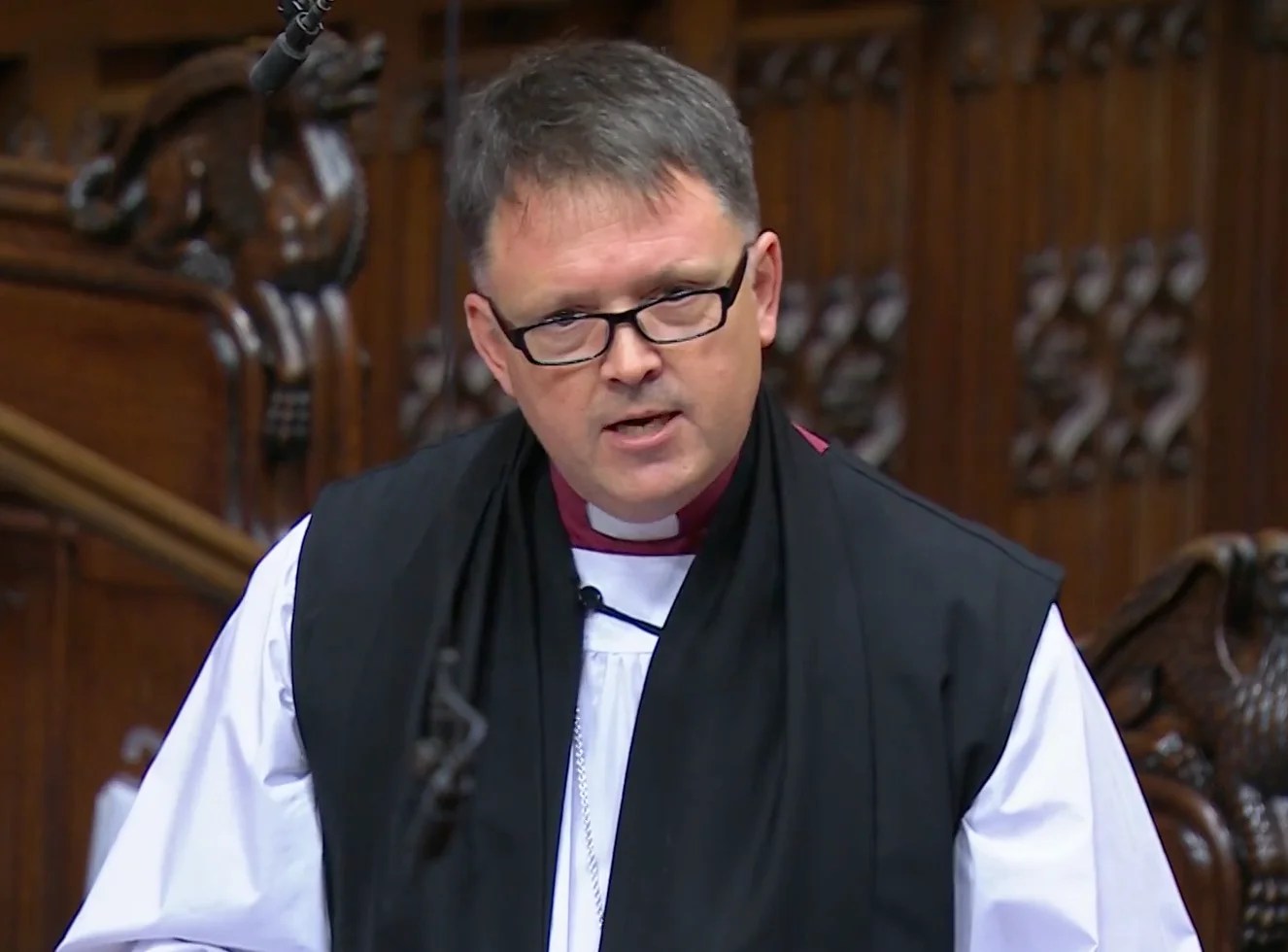
Bishop of Manchester asks about preparing young people for civic participation

The Bishop of Manchester asked a question on preparing young people for participation in politics on 18th November 2025, during a discussion on election law and the expansion of the voting franchise:

The Lord Bishop of Manchester: My Lords, as an enthusiastic volunteer on the Learn with the Lords programme, I strongly applaud the Government’s plans to reduce the voting age from 18 to 16. In preparation for that, what can the Government do to help teachers in schools prepare young people and be able to teach about politics in a way that does not get them in trouble for perhaps being seen to be partisan?

Continue reading “Bishop of Manchester asks about preparing young people for civic participation”

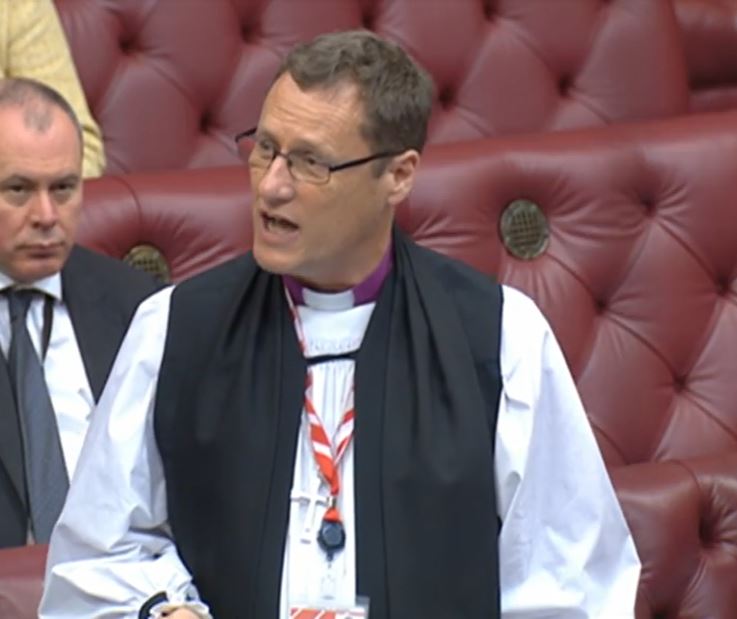
Bishop of Leicester asks about engagement with work on debt cancellation

The Bishop of Leicester asked a question about the Jubilee 2000 Campaign on 17th July 2025, during a wider discussion on debt relief and cancelling international debt:

The Lord Bishop of Leicester: My Lords, this year marks the 25th anniversary of the Jubilee 2000 campaign—a remarkable coming together of tens of millions of people from around the world, which led to around $130 billion of debt being cancelled across 36 countries. It allowed those countries to reinvest in education, healthcare and poverty alleviation. The Pope has also declared this year a year of Jubilee and set up a commission to look at international debt relief. What are the Government doing to learn from the Jubilee 2000 campaign and to engage with faith communities and charities working in this sector?

Continue reading “Bishop of Leicester asks about engagement with work on debt cancellation”

Bishop of St Albans asks about disappearance of civil society activist in Laos

The Bishop of St Albans received the following written answers on 24th February 2025:

The Lord Bishop of St Albans asked His Majesty’s Government what plans they have to raise the case of civil society activist Sombath Somphone at the UN’s fourth Universal Periodic Review of Laos on 29 April.

Continue reading “Bishop of St Albans asks about disappearance of civil society activist in Laos”

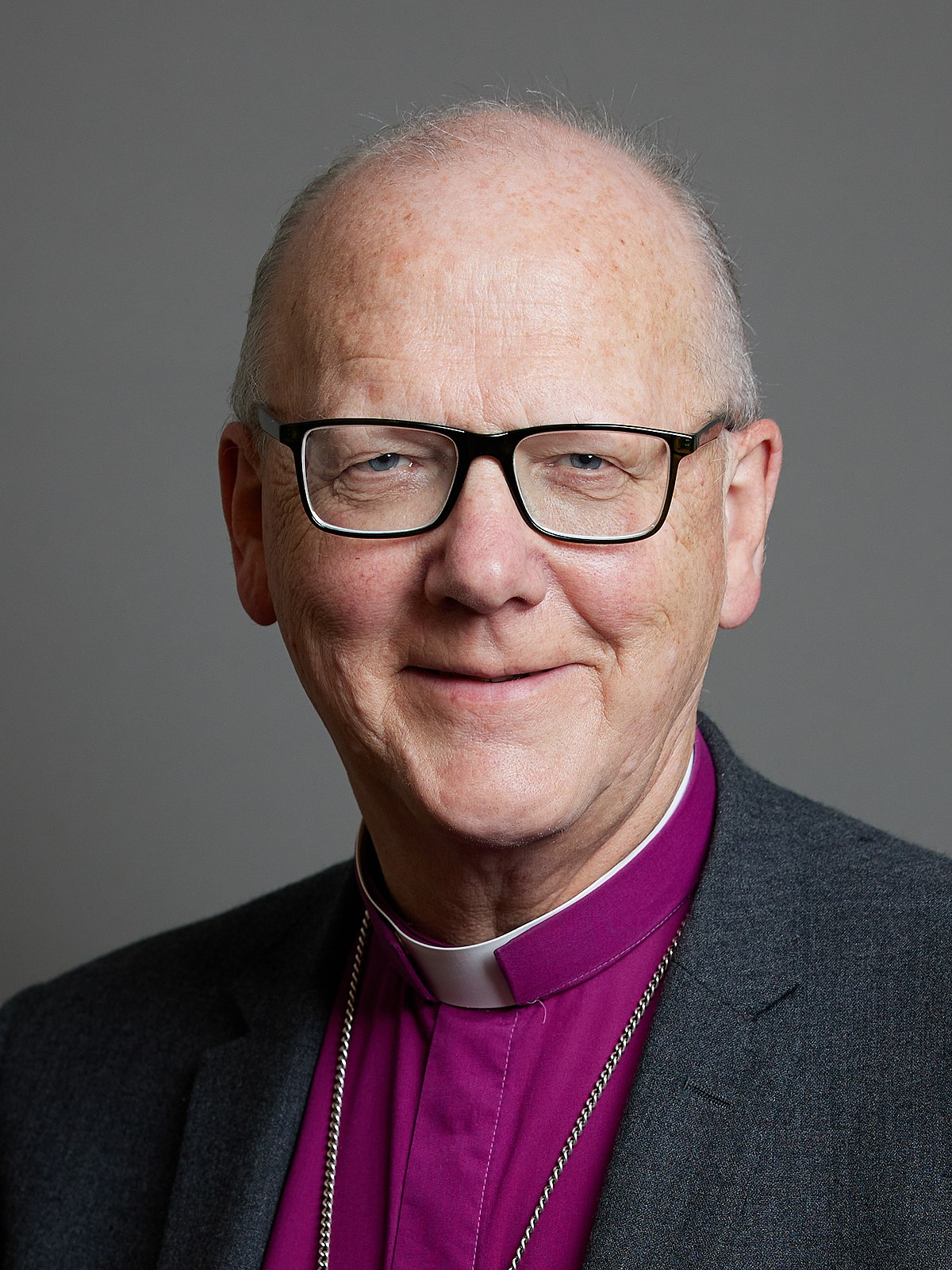
Bishop of Sheffield urges consideration of civil society role of the House of Lords

The Bishop of Sheffield spoke in a debate on House of Lords reform on 12th November 2024, supporting the principle of reform and outlining the role of the House of Lords in providing independence, expertise and a voice from civil society:

The Lord Bishop of Sheffield: My Lords, I welcome the opportunity for a meaningful debate on this matter. The Lords spiritual have a long history of constructive engagement on the question of reform. I pay tribute especially to the noble and right reverend Lord, Lord Harries of Pentregarth, who served on the Royal Commission on the Reform of the House of Lords, which produced the Wakeham report in 2000. That commission encouraged

“a broadening and deepening of religious representation in the second chamber”

to reflect the diversity of our multifaith society, a principle that these Benches have supported before and since. We stand ready to assist any future appointments commission in that task.

Continue reading “Bishop of Sheffield urges consideration of civil society role of the House of Lords”

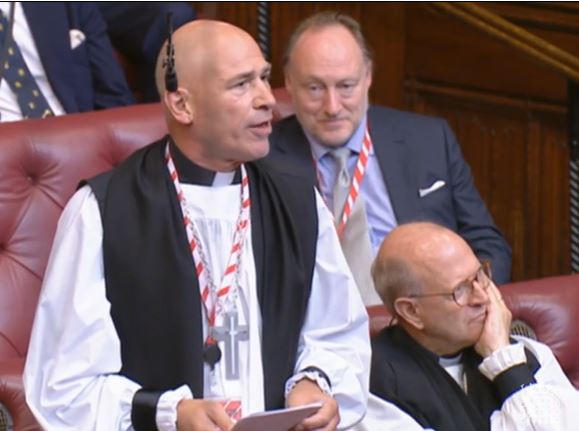
Bishop of Leeds asks about support for Russian anti-war organisations in the UK

The Bishop of Leeds asked a question on government efforts to help coordinate Russian anti-war organisations based in the UK, following a government statement on the conflict in Ukraine on 28th February 2024:

The Lord Bishop of Leeds: My Lords, I am grateful for what the Minister has said. It is understandable that the murder of Alexei Navalny is commanding the headlines, but there are other opposition leaders, a number of whom are in prison and possibly facing the same fate as Navalny.

Continue reading “Bishop of Leeds asks about support for Russian anti-war organisations in the UK”

Archbishop of York asks about role of civil societies in regulating artificial intelligence

On 26th June 2023, the Archbishop of York raised a question on the inclusion of civil society representatives in conversations and debates on AI, in order to aid in building ethical frameworks for regulation of artificial intelligence:

The Lord Archbishop of York: My Lords, I am very grateful to the noble and right reverend Lord, Lord Harries, for raising this issue. I too believe that the best way for us to find the potential of AI is by paying great attention to regulation and ethics, building on what has just been said. What is best in us is beyond rationality—

“Greater love hath no man than this, that a man lay down his life for his friends”

Continue reading “Archbishop of York asks about role of civil societies in regulating artificial intelligence”

Bishop of Coventry asks about treatment of religious minorities and non-governmental organisations in India

The Bishop of Coventry received the following written answers on 21st June 2023:

The Lord Bishop of Coventry asked His Majesty’s Government:

  •  what discussions they have had with the government of India on the importance of pluralism and human rights, including freedom of religion; and what assessment they have made of freedom of religion or belief in India.
  • what discussions they have had with leaders from civil society in India on the status and experiences of religious minorities in that country.
Continue reading “Bishop of Coventry asks about treatment of religious minorities and non-governmental organisations in India”

Bishop of Guildford asks about civil society organisations in Pakistan

The Bishop of Guildford received the following written answers on 16th December 2022:

The Lord Bishop of Guildford asked His Majesty’s Government what support they provide to the Centre for Social Justice in Pakistan.

Lord Ahmad of Wimbledon (Con): The UK is a long-term supporter of civil society in Pakistan, and we engage with the Centre for Social Justice (CSJ) as part of our work on human rights. I conducted a roundtable discussion with human rights stakeholders – including Peter Jacobs, Executive Director of CSJ – on 15 October, discussing open societies and the work of Non-Government Organisations (NGOs). We continue to engage with the Government of Pakistan to ensure NGOs such as CSJ can operate effectively.

Continue reading “Bishop of Guildford asks about civil society organisations in Pakistan”

Bishop of Rochester asks about updates to war memorials

The Bishop of Rochester asked a question on the inclusion of names of fallen soldiers from the former British Empire on war memorials, following a government statement on the Commonwealth War Graves Commission: Historical Inequalities Report:

The Lord Bishop of Rochester: My Lords, I associate myself with the comments just made by the noble Lord, Lord Singh. Like many others, I have stood in places such as the Menin Gate and been overawed by the reading of the names there. In seeing the names of the fallen from many parts of the then Empire, I had assumed that all such were indeed properly commemorated. I know now of course that I and many others were wrong in that assumption. I have present and past diocesan connections with Papua New Guinea, Zimbabwe and Tanzania. I have also visited memorials and cemeteries in those places where I have seen the names of some local nationals. I am now asking myself how many names were not there when I visited those places. Is the Minister able to give me confidence to assure my colleagues in those places that their fallen compatriots will be as fully commemorated as possible, as soon as possible? Is there anything they can do to help this process?

Continue reading “Bishop of Rochester asks about updates to war memorials”

Bishop of Worcester asks Government to work with citizens’ assemblies on plans for democratic reform

worcesterOn 14th January 2020 Baroness Bennett of Manor Castle asked the Government “what plans the Constitution, Democracy and Rights Commission has to engage with civil society”.  The Bishop of Worcester, Rt Revd John Inge, asked a follow-up question:

The Lord Bishop of Worcester: My Lords, I have seen the disillusionment to which the Minister refers. Given that no plans have yet been made for exactly how the commission will work, as well as the success of citizens’ assemblies in Ireland and France in rebuilding trust in democratic institutions, might the Minister think it a good idea to involve such citizens’ assemblies in the commission’s work? Continue reading “Bishop of Worcester asks Government to work with citizens’ assemblies on plans for democratic reform”