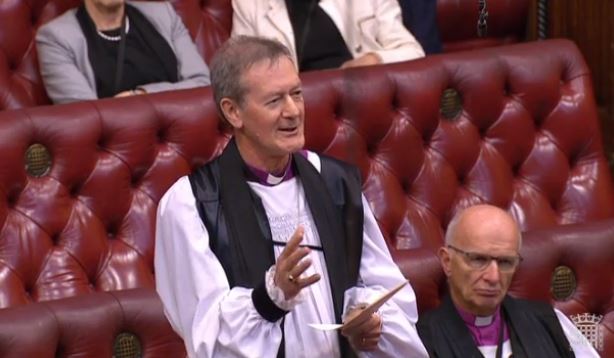
Church Commissioner Written Answer: Human Trafficking

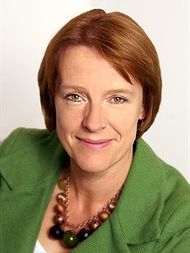
Caroline SpelmanOn 7th July 2016 the Second Church Estates Commissioner, Rt Hon Caroline Spelman MP, answered a written question from Jim Shannon MP on human trafficking:

Jim Shannon (Strangford): To ask the right hon. Member for Meriden, representing the Church Commissioners, what steps are being taken by the Church of England to tackle human trafficking.

Mrs Caroline Spelman: In March 2014 the Archbishop of Canterbury, with Pope Francis and other global faith leaders, gave their backing to the Global Freedom Network (www.globalfreedomnetwork.org), a ground breaking ecumenical initiative to combat modern slavery and human trafficking. The Archbishop is planning an international conference in 2017 with the Ecumenical Patriarch.  Continue reading “Church Commissioner Written Answer: Human Trafficking”

Bishop of Derby asks Government about pastoral care and training for those on zero-hour contracts

On 29th June 2016 Baroness Quin asked Her Majesty’s Government “in the light of the increased use of zero-hours employment contracts nationally and regionally, what assessment they have made of the effects of such contracts on an individual’s chances of gaining full-time salaried employment, and on specific sectors, both public and private, of the UK economy.” The Bishop of Derby, Rt Revd Alastair Redfern, spoke in the debate.

Derby 191115cThe Lord Bishop of Derby: My Lords, I, too, thank the noble Baroness, Lady Quin, for introducing this important event. It does feel lonely over here, and I hope you will not think that I am the Opposition.

I have become interested in this issue in part because of my work on modern slavery. I name that, alongside this issue, because we are in a perfect storm that is making slavery and zero-hours contracts increasing phenomena in our society. We have heard about this perfect storm: this tightness in margins and the shifting of risk; the desire for flexibility; the fact that people are so mobile they do not develop a strong relationship with any employer anyway; and the fact that, as the noble Lord, Lord Monks, and the noble Baroness, Lady Dean, said, economic inequality is increasing so much that people are desperate for work. Then migration, and especially illegal migration, adds another degree of desperation. There is a market to be exploited, both through slavery and through the unscrupulous use of zero-hours contracts, although we know these do suit some people. Continue reading “Bishop of Derby asks Government about pastoral care and training for those on zero-hour contracts”

Bishop of Derby supports bill on renters’ rights

Bishop of DerbyOn Friday 10th June  2016 the Bishop of Derby, the Rt Revd Alastair Redfern spoke during the debate on Baroness Grender’s Renters’ Rights Bill. The Bishop highlighted his concerns about vulnerable people and malpractice by some rental landlords and property management agencies. 
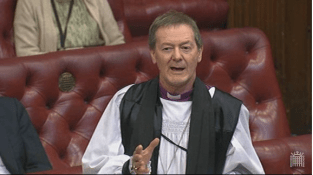
The Lord Bishop of Derby: My Lords, I too wish to offer some thoughts about the importance of the issues raised by the Bill and the sense of direction in which it seeks to travel.

First, I note the point made by the noble Lord, Lord Palmer, regarding a definition of so-called “rogue” landlords. The Housing and Planning Act has introduced a database of rogue landlords and property agents, which is to be made available to local authorities so that they can check for compliance, but there is a question over whether tenants should have access to that kind of information. Continue reading “Bishop of Derby supports bill on renters’ rights”

Bishop of Derby supports Bill to regulate arms brokers

DerbyOn the 10th June 2016 the Bishop of Derby, Rt Revd Alastair Redfern spoke during the Second Reading debate of Baroness Jolly’s Register of Arms Brokers Bill. The Bishop drew parallels with similar work he had undertaking in the area of  supply chain transparency during the passage of the Modern Slavery Act. 

The Lord Bishop of Derby: My Lords, I rise to support the noble Baroness, Lady Jolly, and to make three simple points about why this such a powerful and necessary case. First, it builds upon existing legislation about licensing and export control, so we have a set of criteria and an assessment process in place so that all companies involved are scrutinised and licensed. We are doing the work that would provide the register. So the principle of identifying and monitoring arms brokers is established.

Continue reading “Bishop of Derby supports Bill to regulate arms brokers”

Bishop of Derby highlights importance of local grassroots work in combating FGM

On 9th June 2016 Lord Berkeley of Knighton led a short debate to ask Her Majesty’s Government “what steps they intend to take in the light of NHS statistics showing that in 2015 over 1,000 cases of female genital mutilation were reported every three months and the lack of any successful prosecutions to date.” The Bishop of Derby, Rt Revd Alastair Redfern, spoke in the debate, highlighting the historic and cultural influences behind the practice and the work taking place at a local and grassroots level to reduce instances of FGM and support the law. 

Derby 191115cThe Lord Bishop of Derby: My Lords, I, too, thank the noble Lord, Lord Berkeley, for introducing this vital debate and making the point that we need to keep this subject in the public domain to raise awareness and challenge people.

I want to offer some perspectives from my experience in Derby, where I operate as a bishop at grassroots level, to try to help understand why we are in this position and how we might best tackle things. Your Lordships will know that FGM is a very ancient practice going back to at least the fifth century BC. It was mentioned by Herodotus, especially in Egypt and Ethiopia, all that time ago. I remind noble Lords that FGM was practised until the 1950s in western countries as part of dealing with what was then called “female deviancy”. Things such as hysteria, epilepsy and lesbianism were dealt with by this horrific practice as an enlightened medical approach to those conditions. We have to recognise that it is not only deeply embedded in ancient culture, but until quite recently in the west, we have been implicated in using this barbaric method for medical reasons. Continue reading “Bishop of Derby highlights importance of local grassroots work in combating FGM”

Bishop of Derby asks about the future of DfID funding for civil society groups in Burma

Bishop of DerbyOn Monday 6th June 2016 Baroness Cox asked Her Majesty’s Government “what is their assessment of the current situation in Burma, in particular with regard to the reported continuing military offensives and violations of human rights of the Shan, Kachin and Rohingya people by the Burmese army.” The Bishop of Derby, Rt Revd Alastair Redfern, asked a follow up question:

The Lord Bishop of Derby: My Lords, is it true that DfID has decided prematurely to end funding for civil rights groups and civil society organisations that are working cross-border? Given the delicacy of the situation and the efforts to turn it around that have been referred to, should that decision, if it has been made, be reviewed so that we can play our part in helping those civil society organisations to make a full contribution? Continue reading “Bishop of Derby asks about the future of DfID funding for civil society groups in Burma”

Bishop of Derby questions the drive for efficiency in the use of technology instead of assisting meaningful face-to-face pastoral engagement

Derby 191115c

On the 14th April 2014 the Bishop of Derby, the Rt Revd Alastair Redfern spoke during a debate on the Deloitte report ‘Technology and people: The great job-creating machine published in August.’ Bishop Alastair spoke about the competing pressures of company supply chains and corporate responsibility, the values of society and the impact technology is having as efficiency cuts across the face-to-face pastoral engagement of professions such as healthcare. The Minister Baroness Neville-Rolfe responded for the Government and addressed a number of the questions highlighted by the Bishop.

Continue reading “Bishop of Derby questions the drive for efficiency in the use of technology instead of assisting meaningful face-to-face pastoral engagement”

Bishop of Derby speaks on role of education and lifelong learning

On 28th January 2016 the House of Lords debated a motion from Baroness Sharp of Guildford “that this House takes note of the role of adult education and lifelong learning and the need to develop the skills needed to strengthen the United Kingdom economy.” The Bishop of Dery, Rt Revd Alastair Redfern, spoke in the debate.

Derby 191115cThe Lord Bishop of Derby: My Lords, I, too, thank the noble Baroness, Lady Sharp, for introducing the debate and from these Benches I want to pay tribute to the noble Baroness, Lady Williams. From our perspective she has continually shown a very special and thoughtful faith—faith in people, faith in politics and faith in goodness. That is the kind of model that we all need to aspire to, and the noble Baroness has certainly been a great inspiration to me and to many of my colleagues.

I want to look at skills and the strengthening of the UK economy. We have heard from the noble Baroness, Lady Sharp, and others about the skills shortage, which is much in evidence. There is a clear mismatch between the needs of business and learning provision. We have heard about the dramatic decline in the number of places for part-time study, and I think that a strong case can be made for earn-as-you-learn opportunities for people at every stage, especially as employment is now such a variable journey for so many people. Continue reading “Bishop of Derby speaks on role of education and lifelong learning”

Bishop of Derby speaks in debate on local democracy

On 28th January 2016 the House of Lords debated a motion from Lord Shipley “that this House takes note of local democracy in the United Kingdom.” The Bishop of Derby, Rt Revd Alastair Redfern, spoke in the debate.

Derby 191115cLord Bishop of Derby: My Lords, it is a great privilege on behalf of the House to welcome the noble Baroness, Lady Scott, and to thank her for an expert and excellent speech—a great harbinger of what she will bring to the House.

 I feel connected with all the maiden speeches today. I was once Bishop of Spalding and worked with great joy in the area of South Holland, where the noble Lord, Lord Porter, was leader of the district council, and I had the privilege of serving with the noble Lord, Lord Stunell, on a Select Committee, so it is good to welcome both of them too. Continue reading “Bishop of Derby speaks in debate on local democracy”

Bishop of Derby highlights work of prison chaplains and value of educational and arts projects

On the 19th January 2016 the Bishop of Derby, the Rt Revd Alistair Redfern took part in a short debate  tabled by Lord Hanningfield “To ask Her Majesty’s Government what steps they are taking to help improve education standards in United Kingdom prisons.” The Bishop spoke from his own experience of visiting a number of prisons in his diocese and of the important work of chaplains, musicians and arts projects within prisons.

DerbyThe Lord Bishop of Derby: My Lords, I, too, thank the noble Lord, Lord Hanningfield, for his introduction to the debate, especially for linking education with vocation for people in prison. As the noble Lord, Lord Addington, said, it is a very complex territory with very deep needs. A lot of research shows that the prison population represents people with multiple needs. Therefore, the task of education and vocation will be challenging. I see the importance of formal education for literacy and numeracy to help people to get jobs. I am all in favour of that, but I want to look behind that at the informal fashioning of vocation and the development of character and confidence, which allows people to enter formal learning. I will draw on my own experience of going into prisons. Continue reading “Bishop of Derby highlights work of prison chaplains and value of educational and arts projects”