
 On 16th July 2019 in the House of Commons Emma Hardy MP (Lab) asked an urgent question to the Secretary of State for Education on whether “he will make a statement on what steps he is taking to counter misinformation about the content of relationship education in schools”. The Second Church Estates Commissioner, Rt Hon Dame Caroline Spelman MP, asked a follow-up question:
Dame Caroline Spelman: The Church of England, the largest provider of primary education, fully supports this updating of the guidance. As the Minister says, it has not been updated for the past 20 years, and childhood has changed greatly during that time. Does the Minister agree that one of the imperatives for this change must be to protect pupils and keep them safe in the complex online world that they inhabit? My heart goes out to the children caught up in all this.
Continue reading “Second Estates Commissioner welcomes relationships education in schools”
 On 2nd July 2019 the House of Lords debated a motion “that this House should take note of the Review of Post-18 Education and Funding led by Philip Augar”. The Bishop of Winchester, Rt Revd Tim Dakin, spoke in the debate:
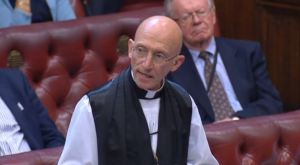 The Lord Bishop of Chichester: My Lords, any reduction in higher education funding is likely to have a particular impact not merely on teaching and student contact time but on the very future of smaller institutions, such as the Cathedrals Group universities. Does the Minister agree that, as the Government consider reforms, they need to take into account, first, the effect of those reforms on the diversity of the sector and, secondly, their impact on particular localities? Chichester, for example, is the only university in West Sussex. A threat to its funding would seriously damage its contribution to the regeneration of the disadvantaged coastal areas that it serves.
 On 24th June 2019 Lord Black of Brentwood asked the Government “what steps they are taking to address the decline in the number of students taking music A-level”. The Bishop of Chichester, Rt Revd Dr Martin Warner, asked a follow-up question:
 The Lord Bishop of Winchester: My Lords, I thank the noble Lord, Lord Howell, for bringing this debate and chairing the Select Committee that produced this excellent report. I declare an interest, having spent 12 years as general secretary of the Oxford-based CMS—historically the Anglican mission society—working across 50 countries, and prior to that six years working with an indigenous Africa-wide Anglican mission society based in Nairobi. My diocese has companion links with the Anglican provinces of Burundi, DR Congo, Rwanda, Uganda and Myanmar, and growing links with Chile. I was born in Tanzania, grew up partly in Kenya and still have a home near Thika.
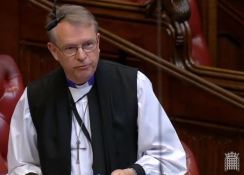 The Lord Bishop of Durham: My Lords, it is my pleasure to follow the noble Baroness, Lady Tyler, and I fully endorse everything she said about the context of relationships being at the heart of all this. I welcome the discussion and the framework. The Church of England, as the biggest single education provider in the country, has been among the parties engaged in the consultation, for which we are deeply grateful.
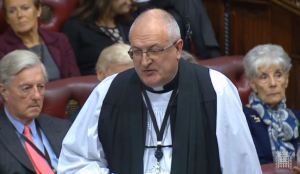 The Lord Bishop of Ely: My Lords, I understand that the purpose of the 2014 set of reforms was to ensure a holistic approach by health, education and social care services in the support of children with special needs and of their families. But when appeals take place, I understand that it is not uncommon for social care services to say that they do not know the child. Are the Government ensuring proactive co-operation between health, social care and education services in supporting such children and their parents?
 The Lord Bishop of Durham:
 The Church of England in Parliament
You must be logged in to post a comment.