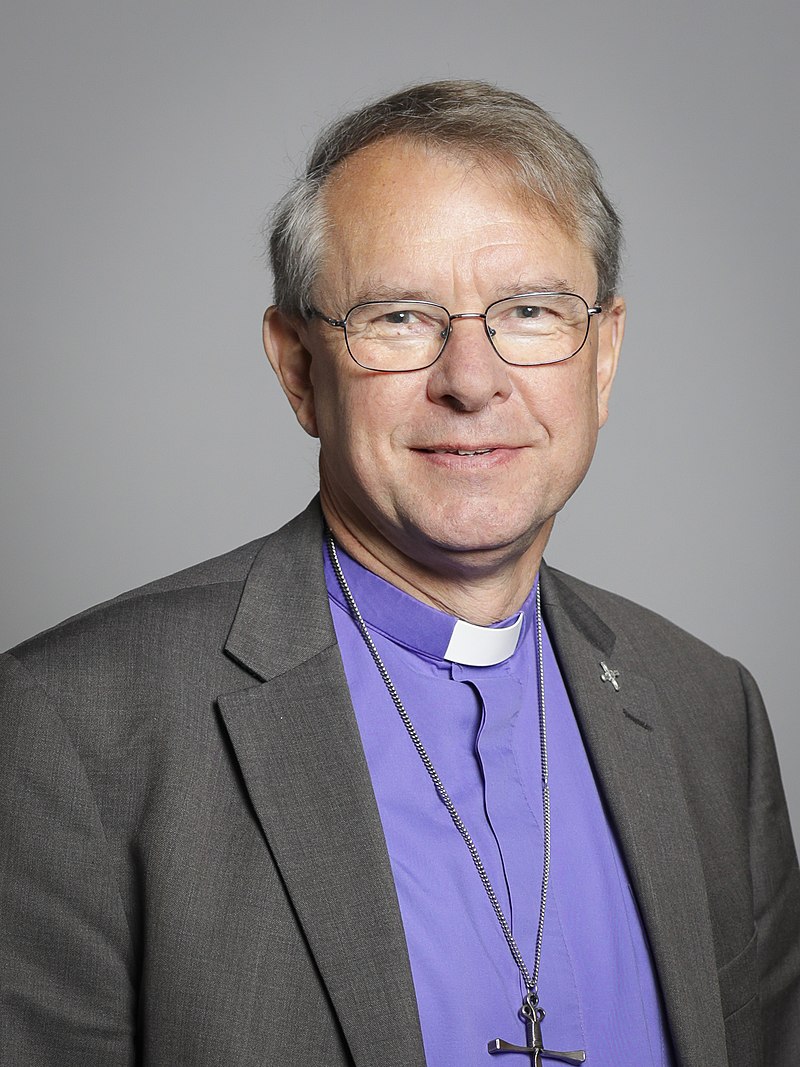
Bishop of Chichester asks about teacher training and development

The Bishop of Chichester asked a question on the future of training and development for teachers, and teachers’ experiences with Ofsted on 13th July 2023, during a debate on the level of teaching vacancies in the UK:

The Lord Bishop of Chichester: My Lords, is the Minister willing to undertake to work with Ofsted to make inspection programmes and grading of schools a more positive experience for teachers? If teachers themselves are not flourishing, it is hard to see how they can encourage, inspire and develop our young people to flourish. The Church of England has developed its own centre for education development to help teachers develop their skills and knowledge in a range of areas—every area in the curriculum—and I commend its work to the Minister’s department.

Continue reading “Bishop of Chichester asks about teacher training and development”

Bishop of Leeds asks about building resilience in education

The Bishop of Leeds asked a question on teaching controversial topics and conflicting opinions in schools during a debate on updates to the national curriculum:

The Lord Bishop of Leeds: My Lords, does the Minister agree that resilience is not something primarily that is taught? It is something that develops as you take what is thrown at you in the experiences of life. To that end, is any thinking going on in government about future curricula which allow for children in our schools, particularly secondary schools, to be exposed to opinions and things with which they do not agree in order that they are able to live in a world of conflicting dogmas and opinions, and do not have to run away from them?

Continue reading “Bishop of Leeds asks about building resilience in education”

Archbishop of York asks about access to arts education

The Lord Archbishop of York: My question is about the variability of access. I think we all recognise that the statistics quoted are going the wrong way. What we observe particularly is that it is far worse in some parts of the country than others. That is something I particularly observe in the north, where I serve. The DCMS Committee’s report last year spoke about how the creative industries themselves are saying that there is a shortage of the skills that we need. What is being done about this and, particularly, how do we know about the situation? In about 2014, Ofsted changed the way its inspections investigated the arts. For instance, dance was looked at as part of PE. Does the Minister think that this lack of joined-up thinking has had an impact on where we are now and, in particular, on the way that some parts of the country are suffering much more than others?

Continue reading “Archbishop of York asks about access to arts education”

Bishop of St Albans asks about teaching of financial literacy in schools

The Bishop of St Albans received the following written answer on 17th April 2023:

The Lord Bishop of St Albans asked His Majesty’s Government what steps they are taking to promote financial literacy in schools.

Baroness Barran (Con): Education on financial matters helps to ensure that young people are prepared to manage their money well, make sound financial decisions and know where to seek further information when needed.

Finance education forms part of the citizenship National Curriculum, at Key Stages 3 and 4, but can be taught by all schools at all Key Stages. The subject covers the functions and uses of money, the importance of personal budgeting, money management, and managing financial risk. At secondary school, pupils are taught about income and expenditure, credit and debt, insurance, savings and pensions, financial products and services, and how public money is raised and spent.

Continue reading “Bishop of St Albans asks about teaching of financial literacy in schools”

Bishop of Worcester asks about arts education

The Bishop of Worcester asked a question about government commitment to arts education during a debate on data, digital, and financial literacy in schools on 14th March 2023:

The Lord Bishop of Worcester: My Lords, recently I had the privilege of serving on your Lordships’ Communications Committee. What came through consistently in our inquiry into the effects of technology on the creative industries was the need for creative and artistic literacy as well as digital literacy—we need STEAM, not just STEM. I speak as a former scientist deeply committed to science and technology. Does the Minister agree and, if so, what can the Government do to enable that, given their reluctance to review the national curriculum and prioritise arts more?

Continue reading “Bishop of Worcester asks about arts education”

Bishop of St Albans asks about education on gambling

The Bishop of St Albans received the following written answer on 31st January 2023:

The Lord Bishop of St Albans asked His Majesty’s Government, further to the Written Answers by Baroness Barran on 9 January (HL4502 and HL4503), what current research informs their statutory curriculum for relationships, sex and health education (RSHE) with regard to gambling education.

Baroness Barran: The current statutory guidance for relationships, sex and health education (RSHE) was informed by a stakeholder engagement process in 2017, including a public call for evidence that received over 23,000 responses from parents, young people, schools and experts.

Continue reading “Bishop of St Albans asks about education on gambling”

Levelling Up Bill: Bishop of Leeds highlights the importance of transport and education

On Tuesday 17th January 2023, the House of Lords debated the Levelling Up Bill in its second reading. The Bishop of Leeds made a speech on the importance of good transport links and amending discrepancies in education:

The Lord Bishop of Leeds: My Lords, I am delighted to follow the noble and right reverend Lord, who has already stolen some of what I was going to say—great minds and all of that, maybe. When I first heard the phrase “levelling up”, I thought, “Here we go again—another slogan in search of substance”. Yet what we have heard today so far is that there is a great deal of potential substance to this Bill. I applaud the motivation and ambition behind it, and the attempt in the 12 missions to have a holistic approach rather than simply to pick off bits of our society. But I do think we need to take seriously, after the honest analysis that we had from the Minister, the argument that it gives the lie to the opening assertion of the White Paper that the UK is an unparalleled success story. If it was, we would not need the detail that we have before us. This sort of language of hubris can very easily militate against us taking seriously the scale of the task.

Continue reading “Levelling Up Bill: Bishop of Leeds highlights the importance of transport and education”

Bishop of St Albans asks about education on gambling

The Bishop of St Albans received the following written answer on 9th January 2023:

The Lord Bishop of St Albans asked His Majesty’s Government:

  • what plans they have to review the statutory guidance Relationships Education, Relationships and Sex Education (RSE) and Health Education to provide further clarification on what pupils should know about online gambling.
  • what assessment they have made of the effectiveness of the statutory guidance Relationships Education, Relationships and Sex Education (RSE) and Health Education in preventing harmful gambling by school pupils.
Continue reading “Bishop of St Albans asks about education on gambling”

Bishop of Gloucester asks about women’s education in sub-Saharan Africa, with a view to HIV prevention

The Bishop of Gloucester asked a question on women’s education in sub-Saharan Africa, during a debate on government plans to combat HIV, tabled for World AIDS day on 1st December 2022:

The Lord Bishop of Gloucester: My Lords, in sub-Saharan Africa, adolescent girls and young women are three times more likely to acquire HIV than adolescent boys and men. Can the Minister say what is being done to fund programmes which help to keep girls in education, which we know reduces their vulnerability to HIV by up to 50%?

Continue reading “Bishop of Gloucester asks about women’s education in sub-Saharan Africa, with a view to HIV prevention”

Bishop of Gloucester asks about school development

The Bishop of Gloucester asked a question about government plans to implement parts of the Schools Bill, during a debate on improving the education system on 30th November 2022:

The Lord Bishop of Gloucester: My Lords, the Schools Bill was partly intended to remove barriers to enable church schools to fully embrace the journey towards academisation. Given that there has been no further progress on that Bill, what plan do the Government have for introducing the legislative parts of that Bill that were broadly agreed and are needed to secure the development of all schools?

Continue reading “Bishop of Gloucester asks about school development”