Education (Values of British Citizenship) Bill: Bishop of Sheffield speaks in support of legislation

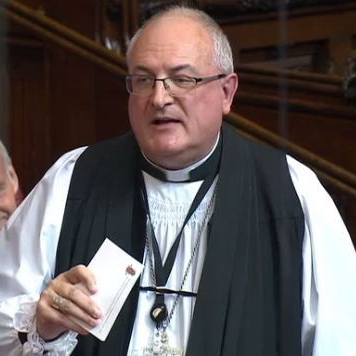
On 18th October 2024, the Bishop of Sheffield spoke at the second reading of the Education (Values of British Citizenship) Bill, a private members bill tabled by Lord Harries of Pentregarth, supporting the bill and welcoming provision to improve provision for education on religion and the environment:

The Lord Bishop of Sheffield: My Lords, I too congratulate the noble and right reverend Lord, Lord Harries, on bringing forward this Private Member’s Bill, and indeed on the many years of thinking and hard work which have brought the Bill to this point. I welcome the Bill, support its aims and heartily welcome the five specific headings, which together give some definition of what is meant by “British values” in an educational context.

Especially in an educational context, it will be vital to foster a culture in which these headline categories are inhabited in a meaningful way. This kind of culture is capable of being fostered as much in the teaching of maths and science as through the teaching of citizenship, PSHE or RE, but these latter subjects provide an opportunity for values to be addressed directly and explicitly. I shall say something further about RE in particular, but the list of values identified in the Bill includes respect for the environment, and I would also like to say something about the potential for a natural history GSCE.

Continue reading “Education (Values of British Citizenship) Bill: Bishop of Sheffield speaks in support of legislation”

Bishop of Sheffield asks about tackling regional inequalities in education

The Bishop of Sheffield asked a question on government plans to tackle regional inequalities in education outcomes on 17th October 2024, during a discussion on equality of opportunity in the education sector:

The Lord Bishop of Sheffield: My Lords, according to data published by the Education Policy Institute, disadvantaged learners in Yorkshire and the Humber are typically 21.4 months behind their more advantaged learners by the end of secondary school. This is opposed to a disadvantage gap of half that size, at just 10.4 months, in London. What steps will the Government take to reduce such perniciously stubborn regional inequalities in educational outcomes?

Continue reading “Bishop of Sheffield asks about tackling regional inequalities in education”

Bishop of St Albans asks about impact of VAT on school fees on SEND pupils

The Bishop of St Albans asked a question on the impact that imposing VAT on school fees would have on pupils with special educational needs and disabilities on 10th October 2024:

The Lord Bishop of St Albans: I wonder if I might press the Minister on SEND pupils. The majority of SEND pupils, who were mentioned by the noble Lord, Lord Black, do not have an education, health and care plan, and therefore there is a genuine worry that this policy might mean that their education is interrupted. What mitigating factors are His Majesty’s Government putting in place to ensure that this particularly vulnerable group is supported?

Continue reading “Bishop of St Albans asks about impact of VAT on school fees on SEND pupils”

Bishop of Southwark speaks on risks posed by changes to VAT exemption for independent schools

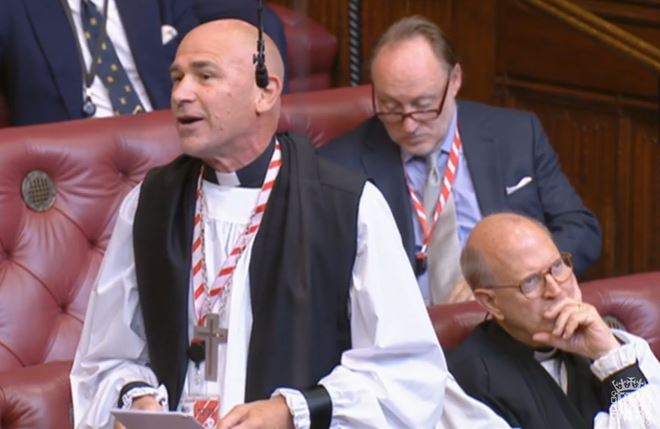
The Bishop of Southwark spoke in a debate on the impact of changes to the VAT exemption for independent schools on 5th September 2024, raising the issue of unintended effects on SEND provision and potential ramifications for cathedral and choir schools:

The Lord Bishop of Southwark: My Lords, the Government’s intention to levy value added tax in this area was a manifesto commitment at the general election. The Government entertain a well-evidenced belief that parents purchase an economic and social benefit for their children’s future through private schooling. Whatever the experience any of your Lordships have had of such schooling, the undoubted premium placed on forming character or the excellence in pastoral care that some of these schools exhibit, the Government nevertheless have a mandate for change. The noble Baroness, Lady Ramsey, underlined the pressing need for more teachers in our state schools.

However, who will and who will not be affected by this change is a worthy subject of debate. I am happy to say that both the boys’ and girls’ choirs at Southwark Cathedral are almost entirely drawn from state schools, and are consequently unaffected by the VAT change. Furthermore, a number of schools in my diocese offering provision for special educational needs and disabilities have their places funded by the local authorities. But there are cathedral and choir schools, and private schools, with provision for special educational needs that will be severely affected by the change that the Government intend. Many of these are small schools, and therefore the impact will be disproportionately severe.

Continue reading “Bishop of Southwark speaks on risks posed by changes to VAT exemption for independent schools”

Bishop of Chichester speaks in debate on education in the UK

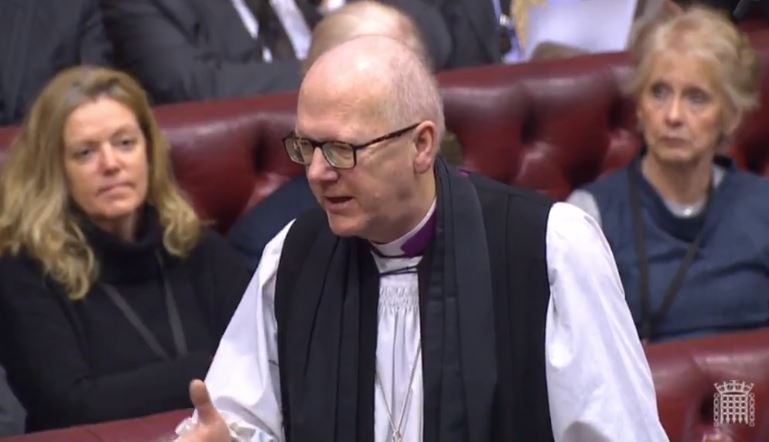
The Bishop of Chichester spoke in a debate on a report from the Education for 11 to 16-year olds Committee, ‘Requires improvement: urgent change for 11–16 education (Session 2023–24, HL Paper 17)’ on 26th July 2024, welcoming the report and highlighting the importance of religious education and the Church of England’s role as an educational provider:

The Lord Bishop of Chichester: My Lords, it is an honour to follow the noble Lord, Lord Aberdare, and the noble Baroness, Lady Blower, who have participated in the excellent report chaired by the group led by the noble Lord, Lord Johnson.

I welcome the priority that has been given to the review of the curriculum for 11 to 19 year-olds at an early stage of the Government coming into office. In particular, I welcome the report of the review group and how it will “refresh” the curriculum,

“build on the hard work of teachers and staff”,

and seek “evolution and not revolution”.

These are important indications that education will not be driven by ideology that leads to it becoming a political football, as sometimes has happened in the past.

In particular, the promise that the review will not

“place undue burdens on education staff”

will need to be delivered ostentatiously, particularly if the Government wish to improve the recruitment and retention of top-quality teachers. To that end, I greatly welcome also the acknowledgement of

“the innovation and professionalism of teachers”.

Continue reading “Bishop of Chichester speaks in debate on education in the UK”

Bishop of Southwell and Nottingham asks about effects of COVID-19 pandemic on educational attainment

The Bishop of Southwell and Nottingham asked a question on the impact of the COVID-19 pandemic on the educational needs of SEN children on 22nd May 2024, during a discussion on the effects of the pandemic on educational attainment for UK schoolchildren:

The Lord Bishop of Southwell and Nottingham: My Lords, head teachers in my diocese in Nottinghamshire are reporting that the adverse impacts of the pandemic include a dramatic increase in attendance concerns, parental anxiety and pupils’ mental health difficulties. At the same time, they are reporting severe pressures on schools funding, leading to staff reductions, which cannot be in the best interests of children, especially where SEN provision is reduced. What assessment have His Majesty’s Government made of the impact of the Covid-19 pandemic on the educational needs of SEN children, and what more can be done to mitigate this?

Continue reading “Bishop of Southwell and Nottingham asks about effects of COVID-19 pandemic on educational attainment”

Bishop of Manchester asks about impact of early release on prisoner qualifications

The Bishop of Manchester asked a question on the issue of advanced release dates preventing prisoners from completing qualifications begun whilst in prison, during a discussion on the End of Custody Supervised Licence Scheme on 13th May 2024:

The Lord Bishop of Manchester: My Lords, I declare that I am a trustee of the Clink Charity: we are involved with training people in prison for qualifications for restaurants, catering and the like. Those last few weeks in prison are often a crucial time for prisoners gaining the qualifications they need to get a decent job when they are released. I am sure every prisoner wants to go as soon as they can, but is the Minister aware, and will the Government take consideration, of the effect of prisoners not receiving their qualifications because they have not quite been completed by the time their advanced release date comes?

Continue reading “Bishop of Manchester asks about impact of early release on prisoner qualifications”

Bishop of St Albans asks about foreign language learning and international study

The Bishop of St Albans received the following written answers on 9th May 2024:

The Lord Bishop of St Albans asked His Majesty’s Government whether they have made an assessment of the impact of emerging artificial intelligence capacities on the necessity for foreign language learning.

Baroness Barran (Con, DfE): Studying a language can be extremely rewarding and exciting for children and young people. It can provide insight into other cultures and open the door to travel and employment opportunities. Whilst Artificial Intelligence (AI) can be useful in enhancing the experience of learning a language, and this should be explored further, it should not be seen as a replacement.

Continue reading “Bishop of St Albans asks about foreign language learning and international study”

Bishop of St Albans asks about funding for SEND school places

The Bishop of St Albans asked a question on the availability of additional funding for SEND places in schools during a discussion on the removal of the admissions cap on state-funded faith schools on 7th May 2024:

The Lord Bishop of St Albans: My Lords, Church of England schools will continue our long tradition of seeking to serve the common good and welcoming a huge diversity of people; we are glad to do that. The Minister has spoken about the huge problem of there not being enough special educational needs places. If I have understood this correctly, it means that this will be a new possibility. We in the Church of England would be keen to play our part to help with this, but one issue is the funding available for it, which makes it very difficult to offer. Alongside this announcement, what consideration have His Majesty’s Government given to providing additional funding for those SEND places, which we hope can release more energy into that deprived area?

Continue reading “Bishop of St Albans asks about funding for SEND school places”

Bishop of Oxford asks about use of data in education

The Bishop of Oxford received the following written answers on 23rd April 2024:

The Lord Bishop of Oxford asked His Majesty’s Government whether they give third parties access to national pupil data or learner records, and whether they charge a fee for any such access.

Baroness Barran (Con, DfE): The department will only share pupil, or learner, level data with others where it is lawful, secure and ethical to do so. Where these conditions are met and data is shared, the department do not charge any fee.

Continue reading “Bishop of Oxford asks about use of data in education”