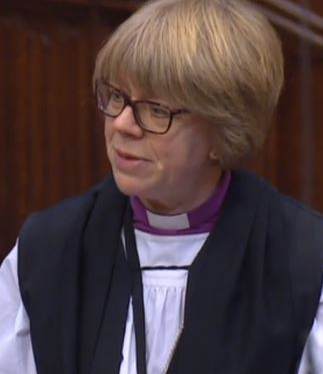
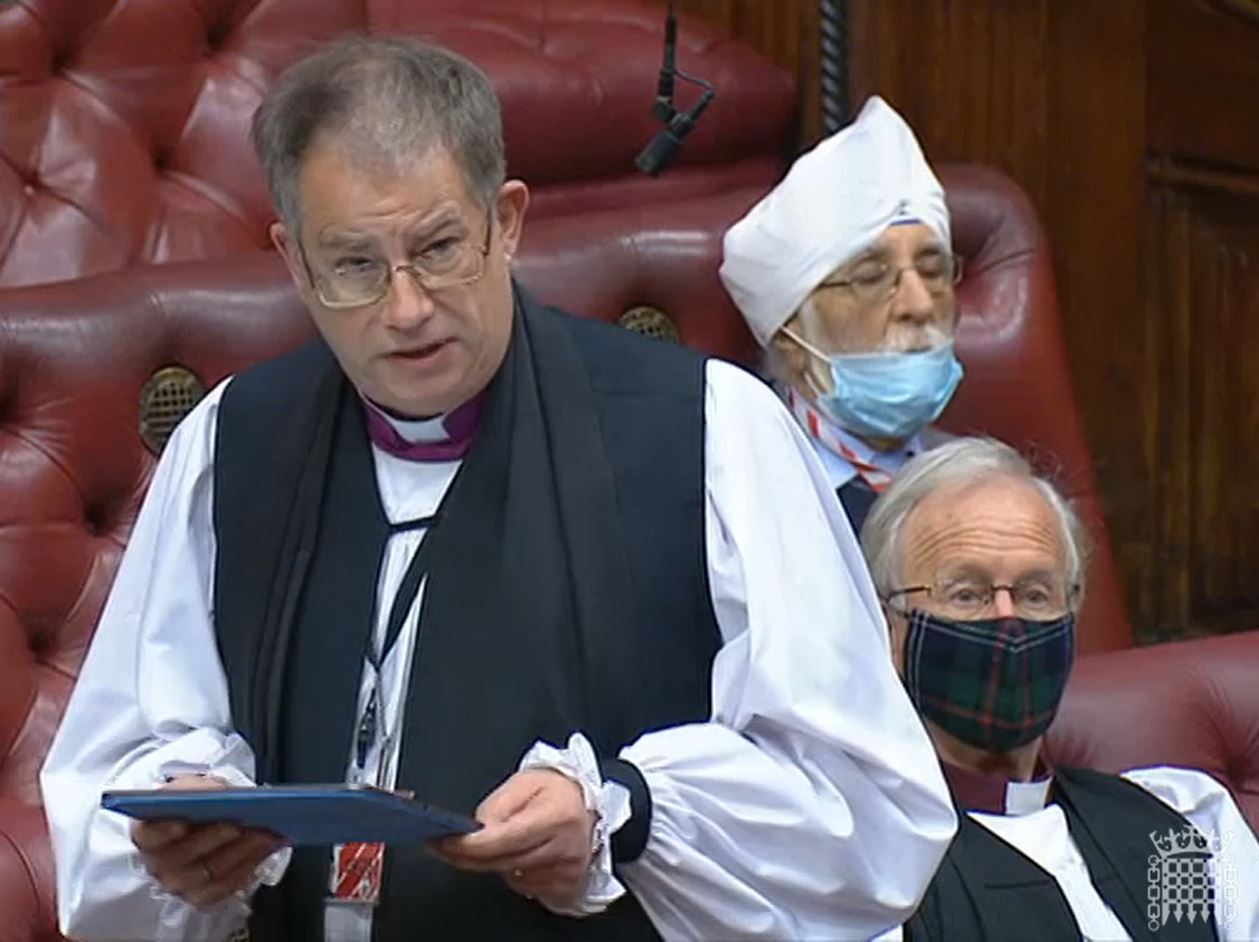
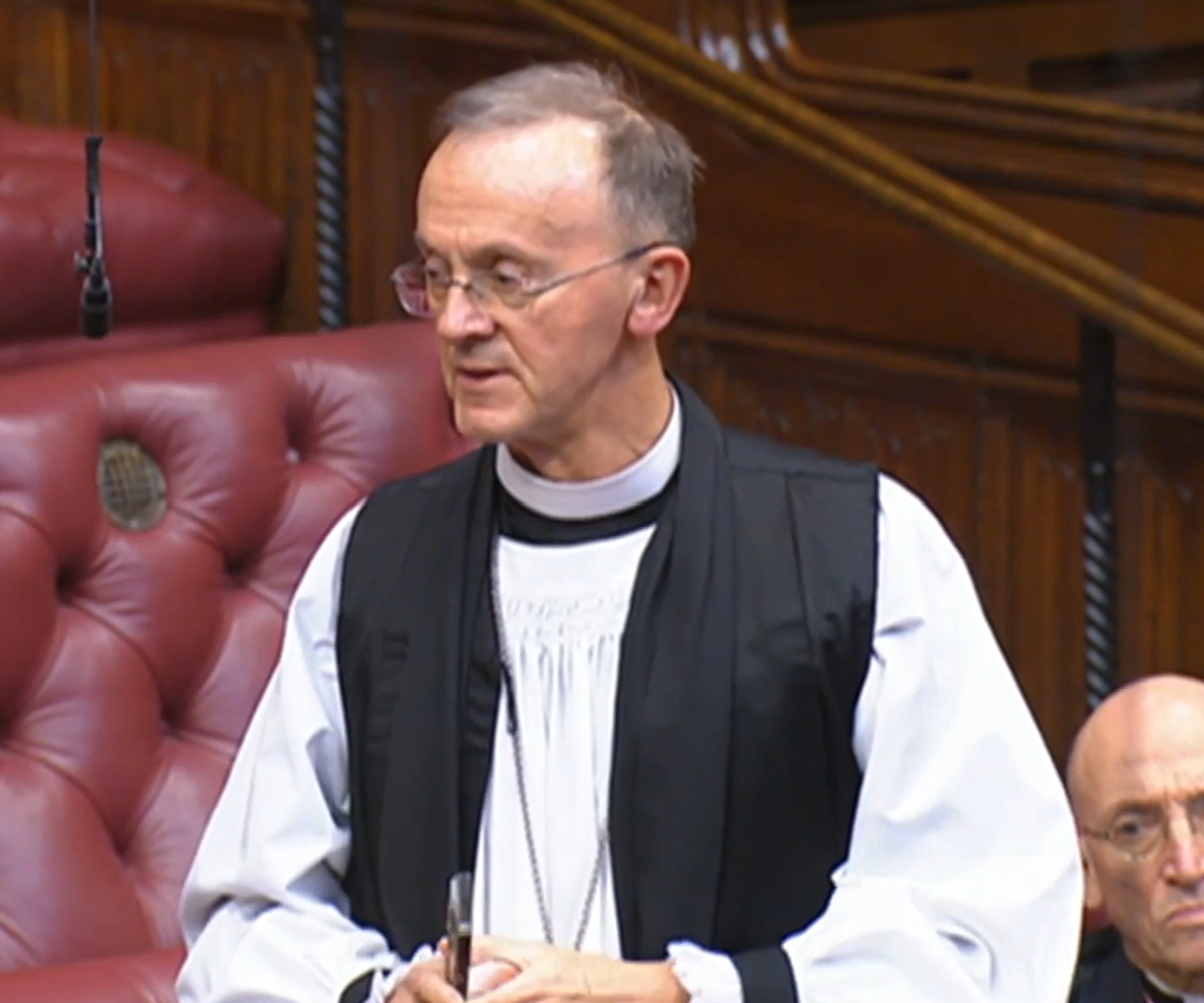
Bishop of Worcester asks about sourcing NHS pay rises

The Bishop of Worcester asked a question on tackling inefficiencies in NHS resources to provide for future pay rises for health workers, during a discussion on the NHS pay review on 9th March 2021:

The Lord Bishop of Worcester: My Lords, I appreciate the immense, unprecedented and unforeseen pressure that the Government are under as they struggle with the devastating effects of the pandemic on public finances. At the same time, as has been noted, we all want to recognise the huge debt of gratitude that we owe to nurses and other health workers. Recognising that would best be done by a pay increase. We are told that a 1% increase is all that can be afforded. Can the Minister comment on whether he thinks tackling the estimated £2 billion lost annually through inefficiencies related to unnecessary A&E attendance and GP consultations might give more wriggle room?

Continue reading “Bishop of Worcester asks about sourcing NHS pay rises”

Response to the Budget from the Bishop of Birmingham


03/03/2021

Following the Budget speech, the Bishop of Birmingham, David Urquhart, Convenor of the Bishops in the House of Lords, said:

“This is a time of great uncertainty, and while the Chancellor has rightly focussed on steps to get the economy moving, I’m concerned he has missed the chance to give certainty to those people and families who rely on Universal Credit, by not making the £20 uplift permanent.

“I’ll look at the details of the Budget closely for measures that will help the poorest and most vulnerable, especially access to sustainable jobs. The £19m for Domestic Abuse programmes is welcome as is support for schools to help get children back on the road of educational discovery. The lack of detail on social care is, however, a worry.

“The £300m additional funding for the Culture Recovery Fund is very welcome and will support the many small businesses and independent contractors our churches employ and support. I also note that the Levelling Up Fund prospectus specifically mentions cultural and heritage assets, including churches, and we look forward to churches and cathedrals particularly in areas of high deprivation taking part in this programme.”

Source: CofE website

Bishop of Winchester asks about support for graduating students affected by the COVID-19 pandemic

On 8th February 2021, the Bishop of Winchester asked a question on support for students seeking graduate jobs on 8th February 2021, following a government statement on the effects of the COVID-19 Pandemic on university students:

The Lord Bishop of Winchester [V]: My Lords, while the short-term support offered by the Government to students facing financial difficulties is most welcome, the pandemic has also generated uncertainty about graduate employment in the short, medium and long term. What plans do Her Majesty’s Government have for supporting students and graduates who are or will be seeking skilled graduate employment?

Continue reading “Bishop of Winchester asks about support for graduating students affected by the COVID-19 pandemic”

Bishop of Winchester asks about provision of high quality jobs for young people

The Bishop of Winchester asked a question on provision of high quality jobs and work placements for young people affected by the COVID-19 Pandemic on 2nd February 2021, during a discussion on youth unemployment:

The Lord Bishop of Winchester [V]: My Lords, in a recent survey by the Prince’s Trust, 21% of those aged 16 to 24 said that they felt their skills and training were no longer useful as a result of the pandemic. Given that about only 2,000 young people secured roles out of 120,000 approved placements in the Kickstart scheme, can the Minister say what action Her Majesty’s Government are taking to increase the numbers enrolled on placements and to ensure that they are all high quality?

Continue reading “Bishop of Winchester asks about provision of high quality jobs for young people”

Bishop of St Albans asks about wages and house prices

On 3rd December 2020 the Bishop of St Albans received a written answer to a question on the effect of quantative easing on wages and house prices:

The Lord Bishop of St Albans: To ask Her Majesty’s Government what assessment they have made of the effects of quantitative easing on the increase in house prices compared to increases in wages. [HL10488]

Continue reading “Bishop of St Albans asks about wages and house prices”

Bishop of Portsmouth asks about job losses due to coronavirus

On Tuesday 10th November a Government statement on the economy was repeated in the House of Lords. The Bishop of Portsmouth responded and asked a question:

The Lord Bishop of Portsmouth [V]: My Lords, I welcome the Government’s desire to protect jobs and livelihoods, but can the Minister confirm that the ​extension of the furlough scheme until March—a full five months—is based on the assumption and expectation that those jobs, or at least the vast majority of them, will be ready to return to unchanged? That is a bold assumption. If it is not the case, what strategy do the Government have now for addressing the transitional challenges for those whose jobs will disappear? This Statement was made late, in haste. Tackling the jobs issue in March is tackling it too late. Continue reading “Bishop of Portsmouth asks about job losses due to coronavirus”

Bishop of Oxford asks about employment rights in the gig economy

On 10th November the Bishop of Oxford received written answers to three questions, on employment conditions in the gig economy:

The Lord Bishop of Oxford: To ask Her Majesty’s Government what assessment they have made of (1) the impact, and (2) the effectiveness, of requiring employers in the gig economy to provide workers and contractors with a written statement of their core terms of employment. [HL9569]

Lord Callanan: In response to the Taylor Review, the Government recognised that there was a significant lack of awareness among individuals and employers about applicable rights and responsibilities in non-standard contracts. We therefore amended legislation so that the Employment Rights Act 1996 entitles both employees and workers to receive a written statement of employment particulars that sets out the position regarding remuneration and hours of work etc. Continue reading “Bishop of Oxford asks about employment rights in the gig economy”

Bishop of Winchester asks whether employers are using apprenticeship funding for new recruits

On 3rd November 2020 Lord Haskel asked the Government “what steps they are taking (1) to rationalise the number of, and (2) to set standards for, qualifications to ensure that such qualifications are of value to (a) individuals, and (b) employers.” The Bishop of Winchester asked a further question:

The Lord Bishop of Winchester [V]: My Lords, a recent survey of apprenticeship employers published by the Department for Education indicates that employers see higher apprenticeships as better value for money than lower level 2 and 3 apprenticeships, so they are utilising levy funds to upskill existing staff, rather than to train new recruits. Can the Minister confirm what plans Her Majesty’s Government have to prevent further decline in level 2 apprenticeships to ensure that these apprenticeship pathways are available to new recruits across the country? Continue reading “Bishop of Winchester asks whether employers are using apprenticeship funding for new recruits”

Bishop of Oxford asks Government about impact of covid-19 on the gig economy

On 22nd October the Bishop of Oxford asked a question he had tabled to Government on the impact of Covid-19 on the gig economy. The exchanges and further questions from other Members, are below:

Asked by The Lord Bishop of Oxford

To ask Her Majesty’s Government what assessment they have made of the impact of the COVID-19 pandemic on the gig economy.

Baroness Penn (Con): My Lords, the Government have stood by businesses and workers with one of the most comprehensive and generous packages of support globally. We are working intensively with employers and industry groups to understand the long-term effects of Covid-19 and specific challenges to businesses and workers, including in the gig economy. Following announcements of further measures to control the spread of Covid-19, we are continuing to monitor the impact of government support in different sectors.

The Lord Bishop of Oxford [V]: I thank the Minister very much for her Answer. While the job coaches and extra provision made may improve the CVs and present conditions of those forced into the gig economy, they will do nothing to improve the security or the working conditions of those so precariously employed and poorly protected. Therefore, will the employment Bill provide a clearer definition of what counts as an employer-employee relationship? How will it stop platform employers retaining all of the profits while socialising essential costs such as sickness pay or a basic pension in old age? Continue reading “Bishop of Oxford asks Government about impact of covid-19 on the gig economy”

Bishop of Oxford calls for employment interventions to address inequality and help levelling up

On 15th October 2020 Baroness Bull asked the Government “what assessment they have made of the report by the Social Mobility Commission The long shadow of deprivation, published on 15 September.” The Bishop of Oxford asked a further question:

The Lord Bishop of Oxford: My Lords, I welcome this report and it is good to hear the Minister welcome it too. Deprivation is an issue that goes to the core of natural justice, and therefore our common good as a nation. Does the Minister accept in particular the report’s findings that employment interventions are as critical as educational improvement in addressing systematic inequalities and levelling up? What additional steps do the Government propose to take to improve employment opportunities, particularly when facing the current recession, in the cold spots that the report identifies across the nation? Continue reading “Bishop of Oxford calls for employment interventions to address inequality and help levelling up”