Votes: Retained EU Law (Revocation and Reform) Bill

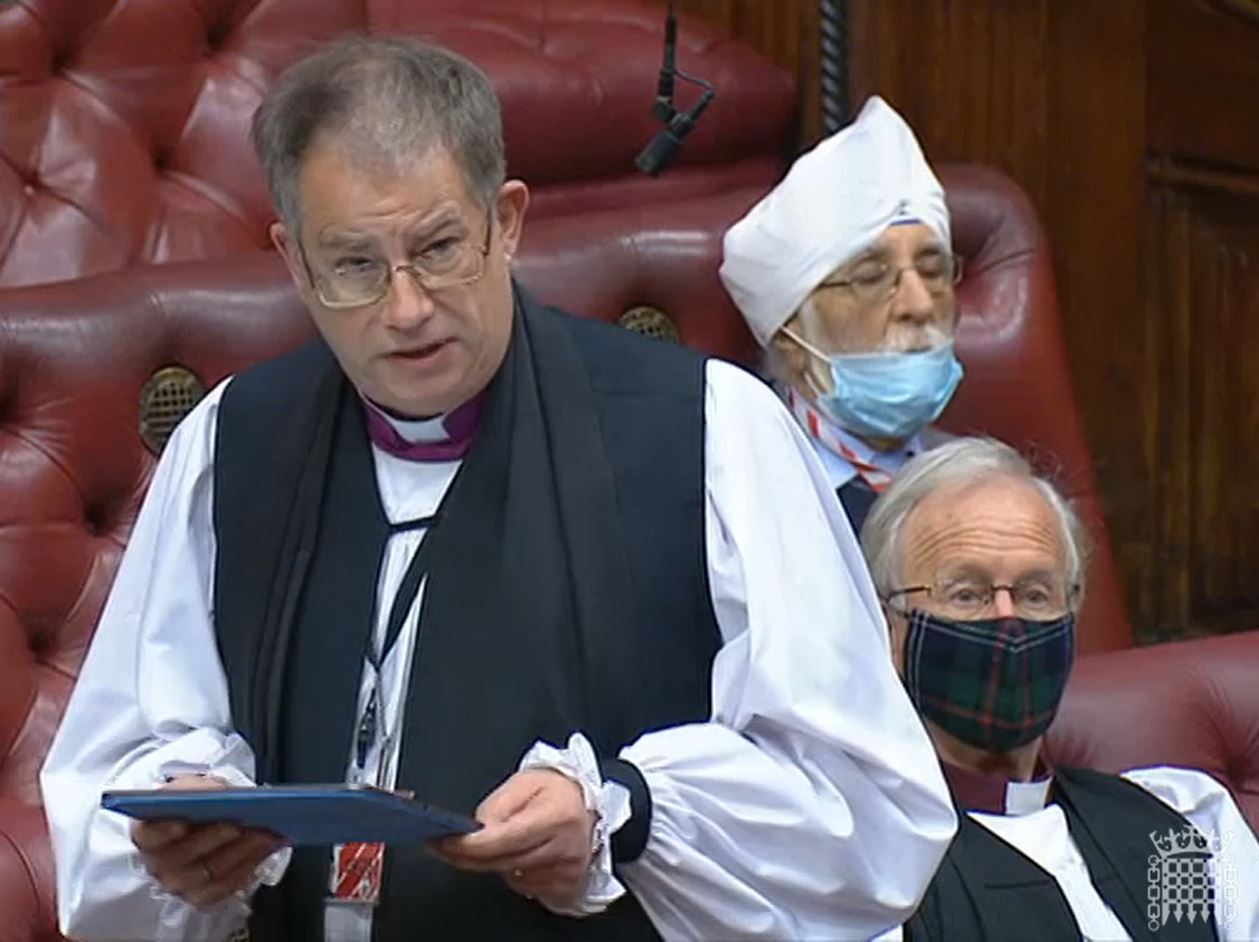
On 20th June 2023, the House of Lords debated the Retained EU Law (Revocation and Reform) Bill. Votes were held on amendments to the bill, in which Bishops took part:

Continue reading “Votes: Retained EU Law (Revocation and Reform) Bill”

Bishop of Exeter asks about diseases and invasive insects affecting the health of trees

The Bishop of Exeter received the following written answers on 19th June 2023:

The Lord Bishop of Exeter asked His Majesty’s Government what assessment they have made of acute oak decline in the UK; and what steps they are taking to minimise its impact.

Lord Benyon (Con): We have a dedicated programme of risk and horizon scanning, which continuously and proactively assesses emerging threats to plant health and the potential impact on the UK.

Continue reading “Bishop of Exeter asks about diseases and invasive insects affecting the health of trees”

Bishop of Oxford urges commitment to unilateral action on climate change

On 7th June 2023, the Bishop of Oxford spoke in a debate on a report from the Environment and Climate Change Committee, stressing the need for a coordinated response to the challenges presented by climate change:

The Lord Bishop of Oxford: My Lords, it is a pleasure to be part of your Lordships’ committee under the excellent leadership of the noble Baroness, Lady Parminter, and to present this report and debate it today. Many in your Lordships’ House will have seen the 2021 Hollywood film “Don’t Look Up”, which was written and directed by Adam McKay. It explores the world’s response to climate change through the metaphor of an asteroid hurtling towards the earth bringing destruction in its wake. The scientists and world leaders in the film have a way through the crisis, but only if the scientific facts are acknowledged and the world works together. As noble Lords may know, in the film the world fails that test spectacularly.

Each year brings fresh reminders of the reality of global heating in floods, fires, extreme weather events, natural disasters and rising sea levels. The IPCC continues to publish ever more solemn warnings to the world, including most recently that we are likely to see a 1.5 degree rise in average temperature in at least one year in this decade. The human consequences of climate change are seen in wars, migration, changing crop patterns and the loss of islands and coastal areas. The burden falls most on the poorest and those who have historically used the least in terms of carbon, yet still we do not listen.

Continue reading “Bishop of Oxford urges commitment to unilateral action on climate change”

Votes: Retained EU Law Bill (Revocation and Reform)

On 6th June 2023, the House of Lords debated the Retained EU Law Bill following Commons amendments. Votes were held on motions to add additional amendments to the bill, in which a bishop took part:

Continue reading “Votes: Retained EU Law Bill (Revocation and Reform)”

Votes: Energy Bill [HL]

On 17th April 2023, the House of Lords debated the Energy Bill in the second day of the report stage. Votes were held on amendments to the bill, in which bishops took part:

Continue reading “Votes: Energy Bill [HL]”

Bishop of Exeter asks about greenhouse gas emissions associated with dairy farming

The Bishop of Exeter received the following written answer on 17th April 2023:

The Lord Bishop of Exeter asked His Majesty’s Government what steps they are taking to encourage dairy farmers to undertake a Greenhouse Gas Protocol audit.

Lord Benyon (Con): In the Net Zero Growth Plan, we have committed to developing a harmonised approach to measuring carbon on farms and will set out how we will support farmers to undertake carbon audits by 2024.

Hansard

Archbishop highlights increased risk of climate change-driven conflict and migration

On 30th March 2023 the House of Lords held a short debate on a Motion from Lord Naseby: To ask His Majesty’s Government what plans they have to introduce new economic policies to address the challenges of climate change in developing countries, particularly those that are members of the Commonwealth.

The Archbishop of Canterbury: My Lords, I am grateful to the noble Lord, Lord Naseby, for tabling this Question. In his travelogue, he mentioned, to my alarm, the areas for which I am directly responsible—I suppose because they could not go anywhere else—notably, the Falkland Islands, Antarctica, Sri Lanka and Bermuda; I do not know what is going to happen to Kent.

The OECD’s most recent States of Fragility report found that, in 2022, 23% of the world’s population were living in fragile contexts, often linked to climate change, but 73% of the world’s extreme poor were. This figure is projected to rise to 86% of the world’s poor on the lowest incomes by 2030. For the Anglican Communion, within 165 countries over 150 of them are affected by such changes.

Continue reading “Archbishop highlights increased risk of climate change-driven conflict and migration”

Bishop of St Edmundsbury and Ipswich highlights need to encourage farmers engagement with Environmental Land Management Scheme

The Bishop of St Edmundsbury and Ipswich spoke during a debate on a motion to approve new regulations on direct payments to farmers, highlighting the need for support for farmers to engage with Environmental Land Management Schemes:

The Lord Bishop of St Edmundsbury and Ipswich: My Lords, I shall follow the comments that we have just heard. I declare a new interest as the president-elect of the Suffolk Agricultural Association, where we see the issues that have just been described in the uplands similarly in small family farms in Suffolk.

By and large, the farmers that I speak to want to embrace the ELM scheme and many of them are doing so. What those who are embracing it are saying to me about those who are not yet doing so is that somehow the scheme needs to be made more attractive, the incentives need to be increased—particularly for the smaller family farmers—and the process simplified in some way so that they can gain access to the scheme. I understand that His Majesty’s Government are seeking to achieve 80% take-up of ELMS by 2030. I ask the Minister where we are with that at the moment and what he sees as the possibilities of accelerating and incentivising the take-up by those who, as we heard earlier, might need hand-holding in that process.

Hansard

Bishop of St Albans asks about United Nations World Water Development Report

The Bishop of St Albans asked a question on the government’s assessment of the United Nations World Water Development Report on 28th March 2023:

The Lord Bishop of St Albans: To ask His Majesty’s Government what assessment they have made of the United Nations World Water Development Report, published on 15 March.

Lord Goldsmith of Richmond Park (Con): My Lords, the UK supports the findings of the UN World Water Development Report 2023. We agree that partnership and co-operation are key to achieving sustainable development goal 6: equitable access to water and sanitation for all. However, delivery is far off track, particularly on accountability, political leadership and finance. At last week’s UN water conference I called for increased action in these areas and announced a new £18.5 million water sanitation and hygiene—WASH—system for health programme, as well as seed funding for a new £38 million water programme.

Continue reading “Bishop of St Albans asks about United Nations World Water Development Report”

Bishop of St Albans asks about sustainability targets for oil companies

The Bishop of St Albans received the following written answer on 22nd February 2023:

The Lord Bishop of St Albans asked His Majesty’s Government whether they have held any discussions with BP following reports that the company will fail to meet its climate targets; and what steps they are taking to promote sustainability in oil companies.

Continue reading “Bishop of St Albans asks about sustainability targets for oil companies”