Bishop of Chester asks question on assessment of needs of dyslexics in higher education

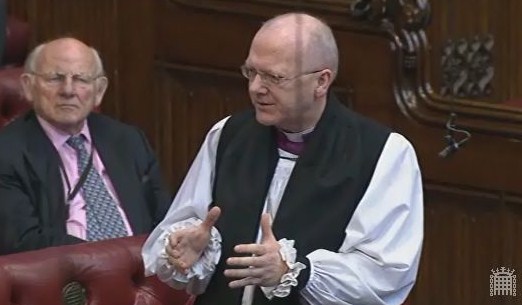
On 30th June 2014, Liberal Democrat peer Lord Addington asked Her Majesty’s Government how the assessment of complex needs for dyslexics will be achieved under the new Disabled Students’ Allowance arrangements. The Bishop of Chester, the Rt Revd Peter Forster, asked a supplementary question.
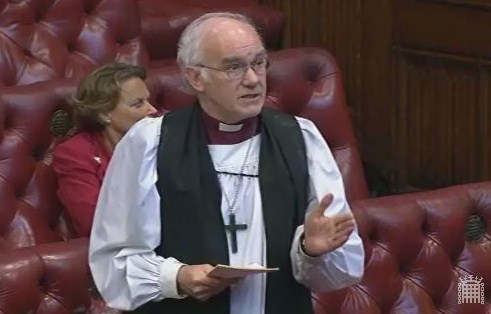
14.03 Bishop of ChesterThe Lord Bishop of Chester: My Lords, I declare an interest in that my younger son has just graduated successfully and has benefited from the computer and software for someone with dyslexia. People with dyslexia often flourish later in the educational process as they gain their coping mechanisms. Does this not mean that it is even more important to make sure that this support is fully in place, not least at university?
Lord Ahmad of Wimbledon: The right reverend Prelate makes an important point, and I congratulate him on his son’s successful graduation. The point he makes is perfectly valid. I have already mentioned that we will be looking at a full equality impact assessment before laying the regulations. I am sure that part and parcel of that process, and the discussion around those regulations, will be to cover the points that the right reverend Prelate has made.

Bishop of St Albans speaks in support of greater availability of defibrillators in public spaces

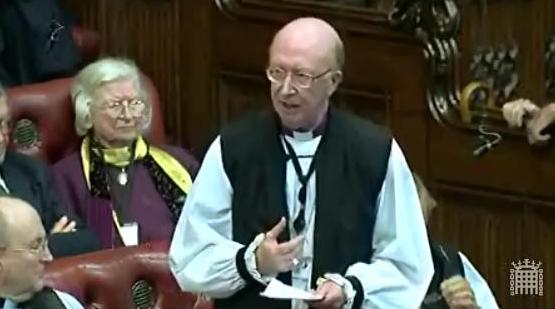
Bishop of St AlbansOn 24th June 2014, Lord Storey led a short debate in the House of Lords, to ask Her Majesty’s Government what action they will take to ensure that all schools, sports clubs and public service buildings have defibrillators as part of their first-aid kit provision.The Bishop of St Albans, the Rt Revd Alan Smith spoken during the debate, and expressed his desire to see a greater number of defibrillators in public spaces including churches and church halls. The Bishop commended the work of charities such as the British Heart Foundation and the Community Heartbeat trust as well as the efforts of the community first responders.
The Lord Bishop of St Albans: My Lords, I am grateful to the noble Lord, Lord Storey, for raising this important issue and for keeping it to the forefront. When I was training to be ordained, I became used to some people going off for a little doze while I was preaching. What I did not know was that, during my very first sermon, somebody—a very nice lady—would have a heart attack. Fortunately, she did not die and I got to know her and her family very well during her convalescence. I saw something of the impact of such events on families; indeed, my sympathy goes out to those who know something of this in their own family.

Continue reading “Bishop of St Albans speaks in support of greater availability of defibrillators in public spaces”

Bishop of Carlisle raises concerns about health inequalities for people with learning disabilities

“Even when all the other factors have been taken into account, the disparity in mortality between people with and without learning difficulties is alarming” – Bishop of Carlisle, 12/6/14

On 12th June, the House of Lords debated a motion from Baroness Hollins: ‘To ask Her Majesty’s Government what action they are taking to address the health inequalities found by the Confidential Inquiry into Premature Deaths of People with Learning Disabilities’. The Bishop of Carlisle, Rt Rev James Newcome, who is the lead CofE bishop for healthcare issues, spoke in the debate. He highlighted the need for greater monitoring of the causes of health inequalities for those with learning disabilities, better training for health professionals and improved advocacy and service design, especially to involve patients.

14.06.09 Bishop of Carlisle

The Lord Bishop of Carlisle: My Lords, in this debate we are asking Her Majesty’s Government to do three things. The first is to recognise the situation that currently exists, as we have heard, with regard to people with learning disabilities. It has been pointed out that the situation is one of considerable inequality. Continue reading “Bishop of Carlisle raises concerns about health inequalities for people with learning disabilities”

Bishop of Carlisle regrets “short-sighted and ill advised” reduction in NHS chaplaincy hours during Queen’s Speech debate

“NHS staff may often be the only point of contact that trafficked individuals have with society…This is just one of many reasons why the significant reduction in chaplaincy hours by some trusts seems to be short-sighted and ill advised”- Bishop of Carlisle, 9/6/14

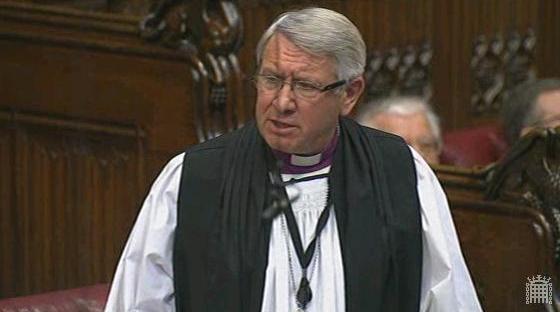
In the sixth response from the Bishops’ Benches to the Queen’s Speech, the Bishop of Carlisle, Rt Rev James Newcome, focused on health matters, drawing special attention to the need for action on elderly social care and on the health aspects of proposed legislation on modern slavery. He also criticised some Trusts for the recent significant reduction in chaplaincy hours.

14.06.09 Bishop of CarlisleThe Lord Bishop of Carlisle: My Lords, I agree with the noble Lord, Lord Willis, that the quantity of legislation does not equate to its quality. As we have already heard, we doubtless all agree that the noble Earl, Lord Howe, and the NHS deserve a bit of a rest. However, there are none the less those who regret the fact that so little of the gracious Speech related directly to health. For instance, the charity Age UK expressed its disappointment that an opportunity was lost to put in place safeguarding legislation that would have helped prevent the abuse of older people.

Continue reading “Bishop of Carlisle regrets “short-sighted and ill advised” reduction in NHS chaplaincy hours during Queen’s Speech debate”

Bishop of Oxford asks for Government assurances on nurse / patient ratios in NHS

On 12th May 2014 Baroness Kennedy of Cradley asked Her Majesty’s Government “what steps are being taken to ensure adequate levels of nursing staff in the National Health Service.”

The Bishop of Oxford asked a supplementary question, drawing parallels between staffing obligations and the situation of Thanet Clinical Commissioning Group, which had been warned about disregarding NICE guidelines on another case:

11.12.15 Bishop of OxfordThe Lord Bishop of Oxford: My Lords, given the court ruling last week against  Thanet Clinical Commissioning Group, saying that it was obliged to follow NICE guidelines unless a special factor could be determined that would justify departure, will Her Majesty’s Government give an assurance that the same test will apply to NHS trusts in regard to the ratio of nurses and patients?

Earl Howe: The guidance issued today by NICE on staffing ratios, to which I think the right reverend Prelate is specifically referring, is in draft, but the deputy chief executive of NICE has stressed that there are no floor or ceiling numbers on the required number of nursing staff that can be applied either across the whole of the NHS or in a particular ward setting. What the profession is seeking, and what NICE is looking to give it, is a reference tool or guideline that will enable it to judge correct staffing levels in accordance with the particular circumstances of a ward and the skill mix of the staff on that ward. It is a guideline rather than a mandatory prescription.

(via Parliament.uk)

Minority ethnic communities access to mental health services

On 3rd April 2014 Lord Hunt of Kings Heath asked Her Majesty’s Government ‘what action they are taking to ensure that NHS England funds mental health in line with the requirement for parity of esteem’. The Bishop of St Albans asked a supplementary question:

14.03 Bishop of St Albans

The Lord Bishop of St Albans: Given the significant disparity in mental health diagnosis, treatment and outcomes between minority ethnic groups and the general population, what steps are being taken not only to uphold parity of esteem between mental and physical health but to reflect that in the provision of accessible and effective mental health services for all people? Continue reading “Minority ethnic communities access to mental health services”

Bishop of Norwich presses Government on sustainability of GP numbers

NHS: General Practitioners

(via Parliament.uk)

The Bishop of Norwich asked a written question of Government, on the number of GPs available for primary care needs in the next five years. He received an answer from the Parliamentary Under-Secretary of State for Health, Earl Howe, on 10th March 2014. The question and reply are below.

The Lord Bishop of Norwich:

The Bishop of Norwich, Rt Revd Graham James

To ask Her Majesty’s Government what steps they are taking to ensure that there are adequate numbers of general practitioners (GPs) available for primary care needs in England over the next five years in the light of the age profile of current practising GPs, their increasing role as commissioners, and the impact of the introduction of revalidation for all doctors.

The Parliamentary Under-Secretary of State, Department of Health (Earl Howe): The Department set up Health Education England (HEE) to deliver a better health and healthcare workforce for England. HEE is responsible for ensuring a secure workforce supply for the future balancing need against demand, taking into account factors such as the age profile of the existing workforce, the impact of technology, and new drugs. Continue reading “Bishop of Norwich presses Government on sustainability of GP numbers”

The Bishop of St Albans asks Government about support for healthy living in schools

Baroness Morgan of Ely asked Her Majesty’s Government what representations they have made to the food and drink industry about reducing levels of sugar in processed products in the United Kingdom.

The Bishop of St Albans asked a supplementary question:

The Lord Bishop of St Albans: My Lords, while I support the need to reduce the level of sugar in processed food wherever possible, I am concerned that this alone will do little to improve the nation’s health or deal with the problem of obesity. What progress are the Department for Education and the Department of Health making on reducing the number of calories in meals served in schools, and what progress is being made on increasing the level of physical activities for the pupils in our schools?

Earl Howe: My Lords, tackling obesity calls for action by the widest possible range of partners, including the food industry but also including schools. That is what we are trying to do through the responsibility deal. Our National Child Measurement Programme, the School Food Plan, the School Games and the money that we are putting into school sports funding—£150 million a year—all contribute to the joint effort across government to influence the way in which calories are consumed by children. I have encouraging news on that front, which is that the level of child obesity is now the lowest that it has been since 1998, so we are moving in the right direction.

(via parliament.uk)

Votes – Children and Families Bill

House of Lords Division Lobby

On 28th and 29th January 2014, the Bishop of St Albans took part in two votes on the Government’s Children and Families Bill, during its Report Stage.

Continue reading “Votes – Children and Families Bill”

Bishop of Leicester asks question on mental health spending for those living with dementia

Lord Hunt of Kings Heath asked Her Majesty’s Government why they have discontinued the annual survey of mental health spending.

The Bishop of Leicester asked a supplementary question:

The Lord Bishop of LeicesteLeicesterr: My Lords, between 2011 and 2012 home support services saw a decrease of some 5.5% in expenditure. Can the noble Baroness tell us what impact this is likely to have on the mental well-being of people living with dementia and their carers? How can this impact be monitored if detailed spending figures are not yet available?

Baroness Jolly: Dementia services are delivered jointly with social care. The Government will be working with NHS England through clinical commissioning groups to make sure that the joint strategic needs assessments that are set out in local plans include provision for people living with dementia. My honourable friend in the other place has set up pioneering groups that are looking at integration of services. All that is very high on the agenda.

(via Parliament.uk)