Strikes (Minimum Service) Bill: Bishop of St Edmundsbury and Ipswich urges government to reconsider legislation

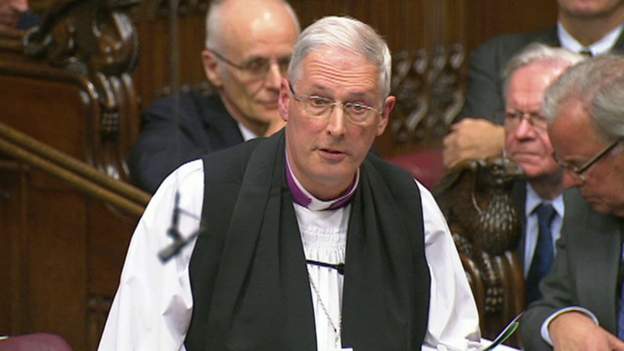
On 21st February 2023, the Bishop of St Edmundsbury and Ipswich spoke in a debate on the Strikes (Minimum Service Levels) Bill, expressing concerns on workers rights and the broadness of the legislation proposed, and urging that the government reconsider the bill:
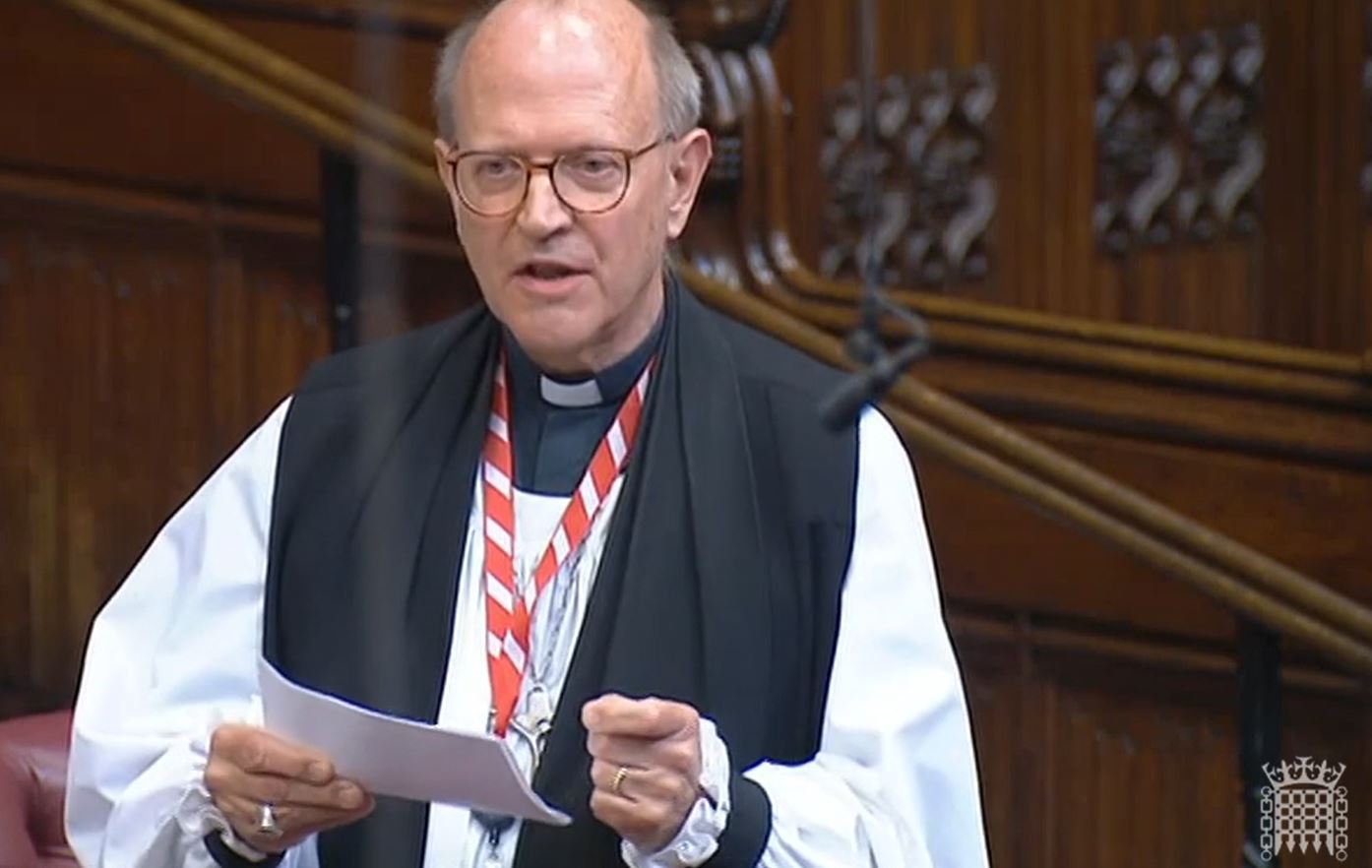
The Lord Bishop of St Edmundsbury and Ipswich: My Lords, I too look forward to the maiden speech of the noble Baroness, Lady O’Neill. There is only me standing in the way, so I will try to be brief.

At Second Reading in the other place, the Government said that the Bill’s purpose was

“to maintain a reasonable balance between the ability of workers to strike and the rights of the public, who work hard and expect the essential services that they pay for to be there when they need them.”—[Official Report, Commons, 16/1/23; col. 54.]

At first glance this might seem a straightforward aim. However, as noble Lords and those in the other place have already said, there is much more at stake here than initially meets the eye. I believe that the Bill in its current form creates more problems than those it perceives or seeks to solve.

There has been a terrible increase in industrial action in the past months. We all reflect on why this may be the case. There are serious and legitimate concerns held by those who decide to go on strike about their well-being, as well as the well-being of the services for which they work and that of wider society.

Continue reading “Strikes (Minimum Service) Bill: Bishop of St Edmundsbury and Ipswich urges government to reconsider legislation”
Bishop of St Albans asks about links between Chinese surveillance companies and human rights abuses

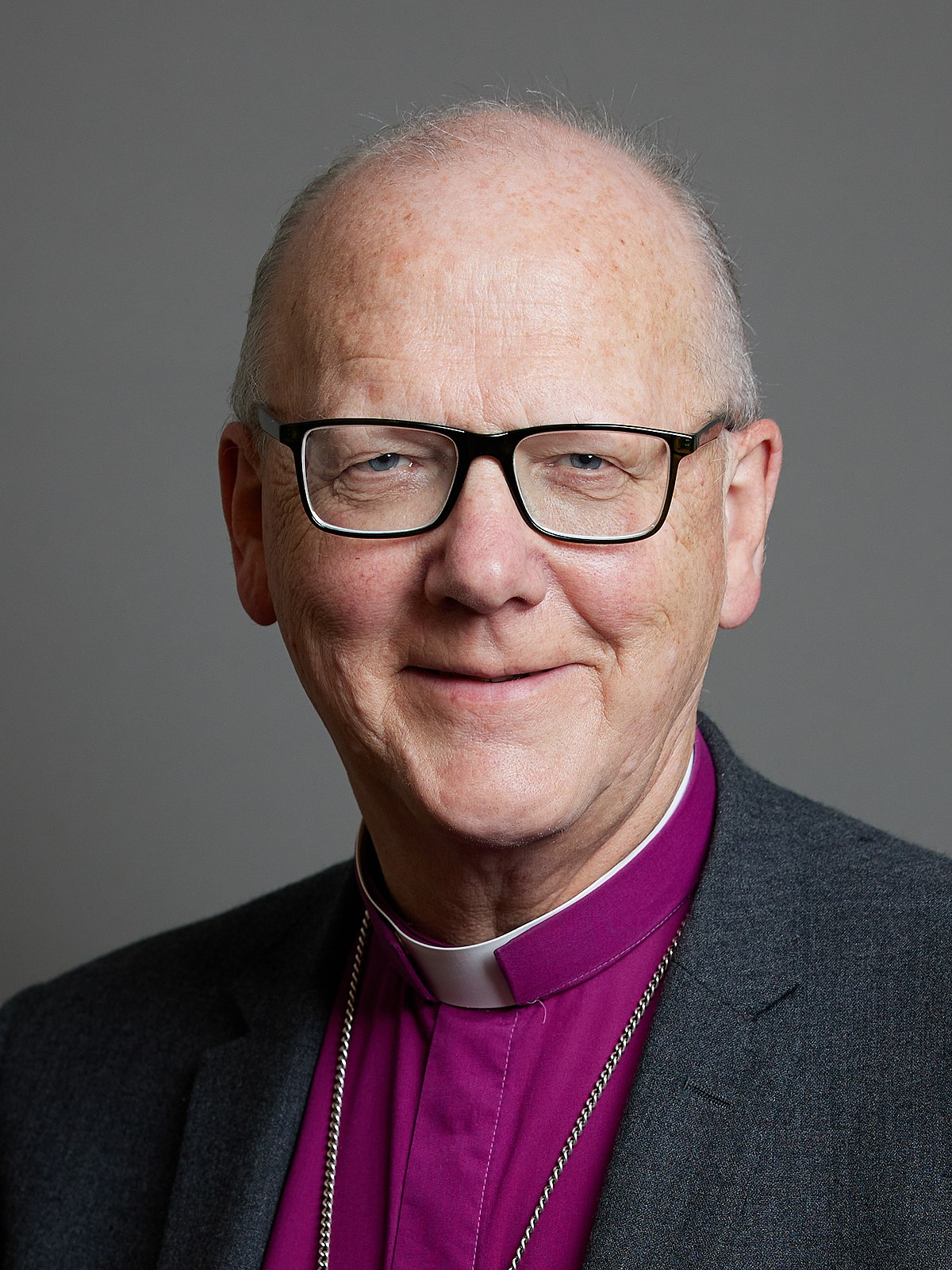
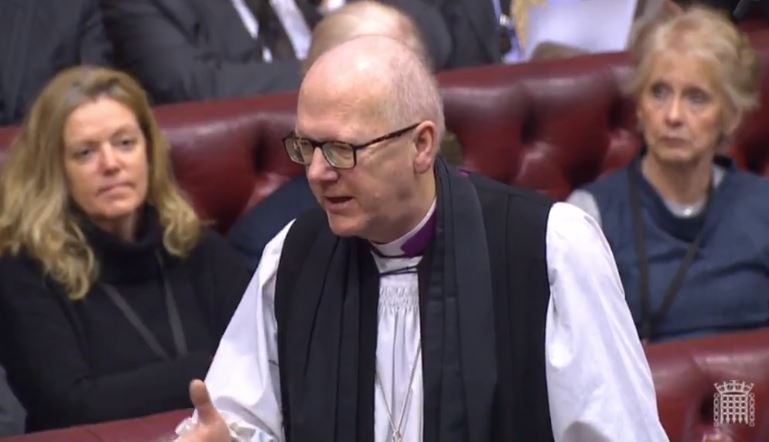
The Bishop of St Albans received the following written answer on 7th February 2023:

The Lord Bishop of St Albans asked His Majesty’s Government what recent assessment they have made of the Chinese surveillance companies (1) Dahua, and (2) Hikvision; what assessment they have made of any links between those companies and human rights abuses in the Xinjiang province; and what assessment they have made of whether they constitute a security threat to the UK.

Continue reading “Bishop of St Albans asks about links between Chinese surveillance companies and human rights abuses”

Bishop of St Albans asks about human rights of children in Iran

The Bishop of St Albans received the following written answers on 19th December 2022:

The Lord Bishop of St Albans asked His Majesty’s Government what estimate they have made of the number of children detained in prisons in Iran.

Lord Ahmad of Wimbledon (Con): The treatment of juvenile offenders in Iran falls short of international standards. The Iranian judicial system is deeply flawed with frequent and well-documented violations of fair trial rights. The use of death sentences against minors is also a regular occurrence. Because of the lack of transparency of the Iranian judicial system, it is difficult to calculate with accuracy the number of children detained in Iran. In recent months, we have observed a significant increase in the rate at which children are arrested and a disproportionate number who have died during the protests. This was also noted by the UN High Commissioner for Human Rights on 17 October. The UK will continue to work with partners to hold Iran to account for its actions.

Continue reading “Bishop of St Albans asks about human rights of children in Iran”

Bishop of St Albans leads debate on human rights abuses in China

The Bishop of St Albans tabled a question for short debate in Grand Committee on 17th November 2022, concerning reports of human rights abuses in China:

The Lord Bishop of St Albans: To ask His Majesty’s Government what assessment they have made of allegations of human rights abuses in China.

My Lords, I approach this debate with a great deal of reticence and, indeed, almost reluctance. I have long admired China and the Chinese people, although one should of course acknowledge that the population of China is made up of 56 different ethnic groups. I have long admired their ancient civilisation. Not only is China a country of great natural beauty; it is the nation that invented the compass, gunpowder, paper, moveable-type printing, kites, fireworks, silk, tea and porcelain, to name a few. I will perhaps omit noodles from my list of admirable inventions. My Chinese friends are among some of the most educated, industrious and cultured people I know. China is the fourth-largest country by land mass and has the largest population of any country in the world. Over many decades, we have developed extensive trade links with China, and it is in its interests and ours for us to share in commerce and seek to find common cause for the good of the world.

Yet I feel I cannot remain silent in the face of such a wide range of human rights abuses. Lying behind our profound differences is a vast cultural gulf that was laid bare most recently for me when I read President Xi’s speech at the 20th National Congress of the Chinese Communist Party last month. He said:

“We will … continue to take the correct and distinctively Chinese approach to handling ethnic affairs … We will remain committed to the principle that religions in China must be Chinese in orientation and provide active guidance to religions so that they can adapt to socialist society.”

He also said:

“We have effectively contained ethnic separatists, religious extremists, and violent terrorists”.

To those here who are familiar with China’s history of human rights abuses, these are worrying words.

Continue reading “Bishop of St Albans leads debate on human rights abuses in China”

Bishop of St Albans warns of ‘tinkering with human rights convention’ in debate on the Human Rights Act

The Bishop of St Albans spoke in a debate on the 1998 Human Rights Act, on 14th July 2022:

My Lords, I too thank the noble Baroness, Lady Whitaker, for securing this debate, and for setting out so clearly many of the great benefits that have been achieved through the Human Rights Act. I will not repeat or elaborate any of those here, and perhaps save a moment or two in so doing.

As neither a legal nor constitutional expert, I am not going to delve into the technical side of the matter, but it is clear to me that this is a discussion not simply about the importance of the Human Rights Act 1998 but about many of the concerns—already raised from different Benches in this House—that noble Lords have with the proposed British Bill of Rights. Before I mention some of my concerns, I commend the introduction of the right to a trial by jury in the updated Bill of Rights Bill. But aside from this one welcome measure, it strikes me that there is a very real danger that the new Bill of Rights may remove levels of accountability from government, particularly in areas such as immigration, which I have an interest in.

Continue reading “Bishop of St Albans warns of ‘tinkering with human rights convention’ in debate on the Human Rights Act”

Bishop of St Albans asks about any potential audits of UK assets held by Chinese Hong Kong Officials linked to human rights violations

The Bishop of St Albans received the following written answer on 11th July 2022:

The Lord Bishop of St Albans asked Her Majesty’s Government what plans they have, if any, to carry out an audit of UK assets held by Chinese Hong Kong officials who are linked to human rights violations.

Continue reading “Bishop of St Albans asks about any potential audits of UK assets held by Chinese Hong Kong Officials linked to human rights violations”

Bishop of Southwark asks about human rights in Azerbaijan

The Bishop of Southwark received the following written answer on 5th July 2022:

The Lord Bishop of Southwark asked Her Majesty’s Government what assessment they have made of (1) the case of the Azeri imam Sardar Babayev, who has been arrested on a charge of treason, and (2) the state of human rights in the Republic of Azerbaijan.

Continue reading “Bishop of Southwark asks about human rights in Azerbaijan”

Bishop of Guildford asks about discrimination against minorities in Pakistan

The Bishop of Guildford received the following written answer on 21st June 2022:

The Lord Bishop of Guildford asked Her Majesty’s Government what assessment they have made of the report by the National Commission for Human Rights Pakistan Unequal citizens: ending systematic discrimination against minorities, published on 23 May; and what plans they have to use UK Aid to increase employment among young Christians in Pakistan.

Continue reading “Bishop of Guildford asks about discrimination against minorities in Pakistan”

Archbishop of Canterbury asks about the government’s asylum policy

The Archbishop of Canterbury received the following written answers on 24th May 2022:

The Lord Archbishop of Canterbury asked Her Majesty’s Government:

  • what criteria they will use to determine whether someone arriving in the UK, outside of the authorised channels, is eligible for being relocated to Rwanda.
  • whether families will be split up through the new Asylum Partnership Arrangement with Rwanda; and if not, what evidence they have that the policy will not lead to increased trafficking of women and children.
Continue reading “Archbishop of Canterbury asks about the government’s asylum policy”

Bishop of Durham asks about human rights in Burundi

The Bishop of Durham received the following written answer on 4th March 2022:

The Lord Bishop of Durham asked Her Majesty’s Government what assessment they have made, if any, of the current level of human rights protection in Burundi.

Lord Goldsmith of Richmond Park (Con): The UK Government welcomes steps taken by the Government of Burundi over the past 18 months, which demonstrate greater commitment to human rights including prisoner releases and engagement with some media outlets.

Continue reading “Bishop of Durham asks about human rights in Burundi”