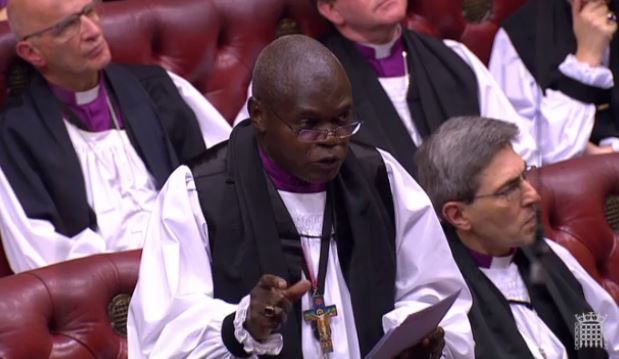
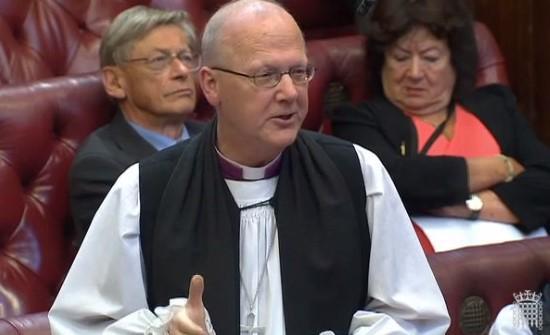
Bishop of London asks about fair pay in the social care sector

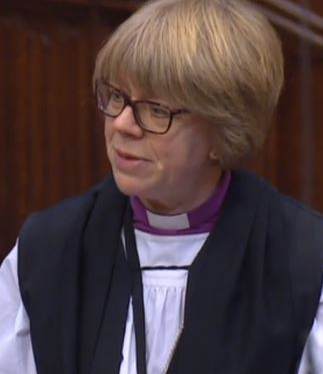
The Bishop of London asked a question on ensuring fair pay, hours, and pensions for social care workers on 18th June 2025:

The Lord Bishop of London: My Lords, as we have heard, concerns around low pay and insecure contracts are long-standing in the social care sector. The Minister made mention of the fair pay agreement; can she explain how this will ensure that a living wage, living hours and living pensions will be paid to staff among the private social care providers?

Continue reading “Bishop of London asks about fair pay in the social care sector”

Bishop of St Albans asks about plans to encourage payment of living wages for UK employees

The Bishop of St Albans received the following written answer on 13th December 2023:

The Lord Bishop of St Albans asked His Majesty’s Government what plans they have to encourage employers to pay their employees a real living wage in light of the finding in the report, UK Poverty 2023, published by the Joseph Rowntree Foundation on 26 January, that 11 per cent of all destitute respondents are in paid work.

Continue reading “Bishop of St Albans asks about plans to encourage payment of living wages for UK employees”

Bishop of St Albans asks about structural pay gaps

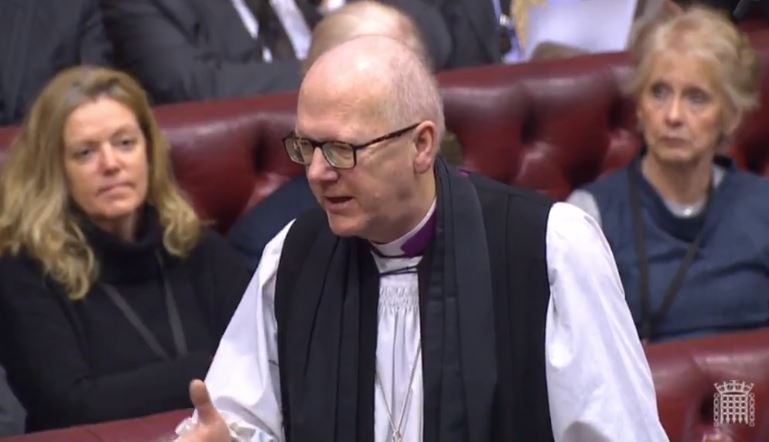
On 23rd November 2023, the Bishop of St Albans asked a question on addressing structural pay gaps following the Chancellor’s autumn statement:

The Lord Bishop of St Albans: My Lords, we on these Benches welcome a number of aspects of the announcements yesterday in the Autumn Statement, not least the rises in the living wage and in pensions. There is an issue, though, over structural pay gaps which hide even greater disparities: pay gaps to do with gender, disability, social mobility and regional disparities, which are vital as we think about our levelling-up strategy. Can the Minister give us some indication of how the Government hope to address those structural pay differentials and gaps?

Continue reading “Bishop of St Albans asks about structural pay gaps”

Bishop of Durham asks about employment and living wage

The Bishop of Durham received the following written answers on 17th October 2023:

The Lord Bishop of Durham asked His Majesty’s Government what assessment they have made of the number of people employed in insecure work; and what steps they are taking to ensure that more employees have secure work.

The Earl of Minto (Con, Treasury): The Government has taken a range of steps to support people in insecure work. We have supported six Private Members’ Bills in this Parliamentary session, which will give benefits including easier access to flexible working and a more predictable working pattern.

Continue reading “Bishop of Durham asks about employment and living wage”

Bishop of London asks about living wage for social care workers

The Bishop of London asked a question about establishing a living wage for social care workers on 21st November 2022:

The Lord Bishop of London: My Lords, Enabled Living in Newham has become the first London-based social care provider to pay its workers the real living wage—the first such employer to do so. We have heard that social care workers are among the lowest paid, with one in five residential care workers living in poverty before the cost of living crisis, according to the Health Foundation. What assessment have the Government made of the real living wage and the impact that it could have on retaining valuable social care workers?

Continue reading “Bishop of London asks about living wage for social care workers”

Archbishop of York leads Lords debate on the case for income equality and sustainability

On 6th May 2020 the Archbishop of York, Most Revd John Sentamu, led a debate in the House of Lords on the motion that the Lords “do consider the case for increasing income equality and sustainability in the light of the recent health emergency.” The Archbishop started the debate, and summed up afterwards, referring to many of the speeches made by other Members over the course of nearly three hours. Amongst the other speakers were the Archbishop of Canterbury and the Bishops of Durham and Derby. The entire debate can be read in Hansard here, and the Archbishop’s opening and closing speeches are reproduced below:

Income Equality and Sustainability: Motion to Consider

Moved by The Archbishop of York, That the Virtual Proceedings do consider the case for increasing income equality and sustainability in the light of the recent health emergency.
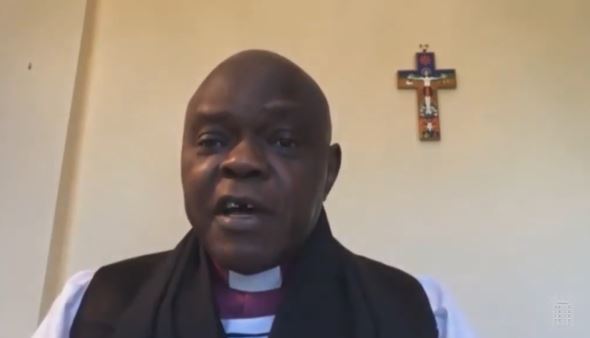
The Archbishop of York: My Lords, I am grateful to the Government Chief Whip and the usual channels for granting me this opportunity to move a Motion that is very dear to my heart—thank you. I commend Her Majesty’s Government for their rapid action in the current crisis and, through unprecedented public spending, working to protect jobs and avert millions of redundancies. It is in the light of this recent health emergency that I beseech your Lordships’ House to take note of the case for increasing income equality and sustainability.

Last Thursday, the noble Baroness, Lady Bennett of Manor Castle, opened a Question for Short Debate on Covid-19 and people living in poverty. I believe that what we are doing today has the potential to make a lasting difference. As Amelia Earhart, the first woman to fly across the Atlantic, said:

“The most difficult thing is the decision to act, the rest is merely tenacity.”

As long ago as 28 April 1909, Winston Churchill, then president of the Board of Trade, gave a speech in the other place in which he said:

“It is a serious national evil that any class of His Majesty’s subjects should receive less than a living wage in return for their utmost exertions.”—[Official Report, Commons, 28/4/1909; col. 388]

Not much has changed since. That principle remains as strong as ever in our national life. Continue reading “Archbishop of York leads Lords debate on the case for income equality and sustainability”

Bishop of Portsmouth responds to Queen’s Speech – how to build ‘one-nation’

On 9th January 2020, the Bishop of Portsmouth, Rt Revd Christopher Foster, spoke in the Queen’s Speech debate, about unifying the nation by building on the expansion of the Living Wage and addressing welfare, child poverty, homelessness and help for the disabled: 

The Lord Bishop of Portsmouth: My Lords, it is stating the obvious to say that these are turbulent, uncertain times, perhaps the most turbulent in living memory, even when that memory belongs to Members of your Lordships’ House—a particular, special demographic. It is striking in the face of so much that is uncertain and unknown that the Government’s rhetoric is of clarity, confidence, and even dash. However, while the terrain might be new, much of the rhetoric is from an older school. What is novel is from whom it comes. Continue reading “Bishop of Portsmouth responds to Queen’s Speech – how to build ‘one-nation’”

Archbishop of York speaks against Government proposals on tax credits

Employers who have already adopted a living wage policy have lifted thousands of people out of working poverty. They are not claiming tax credits because they have been lifted out. The Exchequer could gain up to £4.2 billion a year in increased tax revenues and reduced expenditure on tax credits. That is a much neater way of doing it.“- Archbishop of York, 26/10/15

ABYtaxcreditsdebateOn 26th October 2015 the House of Lords debated a motion to approve the Government’s Tax Credits (Income Thresholds and Determination of Rates) (Amendment) Regulations 2015.

Alongside the motion to approve the House also debated four amendments to the motion, from Liberal Democrat, Crossbench and Labour Peers and one from the Bishop of Portsmouth, Rt Rev Christopher Foster. Continue reading “Archbishop of York speaks against Government proposals on tax credits”

Bishop of St Albans asks Government about impact of National Living Wage on small businesses

Bishop St Albans June 2015On 19th October 2015 Lord Haskel asked Her Majesty’s Government “what assessment they have made of the financial impact on British business of the new minimum wage when it comes into effect in 2016.” The Bishop of St Albans, Rt Revd Alan Smith, asked a supplementary question.

The Lord Bishop of St Albans: My Lords, while welcoming the Government’s moves to look at the level of wages as the Minister has mentioned in terms of the minimum living wage, I am aware that the Resolution Foundation is concerned about very small businesses—those that employ fewer than 10 people. Continue reading “Bishop of St Albans asks Government about impact of National Living Wage on small businesses”

Bishop of St Albans asks government about plans for a national living wage

On 3rd August 2015 the Bishop oBishop St Albans June 2015f St Albans, Rt Revd Alan Smith, received answers to written questions on the government’s plans for a National Living Wage, and on the income pressures faced by young people:

The Lord Bishop of St Albans: To ask Her Majesty’s Government whether they plan to bring the National Living Wage in line with the rate recommended by the Living Wage Foundation by incorporating adjustments for cost of living and support received through tax credits. Continue reading “Bishop of St Albans asks government about plans for a national living wage”