
On 5th February 2026, the Archbishop of Canterbury, who had previously sat in the House of Lords as Bishop of London, was reintroduced to the House and took her seat on the Bishops Benches:
Tag: London
Terminally Ill Adults (End of Life) Bill: Bishop of London supports further safeguards
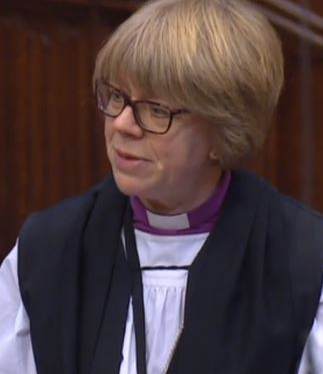
The Bishop of London spoke during a committee debate on the Terminally Ill Adults (End of Life) Bill on 21st November 2025, supporting amendments aimed at introducing further safeguards and monitoring into the bill:
The Lord Bishop of London: My Lords, I will speak particularly in support of Amendments 181, 45 to 49, 58 and 222. It is a privilege to follow the noble Baroness, Lady Hollins, and the noble Lord, Lord Griffiths, whom I thank for sharing their personal stories. They are a reminder to us that this debate touches some of the deepest things within us, and not only should we be kind to each other but we ought also to be kind to ourselves.
I declare my interests as set out in the register, and particularly that I am vice-president of Exeter Hospice Care, chair of the UK Commission on Bereavement, and patron of AtaLoss. Your Lordships will know that, however many amendments there are to this Bill, I do not feel it will ever be safe. But I want to speak on this group because I believe that these amendments are at the heart of the issue of motivation. I remain concerned about the fact that there is currently no real, deep investigation of the motivation for assisted dying.
Continue reading “Terminally Ill Adults (End of Life) Bill: Bishop of London supports further safeguards”Bishop of London asks about engagement with communities affected by Coronavirus pandemic
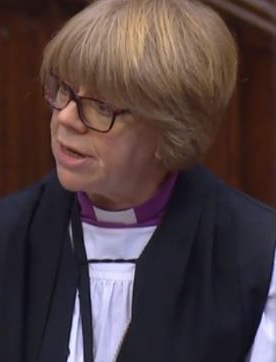
The Bishop of London asked a question on engagement with communities impacted by the COVID-19 pandemic on 13th November 2025, during a discussion on commemoration of the pandemic:
The Lord Bishop of London: My Lords, I add my condolences and prayers to those who lost somebody during Covid, particularly those in the Chamber. I also recognise the hard work of the noble Baroness, Lady Morgan, and the commission. What effort is being made on ongoing engagement with communities to rebuild trust in public services, including the health service, which was lost during Covid?
Continue reading “Bishop of London asks about engagement with communities affected by Coronavirus pandemic”Bishop of London asks about support for local authorities caring for adults with learning disabilities
The Bishop of London asked a question on support for local authorities in caring for adults with learning disabilities on 13th November 2025, during a discussion on the Learning Disabilities Mortality Review Reports:
The Lord Bishop of London: My Lords, according to the learning disabilities mortality review of adults with a learning disability who died in 2023, 25.6% had a care package that did not meet their needs. We know that local authorities continue to face significant challenges to providing adult social care services. Can the Minister say what action the Government are taking to support local authorities as they respond to more complex needs to make sure that every person, including those with learning disabilities, has the correct care plan?
Continue reading “Bishop of London asks about support for local authorities caring for adults with learning disabilities”Bishop of London asks about data collection on telemedical abortions
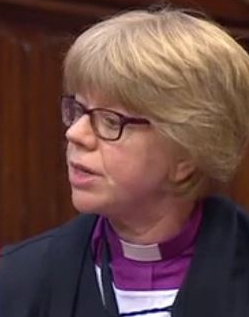
The Bishop of London asked a question on collection of data on the provision of telemedical abortions on 12th November 2025:
The Lord Bishop of London: My Lords, the extension of the regulations to enable early medical abortion to be provided without requiring in-person medical consultation was a significant change. We have heard about the tragic cases of early medical abortion pills being provided outside the law and women being put at risk as a result. We are now three years on from this change. What data has been collected in that time and what does it tell us about the workability of the new system in providing safe abortions within the law?
Baroness Merron (Lab, DHSC): The data available does not point to concerns about the provision of telemedicine. I should emphasise that, of course, abortions can take place only in an NHS hospital, in a place approved by the Secretary of State, or via telemedicine at the woman’s usual place of residence. Approval has to be given by the Secretary of State, and there is inspection by the Care Quality Commission, which inspects providers. The data thus far does not flag a difficulty in respect of telemedicine. In fact, all aspects of this are saying that this ensures that this safe procedure is assisting the situation for the women concerned.
Border Security, Asylum and Immigration Bill: Bishop of London supports amendments on freedom of religion and modern slavery
During a debate on the Border Security, Asylum and Immigration Bill on 11th November 2025, the Bishop of London spoke in opposition to two amendments aimed at potentially restricting claims of asylum for reasons of freedom of religion and modern slavery, pointing out the lack of evidence of any abuse of the baptism process by asylum seekers and the need to protect the safety of those under threat from religious discrimination:
The Lord Bishop of London: My Lords, I resist Amendment 79D. This amendment and Amendment 79E in the next group are both motivated by reports that asylum seekers are choosing to convert to Christianity upon arrival in the UK in order to support their claim for asylum on the grounds of religious persecution. Amendment 79E is of deep concern. I will address this in the next group.
Continue reading “Border Security, Asylum and Immigration Bill: Bishop of London supports amendments on freedom of religion and modern slavery”Votes: Border Security, Asylum and Immigration Bill
On 11th November, the House of Lords debated the Border Security, Asylum and Immigration Bill. Votes were held on amendments to the bill, in which bishops took part:
Bishop of London asks about role and importance of churches in providing religious education
The Bishop of London asked a question on the importance of religious education following a government statement on the curriculum and assessment review on 10th November 2025:
The Lord Bishop of London: My Lords, we are living in an increasingly complex world, and the study of religious education is critical in helping young people to navigate it. The need for understanding and dialogue across different faith groups and worldviews is increasingly obvious. The Church of England has welcomed the scrapping of the EBacc, because it has positive implications for religious education. At present, schools with a religious character provide the most comprehensive RE in the country. Will the Government commit to ensuring that these new proposals do not undermine this or the historic role that churches have in providing education in England?
Continue reading “Bishop of London asks about role and importance of churches in providing religious education”Terminally Ill Adults (End of Life) Bill: Bishop of London opposes legislation and calls for comprehensive funding of palliative care system
The Bishop of London spoke at the second reading of the Terminally Ill Adults (End of Life) Bill, opposing the bill and outlining the need for fully funded palliative and social care services in the UK:
The Lord Bishop of London: My Lords, as the noble Lord, Lord Kamall, has already pointed out, we in this Chamber share the same goal: for people to die with dignity and compassion. They are critical concerns for those who, like me, believe that the Bill is deeply flawed. Noble Lords will know that I am a former government Chief Nursing Officer, and I chaired the UK Commission on Bereavement. As a nurse, a priest, a daughter and a granddaughter, I have had the privilege to be with many people as they die. Most people die well although, as we have heard and will continue to hear, that is not always the case. I have known people to experience some of the most valuable days of their life as it comes to an end, including those with terminal illnesses.
Continue reading “Terminally Ill Adults (End of Life) Bill: Bishop of London opposes legislation and calls for comprehensive funding of palliative care system”Church Commissioners Written Questions: Church of England – Slavery, Churches – Flags

On 4th July 2025, the Second Church Estates Commissioner, Marsha De Cordova MP, gave the following written answers to questions from MPs:
Church of England: Slavery
Neil O’Brien MP (Con, Harborough, Oadby and Wigston): To ask the hon. Member for Battersea, representing the Church Commissioners, for what reason the Church Commissioners have spent £5 million on Project Spire prior to approval from the Charity Commission.
Continue reading “Church Commissioners Written Questions: Church of England – Slavery, Churches – Flags” The Church of England in Parliament
You must be logged in to post a comment.