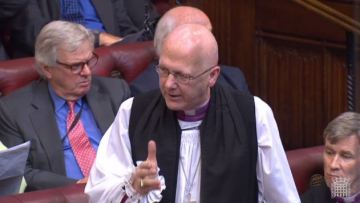
Bishop of Ely highlights access to high quality education for young people receiving mental health treatment

ElyOn the 20th February 2017, Lord Oates asked the Government “how many secondary schools in England do not currently provide in-school counselling services for their students.” The Bishop of Ely, the Rt Revd Stephen Conway, asked a supplementary question.


Lord Bishop of Ely: My Lords, does the Minister agree that an excellent education in a medical setting for those with severe mental health issues is essential to their recovery? Will he join me in paying tribute to the importance of education in acute mental health settings, such as the Pilgrim Pupil Referral Units in Cambridgeshire, which provide a stable learning environment for children and young people? Continue reading “Bishop of Ely highlights access to high quality education for young people receiving mental health treatment”
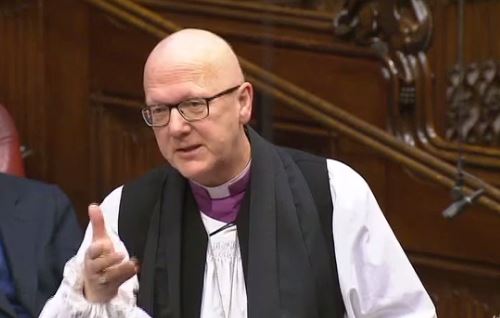
Bishop of St Albans asks Government about support to address self-harm by young people

stalbans190117-bOn 9th February 2017 the House of Lords debated a motion from Baroness Massey of Darwen “to ask Her Majesty’s Government what action they plan to take in the light of the Association for Young People’s Health briefing There for you which discusses the role of parents in supporting young people with mental health problems.” The Bishop of St Albans, Rt Revd Alan Smith, spoke in the debate:

The Lord Bishop of St Albans: My Lords, there are few more urgent issues in modern Britain than the state of mental health among our young people, and I thank the noble Baroness, Lady Massey, for tabling this important debate. Referrals to specialist mental health services have risen dramatically in recent years as increasing social pressures on our young people threaten the mental health of a generation. Issues around body image are one area of particular concern, fuelled in part by the rise of social media. I want to take this opportunity to pay tribute to my friend the right reverend Prelate the Bishop of Gloucester for her important work around body image and self-worth. Continue reading “Bishop of St Albans asks Government about support to address self-harm by young people”

Bishop of St Albans asks Government about workplace access to mental health services

St Albans 2On the 8th February 2017,  Lord Harrison asked Her Majesty’s Government “what measures they are taking to improve productivity in the United Kingdom economy.” The Bishop of St Albans, the Rt Revd Alan Smith, asked a follow-up question.
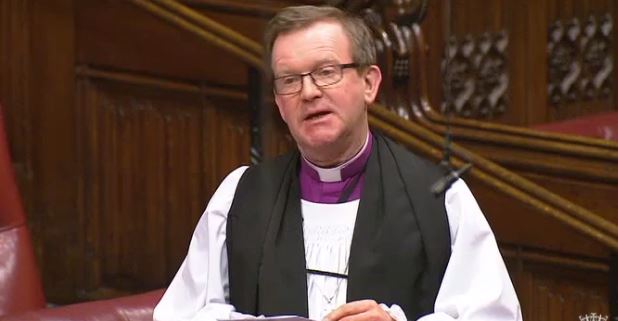
The Lord Bishop of St Albans: My Lords, one factor that influences productivity is issues of health, particularly mental health. Something like nearly three out of 10 employees are reporting some sort of mental health problem each year, which analysts believe is costing employers something like £30 billion a year. Will the Minister tell the House what the Government are doing to support employers in encouraging high levels of well-being and what is being done to lessen the stigma of mental ill health—in particular, encouraging employees to access mental health services that are already available to them? Continue reading “Bishop of St Albans asks Government about workplace access to mental health services”

Bishop of St Albans raises concerns about self-harm by young people

stalbans190117On 19th January 2017 Labour Peer Lord Hunt of King’s Heath asked Her Majesty’s Government “what is their assessment of Young Minds’ analysis published on 21 December 2016 that 64 per cent of Clinical Commissioning Groups are diverting new funding for children’s mental health services to other areas”. The Bishop of St Albans, Rt Revd Alan Smith, asked a follow up question:

The Lord Bishop of St Albans: My Lords, this is a very serious and growing problem. Recent research has shown over the last five years that the number of hospital admissions associated with children’s self-harm has grown by 93% among girls and 45% among boys. It seems extraordinary that when money is announced for mental health services it is then not spent. First, how many years will we wait until we need to ring-fence that money, because this is a really important issue? Secondly, to pick up on the previous but one question, will the Government commit to producing guidelines for schools and colleges about preventing and responding to self-harm, so that we have some practical things put in place? Continue reading “Bishop of St Albans raises concerns about self-harm by young people”

Higher Education and Research Bill: Bishop of Portsmouth moves amendment on support for students with disabilities

portsmouth-180117-bOn 18th January 2016, the House of Lords considered the Government’s Higher Education and Research Bill in Committee. The Bishop of Portsmouth spoke to propose an amendment on behalf of the Bishop of Ely about giving special consideration for those with disabilities within the criteria for approving and reviewing student protection plans. The amendment was withdrawn after the debate, following encouragement from the Minister that the issue deserved greater inspection. Below is his speech and a section of the Minister’s reply.

The Lord the Bishop of Portsmouth: My Lords, my colleague and right reverend friend the Bishop of Ely is unable to be in his place, but has asked me to bring before your Lordships Amendment 134A. I and he welcome the Minister’s assurances thus far for disabled students. It is very welcome that he intends to publish guidance to ensure that higher education institutions are best able to fulfil their duties to disabled students.

Continue reading “Higher Education and Research Bill: Bishop of Portsmouth moves amendment on support for students with disabilities”

Bishop of Peterborough says education system should ‘encourage a love of learning, not a fear of failure’

14.02 PeterboroughOn 13th December, Liberal Democrat peer Lord Sharkey, asked Her Majesty’s Government “what assessment they have made of the United Kingdom’s performance in the latest Programme for International Student Assessment rankings published by the Organisation for Economic Co-operation and Development”. The Bishop of Peterborough, the Rt Revd Donald Allister, asked a follow up question:

The Lord Bishop of Peterborough My Lords, is the Minister aware that, in a number of the countries that have much higher academic standards at secondary school level, particularly those in the Far East—I know the story of South Korea quite well—there is also a much higher suicide rate among teenagers? Does he agree that our schools need to help people learn in ways that they enjoy and are healthy holistically, and that schools should encourage a love of learning rather than a fear of failure?

Continue reading “Bishop of Peterborough says education system should ‘encourage a love of learning, not a fear of failure’”

Bishop of St Albans raises serious need to address self harm amongst children and young people

On 6th December 2016, the Bishop of St Albans, the Rt Revd Alan Smith, spoke to a question he had tabled to ask the Government “what assessment they have made of the rise in the number of children and young people being treated for self-harm.” Lord Prior of Brampton responded for the Government. The Bishops’ follow-up question and those of Peers are reproduced below. 
StAlbans171115The Lord Bishop of St Albans To ask Her Majesty’s Government what assessment they have made of the rise in the number of children and young people being treated for self-harm.

Lord Prior of Brampton My Lords, the Government are aware of the appalling rise in self-harm in children and young people and the misery this reflects. The Government are also acutely aware that self-harm is a leading indicator of risk of suicide and recognise that much more needs to be done to address this issue.

The Lord Bishop of St Albans I thank the Minister for his reply. The research from the World Health Organization shows that around 20% of British 15 year-olds report some sort of self-harm. In the past five years, research shows that hospital admissions associated with self-harm have gone up by nearly 93% among girls and 45% among boys. Having recently visited the outstanding charity selfharmUK, in Luton in my diocese, I have seen what a concerted and systematic approach to this problem can have on a very difficult issue, and we need something similar at a national level. Will Her Majesty’s Government commit to publishing guidelines for schools and colleges about preventing and responding to self-harm?

Bishop of Carlisle asks Government about the impact of work pressures on teachers’ mental health

14.06.09 Bishop of CarlisleOn 16th November 2016, Baroness Tyler of Enfield asked Her Majesty’s Government “what is their response to the Report of the Values-Based Child and Adolescent Mental Health System Commission, What Really Matters in Children and Young People’s Mental Health, published on 7 November.” The Bishop of Carlisle, Rt Revd James Newcome, asked a follow up question:
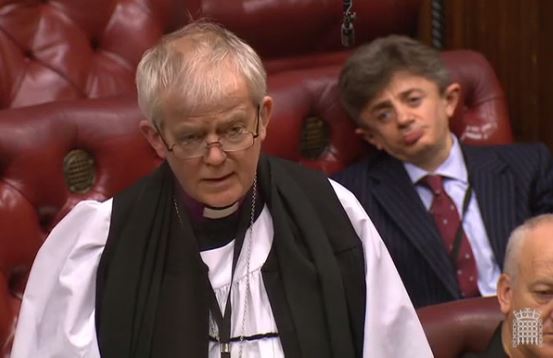
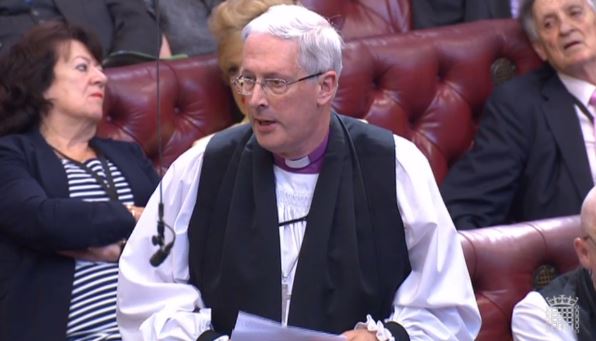
The Lord Bishop of Carlisle: My Lords, the commission highlighted the importance of valuing the workforce, but a 2014 survey of teachers and lecturers indicated that about 55% of them reckoned that their work was seriously damaging their own mental health. Have Her Majesty’s Government any plans to address that particular issue so that the mental health of teachers can be improved and so they are better equipped to help and improve the mental health of their pupils? Continue reading “Bishop of Carlisle asks Government about the impact of work pressures on teachers’ mental health”

Bishop of Salisbury asks Government about suicide and self-harm in prisons

Bp Salisbury 2On 8th November 2016 Lord Patel of Bradford asked Her Majesty’s Government “what action they are taking to address reports of increasing levels of violence in prisons.” The Bishop of Salisbury, Rt Revd Nicholas Holtam, asked a follow up question:

The Lord Bishop of Salisbury: My Lords, I have been in and out of prisons quite a lot, usually in support of the excellent multifaith chaplaincies that attest to the importance of the spirit of human beings. In recent years, there has been an alarming rise in the number of suicides, and in self-harm and violence. The recently published strategy for prison safety and reform is very welcome. Does the Minister agree that an imaginative and creative approach to education and the development of people’s spirit is an essential part of prison life for all those who have offended and are being punished? Continue reading “Bishop of Salisbury asks Government about suicide and self-harm in prisons”

Policing and Crime Bill: Bishop of Southwark responds

On 18th July the House of Lords considered the Government’s Policing and Crime Bill at its Second Reading. The Bishop of Southwark, Rt Revd Christopher Chessun, spoke in the debate, focusing on proposals for police reform, gambling, mental health and young people.

SouthwarkThe Lord Bishop of Southwark: My Lords, I congratulate Ministers and their officials on bringing forward such a large Bill in so orderly a fashion. This is a Bill of nine parts; even Gaul was only divided into three. I hope your Lordships will forgive me if I make a number of points from so varied a terrain.

While the Bill addresses licensed premises for the sale of alcohol, we have no mention in it of other licensed premises, which are also vulnerable to criminal activity. We know from freedom of information requests reported in the press that from 2013 to 2014 there was a 20% rise in the number of police call-outs to betting shops. The right reverend Prelate the Bishop of St Albans, who wished to attend this debate, himself submitted a freedom of information request recently to the Gambling Commission, which reveals a 68% rise in reports of violence against the person at London betting shops over the last five years. Continue reading “Policing and Crime Bill: Bishop of Southwark responds”