
On the 26th April 2018 the House of Lords debated a motion from Lord Patel “that this House takes note of the Report from the Select Committee on the Long-term Sustainability of the NHS, The Long-term Sustainability of the NHS and Adult Social Care (Session 2016-17, HL Paper 151).” The Bishop of Carlisle, Rt Revd James Newcome, who had served on the Select Committee, spoke in the debate:
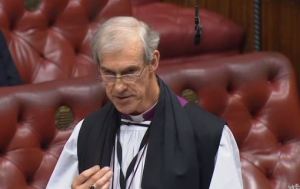 The Lord Bishop of Carlisle: My Lords, like other noble Lords who have already spoken and who will speak in this debate, I had the great privilege of serving on the Select Committee that produced the report of which we are, I hope, taking note today. Like them, I pay tribute to my colleagues, from whom I learned a great deal, and to our excellent chairman, the noble Lord, Lord Patel.
Since the report was published, more than a year ago, I found myself presenting its findings in various venues in Cumbria, where I live and work. On some occasions, local Members of Parliament and senior NHS staff have also been involved, but on every occasion the interest generated has been huge, which is a reminder, should we need it, of the importance of this topic to every citizen in every part of this country. Continue reading “Bishop of Carlisle calls for an independent office for health and care sustainability”
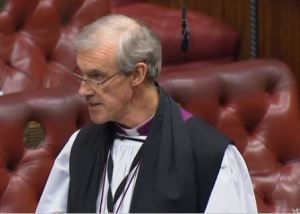
 The Lord Bishop of Durham: To ask Her Majesty’s Government what is their assessment of the impact of changes to NHS charging regulations on refused asylum seekers and other vulnerable groups, including (1) victims of trafficking, (2) homeless people, and (3) those living with mental health conditions.
 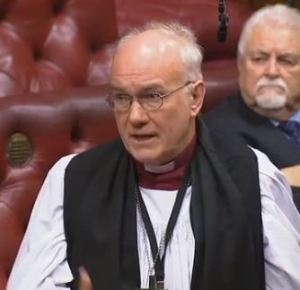 The Lord Bishop of Chester: My Lords, I very much welcome the report; I have simply read the executive summary. It is obviously important to respond well after death occurs, but equally, arguably, it is even more important to put in place measures to reduce the possibility of death. This is where the healthcare provision in the police service is especially important. Given that the NHS has a direct responsibility to provide healthcare in prisons but does not have an equivalent responsibility for those in police care, and given that for half the people the cause of death is alcohol and drug-related, is there not a need to join up A&E, the police, the whole NHS and police support? It is no doubt complex, but at the heart of this lies quite a simple issue. This ought to be brought within the ambit of the NHS, which is the case with prisons.
  The Archbishop of Canterbury: I declare an interest as having members of the family who have used child and adolescent mental health services. Does the Minister not agree that the fundamental principle of the NHS is free treatment at the point of need? Does he also agree that one of the major failures in CAMHS—it has been well evidenced by academic studies over the last two years—has been that, because of the shortage of resources, only those with the most critical needs are treated at all, and the early intervention which would help prevent needs becoming critical has been deeply neglected owing to an absence or lack of specialised therapies, particularly talking therapies? Will he confirm that the work on the most critical side is going to be extended so that children and adolescents can get care earlier and more effectively, saving the state money and fulfilling the purposes of the NHS?
  On 12th July 2017, Lord Warner led a short debate in the House of Lords on the question: “to ask Her Majesty’s Government what assessment have they made of the risks to NHS sustainability arising from the United Kingdom’s departure from the European Union”. The Bishop of St Albans, the Rt Revd Alan Smith, contributed to the debate.
 On 4th April 2017, Lord Harries of Pentregarth asked Her Majesty’s Government ‘what steps they are taking to reduce waiting times for patients using hospital patient transport.’ The Archbishop of York, the Most Rev. John Sentamu, asked a follow up question.
 The Church of England in Parliament
You must be logged in to post a comment.