On 13th July 2021, the House of Lords debated a report from the Procedures and Privileges Committee regarding proposed changes to procedures in the House. Votes were held on a motion to approve the changes, and amendments to the main motion, in which Bishops took part:
On 13th July 2021, the House of Lords debated the motion:
“that the Report from the Select Committee Procedural adaptations arising from the hybrid House; Interim option of voting using PeerHub; Ongoing virtual participation by disabled members (1st Report, HL Paper 41) be agreed to.”
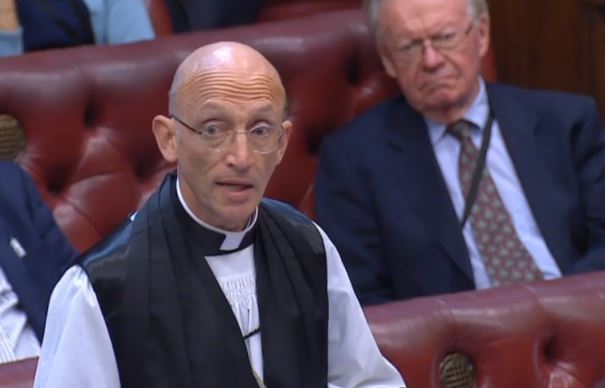
The Bishop of Chichester spoke in the debate, welcoming steps to retain some hybrid adaptations, but expressing concern over the proposed changes to some oral question procedures:
The Lord Bishop of Chichester: My Lords, my right reverend friend the Bishop of Birmingham, who is our convenor, regrets that he cannot attend today’s debate. As Bishop on duty, I offer some thoughts on behalf of these Benches. On behalf of my right reverend friends, I thank the Leader of the House and the leaders of the parties, and especially all the staff who have seen us through this extremely challenging time. All of us have a particular debt of gratitude to those in the digital and technical spheres, which many of us struggle with. I noted earlier that it has enabled some of my right reverend friends to share with the House the interior of their splendid cathedrals, so that has been great. I am grateful to the noble and learned Lord, Lord Mackay, for his recognition that being present in the House is also a very important contribution on our behalf.
I speak as a relative newcomer to your Lordships’ House, and as one of those Members, found on all sides of the House, who combines their service here with a significant full-time outside commitment. It is one of the strengths of this House that it gives space for this, so that membership is not just for what might be described as the full-time, professional politician. The assessment of any change to our procedure should not only test efficiency in our working practices and the capacity for inclusion in them but demonstrate how it will enable those who are not full-time to participate as fully as possible to bring into the debate and scrutiny this House exercises the wide range of experience that they bring.
It is an extraordinary responsibility to attend Parliament. As bishops, our faith compels us to raise questions with those in power about people on the margins, children, the voiceless, the many attacks on human rights abroad, and solutions to the climate emergency.
We are not there to simply defend the interests of the established church, or speak only for people of faith, but to play our own part in holding our elected powers to account on behalf of those who need us most, and help the process of making better law.
We have been at the forefront of recent campaigns in Parliament on justice for leaseholders facing fire safety costs, on prison reform, welfare of migrants and refugees, and on harms caused by gambling.
The Bishop of Gloucester spoke during tributes to the departing Clerk of Parliaments, Ed Ollard, on 13th April 2021, thanking him for his service and welcoming the new Clerk, Simon Burton, to the role:
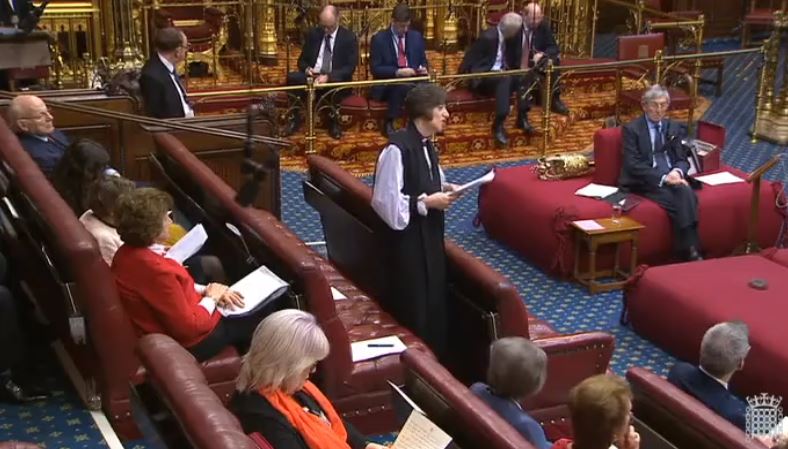
The Lord Bishop of Gloucester: My Lords, I am very glad that I do not have to answer those questions, because I do not know the answers. However, I want to add a few words from these Benches, paying tribute on behalf of the Lords spiritual. My colleagues and I have greatly benefited from Ed Ollard’s sound judgment, diligent support and practical guidance in his time as the Clerk of the Parliaments. We on these Benches are immensely grateful for his calm and steady stewardship during, as others have said, this very unpredictable time. Navigating a unique transition to a hybrid Parliament, the role of the Clerk of the Parliaments has been challenging. He has met it head on, and it is a testament to his adaptability that your Lordships’ House has functioned so well and effectively during this pandemic. We warmly welcome Simon Burton to the role and very much look forward to working with him, but today, we want to say a huge “thank you” to Ed Ollard and to wish him all the best for the future.
On 9th May 2019 the House of Lords debated a motion from Lord Harris of Haringey, “to move that this House regrets the conduct, and toxicity, of debate in public life; of the divisions in society which result from that; and calls on Her Majesty’s Government to take steps to address such divisions.” The Bishop of Leeds spoke in the debate and a transcript is below. The Bishop of Rochester also spoke in the debate and his speech can be read here:
The Lord Bishop of Leeds: My Lords, I am grateful to the noble Lord, Lord Harris, for securing this debate and for the clarity of his and other speeches. I say to the noble Lord, Lord Patten, that if such a cast were assembled, some of the people who need to be there simply would not turn up. If they did, they would see it as their job to disrupt it, so I suspect it will be more complex.
We still admire Benjamin Disraeli for telling Parliament that half the Cabinet were asses and, on being ordered to withdraw the comment, responding, “Mr Speaker, I withdraw. Half the cabinet are not asses”. Political invective is not new and it must have a place in a free society, but words matter. I speak as a former professional linguist. Language is never neutral, and the ad hominem abuse we increasingly witness now simply encourages wider public expression of violent hatred. It is incrementally corrosive.
If the conduct of debate in public life has become toxic, it is only because it has been in the interests of some people to allow it to be so. I have already spoken in this House of the corruption of the public discourse and the consequences of normalising lying and misrepresentation. I add that reducing people to categories might reinforce tribal identity, but it demonises and dehumanises everyone else. As Viktor Klemperer recognised from 1930s Germany, a million repetitions of single words, idioms, and sentence structures or slanders become unconsciously assumed to be normal. Think of Rwanda and “cockroaches”.
On 9th May 2019 the House of Lords debated a motion from Lord Harris of Haringey, “to move that this House regrets the conduct, and toxicity, of debate in public life; of the divisions in society which result from that; and calls on Her Majesty’s Government to take steps to address such divisions.” The Bishop of Rochester spoke in the debate and a transcript is below. The Bishop of Leeds also spoke in the debate and his speech can be read here:
The Lord Bishop of Rochester: My Lords, I join other noble Lords in thanking the noble Lord, Lord Harris, for bringing forward this debate and for his characteristically robust, thoughtful, clear and evidenced introduction. I also thank other noble Lords for their contributions. I look forward to reading in the Official Report what the noble Lord, Lord Parekh, has just said, because there is a lot to reflect on.
Others have spoken from these Benches in recent months on this and related matters, referencing a number of scenarios which have given rise to language and expression that cause hurt and offence and do no credit to our public life. The right reverend Prelate the Bishop of Leeds will, I understand, speak later in this debate about the power and importance of language in our public discourse. My contribution, which I hope will be brief, is to raise a question about one part of the context in which such harmful, toxic, destructive and even violent expression may come to flourish.
The phrase attributed to Aristotle about nature abhorring a vacuum has many applications. I suggest that one of the reasons for this flourishing of destructive and harmful conduct and debate may be that these things are rushing in to fill a vacuum.
On 31st January 2018, the Second Church Estates Commissioner, the Rt Hon Dame Caroline Spelman MP spoke in the House of Commons during a debate on a report of the Joint Committee about the restoration and renewal of the Palace of Westminster. Dame Caroline spoke twice, raising the possibility of adding Church House to the list of buildings which could be used to accommodate Parliament during the restoration of the Palace.
Dame Caroline Spelman (Meriden) (Con): I am grateful to my right hon. Friend for giving way—she is getting a lot of requests. On the subject of decanting, and just for the record—I will speak to this later—the House should know that until very recently there was a contract with Church House, under which, should we have needed to decant at short notice in an emergency, which can happen at any time, Church House had always stood ready to accommodate Parliament, as it did during the second world war. Continue reading “Caroline Spelman on advantages of Church House, Westminster hosting Parliament during renovations”
On Thursday 23rd March 2017 the House of Lords paid tribute to those who had been killed and injured, and to first responders, during the previous day’s terror attack in Westminster. The House also heard a repeat of the statement given in the House of Commons by the Prime Minister. The Archbishop of Canterbury, Most Revd and Rt Hon Justin Welby spoke of the “deep values” in British society that give us the strength to persevere:
The Archbishop of Canterbury: My Lords, I associate myself with the thanks and tributes paid today, and especially our prayers and thoughts for PC Keith Palmer and for his family. I also acknowledge the work of so many members of the public who pitched in and did what they needed to do when faced with things for which they had never been trained or prepared. Yesterday afternoon one of our own security staff at Lambeth Palace, a Muslim, arrived at the gate having been very narrowly missed by the vehicle and having spent time helping those who had been injured. It was typical of this community and this country that he refused to go home until the end of his shift and simply spent the time doing his job as he expected.
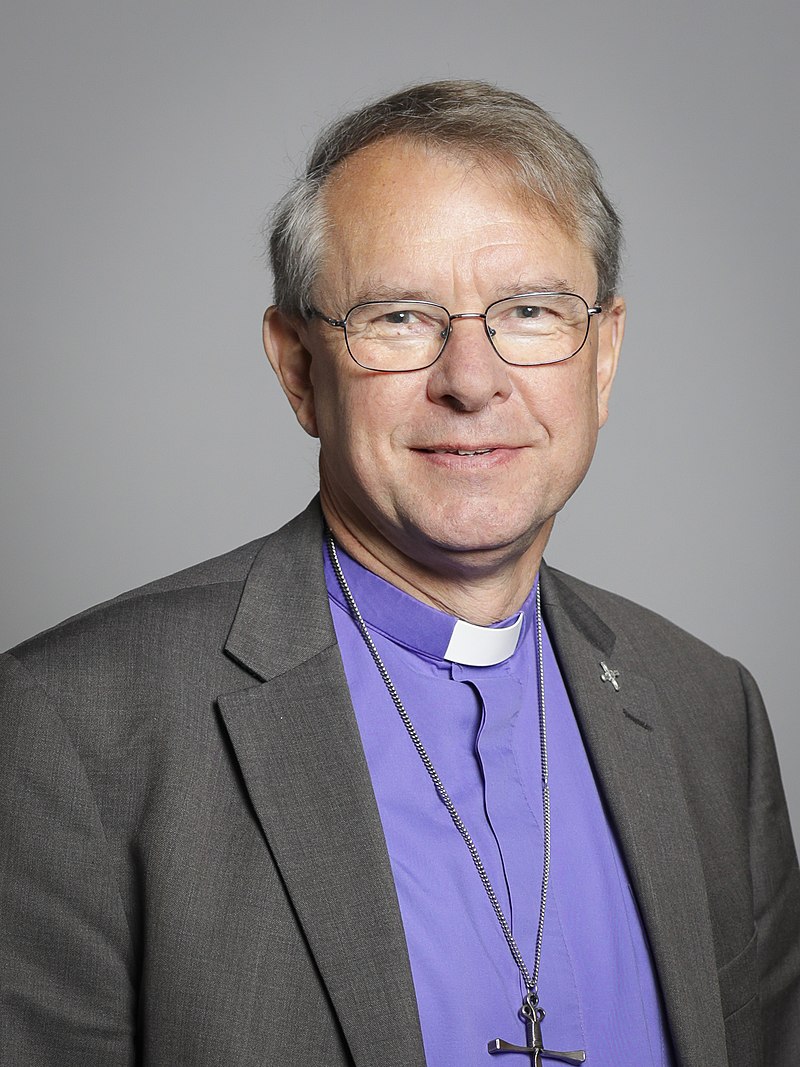
On 29th November 2016, Lord Greaves asked Her Majesty’s Government “what assessment they have made of the case for moving Parliament and central departments to the north of England.” The Bishop of Chester, the Rt Revd Peter Forster asked a follow up question.
The Lord Bishop of Chester Are we quite sure whether the people of the north would want Parliament in the north?
On 19th January 2015, the Bishop of Chester, the Rt Revd Peter Forster, took part in the debate on the Government’s Recall of MPs Bill, during the second day of its Committee Stage. He spoke three times during the debate on Lord Hamilton of Epsom’s amendment, which sought to raise the threshold at which a petition against an MP would trigger the recall process, from 10 per cent to 20 per cent. The amendment was withdrawn at the end of the debate.
The Lord Bishop of Chester: My Lords, I think that only these Benches could participate in these petitions since we have a right to vote in general elections, although there is a convention among us that we do not. I think that the last person who did so was Archbishop Runcie, who simply could not resist voting against Mrs Thatcher. He was found out and promised not to do it again, so there is a convention that we do not do it but we could. Continue reading “Bishop of Chester takes part in debate on Recall of MPs Bill”

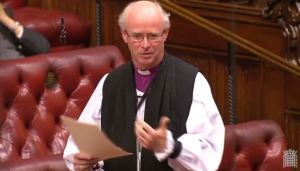 The Lord Bishop of Rochester: My Lords, I join other noble Lords in thanking the noble Lord, Lord Harris, for bringing forward this debate and for his characteristically robust, thoughtful, clear and evidenced introduction. I also thank other noble Lords for their contributions. I look forward to reading in the Official Report what the noble Lord, Lord Parekh, has just said, because there is a lot to reflect on.
 Dame Caroline Spelman (Meriden) (Con): I am grateful to my right hon. Friend for giving way—she is getting a lot of requests. On the subject of decanting, and just for the record—I will speak to this later—the House should know that until very recently there was a contract with Church House, under which, should we have needed to decant at short notice in an emergency, which can happen at any time, Church House had always stood ready to accommodate Parliament, as it did during the second world war.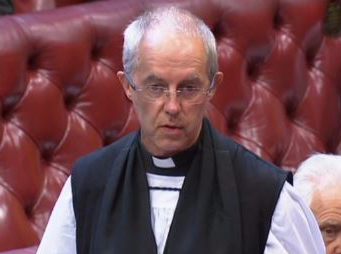
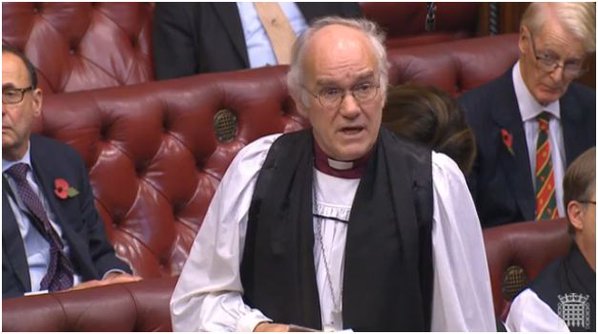 On 29th November 2016, Lord Greaves asked Her Majesty’s Government “what assessment they have made of the case for moving Parliament and central departments to the north of England.” The Bishop of Chester, the Rt Revd Peter Forster asked a follow up question.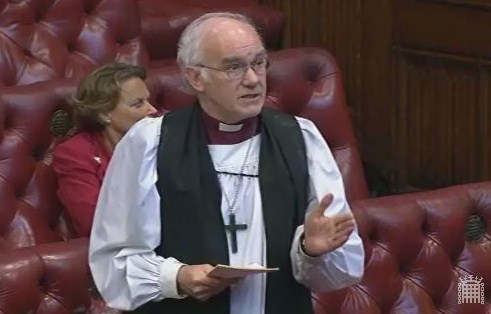


You must be logged in to post a comment.