On 17th January 2022, the House of Lords debated the Police, Crime Sentencing and Courts Bill in its report stage. Votes were held on amendments to the bill, in which Bishops took part:

On 17th January 2022, the House of Lords debated the Police, Crime Sentencing and Courts Bill in its report stage. Votes were held on amendments to the bill, in which Bishops took part:
On 10th January 2022, the House of Lords debated the Police, Crime, Sentencing and Courts Bill in the fourth day of the report stage. The Bishop of Manchester spoke in support of a group of amendments relating to the implementation of Serious Violence Reduction Orders (SVROs):

The Lord Bishop of Manchester: My Lords, I support Amendments 90H, 90J, 95A, 95B and 95C, to which I have added my name. I also signal my support for other amendments in this group which also seek to control more tightly how serious violence reduction orders will operate. I draw your Lordships’ attention to my work on policing ethics, both for Greater Manchester Police and for the National Police Chiefs’ Council, as set out in the register of interests.
As the noble Baroness, Lady Meacher, has indicated, Amendment 90H seeks to ensure that an SVRO can be applied only when a bladed article or offensive weapon is used to commit an offence, not simply when such an item happens to be present and in the possession of the defendant. As the noble Lord, Lord Paddick, has indicated, as presently drafted, the Bill requires no substantive link between the weapon and the offence. An individual could, for example, commit a road traffic offence while driving home from a church picnic, with their used cutlery on the passenger seat next to them, and the prosecution could ask for an SVRO.
Continue reading “Police, Crime, Sentencing and Courts Bill: Bishop of Manchester speaks in favour of amendments on Serious Violence Reduction Orders”“I praise the emergency services and the police for their sensitivity in the way they have addressed this, but they are doing so within a culture that often treats religion as a private matter.”
The House of Lords considered the Government’s Police, Crime, Sentencing and Courts Bill in Committee on 22nd November 2021. The Bishop of Leeds spoke in the debate on an amendment to the Bill from Baroness Stowell of Beeston about police procedure on religious rituals or prayer at crime scenes:

The Lord Bishop of Leeds: My Lords, this is very sensitive territory. Dying is sacred and is part of our living. I think I am the only minister of religion here, and I have accompanied many people, including my own father, to and through their death. If you have been party to that, you will know that it is holy territory
One could say that violent death is even more holy because of how that dying has been brought about. It seems that there needs to be religious literacy on the part of the emergency services and the police, and that the religious bodies need also to improve their literacy in relation to the nature of these events and how they are dealt with.
Continue reading “Police Bill: Bishop of Leeds speaks on amendment on access to crime and accident scenes for ministers of religion”On 3rd November 2021, the Bishop of Manchester spoke in support of amendments to the Police, Crime, Sentencing & Courts Bill in committee. The amendments, tabled by Baroness Whittaker, aimed to limit police powers relating to the offence of “criminal trespass”, particularly pertaining to sites used by Gypsy, Roma and Traveller Communities:
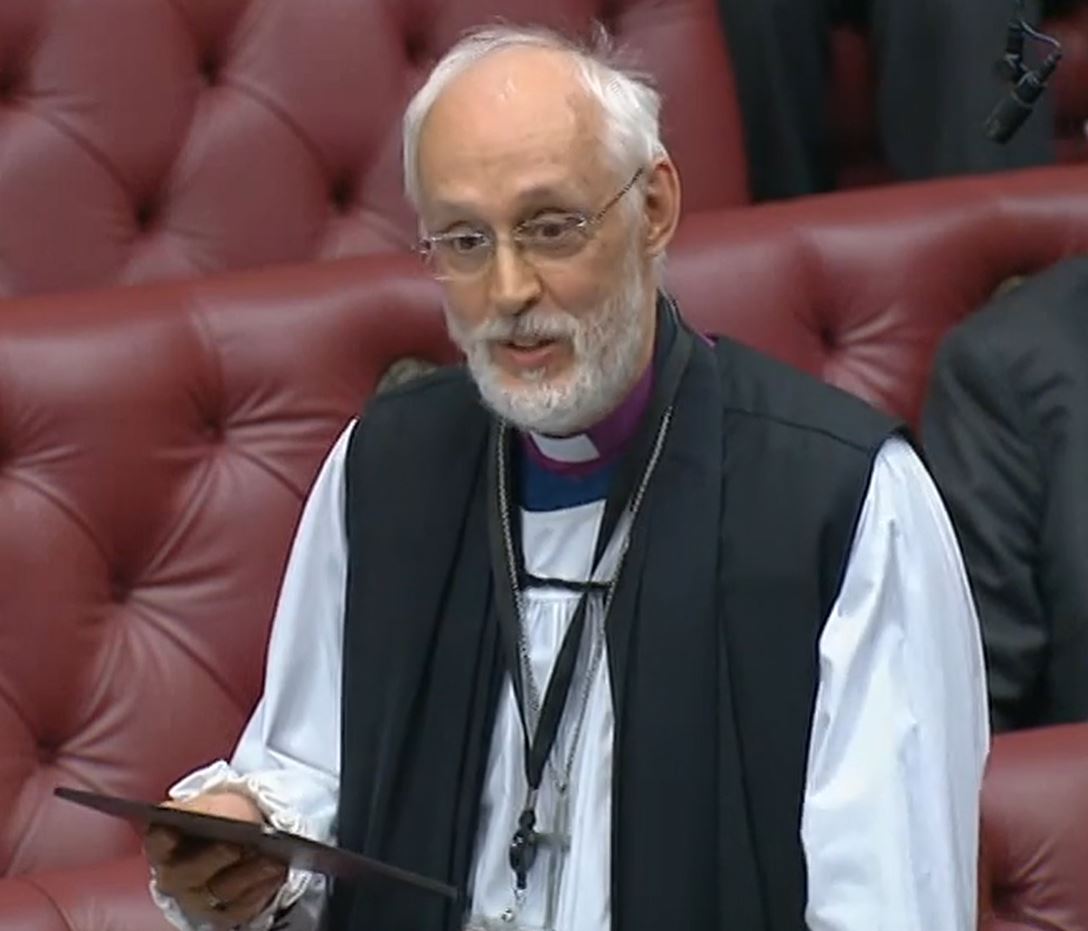
The Lord Bishop of Manchester: My Lords, I support Amendments 133 and 149 in my name and the names of the noble Baroness, Lady Whitaker, who has spoken so eloquently, and the unavoidably absent noble Lords, Lord Alton and Lord Bourne. I also wish to support Amendment 147 in the name of the noble Lord, Lord Rosser, and others. I refer noble Lords to my interest in policing ethics that is set out in the register.
As I said at Second Reading, Gypsy, Roma and Traveller people have been a vital part of the economy of our nation—not least its agricultural sector—for many generations. Their mobility has enabled them to provide labour at the point of need for shorter or longer periods of time. The consequence of that very flexibility is that they have not acquired fixed land, property or dwellings over generations, but are constantly at the whim of the availability of sites and pitches for their vehicles and caravans. The labour shortages that presently beset us might serve as a reminder that we owe a debt to those who have provided a flexible workforce in times past. Instead, this Bill seeks to push them towards criminality while making no adequate alternative provision for them.
Continue reading “Police, Crime, Sentencing and Courts Bill: Bishop of Manchester supports amendments to limit police powers regarding criminal trespass”On 2oth October 2021, the Bishop of Manchester spoke in a debate on the Police, Crime, Sentencing and Courts Bill, adding his support to a group of amendments intending to create a police covenant to better support the mental health and wellbeing of police and their families:
The Lord Bishop of Manchester: My Lords, I draw your Lordships’ attention to my interests in the world of policing as set out in the register, particularly in policing ethics, both with the Greater Manchester Police and the National Police Chiefs’ Council.
At Second Reading I referred briefly to the culture of policing. I did not specifically mention a policing covenant given that time was so short, but I have been intrigued by the debate we have had this afternoon. I note the way in which Members have referred to the Armed Forces covenant. That is helpful in some ways, although I am just a little concerned. As I said at Second Reading, the heart of the policing model is that our police are civilians in uniform; they are not the Armed Forces. We need to be careful not to put police too easily into the same category as the Armed Forces. The Armed Forces are agents of the state while police are agents of society in a slightly different way. That is an important civilian distinction I would want always to hold before us.
Continue reading “Police, Crime, Sentencing and Courts Bill: Bishop of Manchester supports amendments consolidating mental health and family support for police force”The Bishop of Manchester spoke in a debate on the Police, Crime, Sentencing and Courts Bill on 14th September 2021, expressing concern over the increased police powers relating to protest and approaches to Gypsy, Roma and Traveller Communities:
The Lord Bishop of Manchester: My Lords, I draw the House’s attention to my interests as set out in the register, particularly in the world of policing as a trustee of the Clink Charity.
Two centuries ago, in the aftermath of the Peterloo massacre, where a politically motivated militia killed and maimed dozens of citizens who were protesting for voting rights in Manchester city centre, Robert Peel introduced the principles of civilian policing. Those principles have served this country with distinction ever since. British police are civilians in uniform, not agents of state control. Their calling is to police by consent, enabling the public to exercise their rights and freedoms as well as maintaining good order. It is a delicate balance. It requires Governments to stay their hand when proposing legislation and senior police officers to guard their operational independence. It is especially sensitive when the rights of citizens to protest come into the frame.
Continue reading “Police, Crime, Sentencing and Courts Bill: Bishop of Manchester expresses concern over increased police powers”The Bishop of Blackburn spoke in a debate on the second reading of the Police, Crime, Sentencing and Courts Bill, noting the lack of reference to faith communities and calling for more recognition for those communities in the bill:
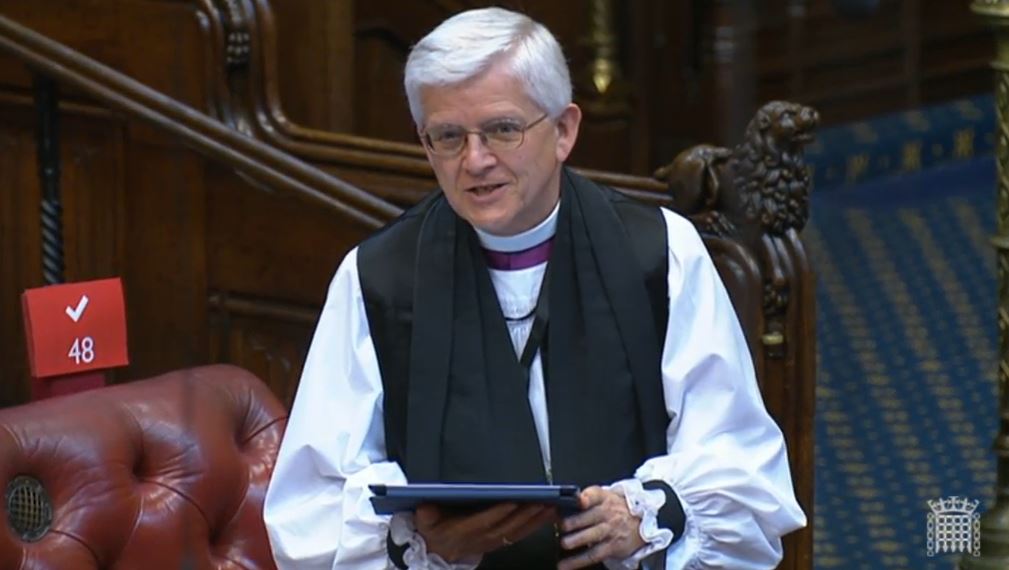
The Lord Bishop of Blackburn: My Lords, I offer to the noble Lord, Lord Sandhurst, my congratulations on his maiden speech. We are glad to welcome him to this House.
With so many words in this wedge of a Bill, it is easy to forget that we are talking about people—as someone said earlier, real people—and the potential consequences for real lives. There is a huge responsibility, therefore, to get these details right, for both the police and the public. The noble Baroness, Lady Chakrabarti, is right, that deep scrutiny is needed here in this House. An example of the wide range of the Bill and the important but almost impossible nature of covering all of its detail is that, although my friend the right reverend Prelate the Bishop of St Albans is unable to attend today’s proceedings, he has asked me to relay his intention to amend the Bill in Committee, to strengthen the ability of the police to deal with the issue of hare coursing. That is something to look forward to.
Continue reading “Police, Crime, Sentencing and Courts Bill: Bishop of Blackburn calls for greater recognition of faith communities”On 18th May the Bishop of Manchester spoke in the fourth day of debate on the Queen’s Speech, focusing on proposals for policing, building safety and conversion therapy.
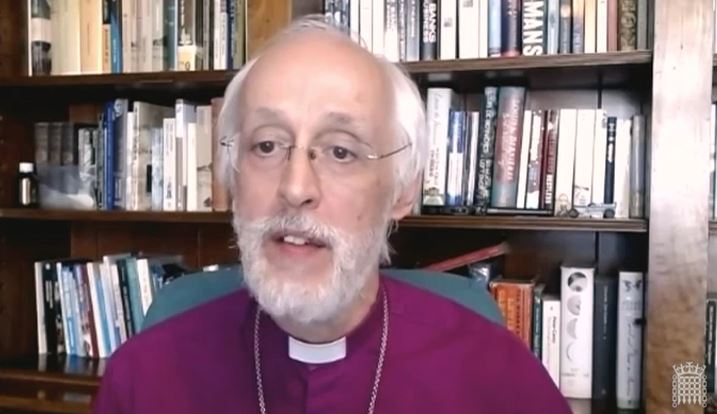
My Lords, I thank the noble Baroness, Lady Fullbrook, whose wisdom I look forward to hearing more often, for an excellent maiden speech. I also refer to my interests, stated in the register, in policing and housing.
A number of Bills mentioned in the gracious Speech will require our police to enforce new laws and regulations. We have already seen considerable disquiet expressed regarding what might amount to a very significant reduction in the ability of the public to engage in peaceful political protest, particularly where such protests directly or indirectly impact on others. I will reserve more detailed comments on this Bill for when it reaches your Lordships’ House, although I note the wise comments made earlier by the noble Baroness, Lady Chakrabarti. For now, I want briefly to lay it alongside my experience of 12 months of rapidly changing coronavirus regulations.
On many occasions, the precise boundaries between regulations—matters that police can enforce—and guidance, to which they can only direct our attention, have been seriously blurred. Meanwhile, ministerial statements have put pressure on our police to issue fixed penalty notices, but the Crown Prosecution Service is quite clear that an adequate chain of evidence will be almost impossible to achieve.
Continue reading “Queen’s Speech – Bishop of Manchester on policing, building safety, conversion therapy”
On 18th May 2021 the Bishop of Gloucester took part in the fourth day of debate in the House of Lords on the Queen’s Speech. She focused on criminal justice, violence against women and girls, and online safety:
My Lords, I too look forward to the maiden speeches of the noble Baroness, Lady Fullbrook and Lady Fleet. In my few minutes, I shall briefly mention women in the criminal justice system, the Police, Crime Sentencing and Courts Bill, violence against women and girls and the online safety Bill. I refer to my interests in the register, as Anglican bishop to prisons.
I begin by asking: when will we see a renewed timetable for the 2018 female offender strategy? While I welcome the implementation of some of the deliverables, analysis by the Prison Reform Trust shows that the Government have met less than half the commitments. The concordat published last year does not appear to have been progressed. Then there was that shocking announcement of 500 new prison places for women, totally at odds with the strategy’s direction to reduce the number of women in prison. What evidence is it based on, and why is the designated £150 million not being spent on women’s centres and implementing the concordat?
Continue reading “Queen’s Speech – Bishop of Gloucester on criminal justice, violence against women and girls, online safety”
The Bishop of St Albans received the following written answers on 18th March 2021:
The Lord Bishop of St Albans asked Her Majesty’s Government what assessment they have made of the difference in funding per head for police services in (1) urban, and (2) rural, areas; and what steps they are taking to reduce any such difference.
Continue reading “Bishop of St Albans asks about resourcing of rural areas” The Church of England in Parliament
You must be logged in to post a comment.