
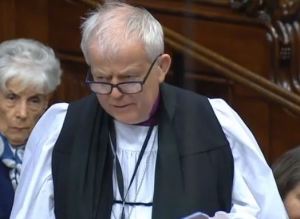
 On 11th December 2018 the House of Lords debated a Motion from Lord Lexden, “That this House regrets the failure by Her Majesty’s Government to institute an independent inquiry into Operation Conifer conducted by the Wiltshire police into allegations of child sex abuse against Sir Edward Heath; and calls on Her Majesty’s Government to make proposals for an independent review of the seven unsubstantiated allegations left unresolved at the end of Operation Conifer.” The Bishop of Salisbury, Rt Revd Nicholas Holtam, spoke in the debate:
The Lord Bishop of Salisbury: My Lords, I thank the noble Lord, Lord Lexden, for his doggedness in persisting with this, and the other Members of the House who have also done so.
I come at this from something of a different angle. We are dealing with an extremely difficult issue as a society. The Church of England knows something about it—but so do we all. This is really difficult stuff. It would not be enough to have an inquiry into the seven unresolved and said to be unsubstantiated allegations. It is about what we have learned from our experience, about good practice, about what has gone wrong and about how we develop things for the future. Continue reading “Bishop of Salisbury supports call for review into Operation Conifer”
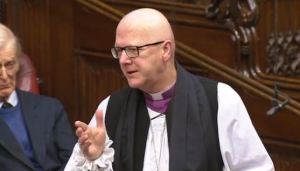 On 1st March 2018 Baroness Jones of Moulsecoomb led a debate in the House of Lords on her question to Her Majesty’s Government ‘what proposals they have for the use of facial recognition technology in security and policing.’ The Bishop of St Albans, Rt Revd Alan Smith, spoke in the debate:
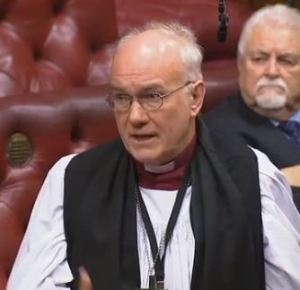 The Lord Bishop of Chester: My Lords, I very much welcome the report; I have simply read the executive summary. It is obviously important to respond well after death occurs, but equally, arguably, it is even more important to put in place measures to reduce the possibility of death. This is where the healthcare provision in the police service is especially important. Given that the NHS has a direct responsibility to provide healthcare in prisons but does not have an equivalent responsibility for those in police care, and given that for half the people the cause of death is alcohol and drug-related, is there not a need to join up A&E, the police, the whole NHS and police support? It is no doubt complex, but at the heart of this lies quite a simple issue. This ought to be brought within the ambit of the NHS, which is the case with prisons.
  On 27th June 2017, the Bishop of Southwark, Rt Rev. Christopher Chessun, contributed to the ongoing debate on the Queen’s Speech. The Bishop’s speech addressed the strong response from volunteers and emergency services to recent events, and called for a re-examination of current resources. Government Minister Lord Bourne of Aberystwyth responded to the Bishop of Southwark’s speech at the end of the debate.
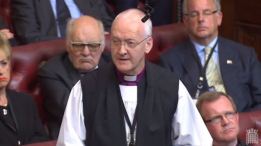 On 9th November 2016, Baroness Miller asked Her Majesty’s Government “what urgent steps they will take to restore confidence in the Metropolitan Police following the conclusions of Sir Richard Henriques report into Operation Midland.” The Bishop of Leeds, Rt Revd. Nick Baines, asked a follow up question about the criteria used to determine whether to make public the name of someone under investigation for sexual offences: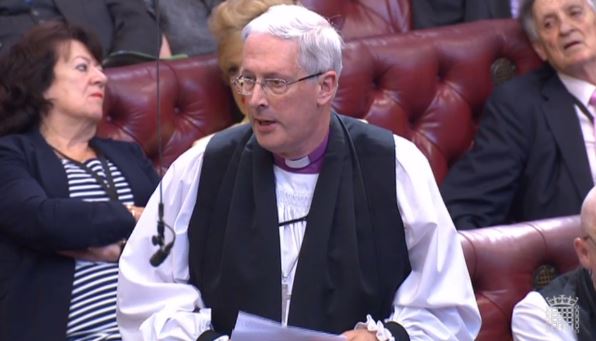


 The Church of England in Parliament
You must be logged in to post a comment.