
On 23rd March 2016 the House of Lords debated the 2016 Budget statement. The Bishop of Portsmouth, Rt Revd Christopher Foster, spoke in the debate:
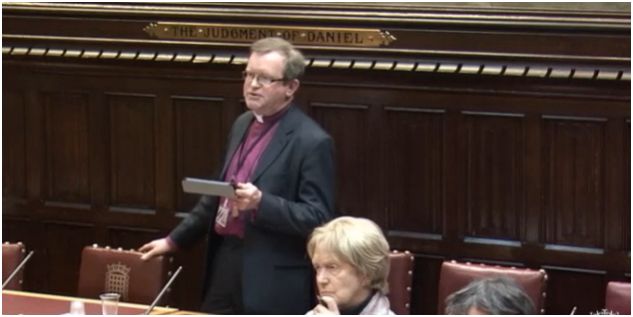 The Lord Bishop of Portsmouth: My Lords, in contributing to this debate and responding to the Chancellor of the Exchequer’s Budget Statement last week, to the subsequent events and to the debate in the other place, I welcome some proposals, express some surprise, and register disappointment—indeed, shock—at some of the measures announced. First, it is good to congratulate the Chancellor and Government on the intention to raise the tax free personal allowance to £11,500 this time next year. Lifting about 1.3 million people out of income tax is, of itself, welcome, although there are some potential drawbacks to which I will return a little later. Continue reading “Budget debate: Bishop of Portsmouth calls on Government to ‘set economic course with a stronger moral compass’”
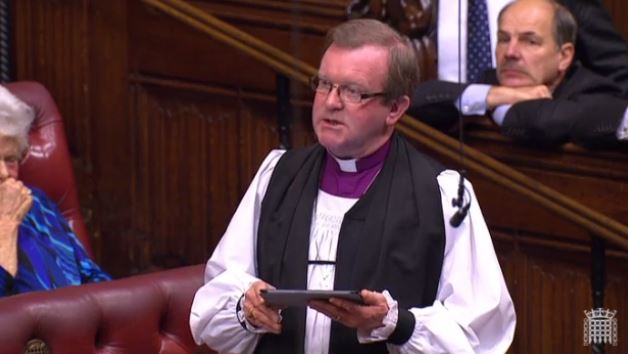
 The Lord Bishop of Durham: My Lords, throughout our debates on the Bill, we have all consistently expressed our desire to see child poverty in our nation reduced and, ultimately, eradicated. We have different views about how this might best be achieved, and about the impact the Bill will have. I continue to have deep concerns about its impact. I fear that it will lead to more children and families being poor.
  The Lord Bishop of Portsmouth: My Lords, by happy coincidence, this debate takes place almost exactly on the anniversary of the signing of the Armed Forces corporate covenant by the right reverend Primates the Archbishops of Canterbury and York. There has been excellent work with the Minister in developing the impact of that covenant, and it is a pleasure to mark that anniversary today and anticipate the maiden speeches this afternoon.
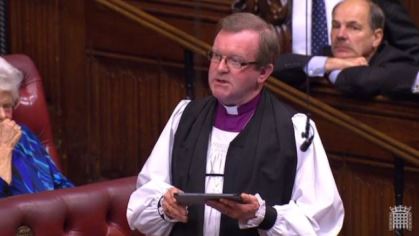 On 27th January 2016 the Bishop of Portsmouth, the Rt Revd Christopher Foster opened the second day of Report Stage on the Government’s
 The Lord Bishop of Portsmouth: My Lords, I tabled Amendment 21 to highlight the impact of this measure on different faith communities who share our concerns with this part of the Bill in particular. Noble Lords who attended the special briefing we organised two weeks ago will have heard Chaya Spitz, chief executive of the Interlink Foundation, speak passionately about the implications for the Orthodox Jewish community that she represents and is a member of. For her community, larger families are the norm and the central pivot around which everything else revolves. There is a positive, faith-based imperative to have children, to create the next generation in service of God. There is also a commonly held conscientious objection to the use of artificial contraception, except in prescribed circumstances, and to abortion, except in rare circumstances. By limiting financial support to the first two children, this policy is making a judgment that touches on deeply personal and strongly held religious and cultural beliefs about the family, and that threatens the viability of whole faith communities.
 The Lord Bishop of Portsmouth: My Lords, I highlight two particularly vulnerable groups in my Amendments 5, 6, 13 and 14, groups that I believe should be exempted from this measure. These are bereaved parents and victims of domestic abuse. In focusing so heavily on promoting personal responsibility, there is always a danger with welfare reforms that we neglect our collective responsibility to look after those who fall on difficult times, people we will probably never meet but whom we support through our taxes in their time of need so that we, too, will be supported when we need help.

You must be logged in to post a comment.