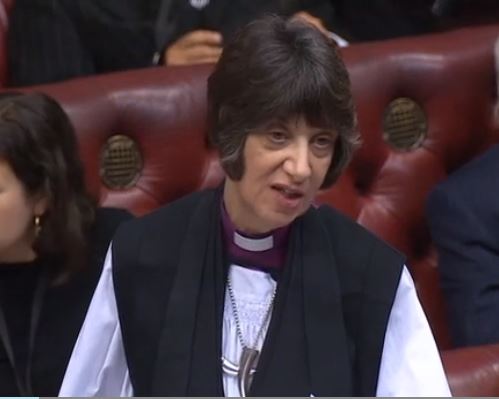
Bishop of Durham speaks on poverty and social security

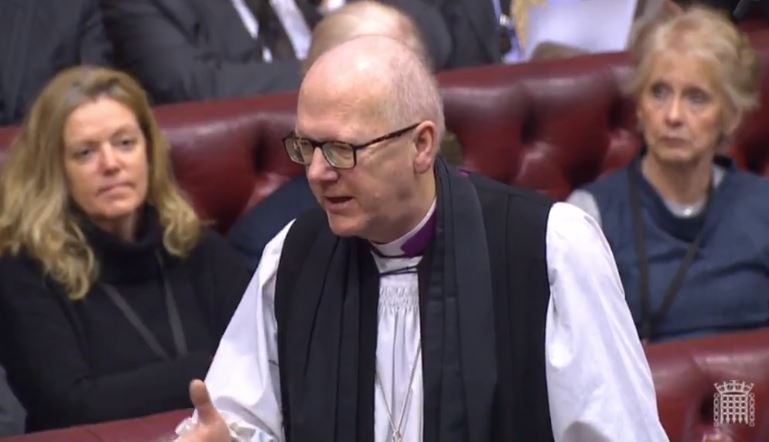
On 10th October 2022, the Bishop of Durham spoke about poverty and social security during a debate on the government’s economic growth plan:
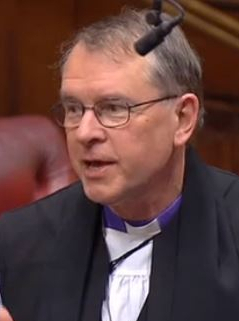
The Lord Bishop of Durham: My Lords, I congratulate my friend of more than 40 years, the right reverend Prelate the Bishop of Birmingham, on his valedictory speech. I thank him for his contributions to this House, particularly as our convenor, and pray God’s blessing for his future endeavours. I also congratulate the noble Baroness, Lady Gohir, on her excellent maiden speech.

In Luke, chapter 16, Jesus tells of a rich man who

“lived in luxury every day”,

while a beggar named Lazarus lay longing to eat what fell from his table. Sat at the rich man’s gate, Lazarus was in plain sight, yet he was invisible to the rich man—a man blind to suffering and the needs of Lazarus.

The Trussell Trust has revealed devastating statistics regarding those in poverty. In recent months, its food banks have provided 50% more parcels. Of those on universal credit, 2 million have skipped meals to meet other essential costs. These statistics continue to rise; poverty is in plain sight. Yet a policy of trickle-down economics renders those in poverty invisible. Like Lazarus waiting to eat what fell from the rich man’s table, this policy does not address urgent needs. These people cannot wait for the benefits of this economic policy to trickle down; this is especially the case for children and young people. We all get only one childhood, which shapes the rest of our lives. Children do not have time to wait for the “pie” to grow; they need meaningful investment now. God does not “trickle down” his love for us; he pours it out extravagantly. Jesus’s priority was to lift up the poor, not wait for some small advance to trickle down.

Continue reading “Bishop of Durham speaks on poverty and social security”

Bishop of Durham asks about Social Security payments

The Bishop of Durham asked a question about rising poverty on 10th October 2022, during a debate on social security and inflation:

The Lord Bishop of Durham: My Lords, I take the Minister back again to the question asked by the noble Baroness, Lady Lister. This morning, the Legatum Institute made it very clear that the number of people in poverty will rise if the rates are not increased by the rate of inflation. Will the Minister acknowledge that that is simply the fact if the Government do not do that?

Continue reading “Bishop of Durham asks about Social Security payments”

Bishop of Gloucester asks about increasing community advice services to low income households

The Bishop of Gloucester received the following written answer on 13th July 2022:

The Lord Bishop of Gloucester asked Her Majesty’s Government whether they have carried out an impact assessment of increasing the numbers of face-to-face advice services covering (1) household finances, and (2) benefit entitlement, in community centres that provide food to households on low incomes.

Continue reading “Bishop of Gloucester asks about increasing community advice services to low income households”

Bishop of Durham asks about the impact of inflation on families

The Bishop of Durham asked a question on benefits for families with children during a debate on inflation on 16th March 2022:

The Lord Bishop of Durham: To ask Her Majesty’s Government what assessment they have made of the impact of inflation on the real terms value of the benefits received by families with children.

Continue reading “Bishop of Durham asks about the impact of inflation on families”

Bishop of St Albans asks about alleviating rural poverty

The Bishop of St Albans tabled a question on efforts to alleviate in-work poverty in rural areas on 25th October 2021:

The Lord Bishop of St Albans: To ask Her Majesty’s Government, further to the report by the Rural Services Network Towards the UK Shared Prosperity Fund, published in June, what plans they have accurately to reflect in-work rural poverty in future funding allocation mechanisms.

Continue reading “Bishop of St Albans asks about alleviating rural poverty”

Bishop of Durham asks about food waste

The Bishop of Durham asked a question on food waste on 20th October 2021, during a debate on government plans for protection of the most vulnerable in the event of energy or necessity shortages:

The Lord Bishop of Durham: My Lords, one of the other necessities mentioned by the noble Lord, Lord Brooke of Alverthorpe, is food. Nationally and globally, we waste a third of all food. When 1.7 million children, between September 2020 and February 2021, were living in food poverty along with their families, surely there must be a better way. This week, the Earthshot Prize celebrated Milan’s citywide food-waste policy, which saves 260,000 meals-worth a year. What steps are Her Majesty’s Government taking to encourage and support the better local collection and distribution of food waste in the UK more effectively?

Continue reading “Bishop of Durham asks about food waste”

Social Security (Up-rating of Benefits) Bill: Bishop of Durham calls for further action on benefits issues

On 13th October 2021, the House of Lords debated the Social Security (Up-rating of Benefits) Bill in its second reading. The Bishop of Durham spoke in the debate, urging the government to do more to support those in poverty:

The Lord Bishop of Durham: My Lords, when I read the title of the Bill I thought, “Good: we will have before us a measure that covers the wide issues of the uprating of the wide range of social security benefits we have, most notably pensions, universal credit and perhaps the question of legacy benefits.” So I was very disappointed to discover that, actually, the scope of the content was purely to do with pensions.

In relation to pensions, I have sympathy with the proposals tackling a specific issue that appears to have emerged as something of an anomaly, given our recent experience of the pandemic. I think the triple lock was probably the right move when it was introduced and it has served pensioners well. However, I now have questions as to whether having such a lock in one part of the social security system actually prevents both the Treasury and the Department for Work and Pensions from truly looking at the system and its funding as a rounded whole—although I note with care the comprehensive and careful input of the noble Baroness, Lady Drake, and that of the noble Baroness, Lady Greengross, just now on the double lock. But this is an uprating Bill for the system, it is not about changing the system, so with some reluctance I accept the proposals in the Bill.

However, I now turn to my deep disappointment with the Bill. I join many noble Lords in raising a concern that the Bill does not address the universal credit uplift cut. I recall the debate in this Chamber back in February, in which many Peers expressed their concern that a Bill would not address what is historically one of the most significant cuts to social security benefits. The letter sent by the Minister outlining the content of this Bill began by stating:

Continue reading “Social Security (Up-rating of Benefits) Bill: Bishop of Durham calls for further action on benefits issues”

Bishop of Blackburn stresses importance of accessibility when encouraging behaviour change on the path to net-zero

The Bishop of Blackburn spoke in a debate on behaviour change and the transition to net-zero carbon emissions on 16th September 2021, urging that the government consider the issues faced by the poorest in society so that they are not left behind:

The Lord Bishop of Blackburn: My Lords, I too am grateful to the noble Baroness, Lady Blackstone, for the opportunity of this debate. I have just finished reading a book about wilding in the UK, and it is a classic story of how difficult it is to change a culture, attitudes and expectations from deeply embedded practices and convictions, in this case about how we manage our land—which was appropriate, with the Environment Bill this week. The same difficulty applies in this debate, which is less about government policy and more about how we, as citizens, choose to live.

My main point, in discussing the role behaviour change can play in helping us towards net-zero carbon emissions, is this: it is essential that our expectations are aspirational, but also realistic. They need to apply to all people. It is my fear that the poorest 10% will be left not just behind, but feeling that they are part of the problem, when they would rather be part of the solution.

Continue reading “Bishop of Blackburn stresses importance of accessibility when encouraging behaviour change on the path to net-zero”

Bishop of Gloucester raises issues of food poverty in debate on universal credit uplift

The Bishop of Gloucester spoke in a debate on the proposed removal of the universal credit uplift on 9th September 2021, with reference to the impact such a decision would have on levels of food poverty in the UK:

The Lord Bishop of Gloucester: I am grateful to the noble Baroness, Lady Tyler, for introducing this important debate, and I declare my interest as a trustee of Feeding Britain. I will focus my time on the impact that withdrawing the £20 uplift will have on food poverty. More than 500 anti-poverty workers, volunteers and supporters within the Feeding Britain network have signed a petition calling on the Government not to remove the increase, and that petition will be delivered to No. 10 in about an hour.

Continue reading “Bishop of Gloucester raises issues of food poverty in debate on universal credit uplift”

Bishop of Gloucester asks about effects of COVID-19 on the levelling-up agenda

The Bishop of Gloucester asked a question on whether the government would provide an opportunity for the House of Lords to hold a debate on the effects of COVID-19 on the government’s levelling-up agenda on 1st July 2021, during a debate on addressing discrepancies in life expectancy and public health in deprived areas:

The Lord Bishop of Gloucester: In the light of Sir Michael Marmot’s report, will the Minister commit to providing an early opportunity for this House to debate the impact of Covid-19 on Her Majesty’s Government’s much-advertised agenda for levelling up, particularly relating to children and young people in those regions with the greatest level of deprivation?

Continue reading “Bishop of Gloucester asks about effects of COVID-19 on the levelling-up agenda”