
The following article by the Bishop of Gloucester appeared on The Times Red Box website on 12th September 2018:
Tag: prisons

Bishop of Gloucester highlights need for meaningful path away from offending
On the 6th of September 2018 Lord Bird asked Her Majesty’s Government “what plans they have to ensure that prisons and young offender institutions are safe and able to meet the rehabilitative needs of those imprisoned.” The Rt Revd Rachel Treweek, Bishop of Gloucester, asked a follow up question focusing on community-based sentences and rehabilitation involving meaningful work.
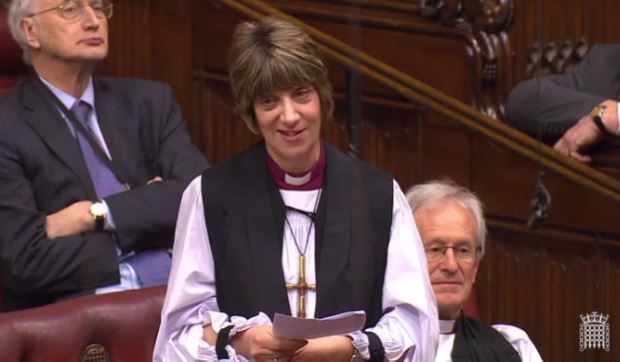 The Lord Bishop of Gloucester: My Lords, I too thank the noble Lord, Lord Bird, for bringing this important debate today. It is encouraging to see some new energy in the Ministry of Justice, and some recent government announcements have been very encouraging, not least the female offender strategy. However, as has been said, it is important to acknowledge that so often prison will not be able to meet the rehabilitative needs of the people who are sent there. Continue reading “Bishop of Gloucester highlights need for meaningful path away from offending”
Bishop of Rochester highlights social care challenges for prisons, and role of voluntary sector
 On 5th July 2018 Baroness Brinton led a debate on the question to Her Majesty’s Government, “what steps they are taking to ensure that social care in England is adequately funded.” The Bishop of Rochester, Rt Revd James Langstaff, spoke in the debate:
The Lord Bishop of Rochester: My Lords, I too join in with the general rejoicing on this the 70th anniversary of the NHS, but as others have observed, I am glad that this debate has been brought forward by the noble Baroness because it is a necessary counterpoint to that. I join the noble Lord in expressing slight surprise at how few people have wanted to contribute to this debate, but that does give those of us who are speaking a little longer to do so.
As the recent National Audit Office report, referred to by the noble Baroness, into the interface between health and social care indicates, the two areas are inextricably linked. Indeed, the dividing line can be quite hard to define, and that is one of the difficulties. Continue reading “Bishop of Rochester highlights social care challenges for prisons, and role of voluntary sector”
Bishop of Gloucester asks if enough attention is given to prison alternatives when women are sentenced
 On 3rd July 2018 Baroness Burt of Solihull asked Her Majesty’s Government “how they will ensure that provision for women in the prison system is properly funded, following their decision to abandon plans for five community prisons for women in England and Wales.” The Bishop of Gloucester, Rt Revd Rachel Treweek, asked a follow-up question:
The Lord Bishop of Gloucester: My Lords, I am grateful that Her Majesty’s Government do not intend to open new women’s prisons, as has been said, and I am grateful for the assurance that more money will be put into women’s centres. However, what work will be done to ensure that those who sentence know what is actually available in the community? Continue reading “Bishop of Gloucester asks if enough attention is given to prison alternatives when women are sentenced”
Archbishop of York questions private finance for prisons
 On 27th June 2018 the Advocate-General for Scotland, Lord Keen of Elie, repeated a Government answer to an Urgent Question on privately financed prisons that had been asked in the House of Commons earlier that day. The Archbishop of York, the Most Revd and Rt Hon Dr John Sentamu, asked a follow up question to raise his concern about indebtedness to private companies:
The Archbishop of York: My Lords, I began my ministry as a prison chaplain in a young offender institution, Latchmere House, where every day some 60 to 70 young men arrived. As a chaplain you had to see them, but sometimes you did not succeed in seeing them because the place was overcrowded. In those days, the prisons were put there by Her Majesty and run with taxpayers’ money. Is the Minister confident that this private finance partnership will not create the same indebtedness from which the National Health Service is suffering? We owe a lot of money to private companies for our new hospitals. Are we walking into the same trap? Continue reading “Archbishop of York questions private finance for prisons”
Bishop of Ely asks Government about funding for more women’s centres
On 11th June 2018 Baroness Fall asked Her Majesty’s Government “what percentage of women in prison have dependants under 16 years old; and what is the average length of stay in prison for such women.” The Bishop of Ely, Rt Revd Stephen Conway, asked a follow-up question:
 The Lord Bishop of Ely: My Lords, the Ministry of Justice has produced clear evidence that women’s centres are effective at reducing reoffending, provide joined-up community services to support physical and mental health needs and give more opportunities to women to have access to their children. What assessment does the Minister make of the need for increased funding to sustain and open more women’s centres? Continue reading “Bishop of Ely asks Government about funding for more women’s centres”
Bishop of St Albans receives written answer about the incarceration of a British citizen in the US

On 5th March, the Bishop of St Albans, the Rt Revd Alan Smith, received a written answer from the Government about the incarceration of a British citizen in America:
Bishop of Rochester asks Government about support for released female offenders
 On 5th March, Baroness Burt of Solihull asked Her Majesty’s Government ‘what assessment they have made of the suitability of bids for replacement services for women prisons made following the closure of HM Prison Holloway.’ The Bishop of Rochester, the Rt Revd James Langstaff, asked a follow up question: Continue reading “Bishop of Rochester asks Government about support for released female offenders”
Bishop of Gloucester highlights long term funding needs for women’s centres in prison sector
 In the House of Lords on the 22nd February 2018 the Bishop of Gloucester, the Rt Revd Rachel Treweek, asked a question she had tabled to Government about their long-term plans for the prison sector, specifically plans for the funding of women’s centres.
The Lord Bishop of Gloucester: To ask Her Majesty’s Government what is their vision for the long-term future of the prison system.
The Advocate-General for Scotland (Lord Keen of Elie) (Con): My Lords, we shall seek to maintain a prison system that is sufficient for public protection and will provide opportunity for the rehabilitation of offenders. Where it is necessary for offenders to be deprived of their liberty, their detention should be decent and safe.
The Lord Bishop of Gloucester: My Lords, in 2015, the Justice Committee of the other place concluded that funding for women’s centres, “appears to be a recurring problem”. Ten years after the report of the noble Baroness, Lady Corston, can the Minister assure me that secure, long-term funding for women’s centres is now a high priority?
Bishop of St Albans asks about investment in women’s centres as an alternative to prison
 On 8th February 2018 Lord Lee of Trafford asked Her Majesty’s Government “what assessment they have made of the size of the prison population and conditions within prisons.” The Bishop of St Albans, Rt Revd Alan Smith, asked a follow up question about women in prison:
The Lord Bishop of St Albans: My Lords, research by the Ministry of Justice shows that women’s centres have a statistically significant effect on decreasing reoffending rates, are substantially cheaper than keeping women in custody and often allow families to stay together. Will the Minister use his department’s evidence to invest in women’s centres that treat women holistically as the best way forward for many women? Continue reading “Bishop of St Albans asks about investment in women’s centres as an alternative to prison”


You must be logged in to post a comment.