 On the 21st December 2016 the Bishop of Rochester, the Rt Revd James Langstaff tabled and asked a question to Government on the floor of the House: “following the disturbance at HM Prison Birmingham, what measures they will take to address immediate and short-term issues of safety and security in prisons.” The full series of exchanges, including follow-up questions from other Members, is reproduced below:
The Lord Bishop of Rochester: My Lords, I beg leave to ask the Question standing in my name on the Order Paper and I draw the House’s attention to my interest as the Bishop to Her Majesty’s Prisons.
The Advocate-General for Scotland (Lord Keen of Elie): My Lords, while we implement our White Paper reforms, which will reduce violence and reoffending, we are continually working to ensure stability across the prison estate. The Prisons Minister chairs daily meetings with senior members of the Prison Service to monitor potential unrest. Where necessary, we are providing governors with immediate targeted support, such as rapid facilities repairs, and we are in the process of recruiting 2,500 additional officers across the estate.
The Lord Bishop of Rochester: I am grateful to the Minister for his response. I am also grateful for the debate and discussion in your Lordships’ House on Monday following the Ministerial Statement. In that debate, a number of noble Lords drew attention to the importance of purposeful activity for prisoners, including education, training, work and a range of other rehabilitative programmes. Such activities aid reform, encourage positive behaviour and thus enhance safety and security—but they can also be seriously compromised, not least by staffing issues. Can the Minister assure the House that such programmes will be sustained and ideally increased in the short term as well as the long term?
Continue reading “Bishop of Rochester questions Government about staffing levels in prisons after Birmingham riots”

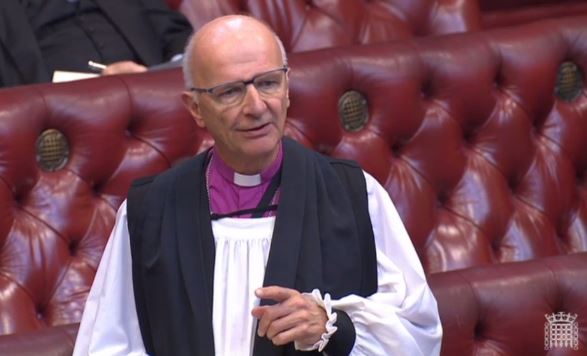 The Lord Bishop of Bristol: My Lords, I welcome the opportunity to contribute to this important debate on the gracious Speech. I thank the noble Lords who have spoken thus far in what has been an interesting debate today.
 On 27th June 2017, the Bishop of Southwark, Rt Rev. Christopher Chessun, contributed to the ongoing debate on the Queen’s Speech. The Bishop’s speech addressed the strong response from volunteers and emergency services to recent events, and called for a re-examination of current resources. Government Minister Lord Bourne of Aberystwyth responded to the Bishop of Southwark’s speech at the end of the debate.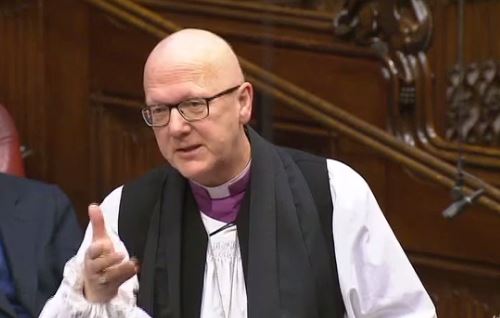

 On 20th February 2017, Lord Brown of Eaton-under-Heywood asked the Government “what is their response to the recommendation of Michael Gove, the former Secretary of State for Justice, in his November 2016 Longford Lecture that the approximately 500 Imprisonment for Public Protection (IPP) prisoners “who have been in jail for far longer than the tariff for their offence” should be released.” The Bishop of Southwark, the Rt Revd Christopher Chessun, asked a supplementary question.
 The Lord Bishop of Gloucester: My Lords, I thank my noble friend the most reverend Primate the Archbishop of Canterbury on his foresight in tabling this debate on shared values. I also add my own congratulations to the noble Lord, Lord McInnes of Kilwinning, and the noble Baroness, Lady Bertin, on their poignant and insightful maiden speeches.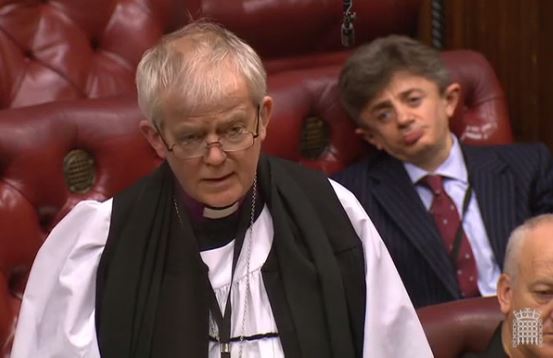

 The Church of England in Parliament
You must be logged in to post a comment.