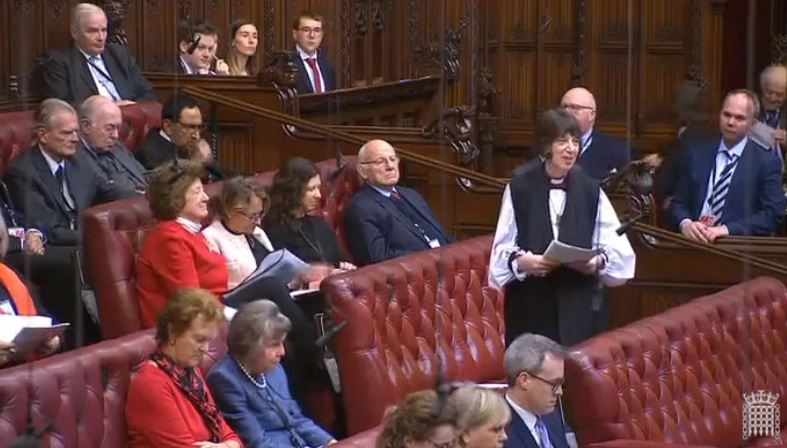
Bishop of Gloucester asks about life imprisonment

The Bishop of Gloucester received the following written answers on 5th September 2022:

The Lord Bishop of Gloucester asked Her Majesty’s Government:

  • how many people received a life sentence and were (1) under 18, (2) 18 to 20, (3) 21 to 24, (4) 25 to 29, (5) 30 to 34, (6) 35 to 39, (7) 40 to 49, (8) 50 to 59, (9) 60 to 69, and (10) 70 and older, at the time of sentencing in each year since 2002.
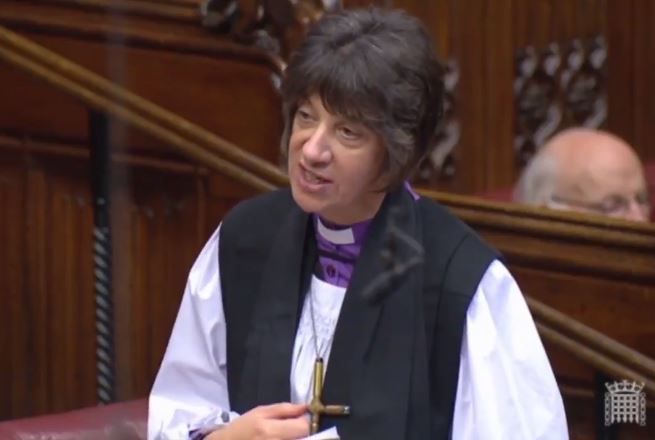
  • how many people received a life sentence with a tariff of between 10 years to less than 15 years, and were (1) under 18, (2) 18 to 20, (3) 21 to 24, (4) 25 to 29, (5) 30 to 34, (6) 35 to 39, (7) 40–49, (8) 50 to 59, (9) 60 to 69, and (10) 70 and older, at the time of sentencing in each year since 2002.
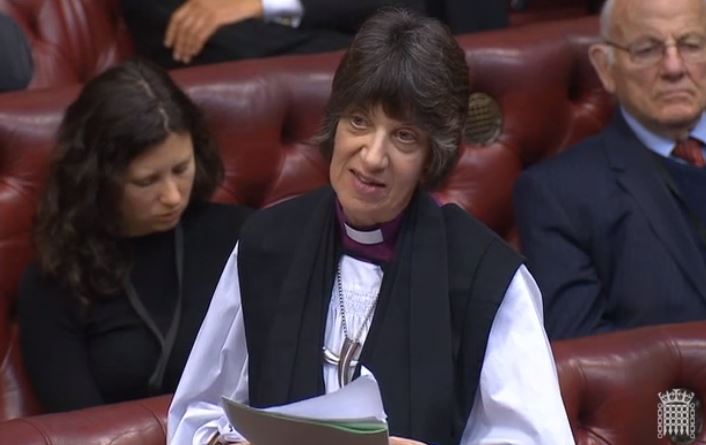
  • how many people received a life sentence with a tariff of between 15 years to less than 20 years, and were (1) under 18, (2) 18 to 20, (3) 21 to 24, (4) 25 to 29, (5) 30 to 34, (6) 35 to 39, (7) 40 to 49, (8) 50 to 59, (9) 60 to 69, and (10) 70 and older, at the time of sentencing in each year since 2002.
  • how many people received a life sentence with a tariff of between 20 years to less than 25 years, and were (1) under 18, (2) 18 to 20, (3) 21 to 24, (4) 25 to 29, (5) 30 to 34, (6) 35 to 39, (7) 40 to 49, (8) 50 to 59, (9) 60 to 69, and (10) 70 and older, at the time of sentencing in each year since 2002.
Continue reading “Bishop of Gloucester asks about life imprisonment”

Bishop of Gloucester speaks in a debate on crime and rehabilitation

The Bishop of Gloucester spoke in a debate on crime, reoffending and rehabilitation on 30th June 2022:

The Lord Bishop of Gloucester: My Lords, I am very grateful to the noble Lord, Lord Farmer, for introducing this debate. His work is inspiring; I want to say “yes” to all that he has said and am sorry that I have only six minutes. I too welcome the noble and learned Lord, Lord Bellamy, and look forward to his maiden speech. I refer to my interests stated in the register as Anglican Bishop to Prisons and president of the Nelson Trust. Last week, I visited HMP Wakefield. In reflecting with the governor on long sentences, he said that he had asked a group of prisoners whether, if they had known the tariff for their crime, it would have been a deterrent. For all but one, the answer was no. Most crimes are rarely planned in a calculated way.

Earlier this month, the Independent Commission into the Experience of Victims and Long-Term Prisoners published a report with a comprehensive set of recommendations, holding together for the first time the perspectives of the offender and the victim. The report highlighted that the number of people in England and Wales given a prison sentence of more than 10 years has more than doubled in a decade, at an ever greater cost. Where is the evidence that greater severity equates to greater deterrence, or a safer society? We need to curb the unhelpful and inaccurate rhetoric about keeping the public safer through longer, tougher sentencing. What matters more than longer and longer sentences is how people are spending their time while in prison, in terms of not only education and purposeful work but meaningful interventions which prevent reoffending and someone else becoming another victim. Holding together justice and restoration is central to Christian theology; I believe it is vital for us to rediscover how those two dwell side by side.

Continue reading “Bishop of Gloucester speaks in a debate on crime and rehabilitation”

Bishop of Gloucester asks a question on women in prisons

The Bishop of Gloucester received the following written answer on 30th June 2022:

The Lord Bishop of Gloucester asked Her Majesty’s Government how many women aged (1) 18 to 25, and (2) 26 and above, went to prison in each of the last 10 years; what was the average length of sentence for each of those categories; and what were the 10 most common offences that led to the imprisonment of women during this period.

Continue reading “Bishop of Gloucester asks a question on women in prisons”

Bishop of Gloucester asks about women in prisons

The Bishop of Gloucester received the following written answers on 9th June 2022:

The Lord Bishop of Gloucester asked Her Majesty’s Government:

  • how many women aged (1) 18 to 25, and (2) 26 years or older, are currently held in each female prison establishment.
  • how many women in prison aged (1) 18 to 25, or (2) 26 years or older, are currently sharing a cell.

Baroness Scott of Bybrook (Con): The requested data, correct as of 31st March 2022, is provided in table form below [linked below].

Continue reading “Bishop of Gloucester asks about women in prisons”

Bishop of Gloucester asks about mental health services in prisons

The Bishop of Gloucester received the following written answers on 8th June 2022:

The Lord Bishop of Gloucester asked Her Majesty’s Government how many women aged (1) 18 to 25, and (2) 26 years or older, have accessed primary care mental health services in each of the last 10 years.

Continue reading “Bishop of Gloucester asks about mental health services in prisons”

Queens Speech: Bishop of Gloucester speaks on criminal justice

On 12th May 2022, the House of Lords debated the Queen’s speech. The Bishop of Gloucester spoke in the debate:

The Lord Bishop of Gloucester: My Lords, it is wonderful to be speaking in this debate on Her Majesty’s gracious Speech. It is always a privilege to listen to the noble and learned Lord, Lord Judge, who is a very hard act to follow. I refer to my interest stated in the register as Anglican bishop of prisons.

As has been said, we know that people are increasingly experiencing hardship in our current climate. In the gracious Speech there was an emphasis on so-called levelling up and tackling disadvantage, whether rooted in education, health, a lack of appropriate housing or low income. Often those issues intersect.

Continue reading “Queens Speech: Bishop of Gloucester speaks on criminal justice”

Bishop of Gloucester asks about women in prisons, and about telephones in prison cells

The Bishop of Gloucester received the following written answers on 24th May 2022:

The Lord Bishop of Gloucester asked Her Majesty’s Government how many women aged (1) 18 to 24, and (2) 25 years or older, are currently held in each female prison establishment.

Continue reading “Bishop of Gloucester asks about women in prisons, and about telephones in prison cells”

Bishop of Leeds asks about prison release policies

The Bishop of Leeds asked a question regarding releases from prisons on 21st March 2022, during a debate on safe and secure housing for released female prisoners:

The Lord Bishop of Leeds: My Lords, Friday releases from prison, in particular, are hugely problematic. This is particularly the case for geographically dispersed women’s prisons, because women cannot travel home in time to make a housing application with their local authority before the office closes. Are the Government aware of this specific problem, and can they offer any solutions as to what can be done to overcome it?

Continue reading “Bishop of Leeds asks about prison release policies”

Bishop of Gloucester asks about conditions in UK prisons

The Bishop of Gloucester received the following written answers on 19th January 2022:

The Lord Bishop of Gloucester asked Her Majesty’s Government how many women in prison aged (1) 18–24, or (2) 25 years or older, have been (a) in receipt of mental health care, or (b) referred to mental health support, whilst in custody.

Continue reading “Bishop of Gloucester asks about conditions in UK prisons”

Police, Crime, Sentencing and Courts Bill: Bishop of Gloucester supports amendment to review criminal sentencing

On 12th January 2022, the House of Lords debated amendments to the Police, Crime, Sentencing and Courts Bill. The Bishop of Gloucester spoke in support of an amendment tabled by Lord Marks of Henley on Thames which would establish a royal commission to review criminal sentencing:

The Lord Bishop of Gloucester: My Lords, I fully support the amendment. Sometimes I feel a bit as if I am in “Groundhog Day” as we listen to things that are said again and again. When we first discussed the Bill in this House, many people far more learned than me commented on all the issues with the Bill and the fact that so much of it is piecemeal—that we are trying to put sticking plasters over things without looking at the issues holistically and without looking at evidence. So much of it seems to be a reaction—often to populist headlines, let us be honest. There is so much evidence that we are not looking at, and so much of what we are discussing is not backed up by the evidence.

Continue reading “Police, Crime, Sentencing and Courts Bill: Bishop of Gloucester supports amendment to review criminal sentencing”