On 29th January 2020 the House of Lords debated a motion from Baroness Tyler of Enfield, “to ask Her Majesty’s Government how they plan to respond to the ten steps to improve social mobility contained in the Sutton Trust’s Mobility Manifesto, published in November 2019, and the recommendations of the Social Mobility Commission’s 2019 State of the Nation report.” The Bishop of Durham, Rt Revd Paul Butler, spoke in the debate:
 The Lord Bishop of Durham: My Lords, I look forward to the maiden speech of the noble Lord, Lord Choudrey.
Opportunity, aspiration and education are critical to all having the best chance of being socially mobile. Giving children the best start in life is paramount, so we need more health visitors, better-targeted childcare for those least able to afford it and renewed opportunities for parents to interact with others. Will Her Majesty’s Government commit to a proper national early years strategy with an increased share of future spending?
Church of England schools in my diocese have found it difficult to implement our motto that “no child is left behind” because social mobility is a great challenge exacerbated by a poverty of aspiration. According to the Social Mobility Commission’s survey, less than a third of people living in the north-east think that there are good opportunities in our region.
Continue reading “Bishop of Durham asks Government to invest in early years to improve social mobility”


 The Lord Bishop of Durham: My Lords, I declare my interests as stated in the register as chair of the National Society. In November, the Church of England produced a charter to support schools in preparing for the new compulsory elements of RSHE. It is important to us and our schools that we consult parents on how best to deliver this new material, to ensure that we provide a sensitive education enabling all pupils to flourish. Will Her Majesty’s Government reassess the delivery date of the new elements of RSHE to accommodate the current constraints on schools’ time and energy due to Covid-19?
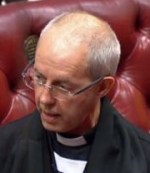 The Archbishop of Canterbury: My Lords, clearly the educational world is working extraordinarily hard—one welcomes that—in its determination to deal with an extraordinarily difficult situation very quickly and under huge pressure. If we follow the Imperial College analysis model that was recently published, we can see in certain circumstances the repeated waves of Covid-19 going on for 18 to 24 months. At what point will we begin to move towards a longer-term view of what needs to happen? Clearly, schools cannot be closed for two years. I wonder whether the Government have in their mind the planning for the eventuality of longer-term infectious prevalence in this country.
 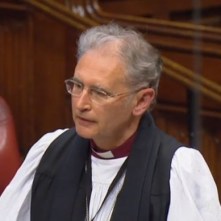 The Lord Bishop of Coventry: My Lords, several heads in Coventry and Warwickshire have told me about the heavy demands on their energies and budgets from, to quote one primary head, children who are not on the SEN register but face horrific circumstances at home and so need extra help; for example, families who are homeless through domestic violence and children whose mental health is so poor—these are nine year-olds—that they threaten suicide. Does the Minister recognise the pressures on schools in mainstream education from children who do not meet the thresholds of special needs but who nevertheless have severe needs and require acute support? Is he confident that there is sufficient funding for them?
 On 30th July 2019 the Bishop of Durham, Rt Revd Paul Butler, received a written answer, from Lord Agnew of Oulton, regarding free school meals for children of those with no recourse to public funds because of their immigration status:
 On 16th July 2019 in the House of Commons Emma Hardy MP (Lab) asked an urgent question to the Secretary of State for Education on whether “he will make a statement on what steps he is taking to counter misinformation about the content of relationship education in schools”. The Second Church Estates Commissioner, Rt Hon Dame Caroline Spelman MP, asked a follow-up question:
 On 3rd July 2019 the Earl of Clancarty asked the Government “what support they are giving to people suffering from asthma, including on access to medicines”. The Bishop of Carlisle, Rt Revd James Newcome, asked a follow-up question:
 On 19th June 2019 the Economic Secretary to the Treasury (John Glen) made a statement on supporting people in problem debt. The Second Church Estates Commissioner, Rt Hon Dame Caroline Spelman MP, asked a follow-up question:
 The Lord Bishop of Winchester: My Lords, in a recent poll of teachers in England, 46% reported that holiday hunger had increased over the last three years. In my diocese, in Southampton alone 37% of children—many of whom are in working families—are living in relative poverty; that is, below the 60% median income line. Despite what she has already said, can the Minister give assurances that the Government will commit to reviewing their policies to reverse the rise in child poverty?
 The Church of England in Parliament
You must be logged in to post a comment.