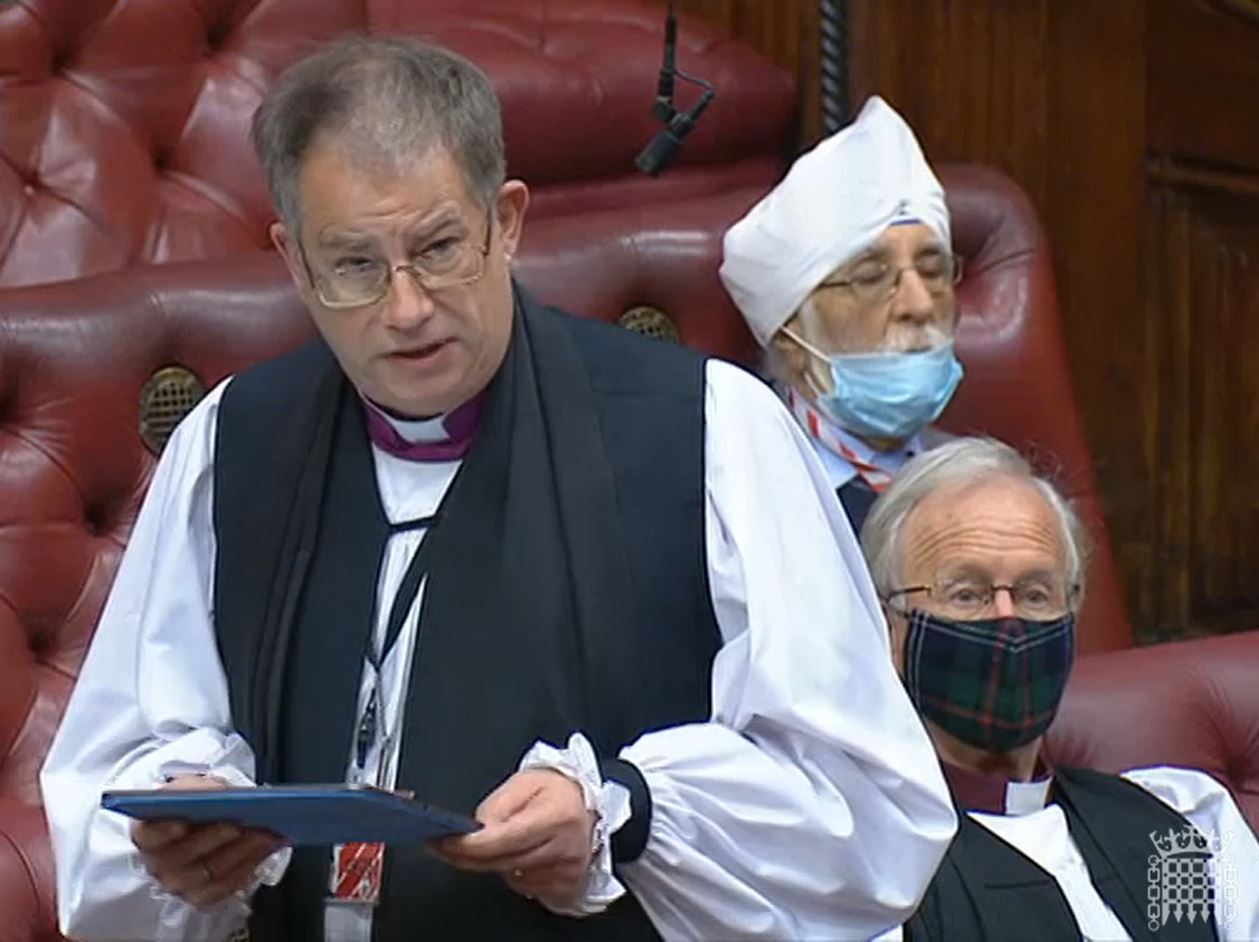
The Bishop of Manchester asked a question on facial recognition technology during a debate on the impacts and use of CCTV in the UK on 2nd February 2023:
The Lord Bishop of Manchester: My Lords, I declare my interest as chair of the Greater Manchester Police independent ethics committee. Can the Minister tell us what the Government’s assessment is of the use of CCTV in conjunction with live facial recognition technology by police across the UK, and what legal safeguards are in place to ensure that fundamental rights are upheld?
On 1st February 2023, the House of Lords debated the Online Safety Bill in its second reading. The Bishop of Oxford spoke in the debate , raising the importance of risk assessments of harm to adults, the independence of Ofcom, and the dangers of technology facilitated crime & domestic abuse:
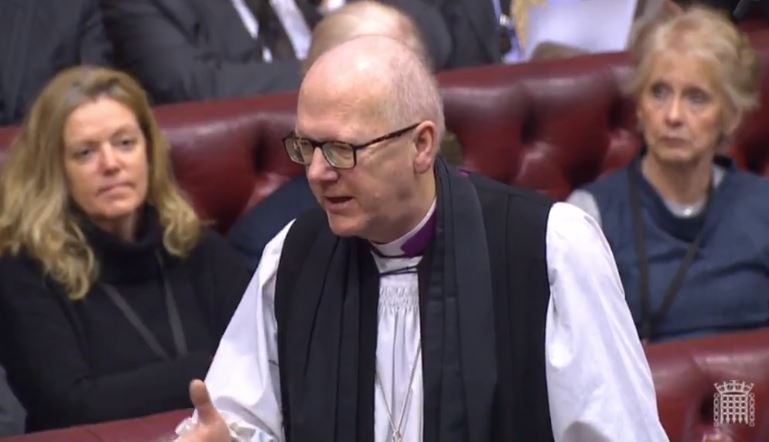
The Lord Bishop of Oxford: My Lords, it is an honour and privilege to follow the noble Baroness, Lady Campbell, and all those who have spoken in this debate. As a member of your Lordships’ Committee on Artificial Intelligence and a founding member of the Centre for Data Ethics and Innovation, I have followed the slow progress of this Bill since the original White Paper. We have seen increasing evidence that many social media platforms are unwilling to acknowledge, let alone prevent, harms of the kind this vital Bill addresses. We know that there is an all too porous frontier between the virtual world and the physical world. The resulting harms damage real lives, real families, and real children, as we have heard.
There is a growing list of priority harms and now there is concern, as well as excitement, over new AIs such as ChatGPT; they demonstrate yet again that technology has no inherent precautionary principles. Without systemic checks and balances, AI in every field develops faster than society can respond. We are and for ever will be catching up with the technology.
The Bill is very welcome, marking as it does a belated but important step towards rebalancing a complex but vital aspect of public life. I pay tribute to the Government and to civil servants for their patient efforts to address a complex set of ethical and practical issues in a proportionate way. But the job is not yet fully done.
The Bishop of Oxford asked a question on surveillance technology on 6th April 2022, during a debate on the introduction of a future Employment Bill:
The Lord Bishop of Oxford: My Lords, technology has intruded further into the world of work over the last five years. Many developments are helpful, but some are not. Almost 60% of workers now report some form of technological surveillance at work, often through so-called bossware, often introduced without consultation with unions and workers. How will the employment Bill eventually keep pace with this development, and will it introduce a statutory requirement on employers to consult and disclose the use of algorithmic and AI surveillance on employees, and protect workers from excessive surveillance by technology?
On 4th April 2022, the Bishop of Oxford asked a question during a debate on facial recognition technology and policing:
The Lord Bishop of Oxford: My Lords, I declare an interest as a former board member of the Centre for Data Ethics and Innovation. I wonder if the Minister would comment on the vital importance of establishing public trust and confidence in the deployment of FRT and indeed any new technology, especially in such a sensitive area as policing. A range of concerns have been raised about rapid deployment, governance and bias by the CDEI, the European Union and the makers of popular documentaries. Yet, in the face of this, the Met and South Wales Police have both announced a ramping up of the use of FRT. Does the Minister agree that it is time to slow this down and for urgent parliamentary scrutiny and better governance of the police’s use of facial recognition technology?
On 13th December 2021, the House of Lords debated the Police, Crime, Sentencing and Courts Bill in the second day of the report stage. The Bishop of Leeds spoke in the debate, following an amendment from Baroness Chakrabarti on digital extraction of information from devices by police, highlighting issues regarding lack of understanding of technology and the need to communicate with young people:
The Lord Bishop of Leeds: My Lords, especially following the speech by the noble Lord, Lord Carlile, I am conscious that I have no conception of what the world looks like through the eyes of my grandchildren. When I was their age there were three channels on television, which began at 4.40 in the afternoon with “Jackanory”. The world has changed considerably and, although I have tried to keep up with technology, professionally and personally, I am aware that I cannot see the world into which we are moving. We are not ahead of the game.
On 30th November 2021, the Bishop of St Albans asked a question on the support and education available for elderly people accessing online financial services:
The Lord Bishop of St Albans: My Lords, with increasing numbers of bank branches being closed on high streets and the impact of Covid, the elderly vulnerable are having to negotiate the choppy waters of online banking like everybody else, in an environment where there are large numbers of online scams and frauds. What are Her Majesty’s Government doing to offer training and resources to try to protect the elderly vulnerable as they engage with online financial services?
On 21st June 2021, Andrew Selous MP, on behalf of the Church Commissioners, gave the following written answers to questions from an MP:
Poverty
Jim Shannon MP (DUP, Strangford): To ask the Member for South West Bedfordshire, representing the Church Commissioners, what steps the Church is taking to (a) prevent and (b) relieve poverty.
On 8th June 2021, the Bishop of St Albans tabled a question on whether tech companies would pay more tax in the UK under the proposed removal of unilateral digital services taxes:
The Lord Bishop of St Albans: To ask Her Majesty’s Government, further to the announcement of the G7 global tax agreement on 5 June, whether tech companies will pay more tax in the United Kingdom after the proposed removal of unilateral digital services taxes.
On 16th December the Bishop of Oxford responded to a Government statement on its plans to tackle online harms:
The Lord Bishop of Oxford [V]: My Lords, I declare my interests, particularly my membership as a board member of the Centre for Data Ethics and Innovation.
I sincerely congratulate the Government and other agencies such as the Carnegie UK Trust for these proposals, the way in which they have been developed and their substance. They have a very simple ethical code at their heart: if something is illegal or harmful offline, it should be illegal and considered harmful online.
The protection of children is paramount; refinements will be needed, but the main direction is right. The proposals break new ground. I only hope that there will be a due sense of urgency as they are taken forward. I understand the need to focus the legislation, but given the decision to rule fraud and certain other areas out of scope—which will no doubt continue to be debated—when will we see an overall digital strategy so that we can see this Bill as part of a whole?
On 5th October 2020 Baroness McDonagh asked the Government “what assessment they have made of the impact on primary and secondary school students’ ability to learn for those students (1) who have digital connectivity, and (2) who do not have such connectivity, when learning from home due to the COVID-19 pandemic.” The Bishop of Oxford asked a follow up question:
The Lord Bishop of Oxford [V]: My Lords, I thank the Minister for her Answer and for what the Government have already done. Before the pandemic, 23% of children in socioeconomic groups D and E lacked home broadband and access to laptops, et cetera. Does the Minister agree that we now need to measure data poverty and its effects more carefully? Will the Government commit to legislating for household digital access to be treated as a utility on an equal footing with the right to access for water and heat—a change supported by the general public? Continue reading “Bishop of Oxford calls for household access to digital connection to be treated equally to other household utilities”




 The Lord Bishop of Oxford [V]: My Lords, I declare my interests, particularly my membership as a board member of the Centre for Data Ethics and Innovation.
 The Church of England in Parliament
You must be logged in to post a comment.