Bishop of Gloucester – crucial to work with young people on internet and social media reforms

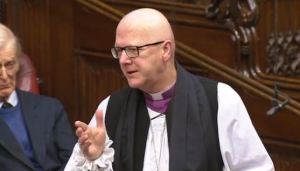
On 7th November 2017, the House of Lords debated a motion from Lord Best, ‘That this House takes note of the Report from the Communications Committee, Growing up with the internet.’ The Bishop of Gloucester, Rt Revd Rachel Treweek, spoke in the debate, which was also reported in the Telegraph newspaper.

The Lord Bishop of Gloucester: My Lords, like other noble Lords, I am very grateful to the Select Committee for this report, and I agree with so much that has been said already. So many young people today source their identities from social media and internet advertising, which has resulted in low self-esteem and poor mental health. Over the last 18 months or so, I have been spearheading a campaign called Liedentity, which is focused around body image and challenging the lie that our value comes from our physical appearance. Continue reading “Bishop of Gloucester – crucial to work with young people on internet and social media reforms”

Bishop of Chelmsford says digital world needs children’s best interests at heart

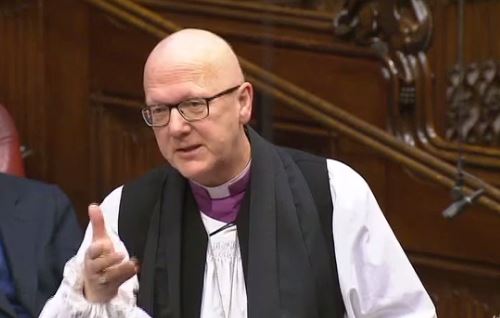
On 7th November 2017, the House of Lords debated a motion from Lord Best, ‘That this House takes note of the Report from the Communications Committee, Growing up with the internet.’ The Bishop of Chelmsford, Rt Revd Stephen Cottrell, who serves on the Communications Committee, spoke in the debate. His speech is below, and was also reported in the Telegraph and Mail newspapers.

The Lord Bishop of Chelmsford: My Lords, it is a great joy to follow the noble Baroness, Lady Kidron. I support the amendments she is pioneering through the House. They are extremely important. It is also a great honour, and a great education, to serve on the Select ​Committee on Communications. As other members of it have said, I pay tribute to the noble Lord, Lord Best, for the admirable and skilful way he led us through this. I welcome the noble Lord, Lord Gilbert, as our new chair.

So much in this report is critical to the sort of world we want to live in, the well-being of our nation, our public life and particularly our children. In his opening speech the noble Lord, Lord Best, outlined disturbingly well the challenges and dangers. Although I welcome the initial responses we have heard from the Government, much more still needs to be done to join all this up and make sure the needs of the child are put at the centre. Among the many important recommendations we offer, I draw attention to just two, because they are important in themselves and illustrate the larger, central point of our report—that government must take up the challenge to ensure that all those who work in the digital world work together to support the needs of children in an integrated and overarching response. Continue reading “Bishop of Chelmsford says digital world needs children’s best interests at heart”

Bishop of St Albans on how digital access and understanding can help deal with social exclusion

On 7th September 2017 Baroness Lane-Fox of Soho led a debate “That this House takes note of the case for improved digital understanding at all levels of United Kingdom society.” The Bishop of St Albans, Rt Revd Alan Smith, took part:

The Lord Bishop of St Albans: My Lords, I add my thanks to the noble Baroness, Lady Lane-Fox, for tabling today’s debate. As well as the powerful economic reasons for improving digital understanding, there are also some very important social reasons why we need to look at this key area. As our lives move increasingly online, we risk leaving those at the margins and without digital understanding even further behind. Continue reading “Bishop of St Albans on how digital access and understanding can help deal with social exclusion”

Artificial Intelligence: A Guide to the Key Issues

The Bishop of Oxford, Rt Revd Steven Croft, is a member of the House of Lords Select Committee on Artificial Intelligence. This blog by Bishop Steven about the key issues involved in AI, was published on the Diocese of Oxford website.

The one on the right is Artie.

Artie is a Robothespian.  We met last week at Oxford Brookes University.  Artie showed me some of his moves.  He plays out scenes from Star Wars and Jaws with a range of voices, movements, gestures and special effects (including shark fins swimming across the screens which form his eyes).

Artie can’t yet hold an intelligent conversation but it won’t be long before his cousins and descendants can.  Artificial Intelligence (AI) is now beginning to affect all of our lives. Continue reading “Artificial Intelligence: A Guide to the Key Issues”

Bishop of St Albans asks Government about broadband in rural areas

On 11th July 2017, Rt Rev. Alan Smith, the Bishop of St Albans, asked Her Majesty’s Government “what proportion of the Digital Infrastructure Investment Fund is expected to be available to support the provision of superfast broadband in hard to reach rural areas.” The full exchange is below, along with the follow-up questions asked by other Members:

The Parliamentary Under-Secretary of State, Department for Digital, Culture, Media and Sport (Lord Ashton of Hyde) (Con): My Lords, the digital infrastructure investment fund aims to support industry investment in full fibre networks, which are the next generation of digital infrastructure. The Government are committing £400 million, which will be at least matched by private sector investments on the same terms. It will be up to the selected managers of the fund themselves to make investments.

Continue reading “Bishop of St Albans asks Government about broadband in rural areas”

Digital Economy Bill: Bishop of Chester asks how Government is keeping pace with technological advancement

On 8th February 2017 the Bishop of Chester, Rt Revd Peter Forster, spoke during a debate on an amendment by Lord Lucas to the Government’s Digital Economy Bill. The amendment was that Ofcom be granted powers to ‘carry out and publish evaluations of algorithms’. 

14.03 Bishop of ChesterThe Lord Bishop of Chester: My Lords, this is an important amendment because it touches upon the bigger issue of the impact of artificial intelligence on all sorts of aspects of our lives. There is a law called Moore’s law, which says that every two years the power of computers doubles. That has been true over the past 20 or 30 years and we should assume that that power will continue to develop. Artificial intelligence in all its impacting forms will be more and more prevalent in our society and more and more potent in the hands of terrorists in the years to come.
Continue reading “Digital Economy Bill: Bishop of Chester asks how Government is keeping pace with technological advancement”

Bishop of Chester asks question about future electricity supply

14.03 Bishop of ChesterOn 26th January 2017 the Bishop of Chester, Rt Revd Peter Forster, asked a question in the Lords about electricity interconnectors. His question and follow-up, and those of Peers, are below:

The Lord Bishop of Chester: To ask Her Majesty’s Government, at peak electricity demand, what level of supply is expected to be available through international interconnectors. Continue reading “Bishop of Chester asks question about future electricity supply”

Bishop of Derby questions the drive for efficiency in the use of technology instead of assisting meaningful face-to-face pastoral engagement

Derby 191115c

On the 14th April 2014 the Bishop of Derby, the Rt Revd Alastair Redfern spoke during a debate on the Deloitte report ‘Technology and people: The great job-creating machine published in August.’ Bishop Alastair spoke about the competing pressures of company supply chains and corporate responsibility, the values of society and the impact technology is having as efficiency cuts across the face-to-face pastoral engagement of professions such as healthcare. The Minister Baroness Neville-Rolfe responded for the Government and addressed a number of the questions highlighted by the Bishop.

Continue reading “Bishop of Derby questions the drive for efficiency in the use of technology instead of assisting meaningful face-to-face pastoral engagement”

Bishop of St Albans – technological goods should be designed to last longer

On 3rd March 2016 the House of Lords considered a questions for short debate tabled by Baroness Jones of Whitchurch, “To ask Her Majesty’s Government what steps they are taking to promote the principles of the circular economy, based on the re-use, repair, refurbishment and recycling of existing materials and products, to protect the environment, give new growth opportunities and avoid waste.” The Bishop of St Albans, Rt Revd Alan Smith, spoke in the debate:
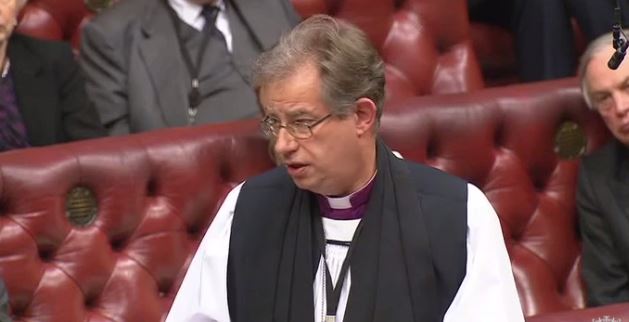


Bishop St Albans June 2015The Lord Bishop of St Albans: My Lords, my thanks also go to the noble Baroness, Lady Jones of Whitchurch, for this important debate on the circular economy.

I want to spend just a few moments highlighting the economic and environmental impact of planned obsolescence—this has already been referred to —particularly in technological goods, which we know is used by companies to drive growth and ensure a steady supply of return customers. It is a business model that relies on technological products needing to be upgraded and/or replaced at regular intervals, whether because they go out of fashion, have a limited lifespan, or are difficult or expensive to repair. Continue reading “Bishop of St Albans – technological goods should be designed to last longer”

Bishop of St Albans highlights sustainable alternatives to throwaway approach to smartphones

On 23rd February 2016 Baroness Jones of Whitchurch asked Her Majesty’s Government “what progress has been made in reducing levels of unwanted electronic goods ending up in landfill through encouraging manufacturers to produce more sustainable products.” The Bishop of St Albans, Rt Revd Alan Smith, asked a follow up question.

Bishop of St AlbansThe Lord Bishop of St Albans: My Lords, nothing exemplifies our society’s throwaway attitude more than modern smartphones, which are almost impossible to get repaired at a reasonable cost, with batteries that are fixed in them and processors which are designed not to work after a couple of years. In contrast, there are now some social enterprises such as Fairphone, a Dutch company, that are producing phones using ethically sourced materials and in which every part can be replaced or upgraded when necessary. Does the Minister agree that such an initiative needs to be held up to the technology industry as a good example of the way forward to find sustainable products? Continue reading “Bishop of St Albans highlights sustainable alternatives to throwaway approach to smartphones”